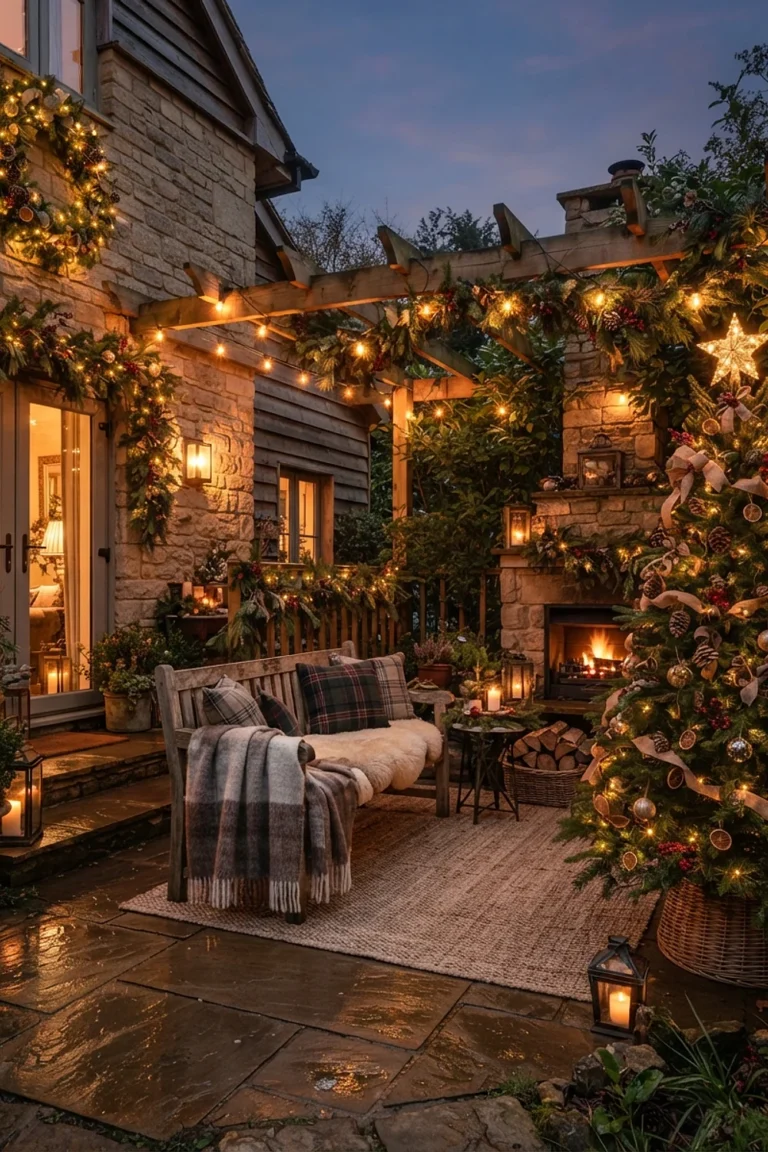
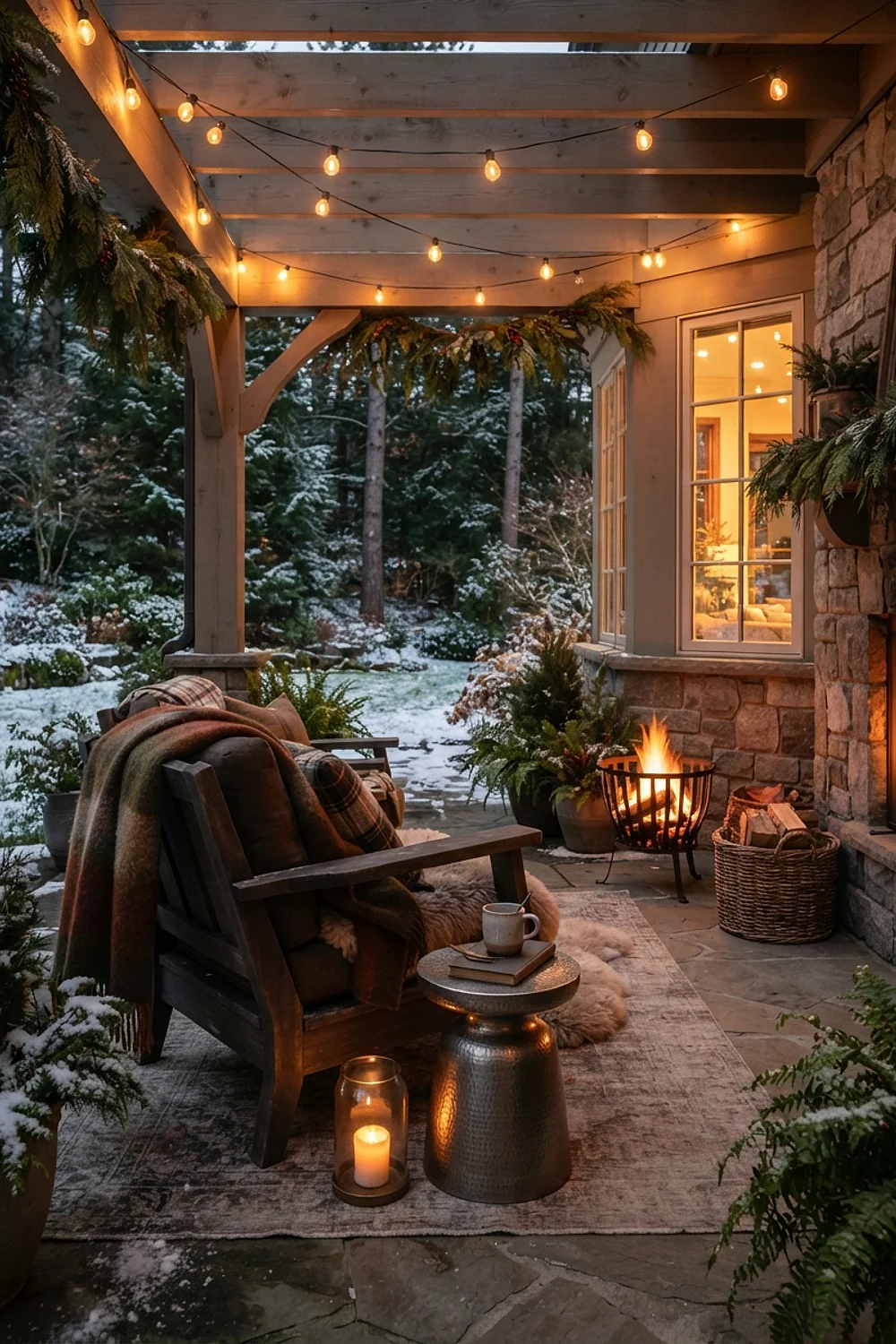
Outdoor Winter Decor Ideas for Every Home Zone
Most winter entryways get decorated for a photo taken at noon, then fail at 5pm when the light is gone and the steps are slick. Good outdoor winter decor has to work in the dark, in 20°F wind, with gloved hands holding grocery bags.
That’s the filter behind every idea below. They’re sorted by zone, from the front door out to the back patio, with real measurements so nothing ends up too small, too tall, or in the way.
Outdoor winter decor for the front porch and entry
Outdoor winter decor at the front door has one job before any other: stay clear of the handle, the keys, and the boots. Anything that fights daily traffic gets moved or removed by mid-December.
A molded-needle wreath, 28 to 30 inches wide
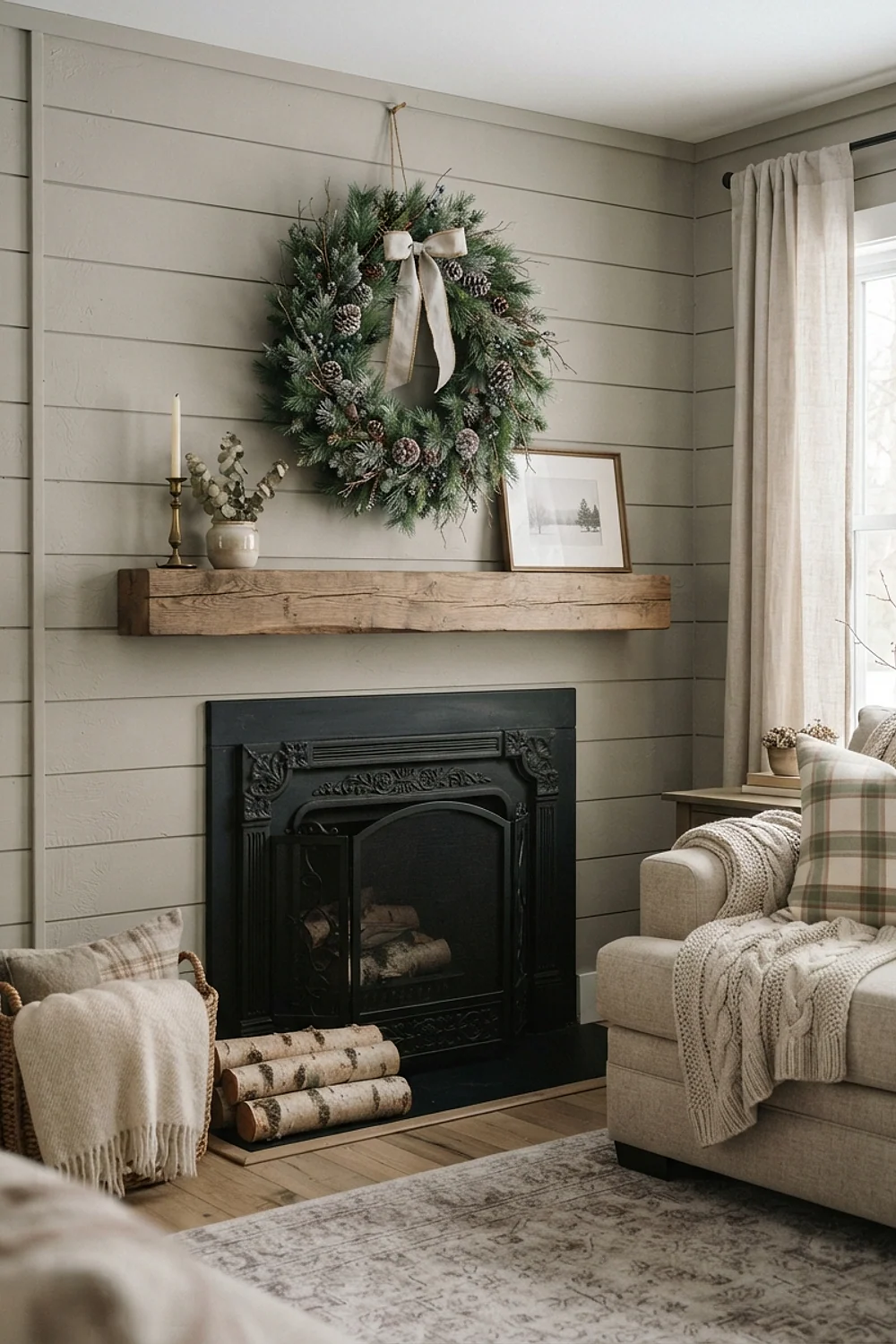
Molded polyethylene needles hold their shape at 15°F, while cheap PVC tips go limp and shiny after a few freeze-thaw cycles. Run a hand over the wreath before buying. The stiffer, slightly waxy one is the winner.
On a standard 36-inch-wide door, 28 inches leaves a few inches of breathing room on each side. Anything wider crowds the handle and gets bumped every time someone walks in.
A lidded deck box beside the door
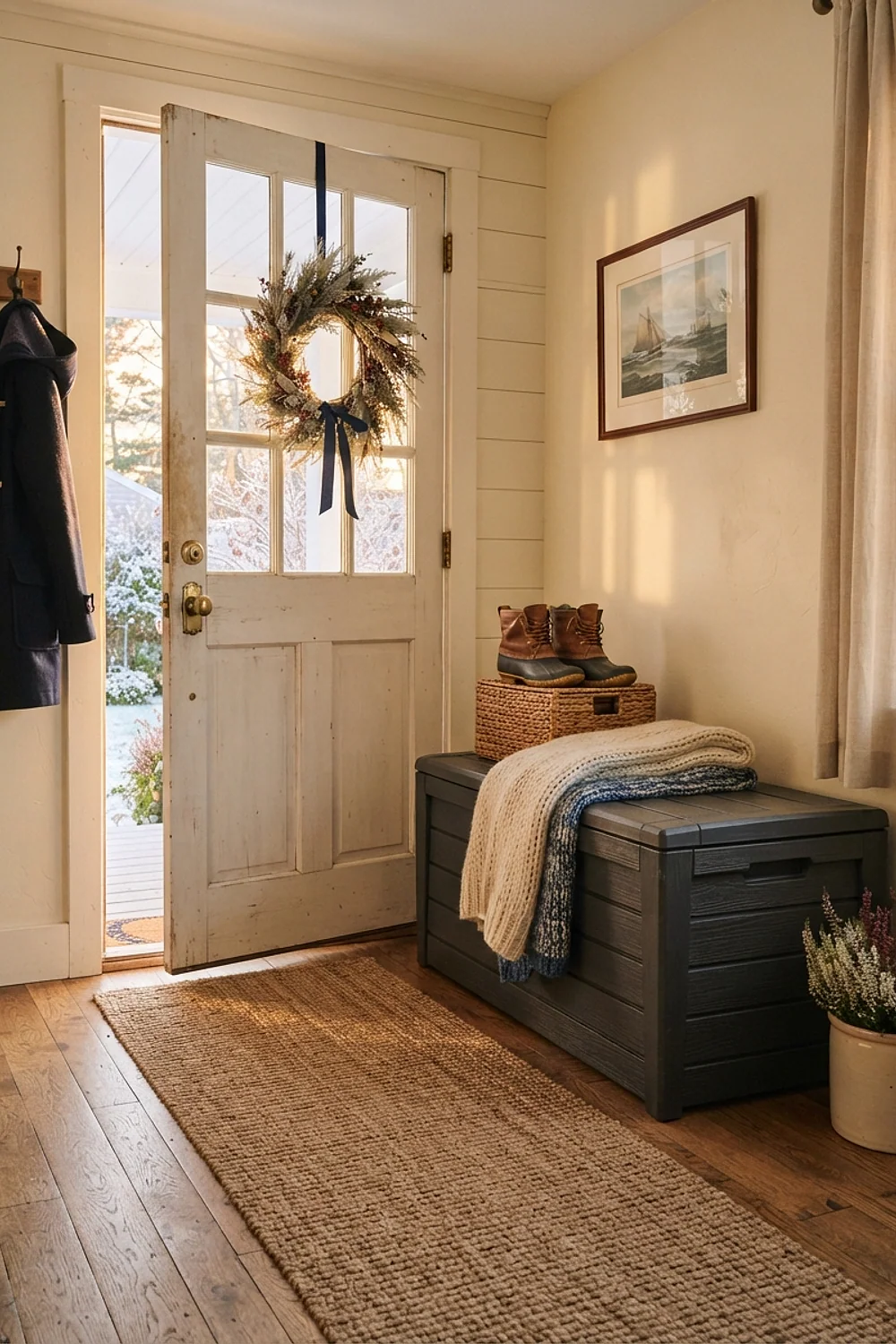
A 22-gallon resin deck box, around $60 to $80, swallows boots, dog leashes, and the ice scraper that always goes missing. Choose one with a flat lid, because a flat lid doubles as a spot to set bags down while you find your keys.
It suits small porches with no mudroom behind them. Keep it under 18 inches deep, or it eats the walking path.
Two doormats layered, one inside the other
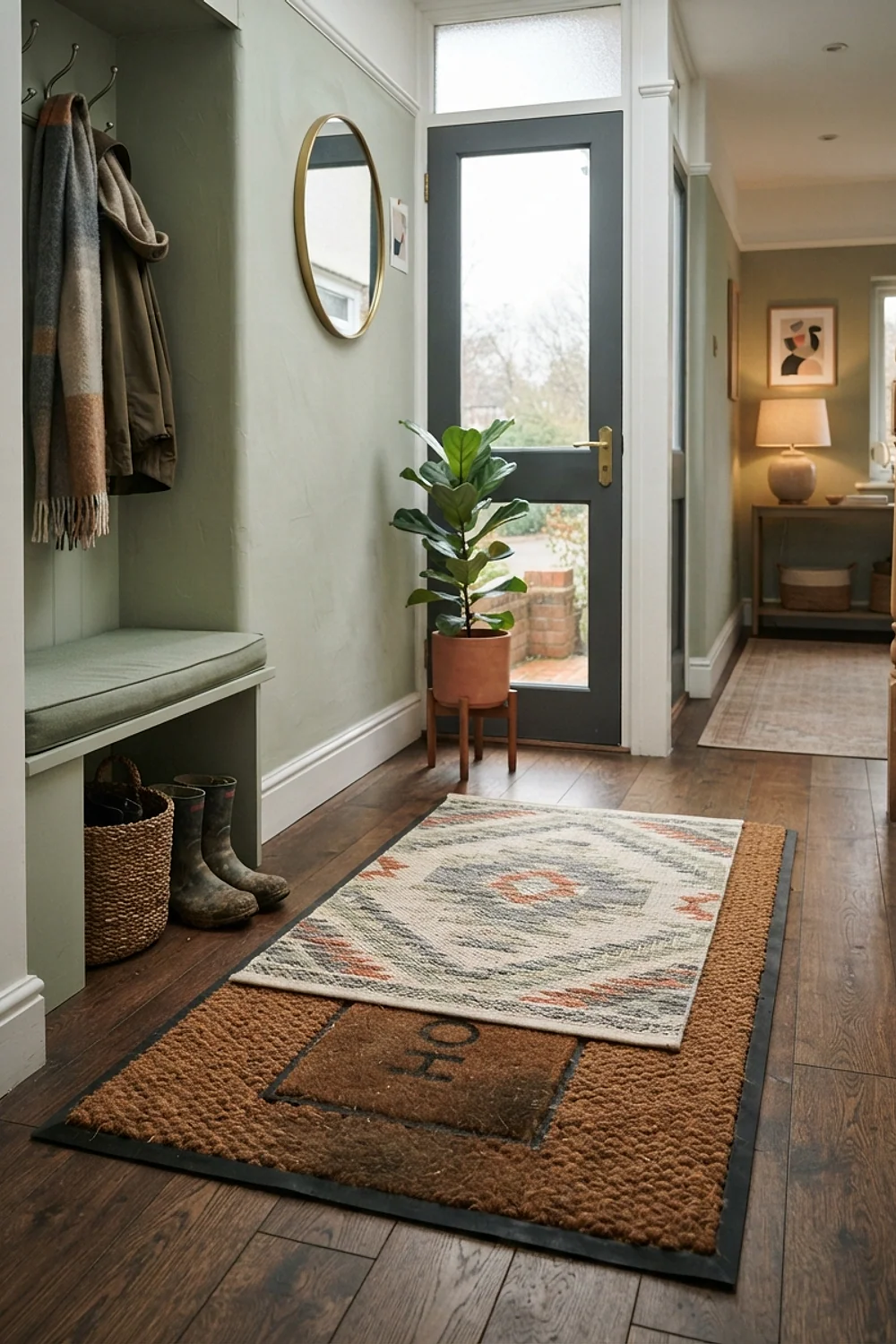
A coir mat on the bottom and a smaller rubber-backed mat on top gives you a scraping surface and a bit of pattern in one move. Coir grabs the grit, and the top mat stops it from migrating indoors.
Size the pair at 24 by 36 inches under 18 by 30. Skip wool mats outside entirely, because meltwater soaks them for days.
One oversized planter instead of a matching pair
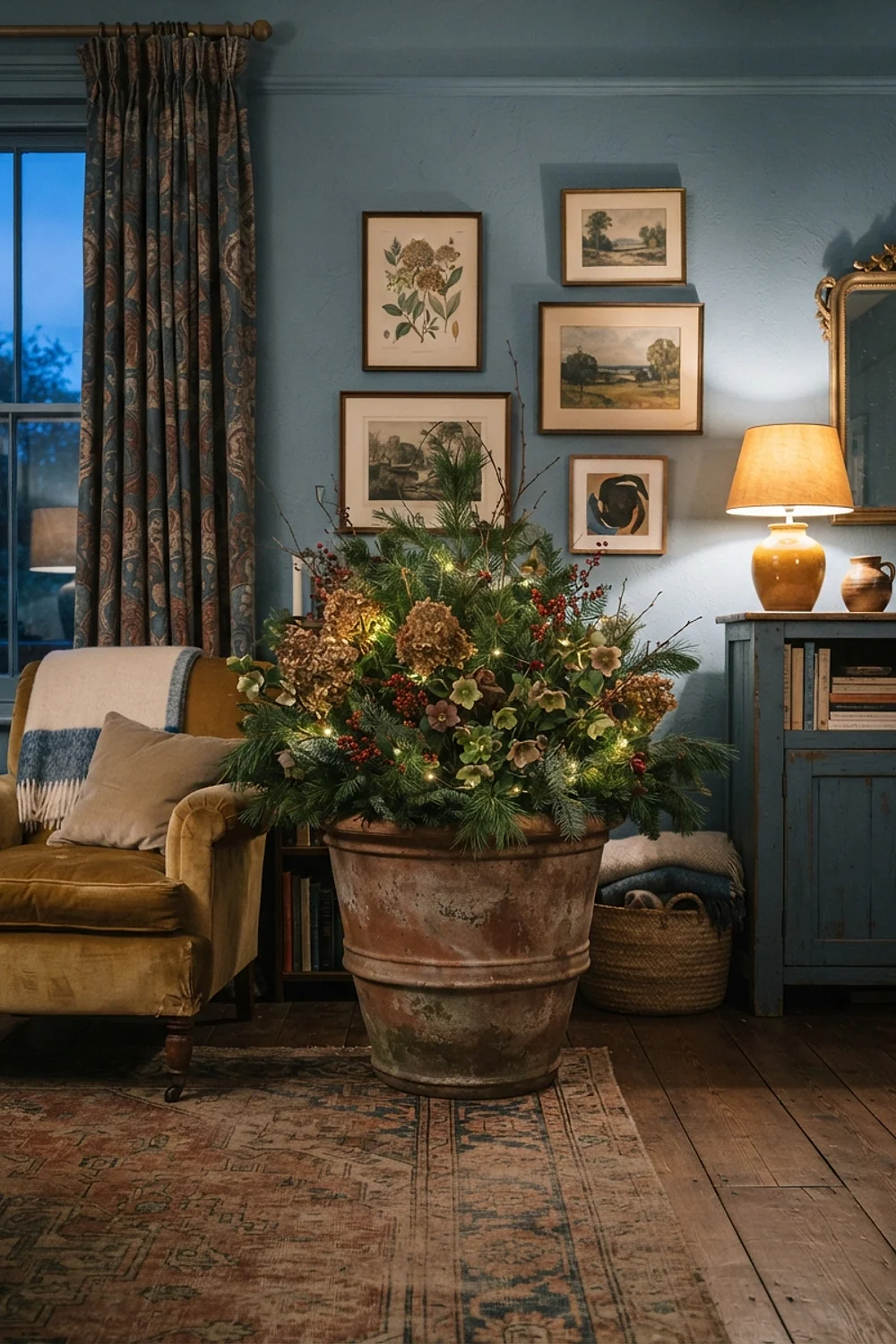
Conventional advice says flank the door with two identical pots. Break it here. A single 24-inch-tall pot packed with spruce tips, cedar, and red-twig dogwood reads fuller than two 14-inch pots, and it leaves one side of the door clear for the swing and the shovel.
It also holds more soil, so the stems stay frozen in place instead of tipping in a gale. Crowd the pot until the stems stand without support.
A front door painted deep evergreen or navy
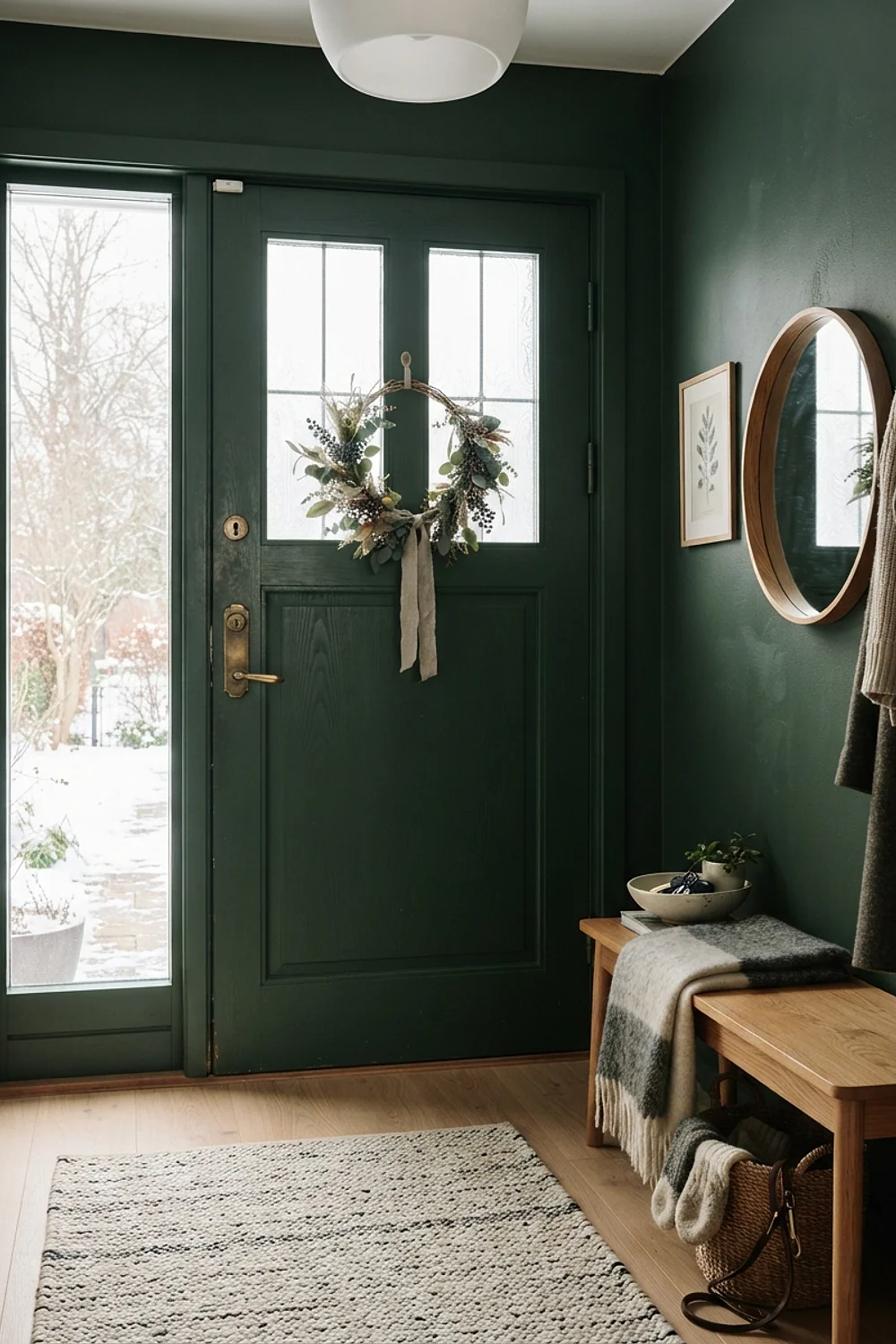
A saturated door color such as Benjamin Moore Hale Navy looks richer against snow than any ornament does. Gray winter light flattens bright colors, but deep tones stay solid.
Paint only when temperatures stay above 50°F for 24 hours, or use a cold-weather exterior formula. That makes this a fall project for most climates, and a spring one if the freeze already hit.
A bench set against the wall, not the railing
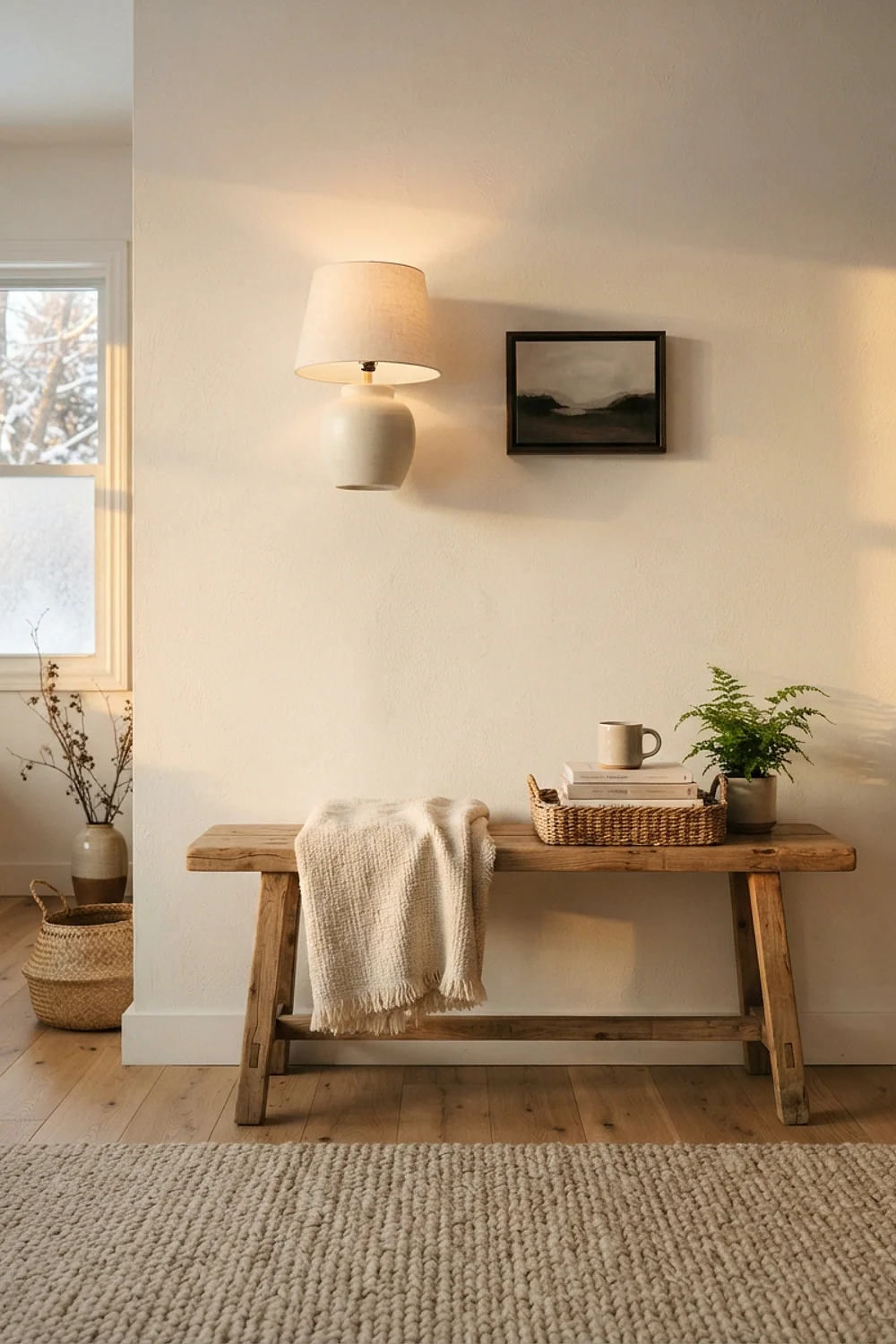
Push the bench flush to the house wall and keep a 36-inch clear path from steps to door. A railing-side bench narrows that path to a shuffle, and nobody wants to sidestep a bench with an armful of packages.
Against the wall, the bench also stays out of the way of the railing, which people grab for balance on icy steps. This works on porches at least 5 feet deep. Under that, skip the bench and use wall hooks, because an 18-inch-deep bench on a shallower porch eats the 36-inch path.
A bench cushion in solution-dyed acrylic
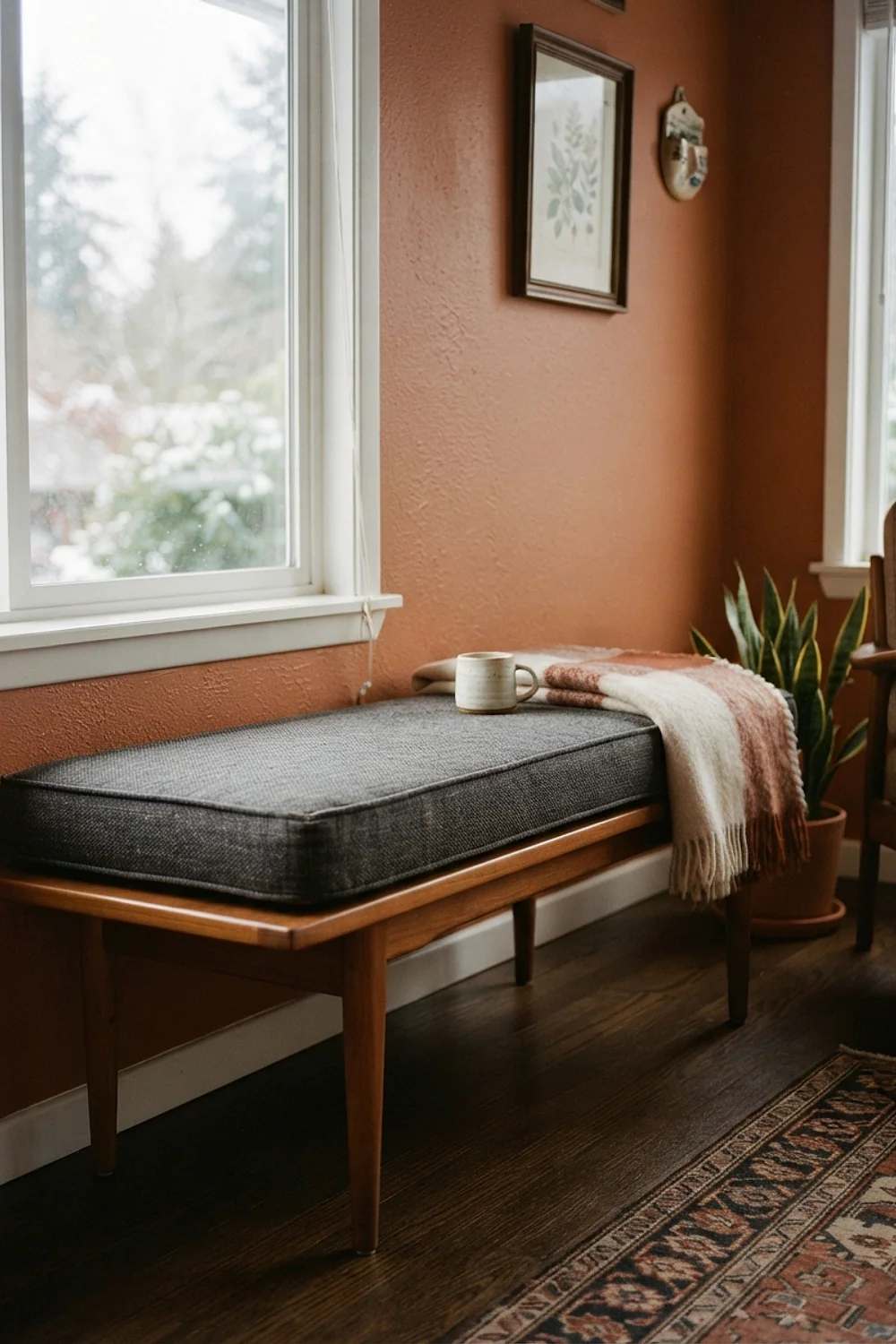
A seat 16 to 18 inches deep and 2 to 3 inches thick feels comfortable for the two minutes people use it to pull boots on. Solution-dyed acrylic sheds frost and dries fast, so it won’t hold the cold the way polyester foam does.
Add a wool-blend throw across the back for photos, and bring it in at night. Wet wool smells like a damp dog by morning.
Lanterns with LED candles on the top two steps
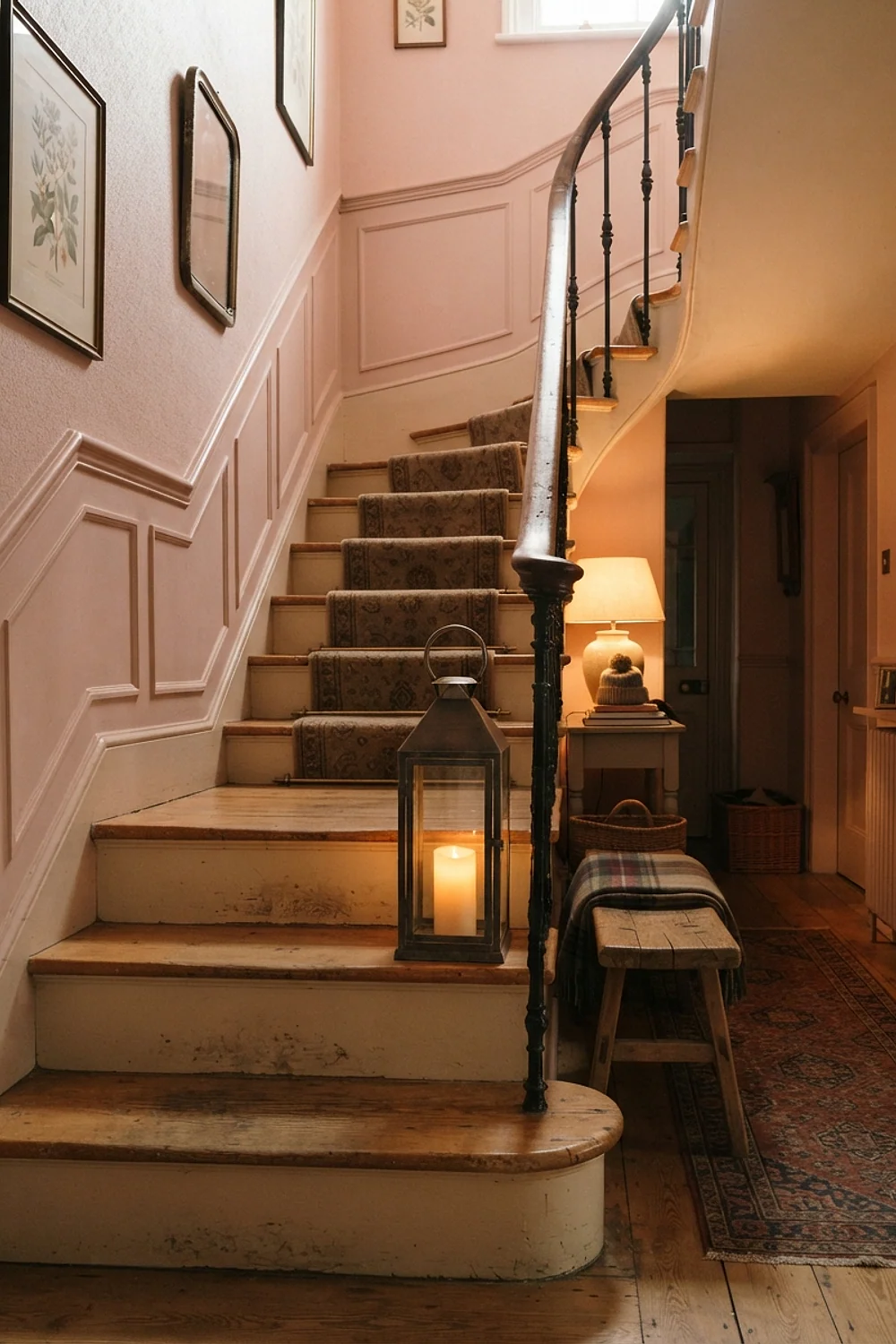
Place a pair of 12-inch lanterns on the top step and one on the second, with flickering LED candles on a built-in timer. They light the exact spot where ice forms and feet slip, so the glow does real safety work as well as decoration.
Real candles blow out in January wind within minutes. LEDs with a 6-hour timer last for the whole evening and cost nothing to relight. This suits households that come home after dark. Avoid placing them in the middle of the tread, where a boot can kick them.
Garland hung with clips, never adhesive hooks
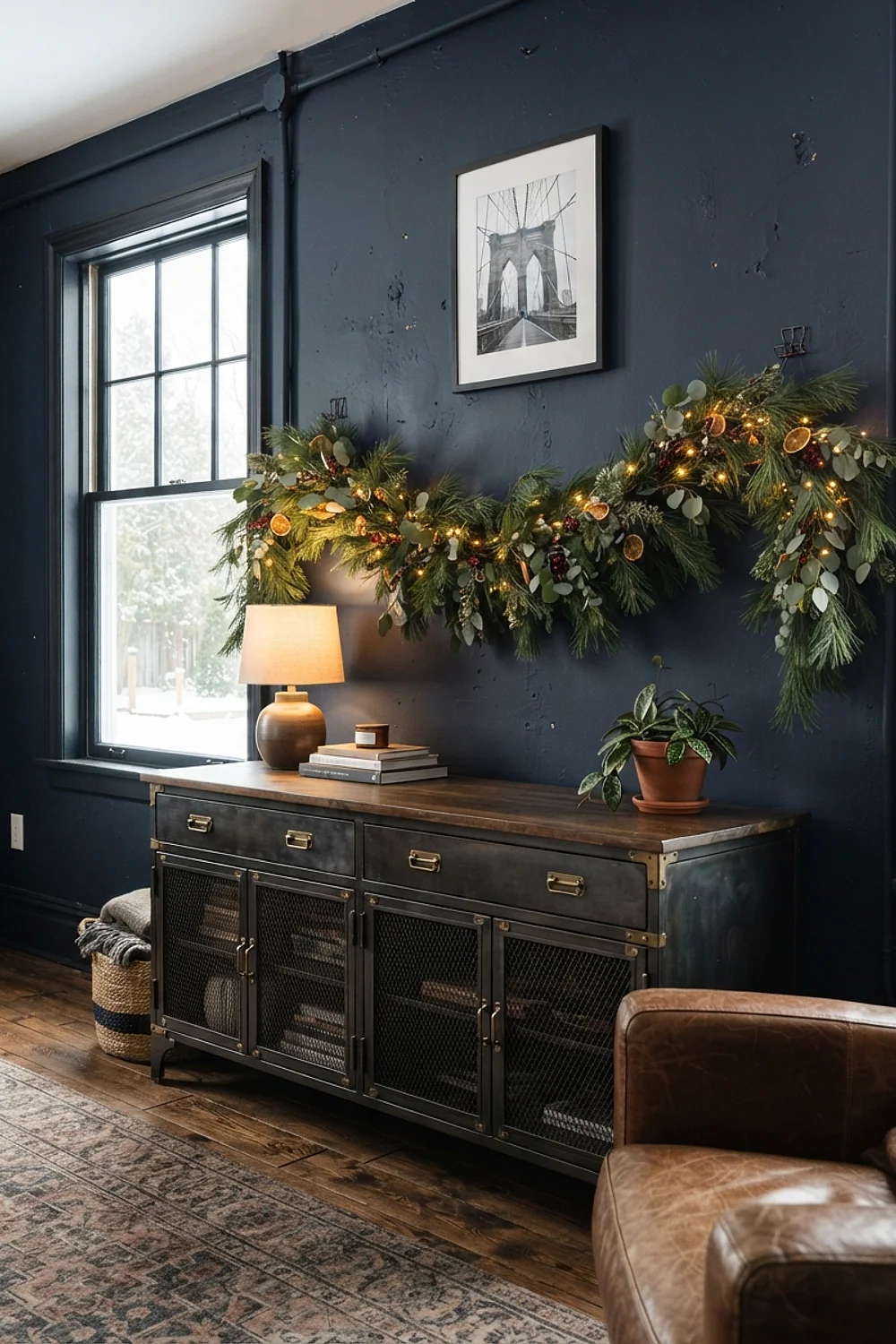
Adhesive hooks lose their grip below about 40°F, and the garland drops at 2am with a thud that wakes the dog. Use screw-in cup hooks, or clip-on hangers rated for outdoor use that grip the porch rail.
The common mistake is hanging garland first and testing the hold later. Tug each hook with real force before you drape anything heavy on it.
A boot scraper and brush set by the bottom step
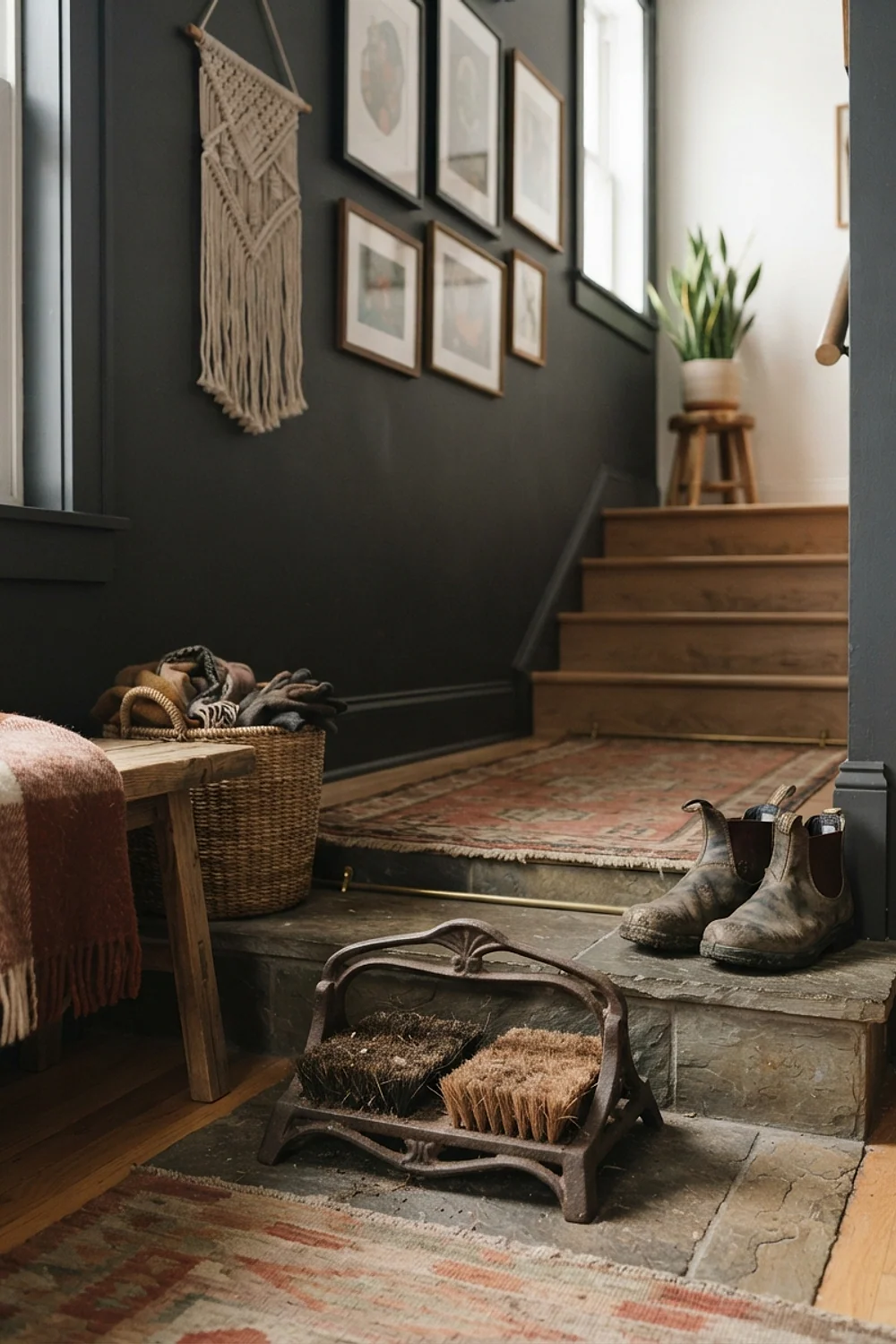
A cast-iron boot scraper bolted to a 12-inch wood base removes slush before it reaches the porch boards. Mount it at the bottom step, where people naturally slow down.
It suits homes with kids or dogs, where the floor inside takes the punishment. Put it on the side nearest the driveway so it sits on the real path, not the pretty one.
A slim firewood rack of galvanized steel
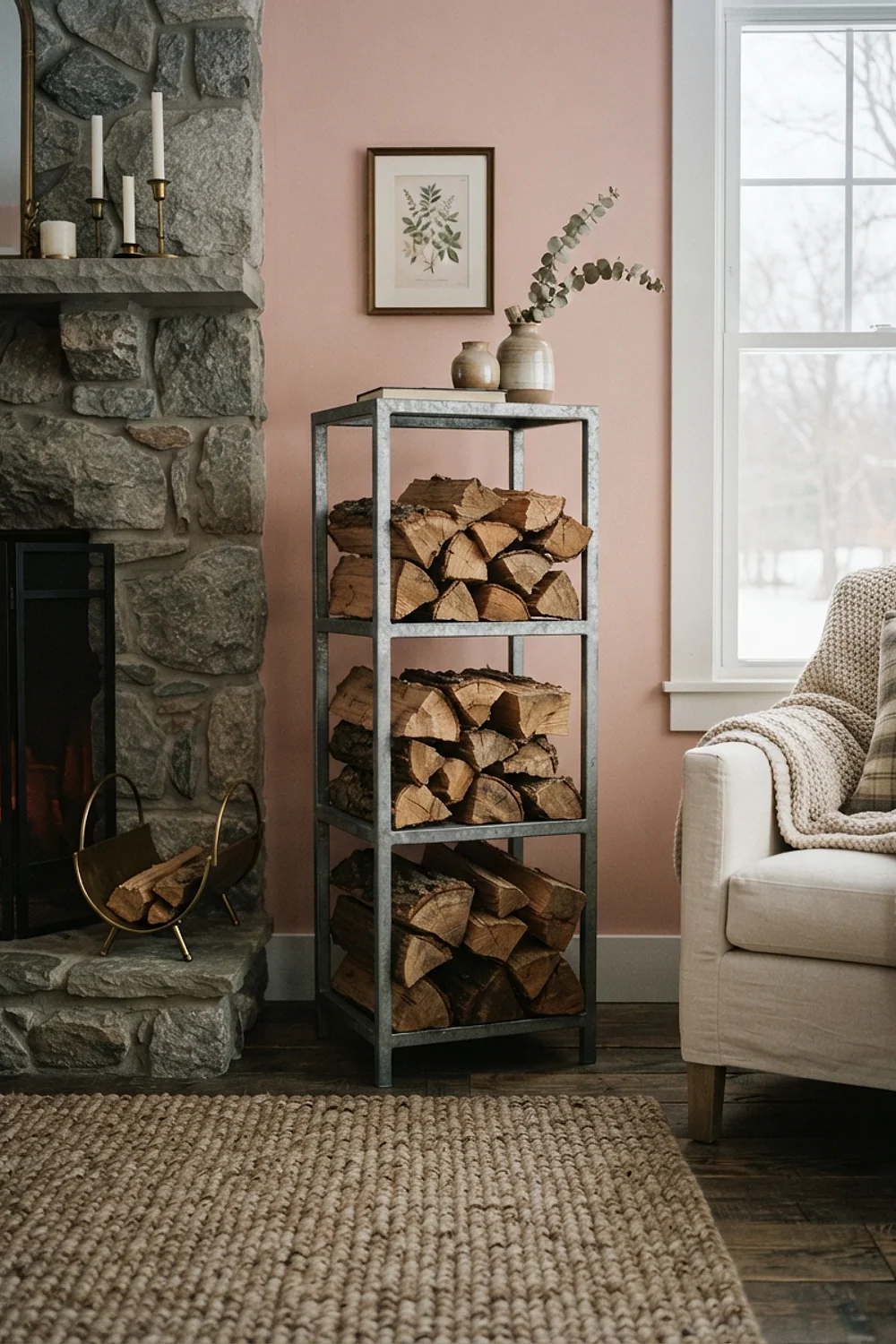
A rack 14 inches deep and 36 inches wide keeps a half-cord of split logs off wet boards and in easy reach. Galvanized steel won’t rot like pine, and it develops a soft gray patina.
Stack the logs bark-side up to shed melting snow. If the porch faces north and stays shaded, put the rack on the dry side of the house.
More outdoor winter decor for walkways, yards and patios
Past the porch, the decorating shifts from objects to light, height, and clear paths. Everything out here has to survive wind and snow load.
A galvanized bucket holding ice melt and a scoop
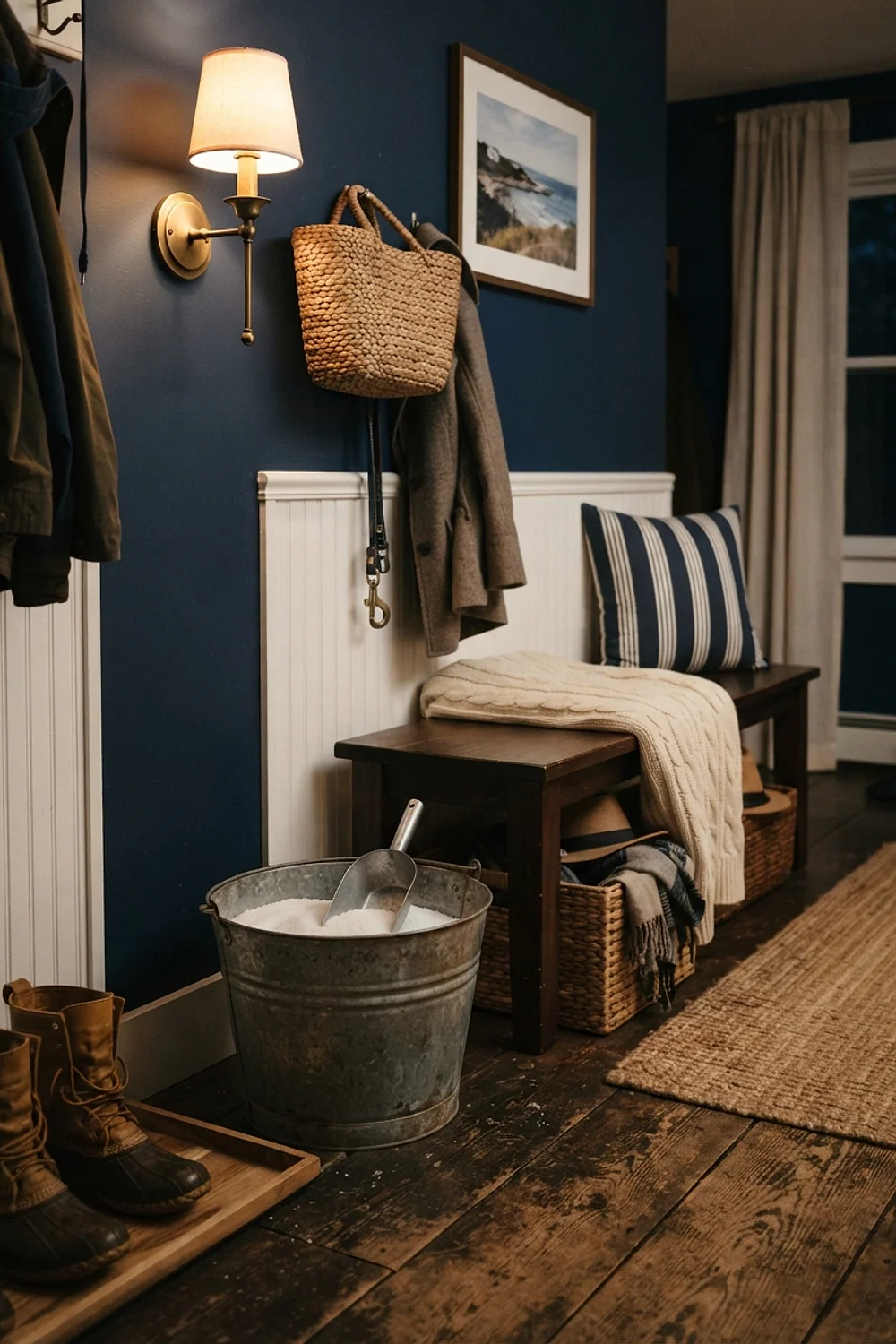
A 10-quart galvanized pail with a scoop sits beside the steps for under $20. It turns a bag of ice melt, which looks awful, into something that reads as décor and gets used.
Put it at hand height, not on the ground, by setting it on the deck box lid or a stool. Bending over on ice is how people fall.
Window boxes stuffed with evergreen clippings
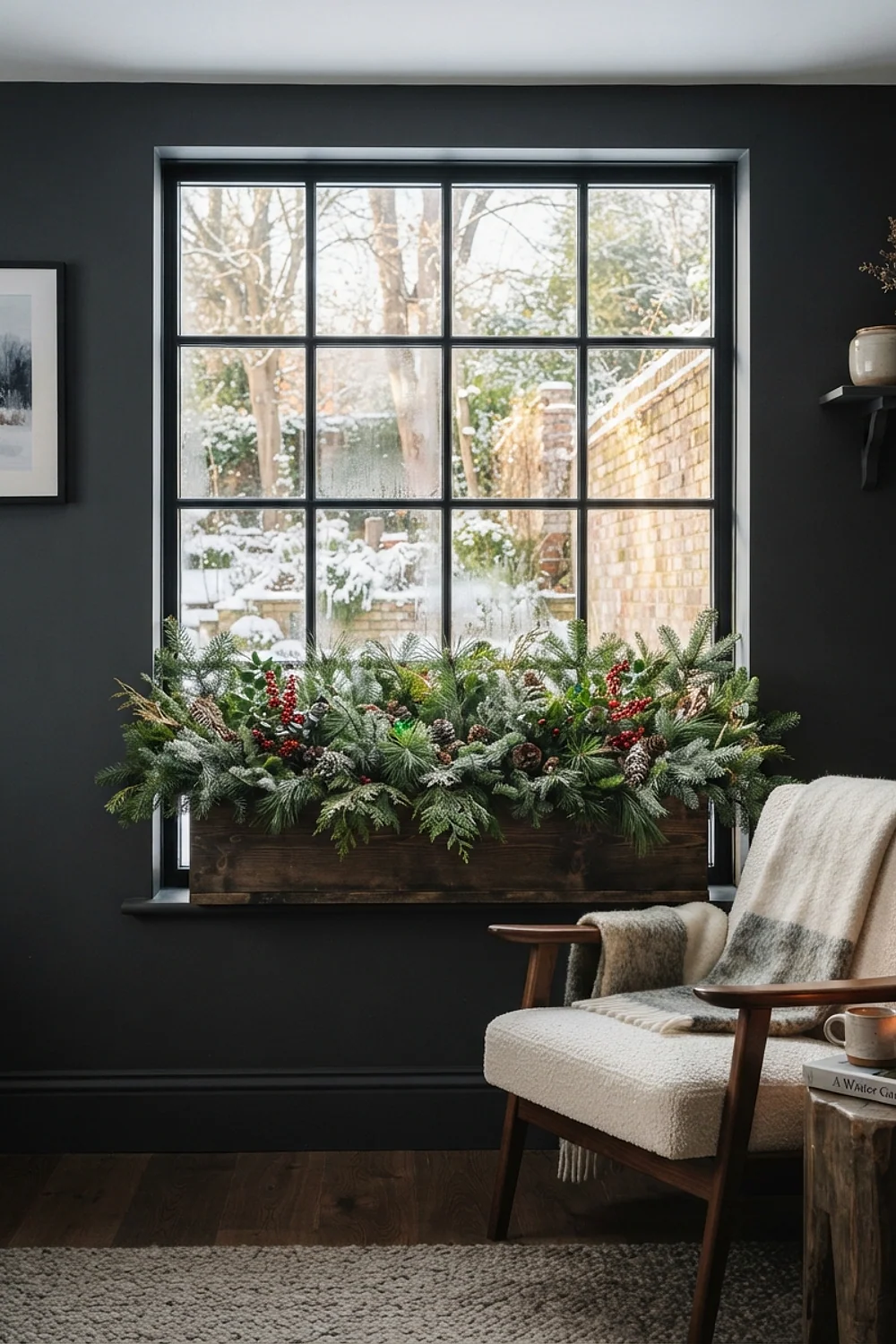
Fill a 30-inch window box with fresh-cut cedar, boxwood, and a few pinecones pushed into the soil. The stems last about six weeks in freezing weather and don’t need water, because the cold keeps them from drying out or dropping needles.
Cut stems 10 inches long so they stand upright in frozen mix; shorter cuttings tip over. This beats faux greenery on a second-story window where nobody can touch it anyway. It suits budget-minded households with a cedar or boxwood hedge to trim.
A 5-foot potted spruce at the driveway edge
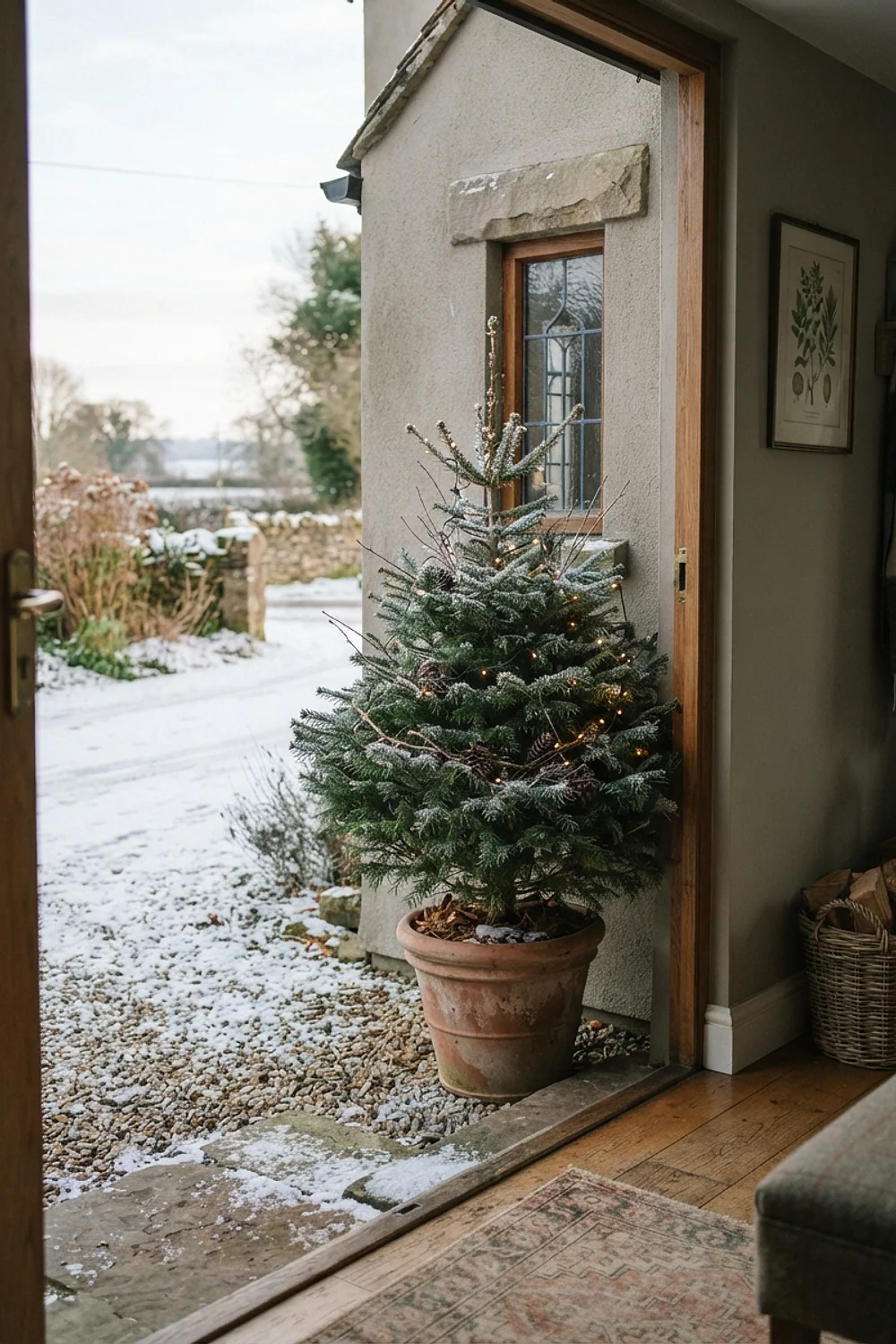
A live dwarf Alberta spruce in a 20-inch pot stands taller than most visitors’ eye line, so it marks the start of the walkway. Trees at that height read from the street, where 2-foot pots disappear.
Wrap the pot in burlap to insulate the roots, and plant the tree in the ground in spring. Placed closer than 3 feet to the driveway, it gets clipped by a plow.
Winterberry branches in a black planter
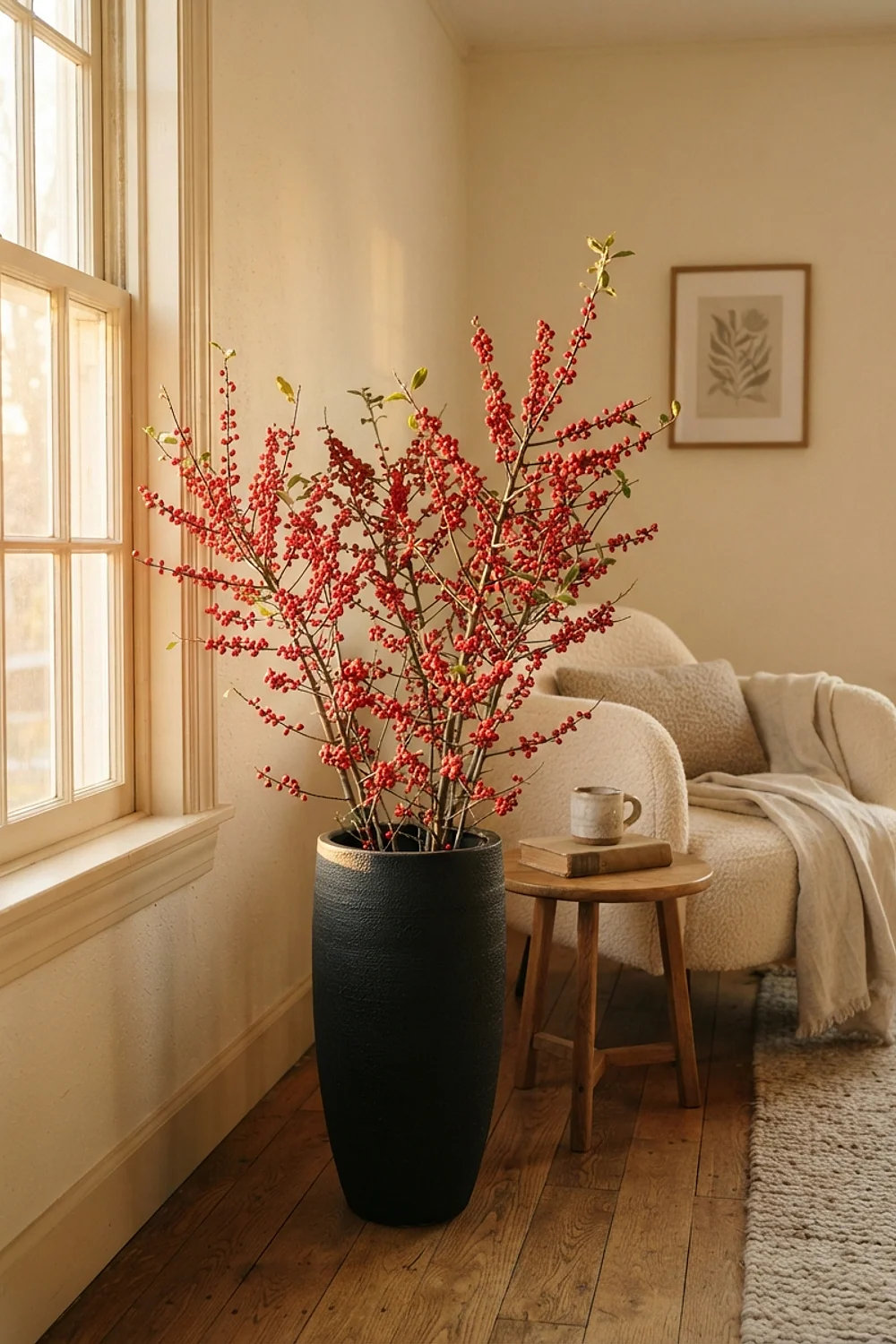
Bright red winterberry stems against white snow and a matte black pot give you one hit of color that carries from 40 feet away. The berries hold on for weeks, and birds usually leave them alone until late winter, so the display stays full through most of the season.
Pick a single color rule for the whole front yard. Red here means no blue ornaments elsewhere. This suits small yards and tight budgets, since one planter does the job. Avoid a glossy pot, which throws glare and competes with the berries.
Pathway lanterns spaced 6 to 8 feet apart
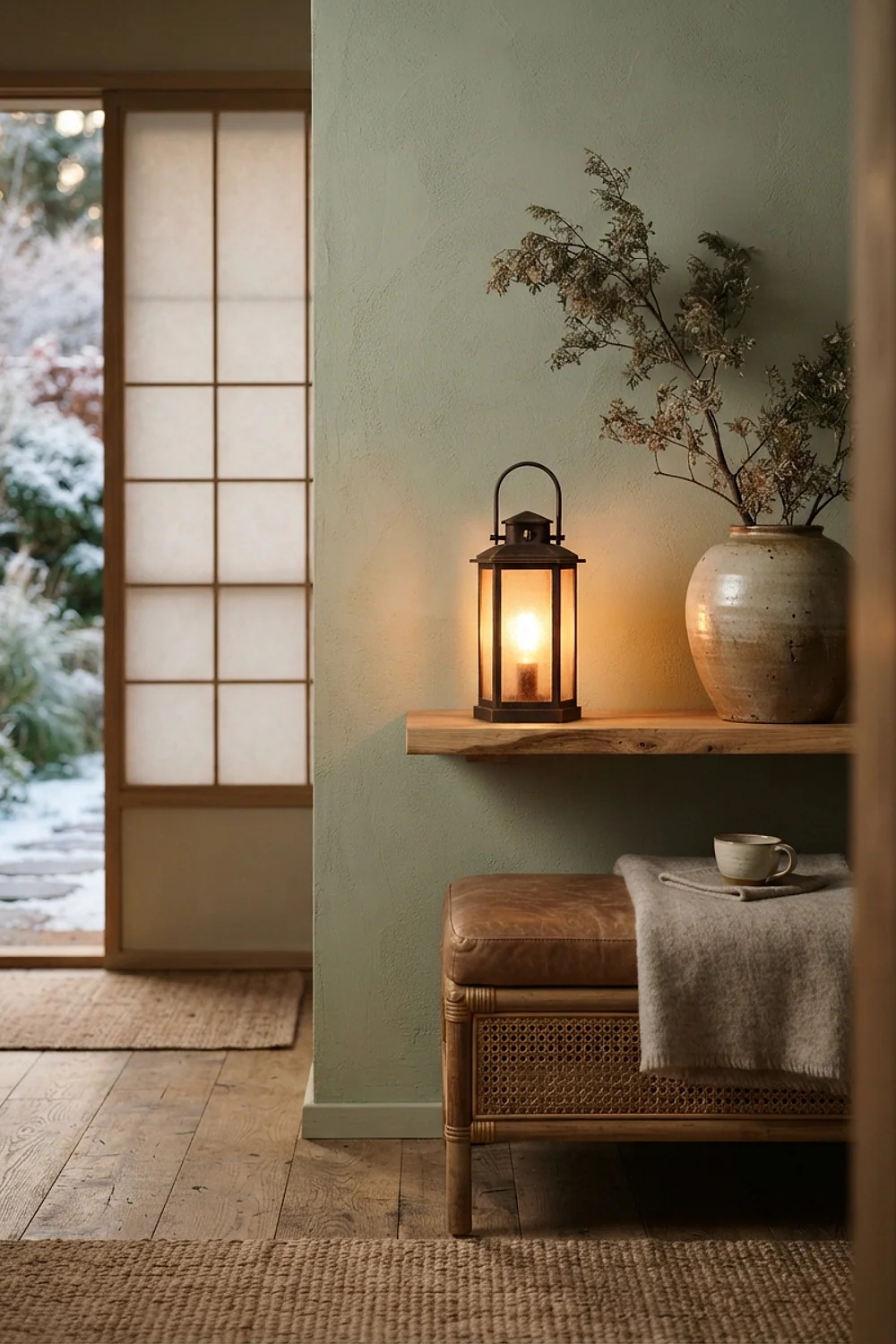
Space stake lights 10 feet apart. Wait, no, scratch that: 10 feet leaves dark gaps where ice hides, so 6 to 8 feet is the number. At that spacing each pool of light touches the next, and a walker never steps into black.
Choose stakes 18 to 24 inches tall, so a snowfall of 6 inches doesn’t bury them. Solar versions run about $10 each, but their output drops hard on gray days, so a low-voltage line is more dependable.
A fire pit table with seating 36 inches back
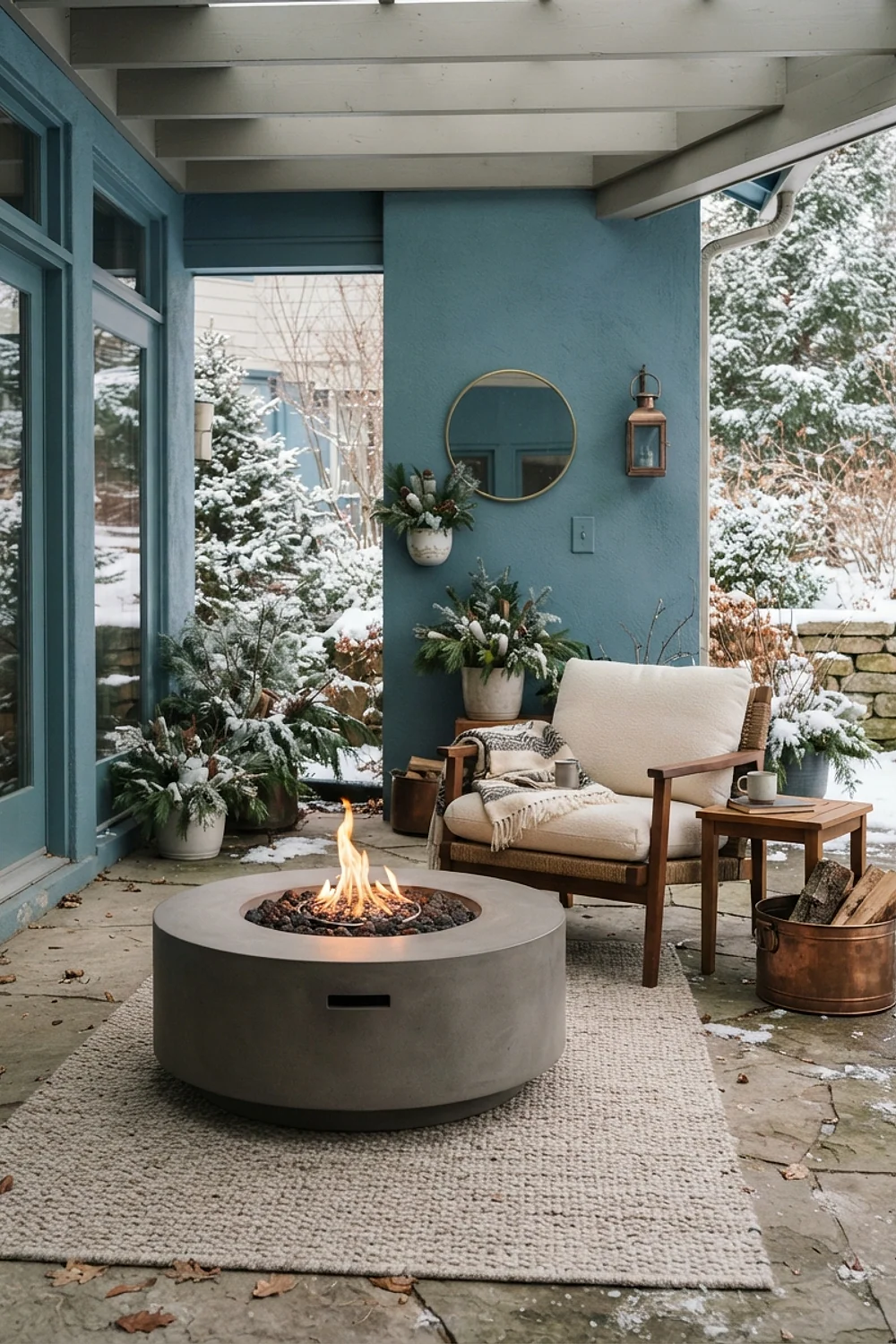
Put chairs about 36 inches from the edge of a gas fire pit, close enough for heat to reach knees, far enough to keep sleeves safe. Seats 18 to 20 inches deep with a slight backward tilt let people sit through a long evening.
This suits patios at least 12 feet across. Smaller ones feel crowded, and a table-height pit works better than a low bowl, which forces everyone to lean forward.
String lights at 2700K, swagged 8 feet overhead
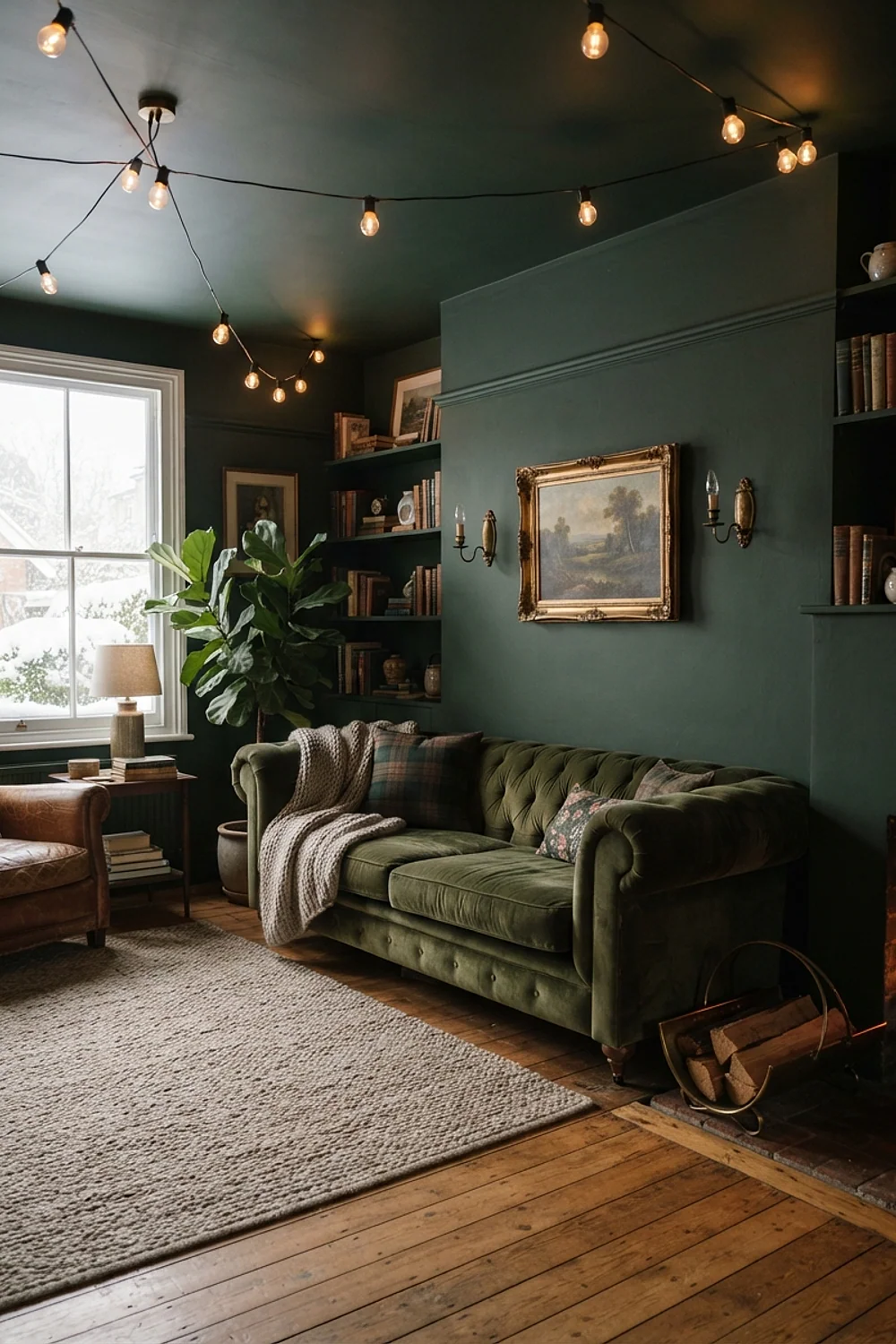
Warm white bulbs at 2700K look gold against snow, while 4000K bulbs read clinical and blue. Hang the strands at least 8 feet above the ground so tall guests clear them, and use commercial-grade cord, which stays flexible in cold.
Spend about $40 to $60 for a 48-foot strand with shatter-resistant bulbs. Plan the swag so each sag is 12 to 18 inches deep and never touches a surface.
Three different white light temperatures on one house
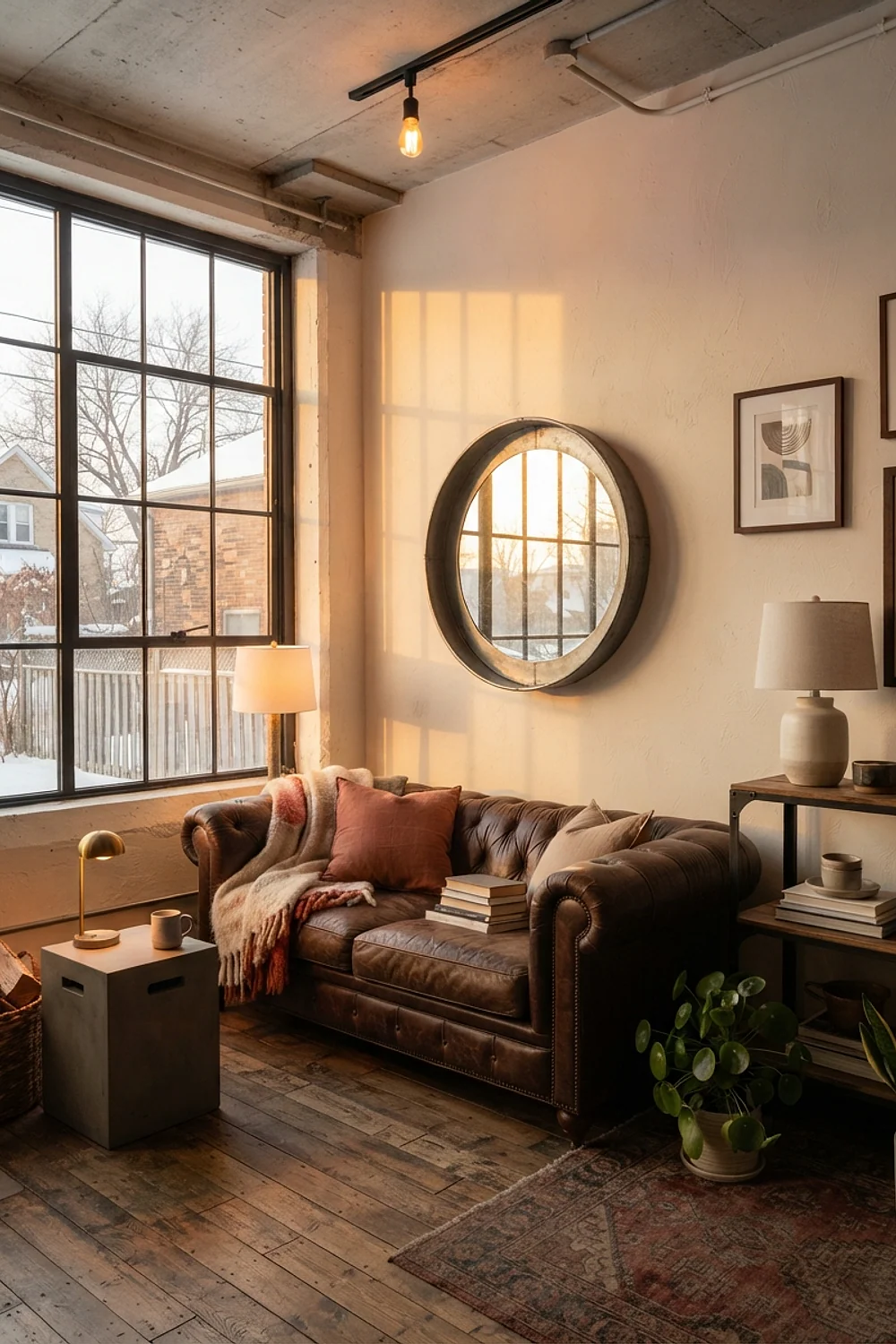
Mixing a 2700K strand with 5000K icicle lights looks like a mistake from the street. The eye catches the mismatch right away, even if it can’t say why.
Buy all the lights for one project in a single batch and check the box for the Kelvin number. If two strands already clash, swap the cooler one and leave the warm strand where it is.
A GFCI outlet and a smart plug on a timer
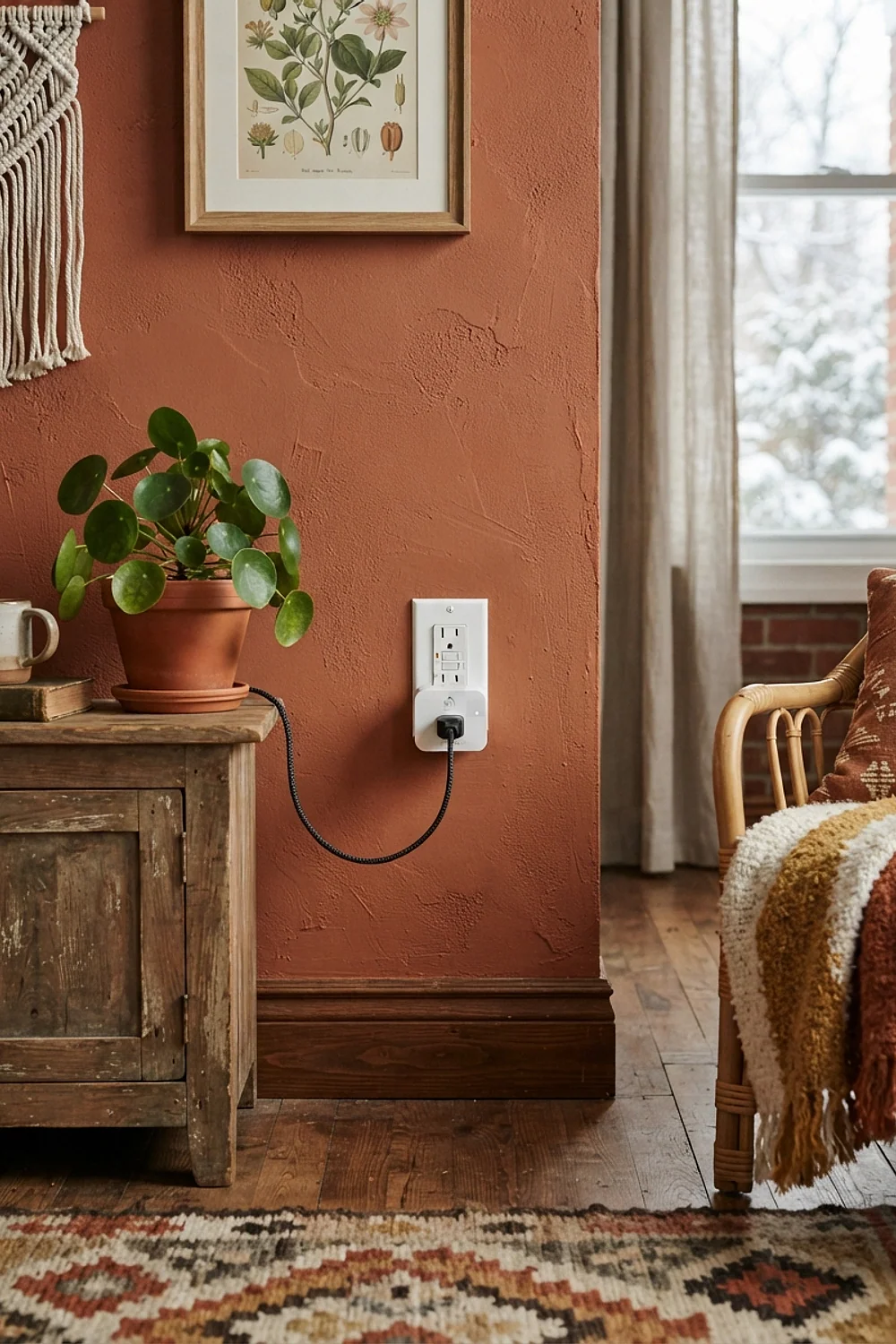
Plug every outdoor strand into a weatherproof, in-use cover on a GFCI outlet, then add a smart plug that switches lights on at dusk and off at 11pm. The in-use cover keeps snow out of the sockets.
That setup means nobody trudges outside to flip a switch in January. It works for anyone who dreads the daily on-off routine, because nothing gets used less than a switch outside in the cold.
Frost-proof fiberglass pots in place of terracotta
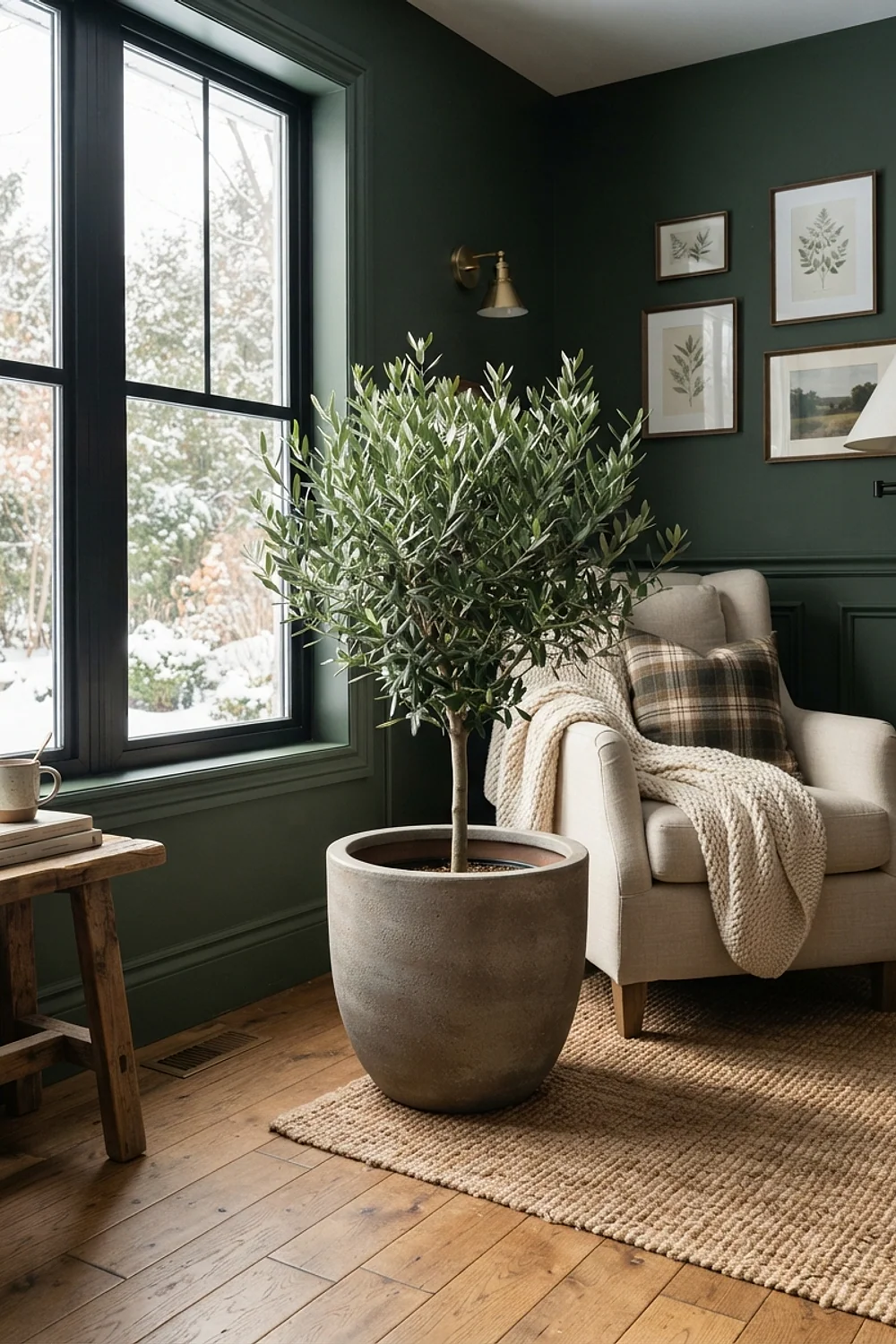
Terracotta absorbs water, freezes, and cracks, usually after the first hard freeze below 25°F. Fiberglass or thick resin pots shrug it off and weigh about a third as much, which matters when someone has to move them.
If you already own terracotta, empty it and flip it upside down before the first hard frost. Wet soil expanding inside is what splits the wall.
A bird feeder station with a lidded seed bin
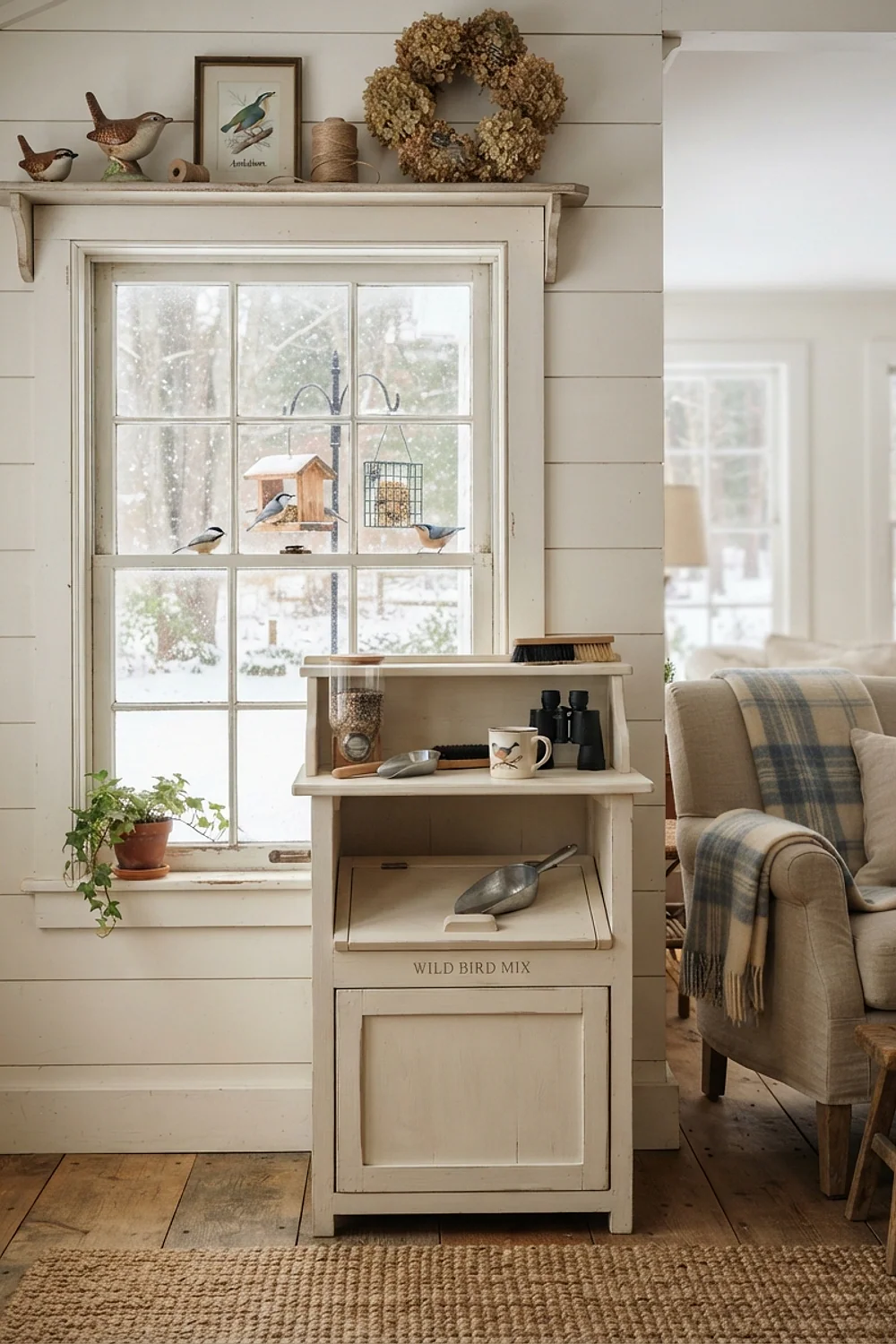
A shepherd’s hook 5 feet tall holds a tube feeder, and a lidded metal bin at its base keeps seed dry and out of reach of squirrels. Visible activity on a gray January morning beats any ornament for sheer life.
Place the post 10 feet from a window, near enough to watch, far enough to reduce collisions. Fill feeders weekly, since wet seed molds fast.
Fence or railing garland wired in 4-foot sections
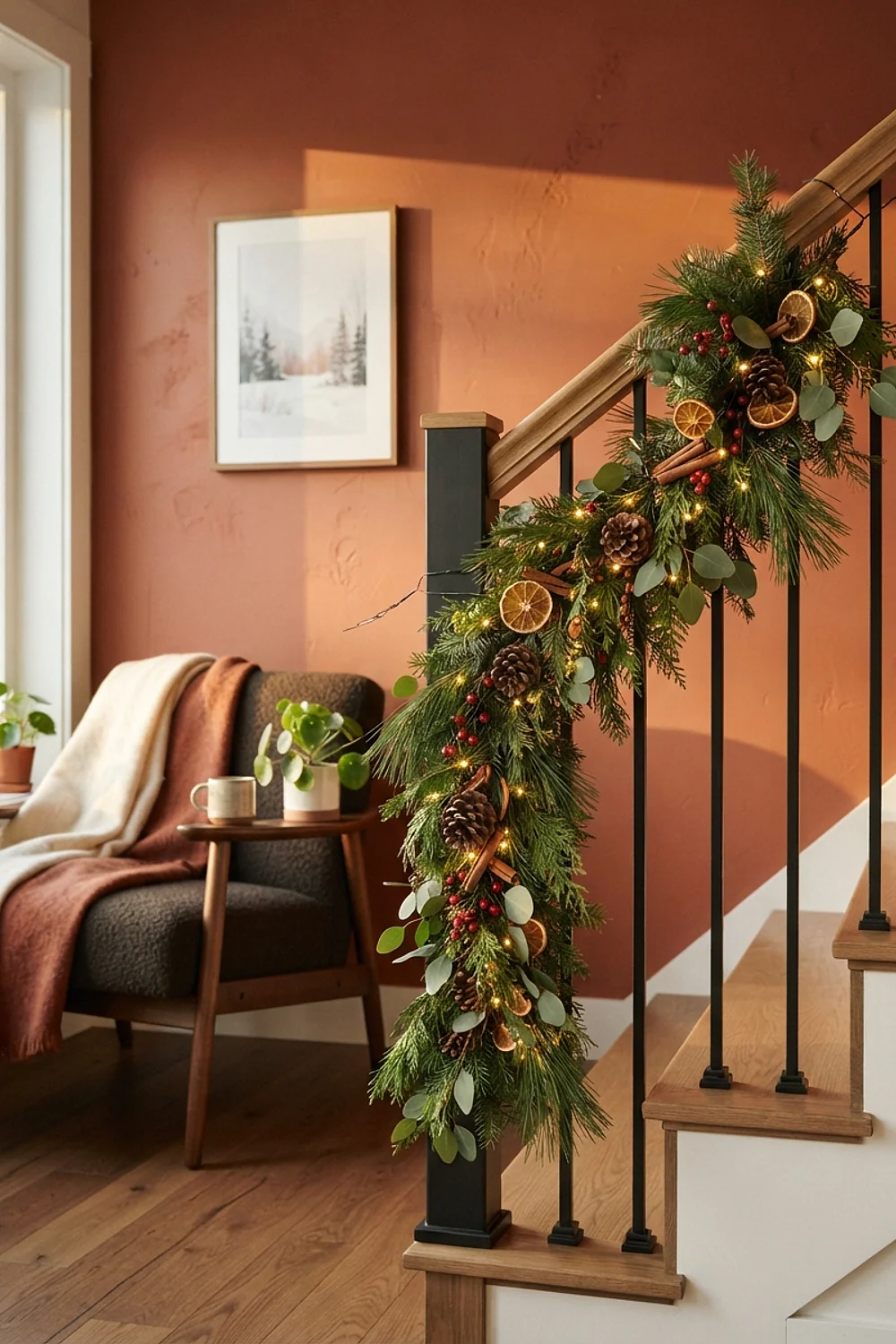
A faux evergreen garland on a fence rail looks fuller when it’s wired in 4-foot sections with a slight overlap, not run as one long rope. A 9-foot length costs roughly $25 to $40.
Use floral wire, not zip ties, which snap in the cold. This idea suits backyards with wooden or metal fencing and gives neighbors something to look at over the top.
Oversized ornaments, 10 to 12 inches wide, in a bare tree
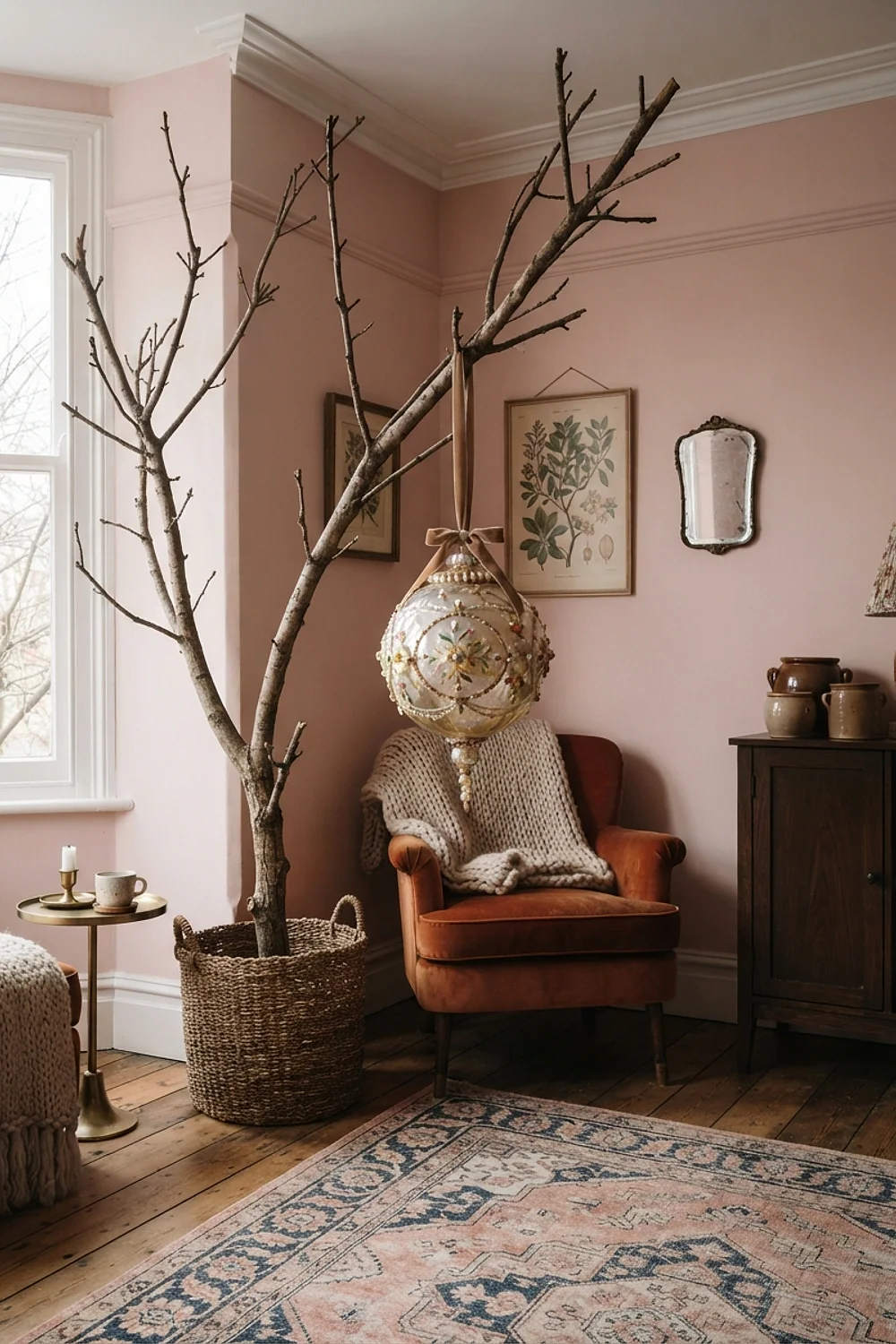
Shatterproof ornaments 10 to 12 inches wide hung from a leafless maple read from the street, where 3-inch balls vanish. Cluster five or seven at different heights between 5 and 9 feet, since odd numbers and staggered heights look natural rather than strung in a row.
Hang them on fishing line looped over a branch, never wire that scars the bark. This works best on trees with an open canopy and clear sightlines. It suits front yards set well back from the road.
A tight palette of evergreen, birch white, and copper
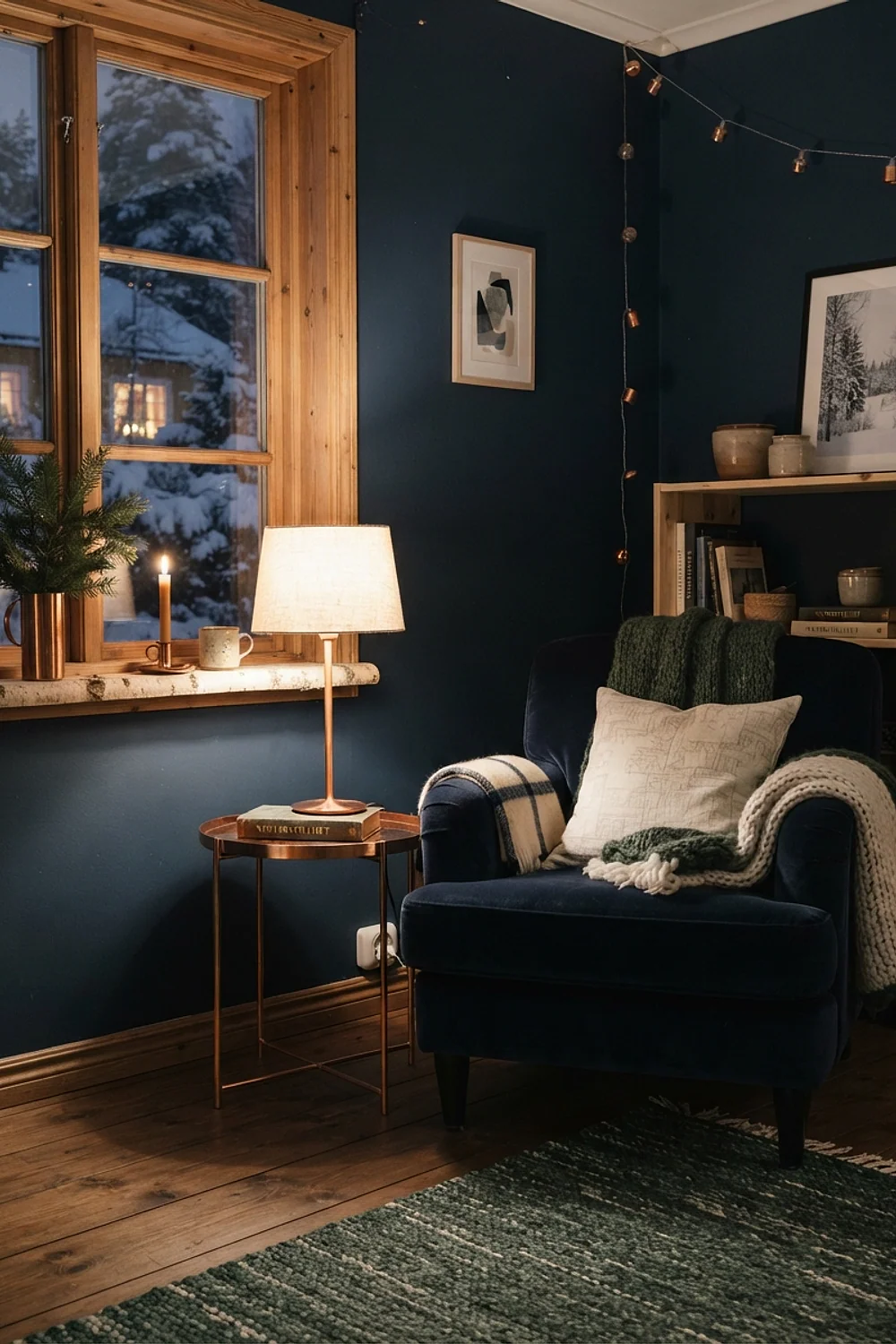
Choose three tones and let nothing else in. Evergreen branches, white birch logs, and copper lanterns all pick up the low sun at 4pm, when light turns amber and the metal glows.
Copper weathers well outdoors, developing a deeper brown rather than rusting. Stick to the palette for everything from the wreath to the planters, and the whole yard looks planned.
The finishing touches
Outdoor winter decor goes wrong in the numbers, not the taste. A few measurements prevent most regrets.
- Keep a 36-inch clear path from step to door.
- Hang wreaths with the center at 56 to 60 inches from the porch floor.
- Place planters at least 6 inches from the door swing.
- Run light strands at 8 feet minimum overhead.
- Leave 3 feet between a fire pit and anything flammable.
- Anchor anything over 4 feet tall against wind.
Measure the porch before shopping, and tape the footprint of each piece on the boards. Walk through it with a laundry basket in your arms to find the pinch points.
Making it flow between rooms
Winter décor that stops at the door feels like a separate house. Link the outside to the inside with a few repeating details.
- Repeat one material, such as birch or copper, indoors and out.
- Use the same light temperature on both sides of the glass, 2700K.
- Match the wreath ribbon to a throw pillow in the living room.
- Place a lantern on the entry console that echoes the porch ones.
Evening is when this pays off, because windows glow gold and the porch picks up the same tone. From the street, the house reads as one deliberate picture rather than a pile of seasonal purchases.
Lessons learned
- Choosing looks over daily use. If it blocks the handle or the rail, it comes down by January.
- Skipping a timer. Lights that depend on memory stay dark half the week.
- Ignoring wind. Light planters and lanterns tip in the first storm.
- Using indoor extension cords outside. Only outdoor-rated cords handle moisture and cold.
- Decorating at noon. Check everything at dusk before calling it finished.
Fixing any of these costs less than a new wreath. Most come down to one change of position or one swap of hardware.
Where to start with your winter exterior
Good outdoor winter decor is mostly about comfort and use. The wreath, the lanterns, the bench, and the timer all earn their spot because someone touches them every day.
Save or pin this list so it’s handy when you’re ready to start. Begin by measuring your porch depth and door width, then pick the first idea, the wreath or the step lanterns, before buying anything else.
Frequently asked questions
How early can I put up outdoor winter decor?
Most people start the weekend after Thanksgiving, but evergreen-based outdoor winter decor can go up in mid-November without looking early. Take it down by the end of January or when the greenery browns.
What outdoor winter decor survives snow and ice best?
Molded-needle faux greenery, fiberglass planters, galvanized metal, and LED lights rated for outdoor use hold up best. Avoid terracotta, paper ornaments, and anything held with adhesive.
How do I keep lights from tripping the breaker in cold weather?
Use LED strands, which draw about 90 percent less power than incandescent, and plug them into a GFCI outlet with a weatherproof cover. Keep each daisy-chained run within the manufacturer’s limit, usually three to five strands.
Can I decorate a small porch without blocking the door?
Yes. Keep outdoor winter decor to the wall and the corners: a wreath, one planter, and wall-mounted hooks. Leave 36 inches clear in front of the door.