Small Room, Big Impact: Winter Decor for Tight Apartments
Most winter decorating fails because it piles things on instead of pulling a room together. The best winter decor ideas for the home in a small apartment take almost no floor, hold warmth where you actually sit, and make a gray 4pm look intentional.
Below are 24 specific moves, grouped by what they fix, with sizes and trade-offs so nothing gets bought blind. Skim the headings, pick three, and leave the rest alone.
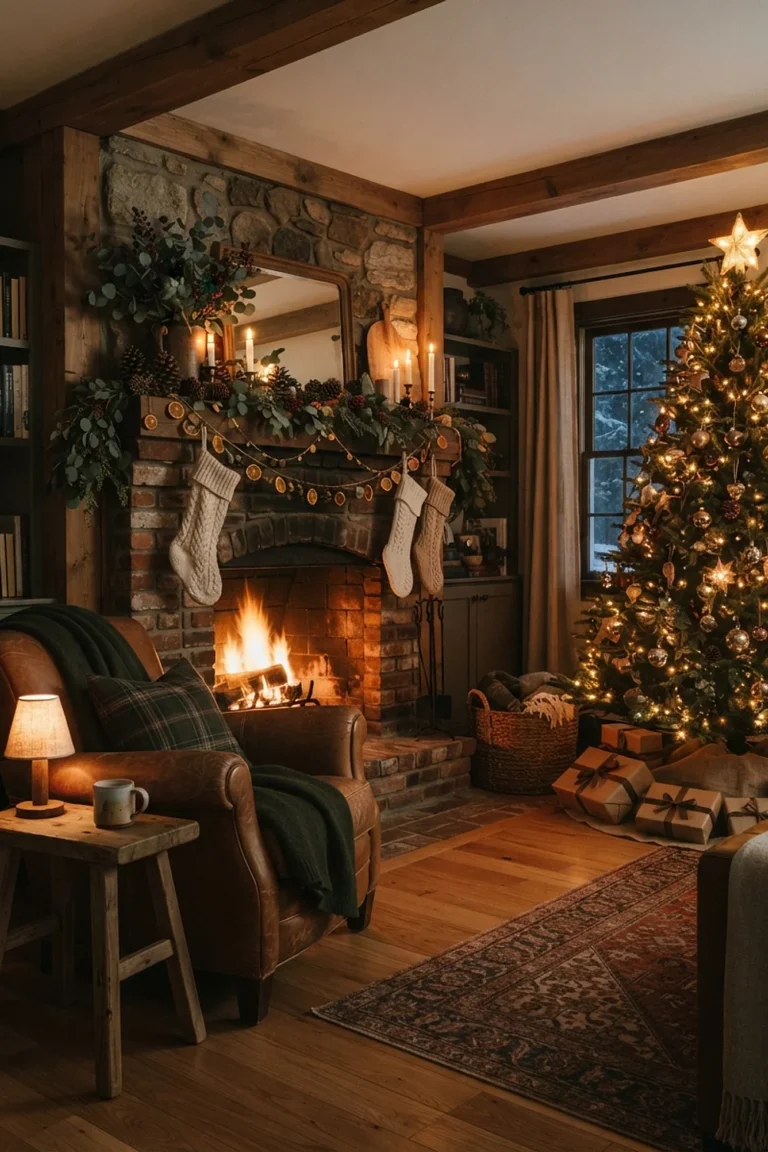
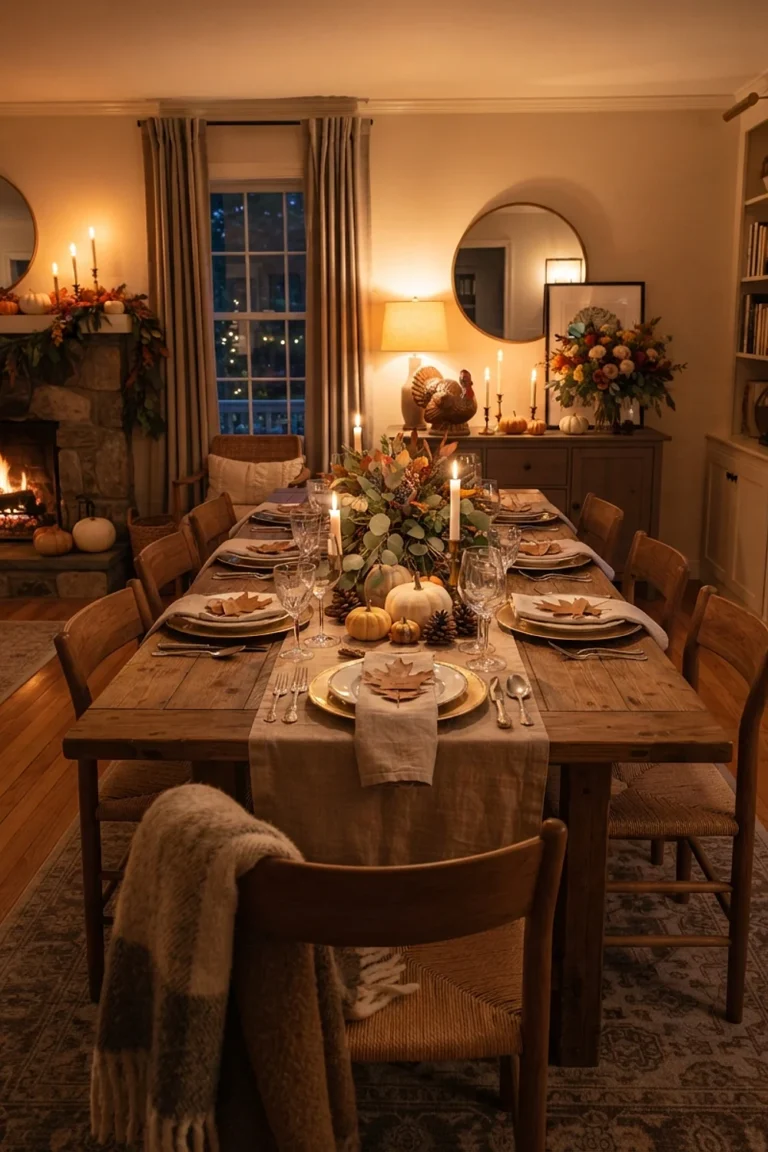
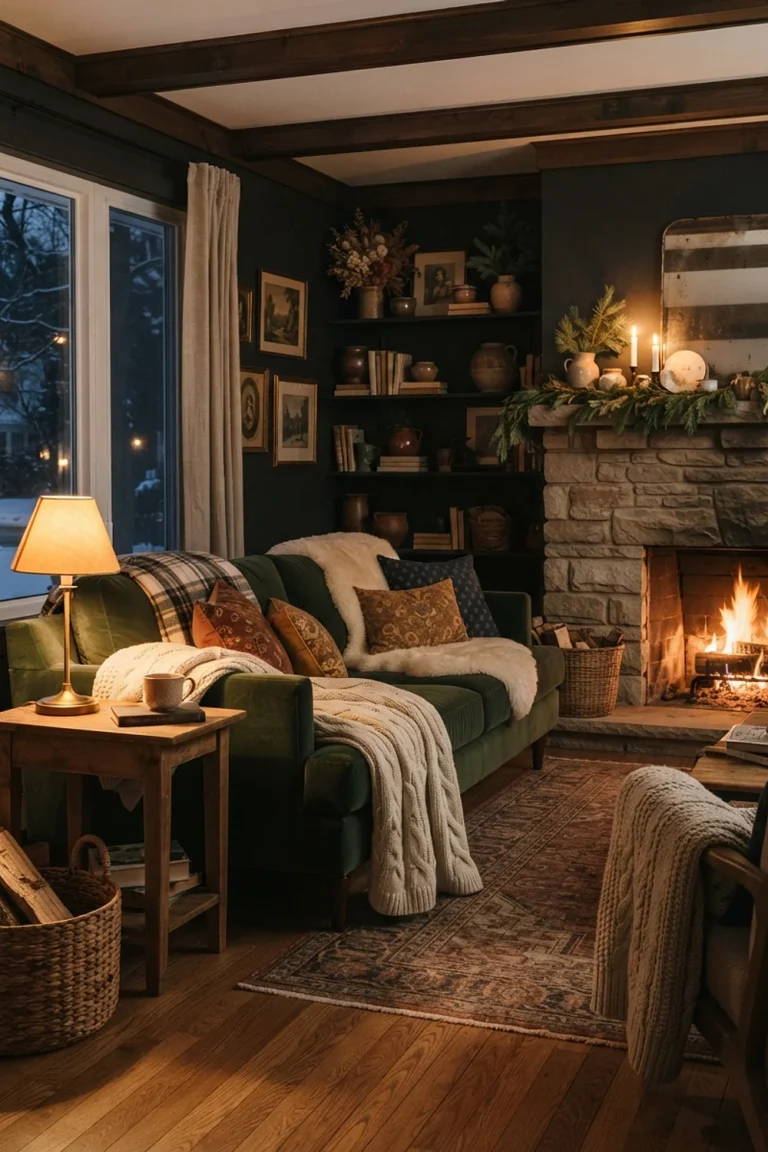
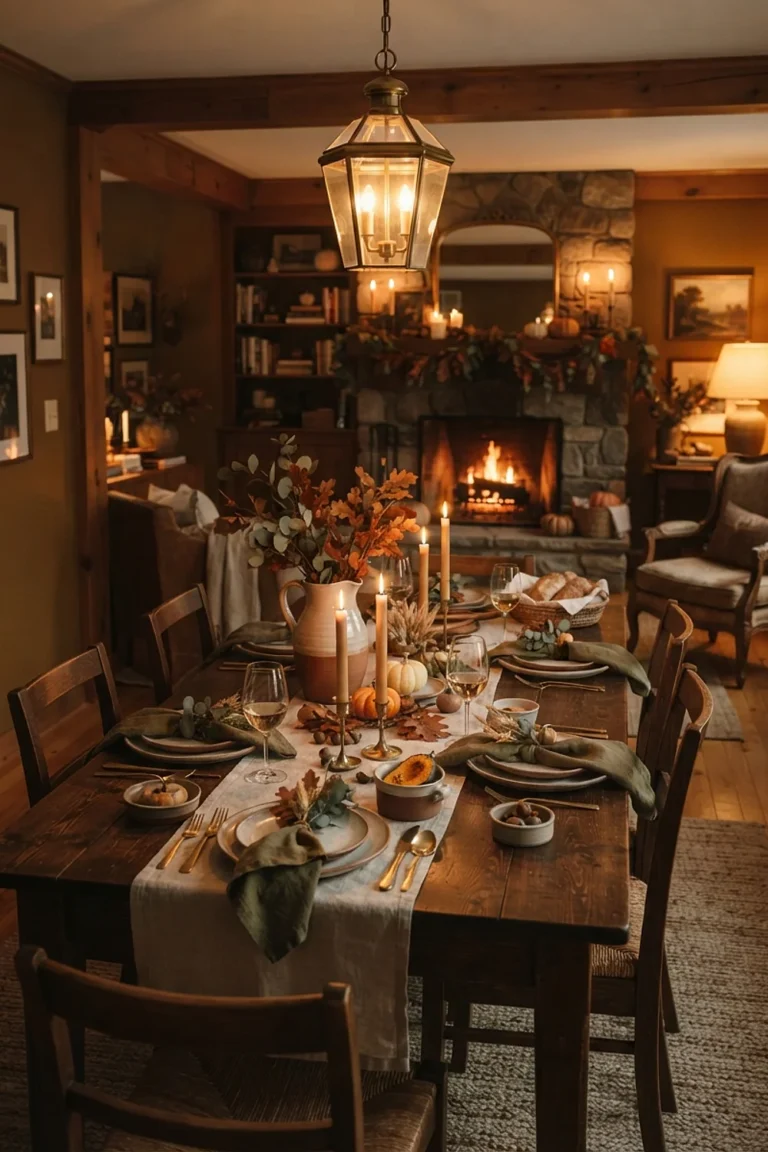
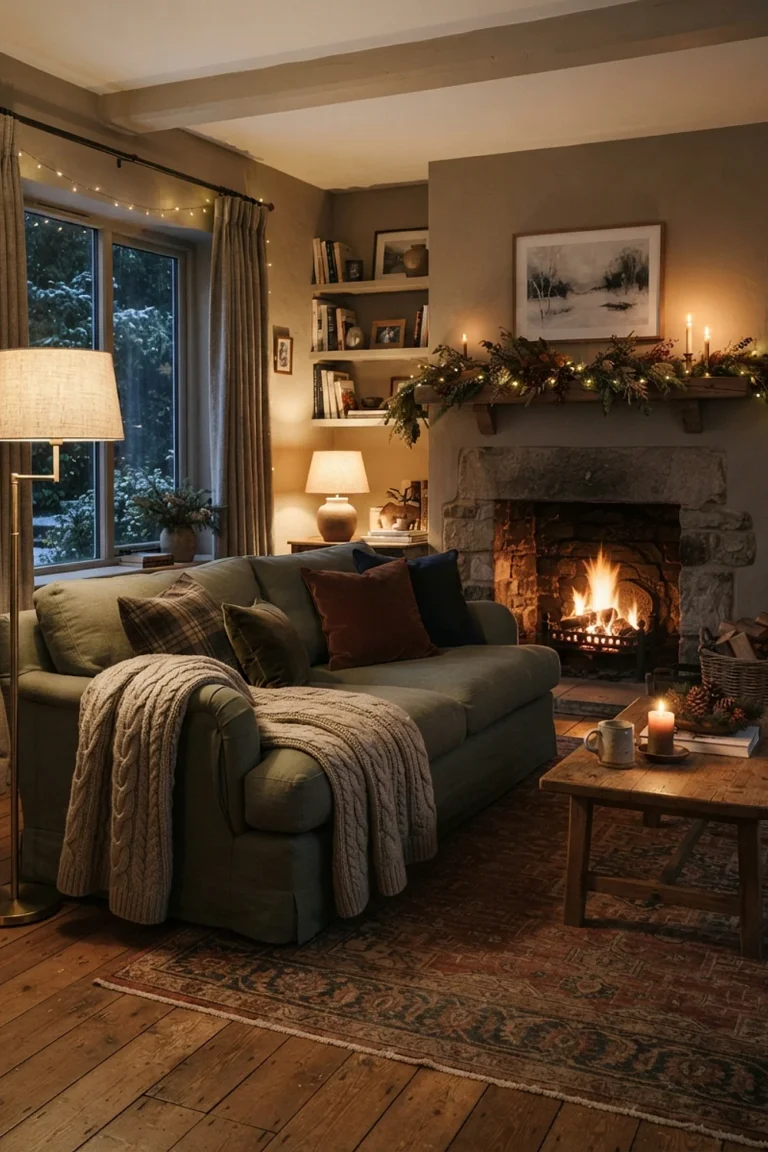
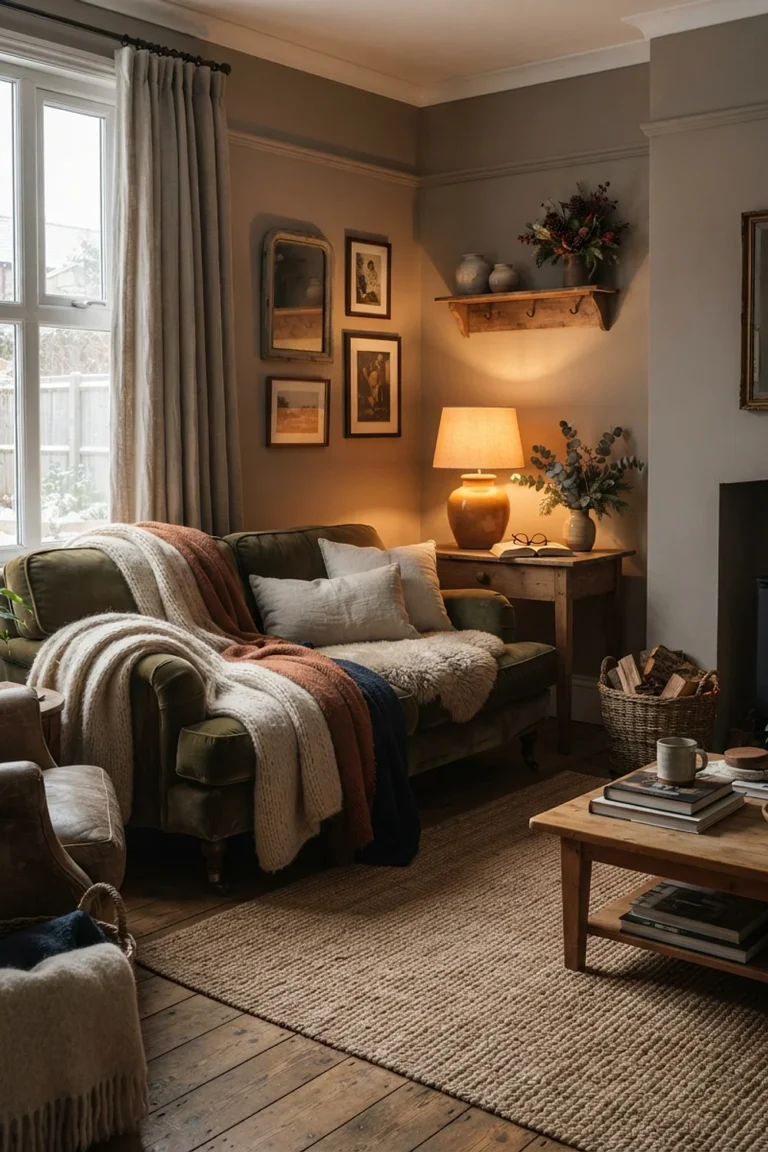
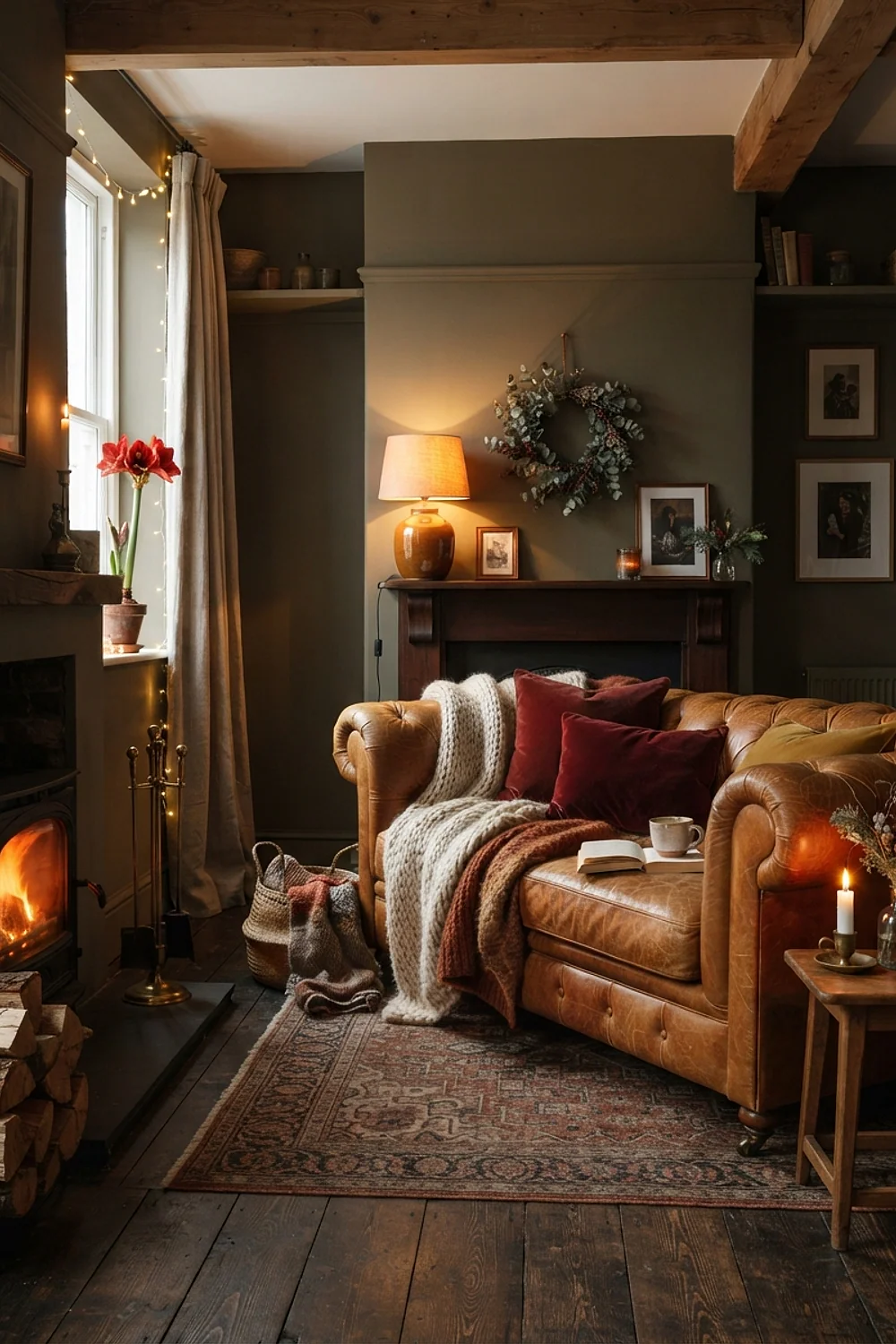
Winter decor ideas for the home: Mood board breakdown
Start with whatever you touch and whatever blocks light. Pieces at sofa-arm and windowsill height change a 300-square-foot room faster than anything hung on the walls.
A single wool throw folded over one sofa arm
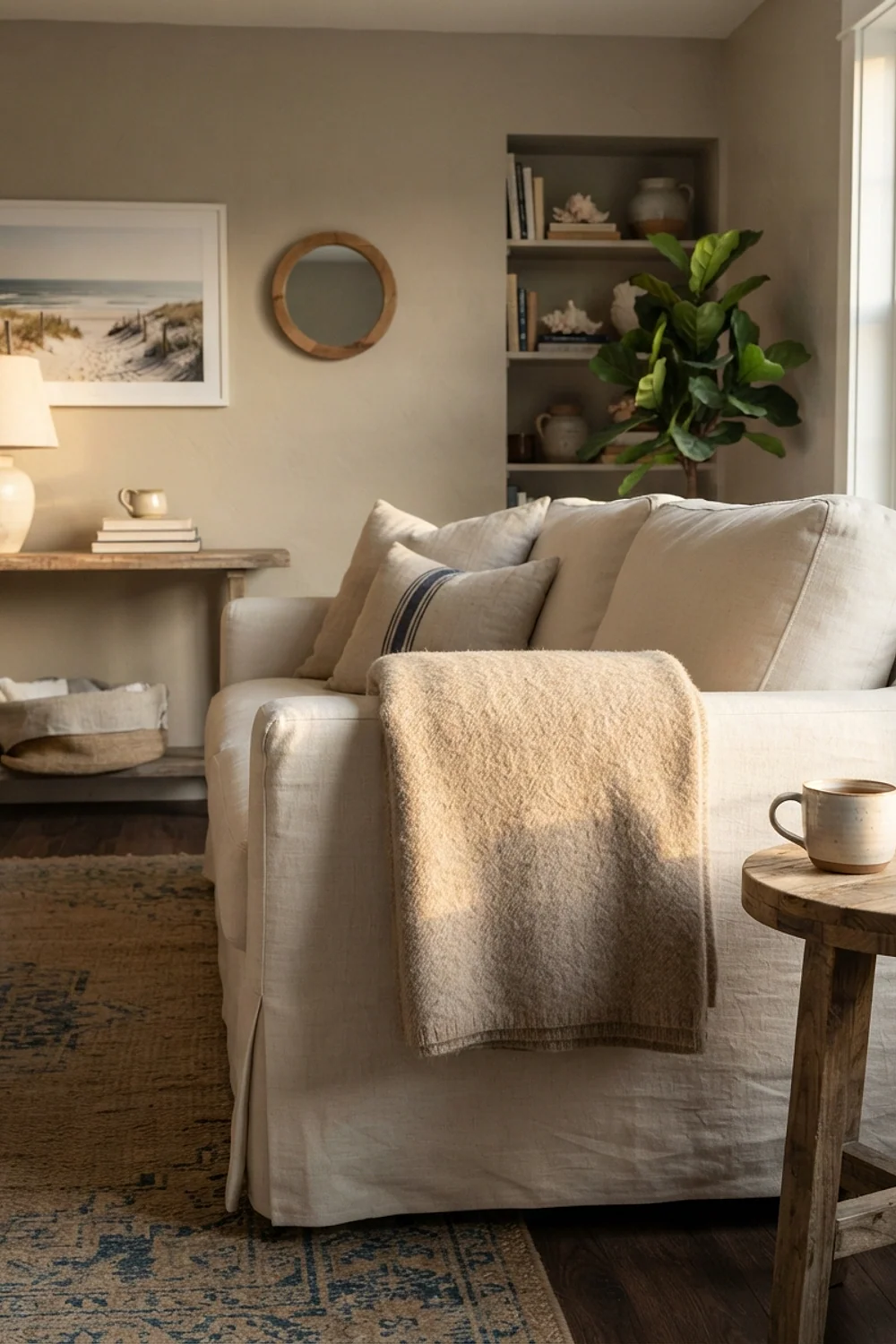
A wool throw folded lengthwise over one sofa arm reads as deliberate, while three throws heaped on the cushions read as clutter. Choose a 50 by 60 inch herringbone or muted plaid, because tight weaves keep their shape and fall in clean vertical lines.
This suits any sofa under 80 inches wide, where a pile has nowhere to go. The catch is wool’s weight, which slides off smooth upholstery, so tuck a strip of non-slip rug pad under the fold.
Three tabletop trees instead of one big fir
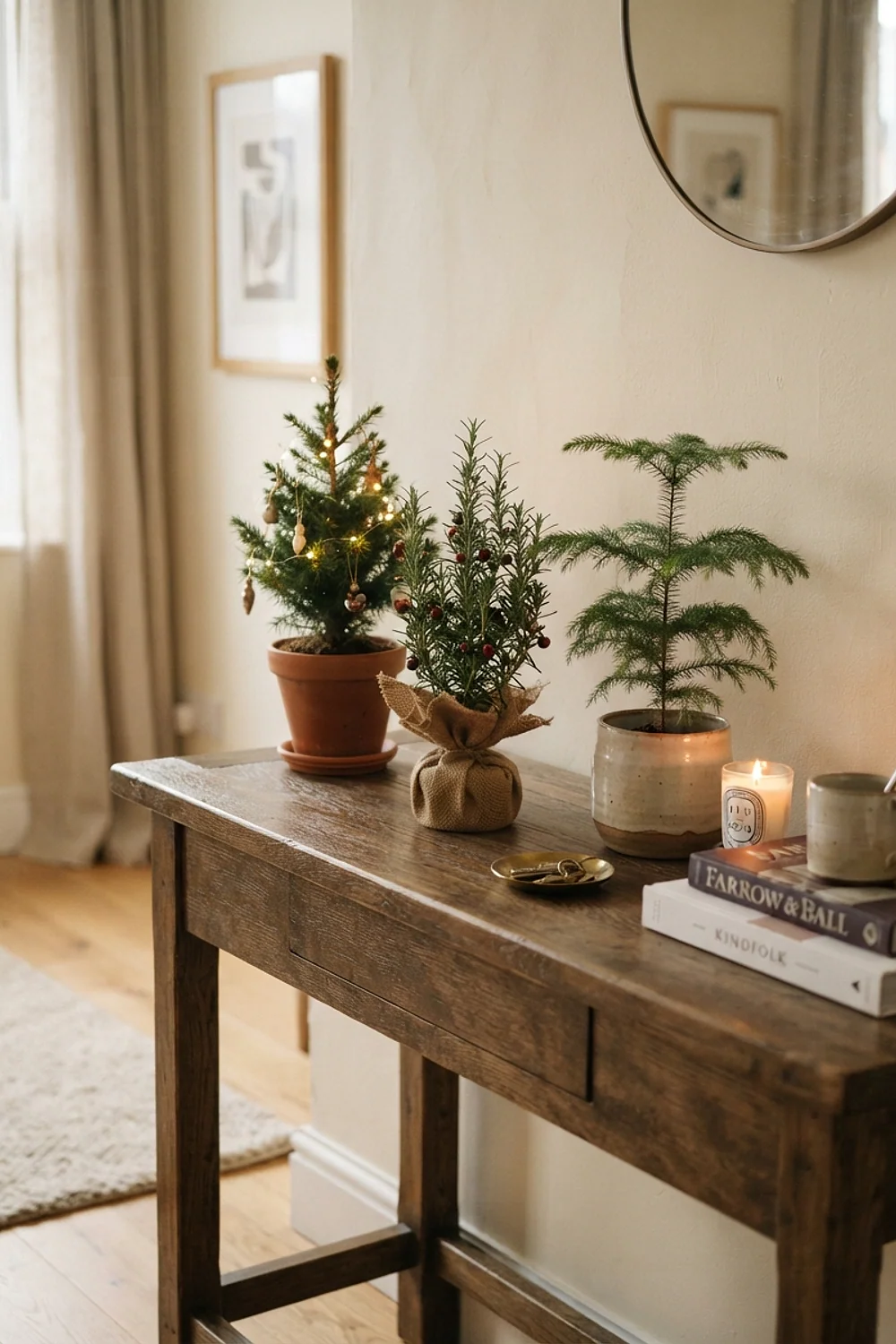
Three tabletop trees between 12 and 18 inches tall, grouped on a console or deep sill, give a studio its seasonal moment without a 6-foot fir swallowing a corner. Rosemary topiaries or flocked faux versions run about $15-30 each. Staggered heights in an odd-numbered group look collected rather than lined up.
Skip them on shelves shallower than 6 inches, where they tip. Set them at the far end of the room so the eye travels past them toward the window.
Floating the sofa off the cold window wall
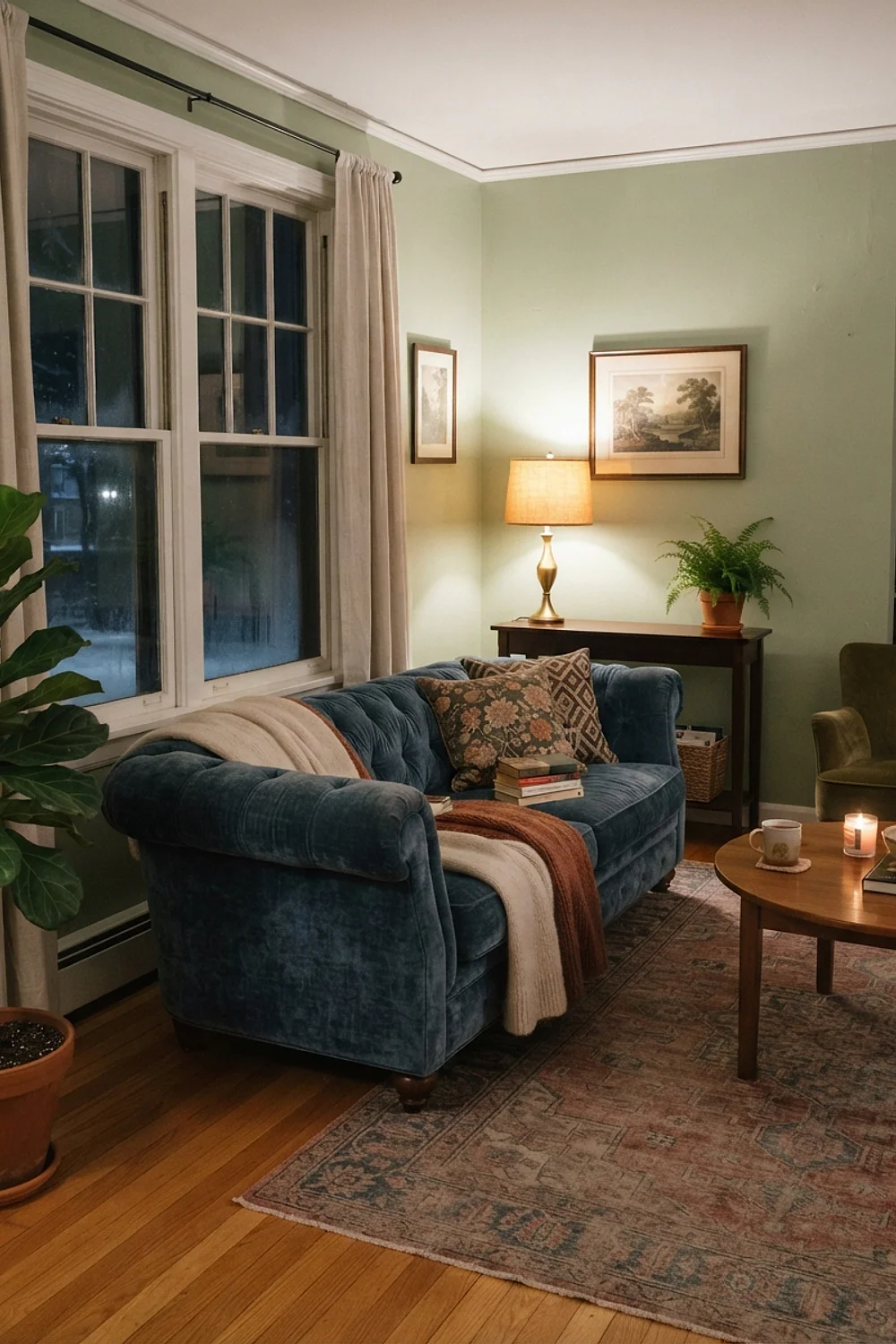
Pulling a sofa 4 to 6 inches off an exterior wall stops the back cushions from soaking up the chill that seeps through old glass. Air moves behind it instead of pooling in the upholstery. Rooms at least 11 feet wide handle this best.
In a very narrow living room, the lost depth hurts more than the chill does. Push the sofa flush there and hang a thick lined curtain behind it.
Lidded baskets that hide the blanket stash
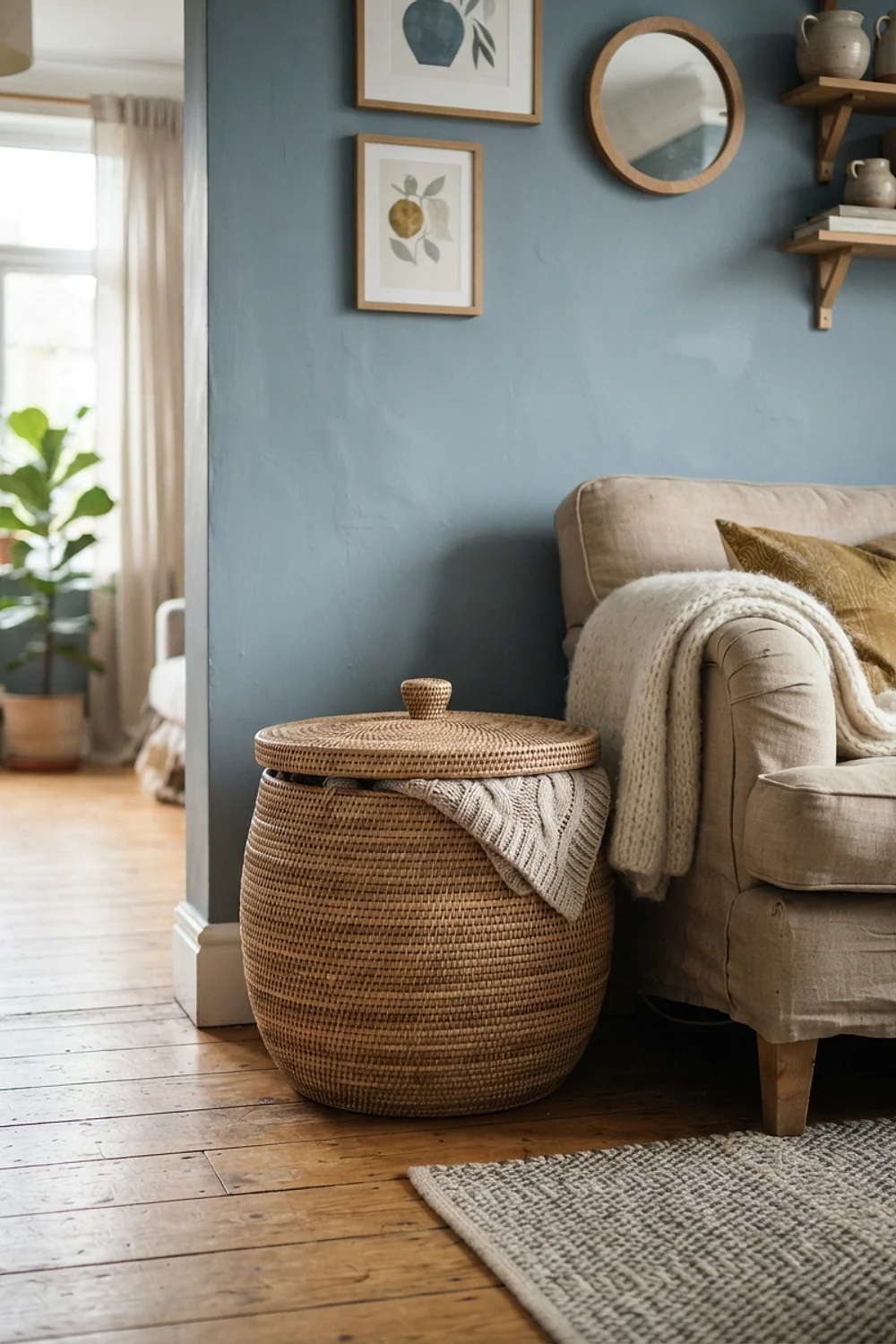
A lidded basket about 16 by 16 inches, tucked under a console or beside the sofa, swallows four or five blankets and looks like furniture instead of storage. Seagrass and rattan bring texture when everything else in the room is knit. The lid also keeps wool free of dust and pet hair.
Measure from the floor to the underside of the console before ordering. Open baskets look relaxed, but they lose the clean line a tiny room depends on.
Sheepskin on the desk or dining chair
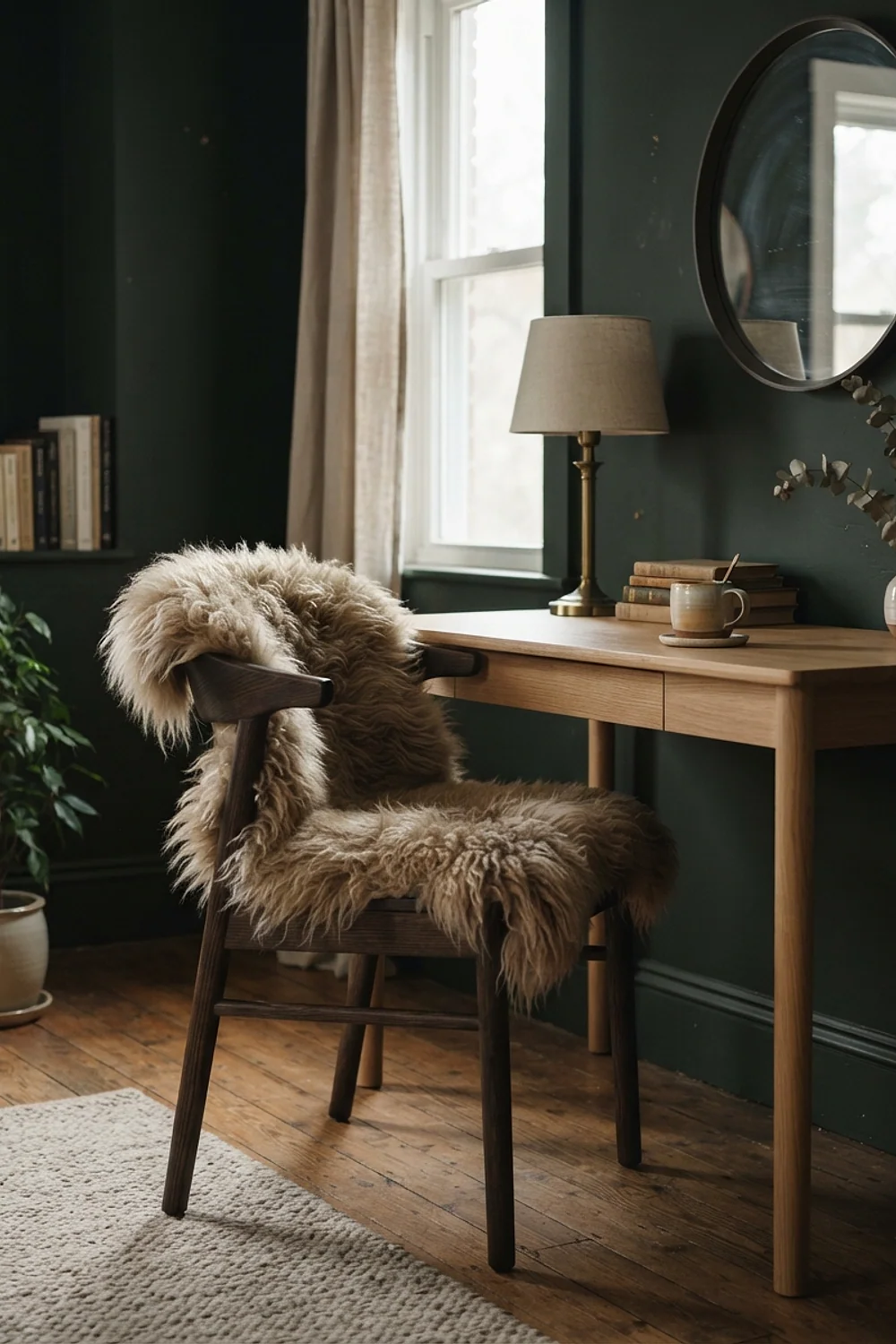
A sheepskin thrown over a hard chair seat takes the chill out of metal or bare wood in seconds. A good faux one around 2 by 3 feet costs $40-60, and real ones run roughly double and shed more. The long pile also softens a chair that otherwise looks stark.
It’s the best fix for a work-from-home nook. Pin it with a non-slip pad, since a sheepskin on a slick seat slides the first time someone sits down fast.
Forest green or oxblood in one pair of cushions
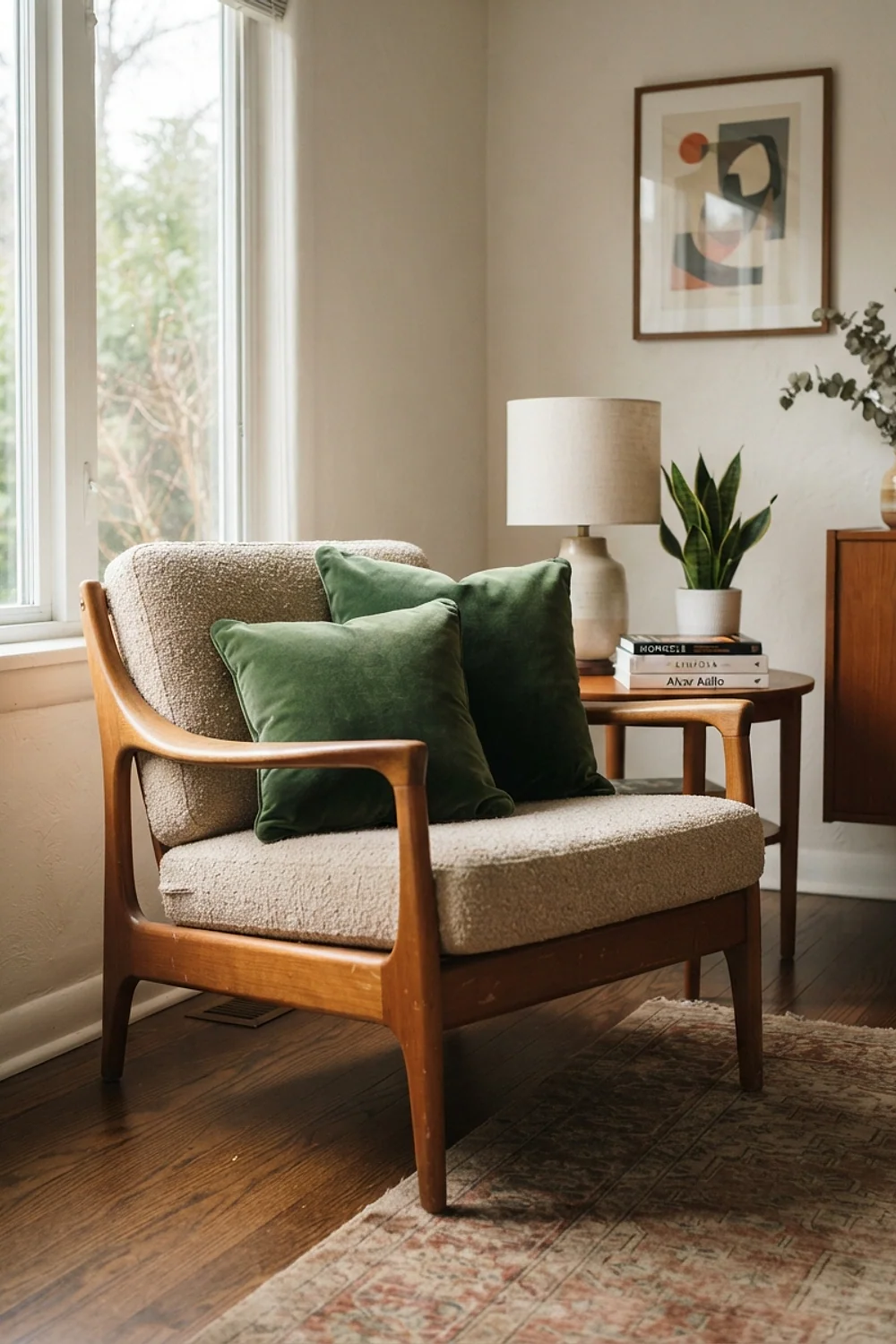
Two 18 by 18 inch cushions in deep forest green or oxblood turn a pale room toward winter in one move. Here’s the counterintuitive part: saturated dark colors blur corners in low light, so walls recede and a small room can feel less boxed in than it does in builder white.
Set them against oatmeal or cream upholstery, because against gray they go muddy. Keep the dark hit to two pieces, since a full wall of it in a 9-foot-wide room needs plenty of lamplight.
Light, texture and greenery for the gray months
Short days do the real damage in a small apartment. These swaps work on the quality of light and the feel of every surface you reach for.
Lamps at three heights with 2700K bulbs
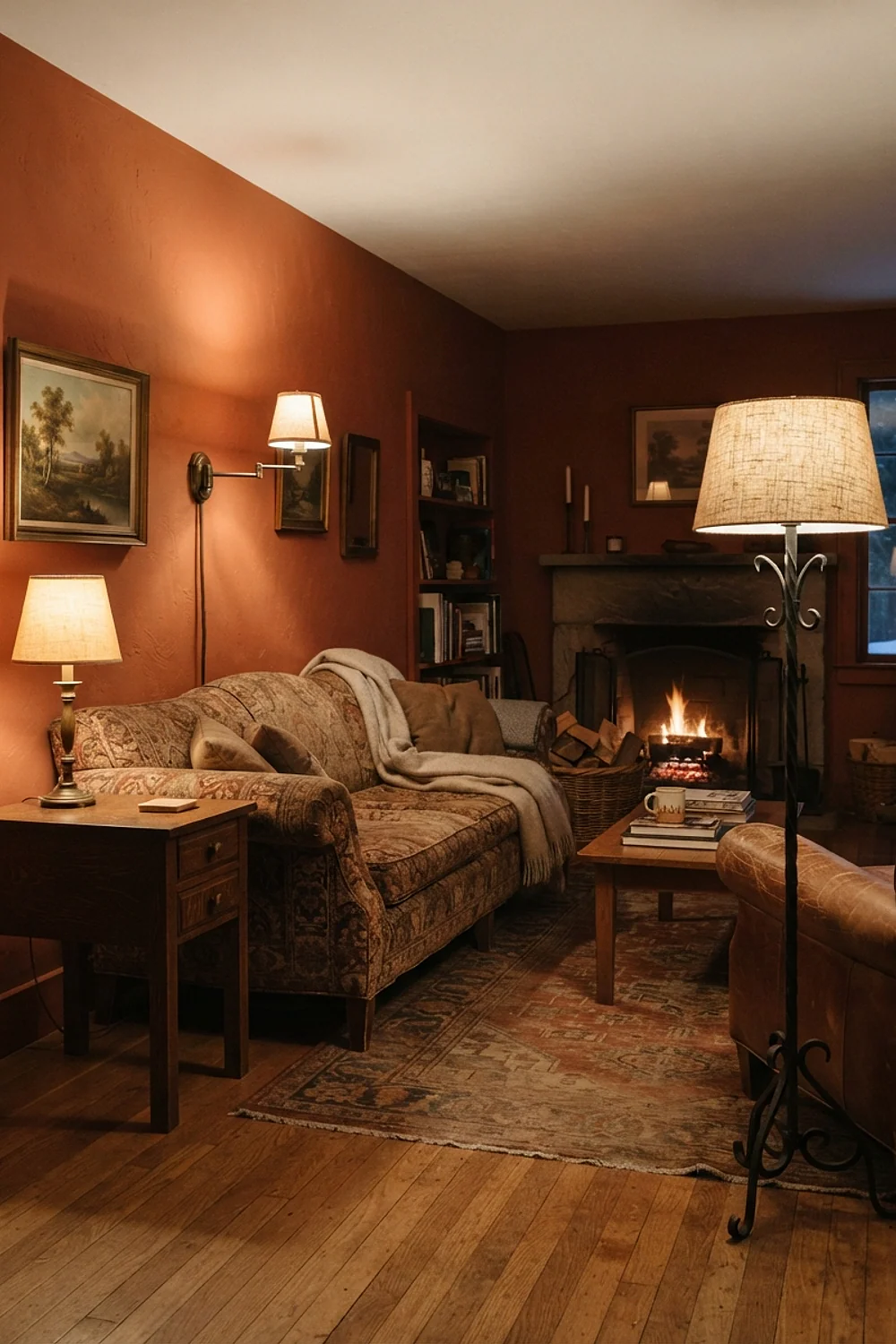
Swap every bulb for 2700K, the color temperature of a low flame, then spread lamps at floor, table and shelf height. On a gray 4pm in late January, one overhead fixture flattens a room, while three small sources layer shadow and depth.
This is the cheapest fix for a rental with a single ceiling light. Keep bulbs under 800 lumens in lamps near the sofa, because anything brighter feels like an office after dark.
Linen, bouclé and felted wool cushion covers
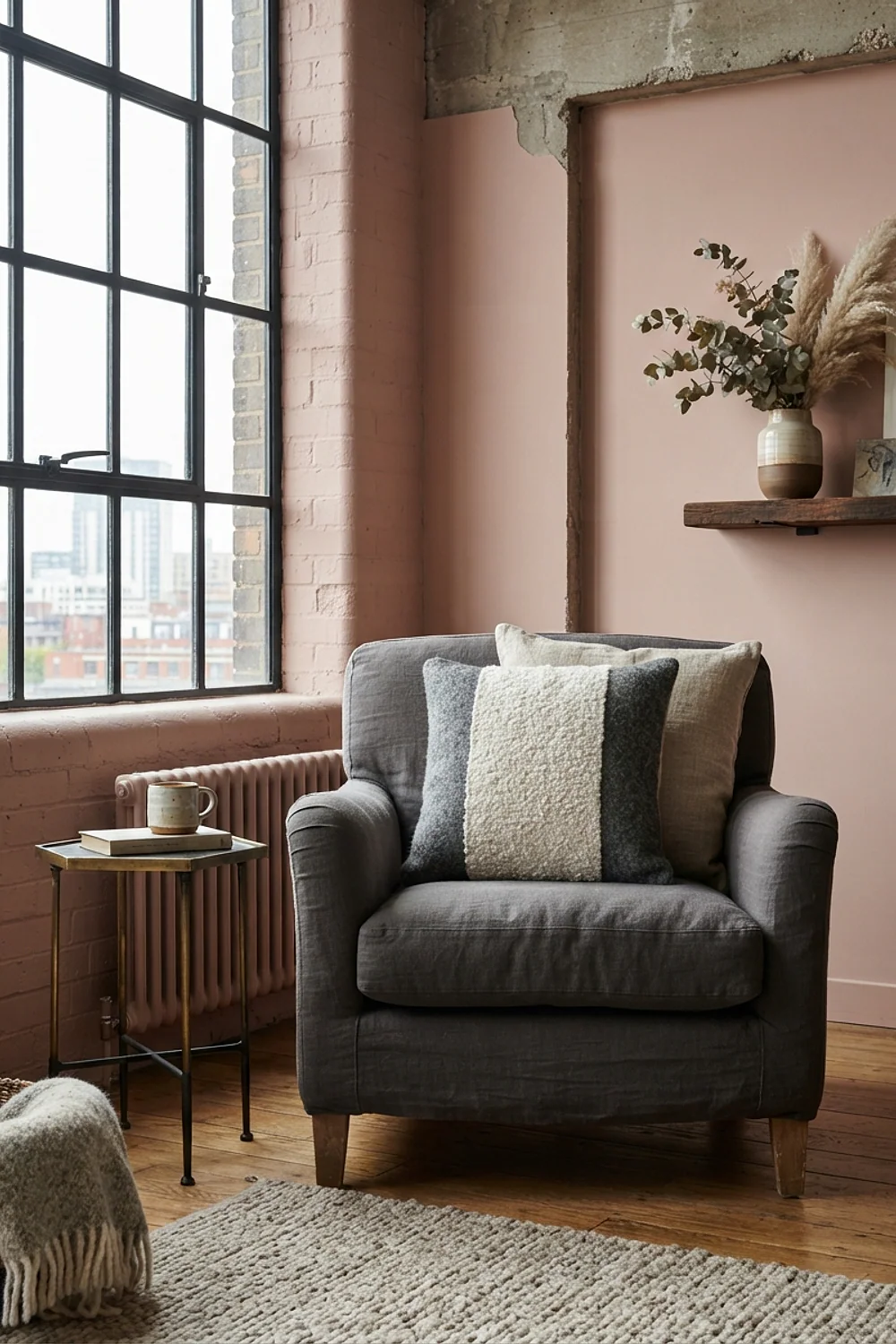
Cushion covers in nubby linen, bouclé or felted wool give hands something to read, and texture does more than pattern in winter. Swapping covers on existing 20-inch inserts is the quickest refresh there is, and the folded covers store flat in a drawer.
Polyester fleece pills after one season, so lean toward wool blends. Wash bouclé cold and inside out, since the loops snag on zippers.
A short garland on one end of the shelf
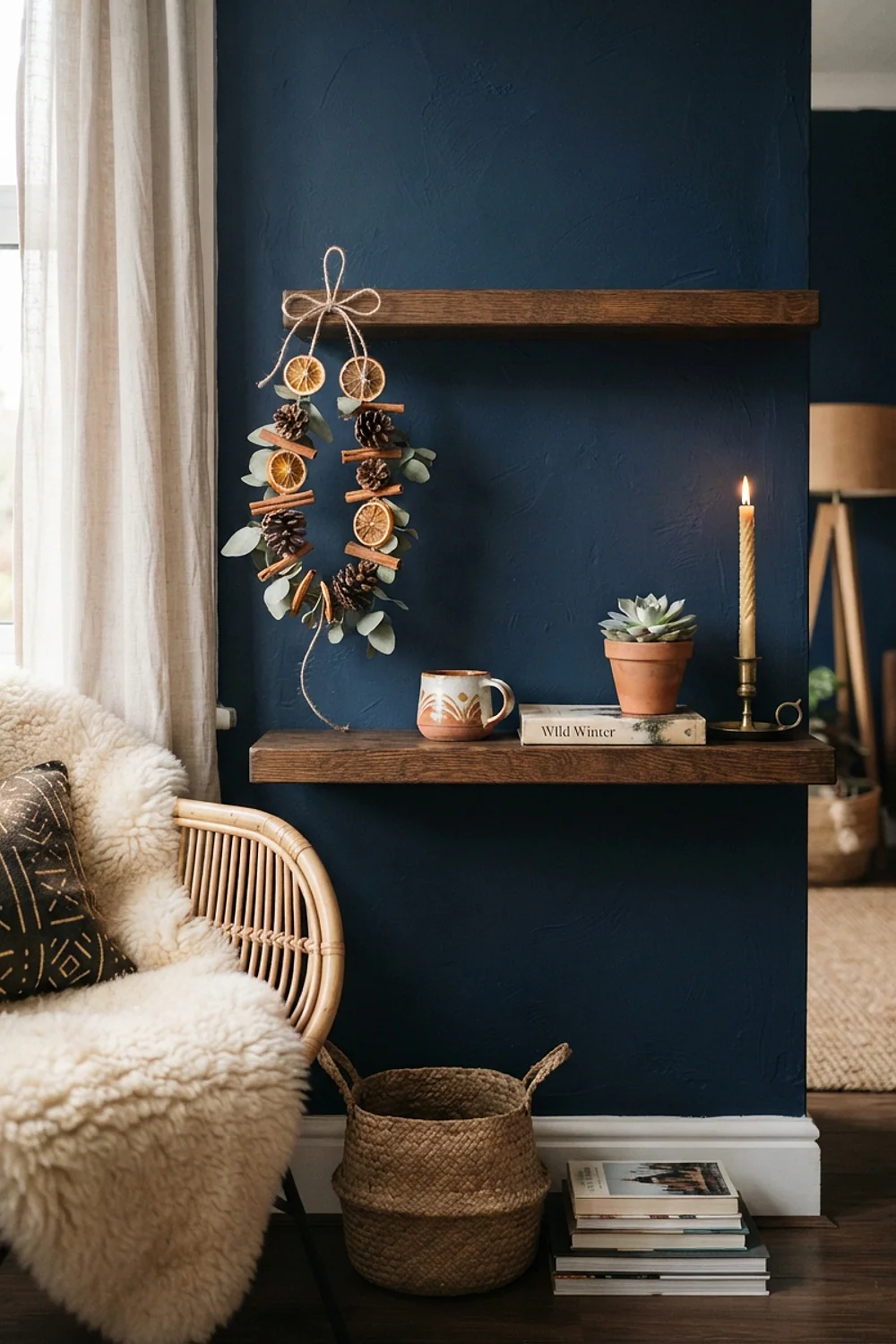
A faux garland draped the full length of a 6-inch-deep shelf is the classic mistake. It spills over the front edge, buries the objects behind it, and makes the shelf read as overstuffed.
Cut it down to a 24-inch swag and tuck it at one end, then leave the rest of the shelf open. Real cedar smells wonderful for about ten days and then drops needles, so faux wins in a small room you vacuum by hand.
A boot tray by the door
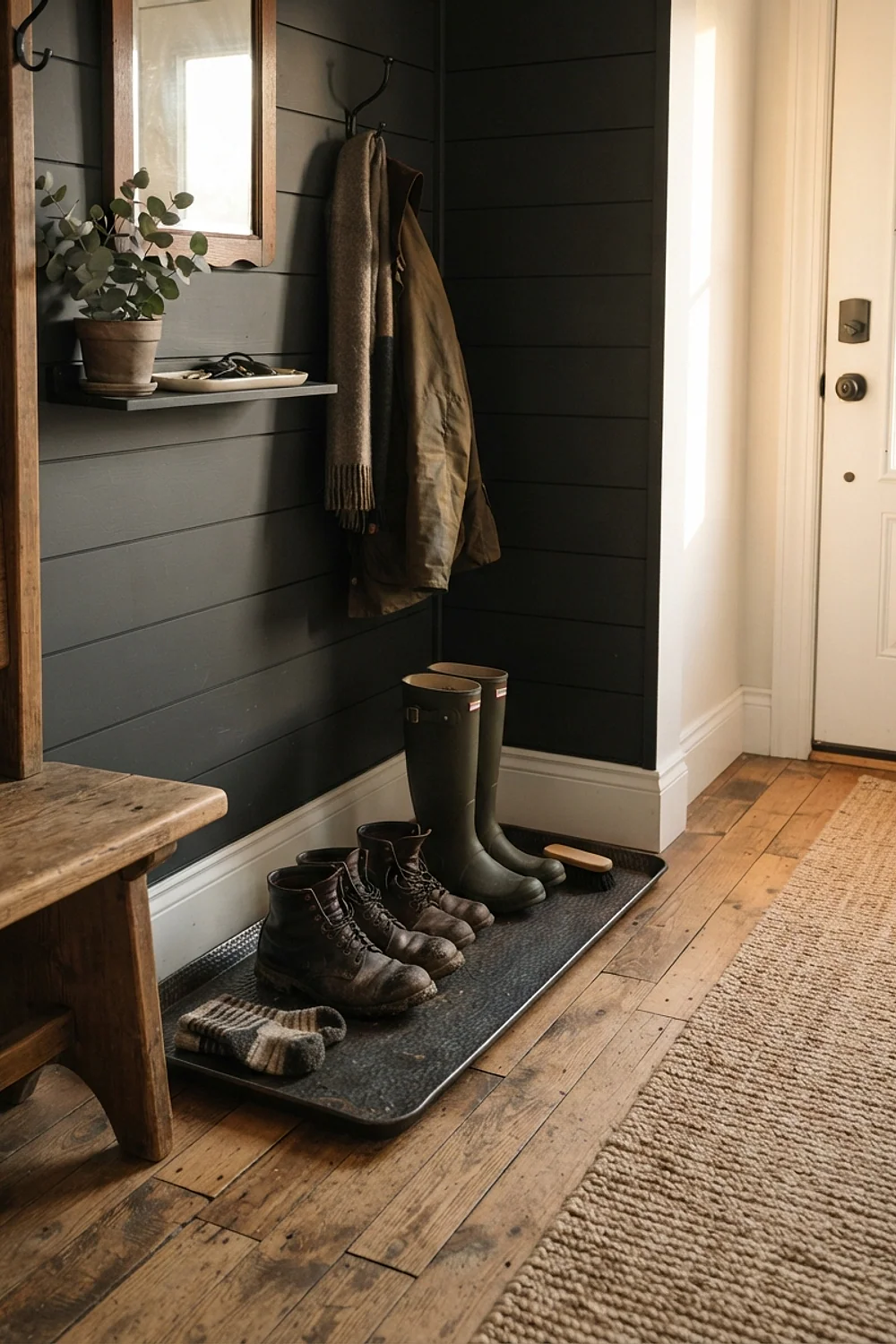
A rubber or stone-lined boot tray, roughly 30 by 15 inches and about $20, keeps slush and salt off the floor in an entry that’s often only 3 feet wide. Wet boots left on bare floorboards leave white tide marks within a week or two.
Pair it with a hook rail at 60 inches high. Pebble-filled trays look nicer than plain rubber, but they’re a pain to empty, so choose based on how often the door gets used.
Bare branches in one tall vase
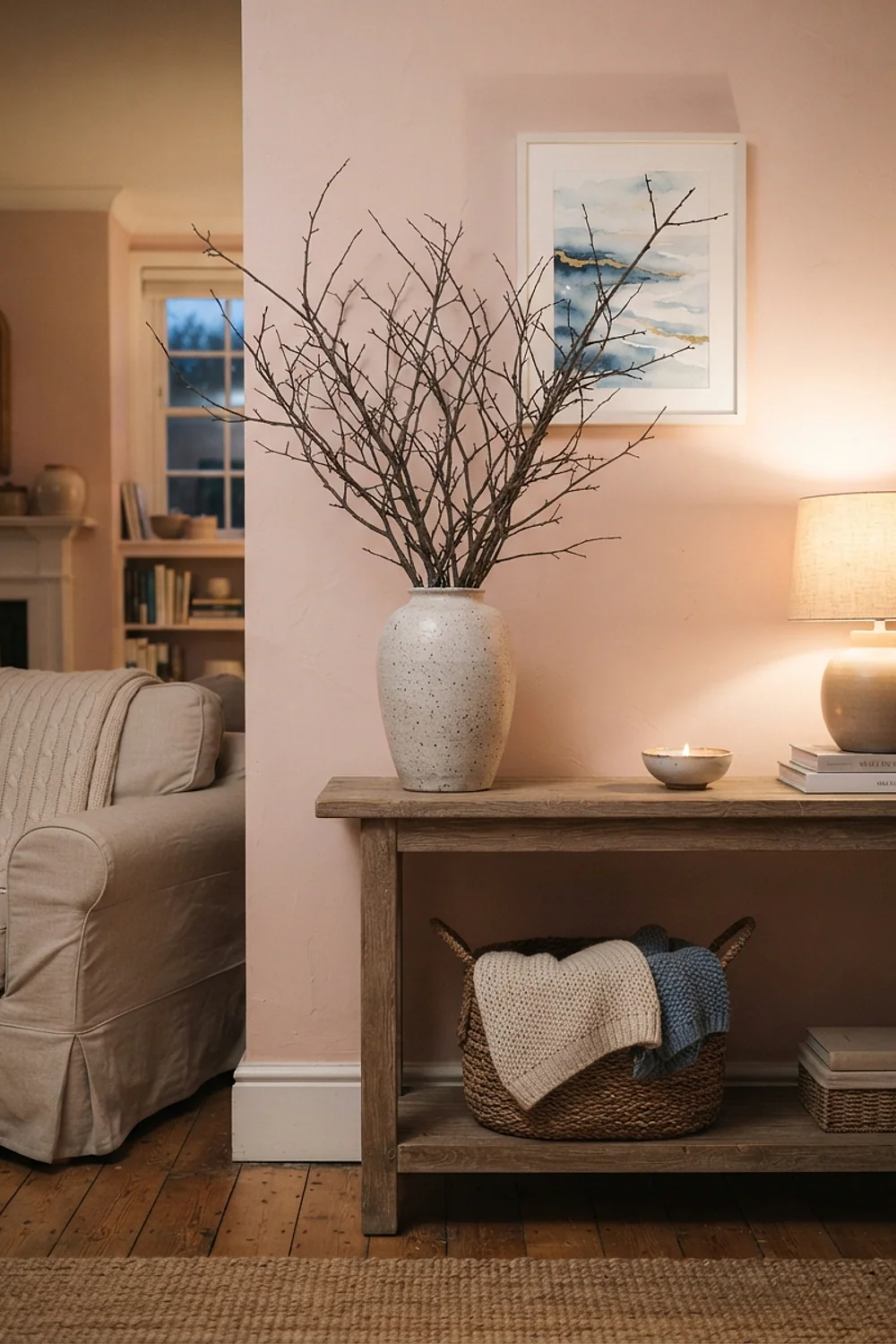
Three to five birch or dogwood branches, 30 to 36 inches long, in a heavy ceramic vase give a corner height and a sculptural line. They cost almost nothing, hold up for months, and have no pollen to bother allergies.
Weight the base with a handful of river stones, because bare stems tip lightweight vases. Birch sheds bark flakes onto the floor, so place the vase where a quick sweep is easy.
One large framed landscape instead of a gallery wall
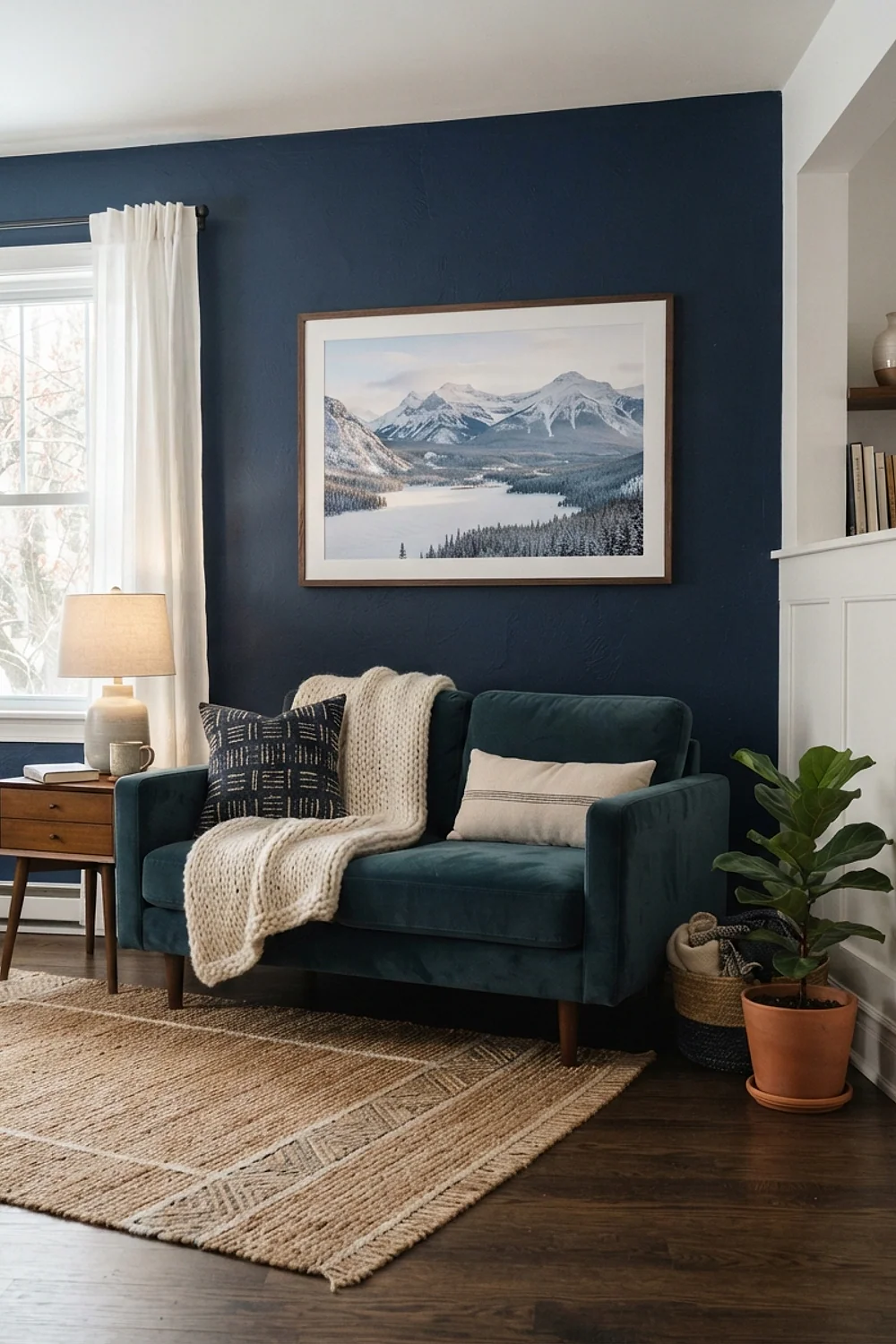
A single framed winter landscape around 24 by 36 inches reads calmer than a gallery wall of nine small frames. Fewer edges mean less visual noise, and that matters most in a room under 150 square feet.
Hang the center at about 57 inches from the floor. Choose a mat with at least 2 inches of border, since a cramped frame makes even a good print look cheap.
Design inspiration and ideas
Every item in this group rewards careful placement. Move the furniture first and the accessories usually take care of themselves.
A reading corner in the dead corner
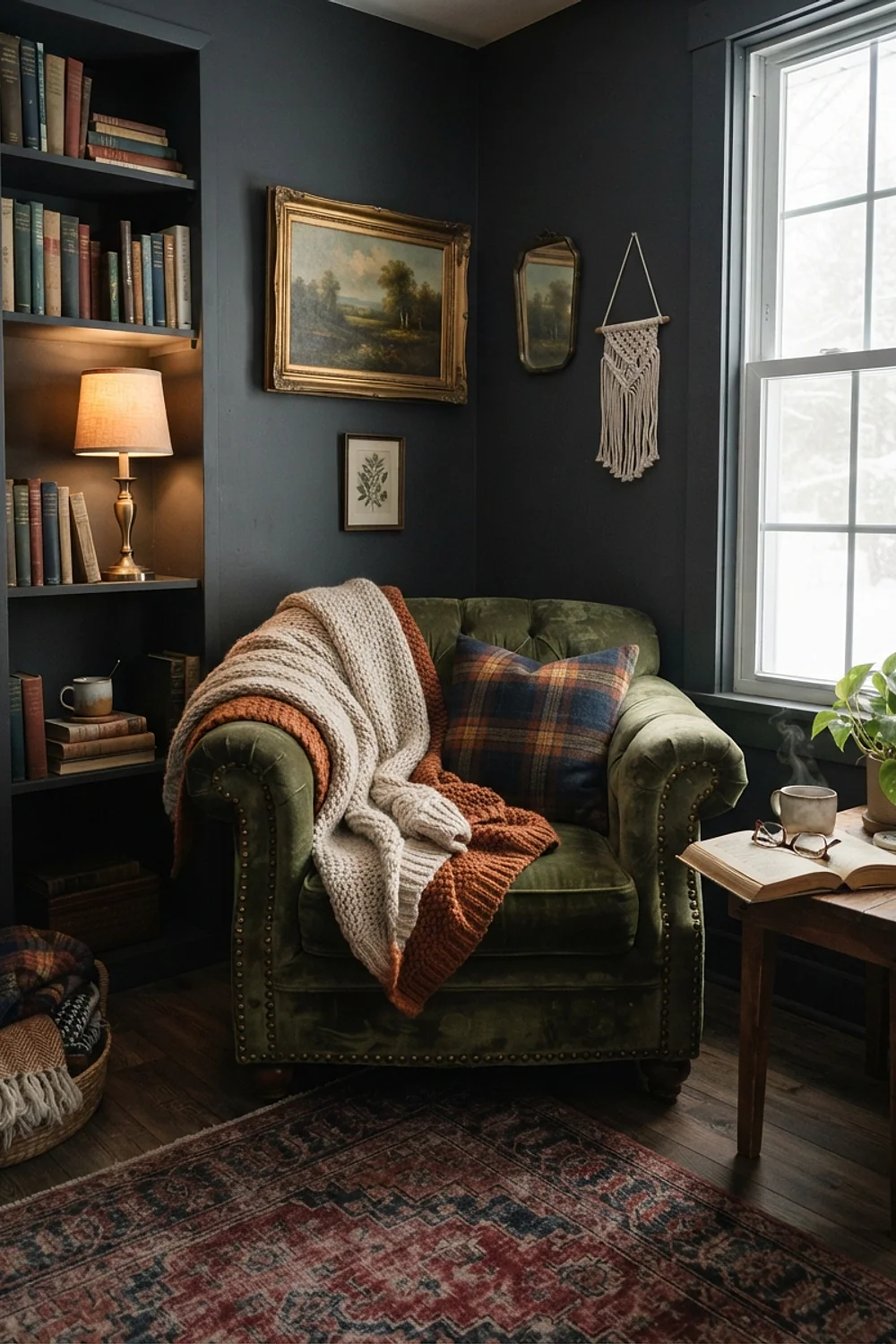
Turn the least-used corner into a reading spot by angling an armchair about 45 degrees, then adding a floor lamp and a 14-inch stool for a mug. Corners are usually wasted, so this puts square footage to work and gives the room a destination.
It suits one-bedroom apartments with a blank corner near a window. Leave at least 30 inches of walkway in front, or the chair becomes an obstacle.
A leaning ladder shelf for throws and books
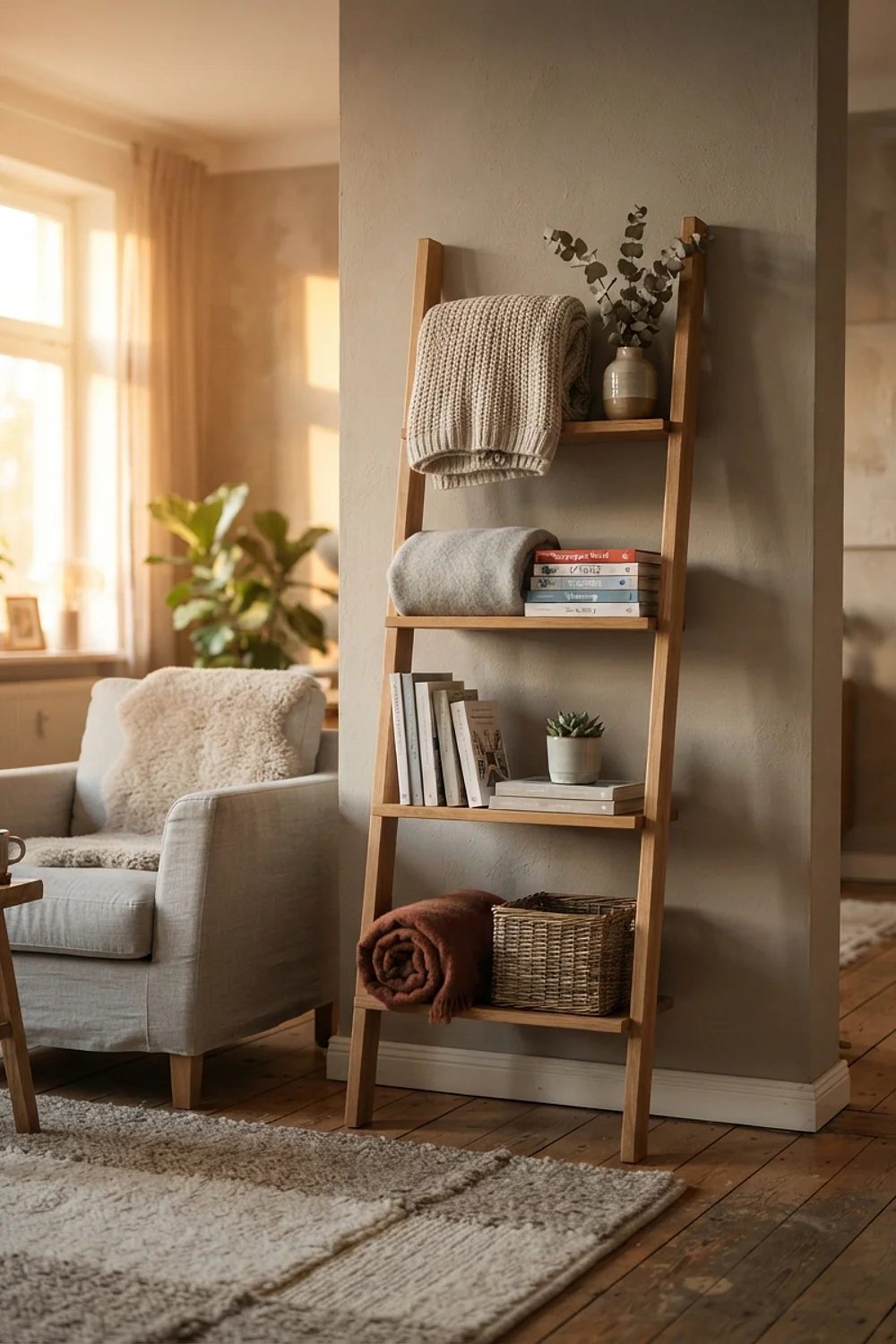
A leaning ladder shelf, about 72 inches tall and 14 inches deep at the base, uses vertical space and takes up a footprint smaller than a bookcase. Drape two throws over a rung, then stack books and a lamp on the lower shelves.
The slant means it needs a wall without a baseboard heater. Stay under 15 pounds per shelf, because lightweight leaning units aren’t anchored and can tip if overloaded.
Brushed flannel sheets and a heavier duvet
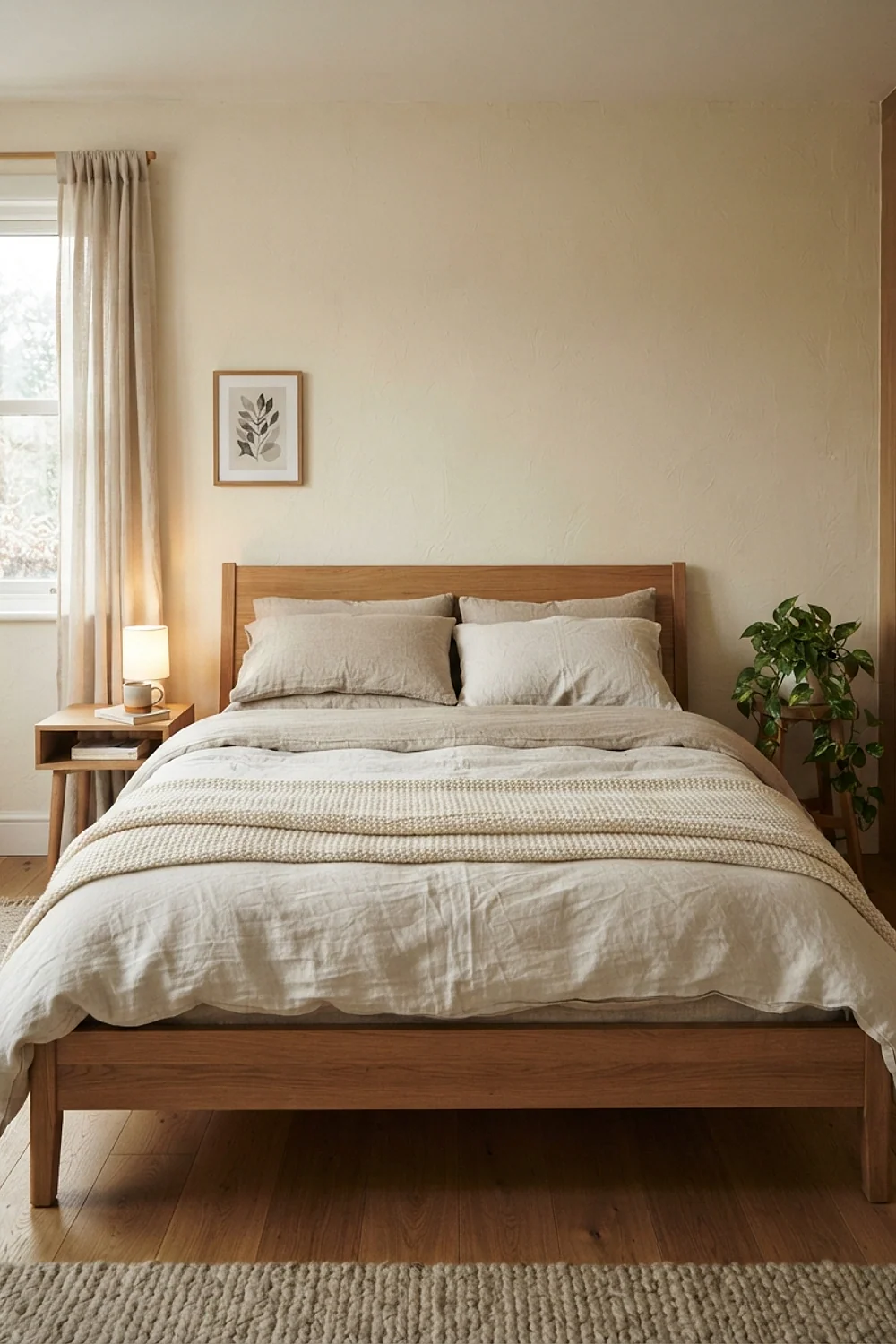
Brushed cotton flannel sheets in the 170 gsm range feel soft from the first night and cut the shock of cold bedding. Pair them with a duvet insert rated for winter, and you can skip the second blanket that crowds a small bed.
This helps most in older buildings with uneven heat. Flannel pills after repeated hot washes, so wash on cool and line dry when the weather allows.
A door painted deep slate blue
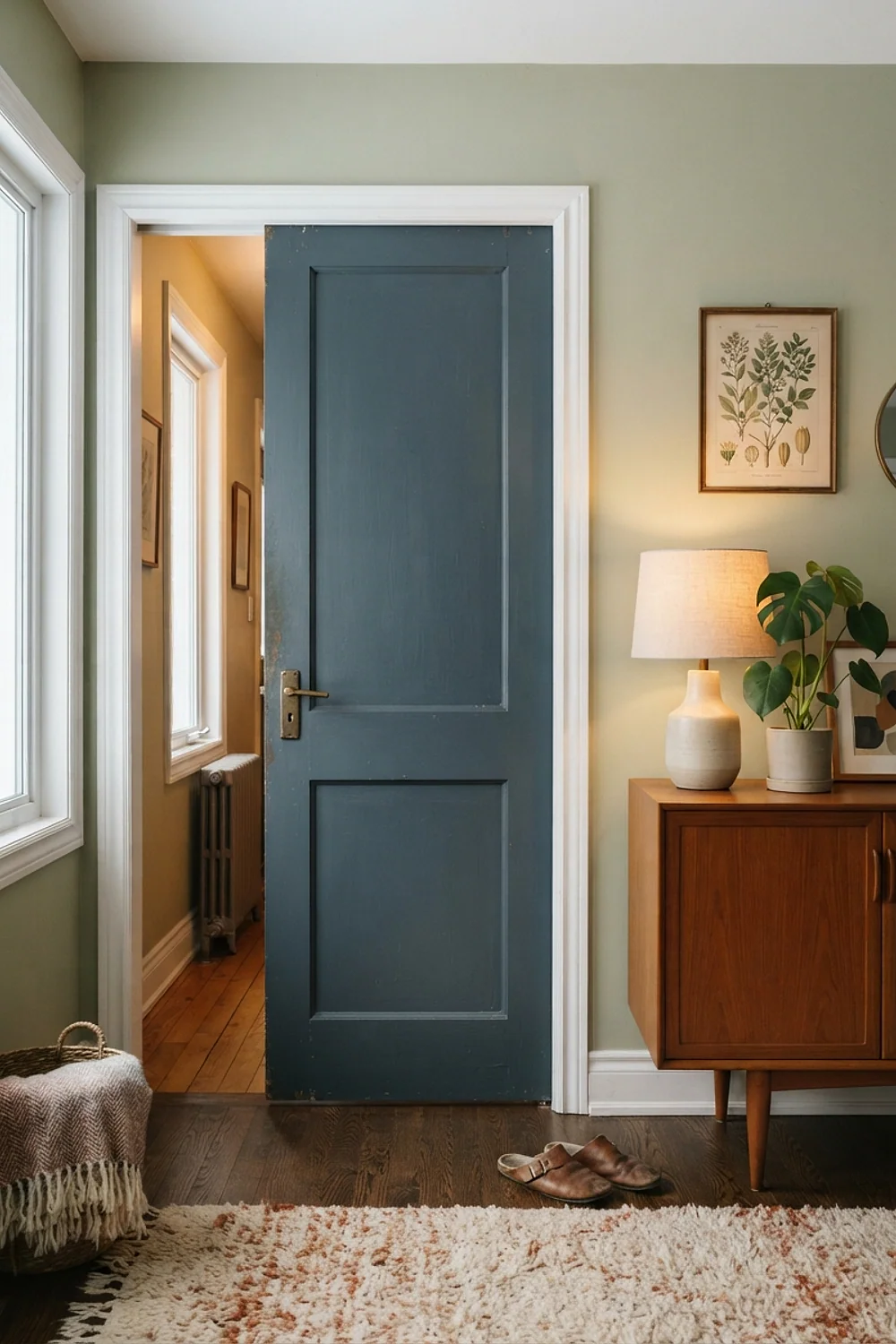
Painting one interior door, about 36 by 80 inches, in a deep slate such as Benjamin Moore Hale Navy brings color into a small room without touching the walls. A quart covers it, and the dark rectangle gives the eye a focal point.
Choose a satin or semi-gloss finish, since flat paint scuffs at hand height. In a windowless hallway, test the swatch first, because dark colors can swallow the little light there is.
Plug-in sconces at eye level
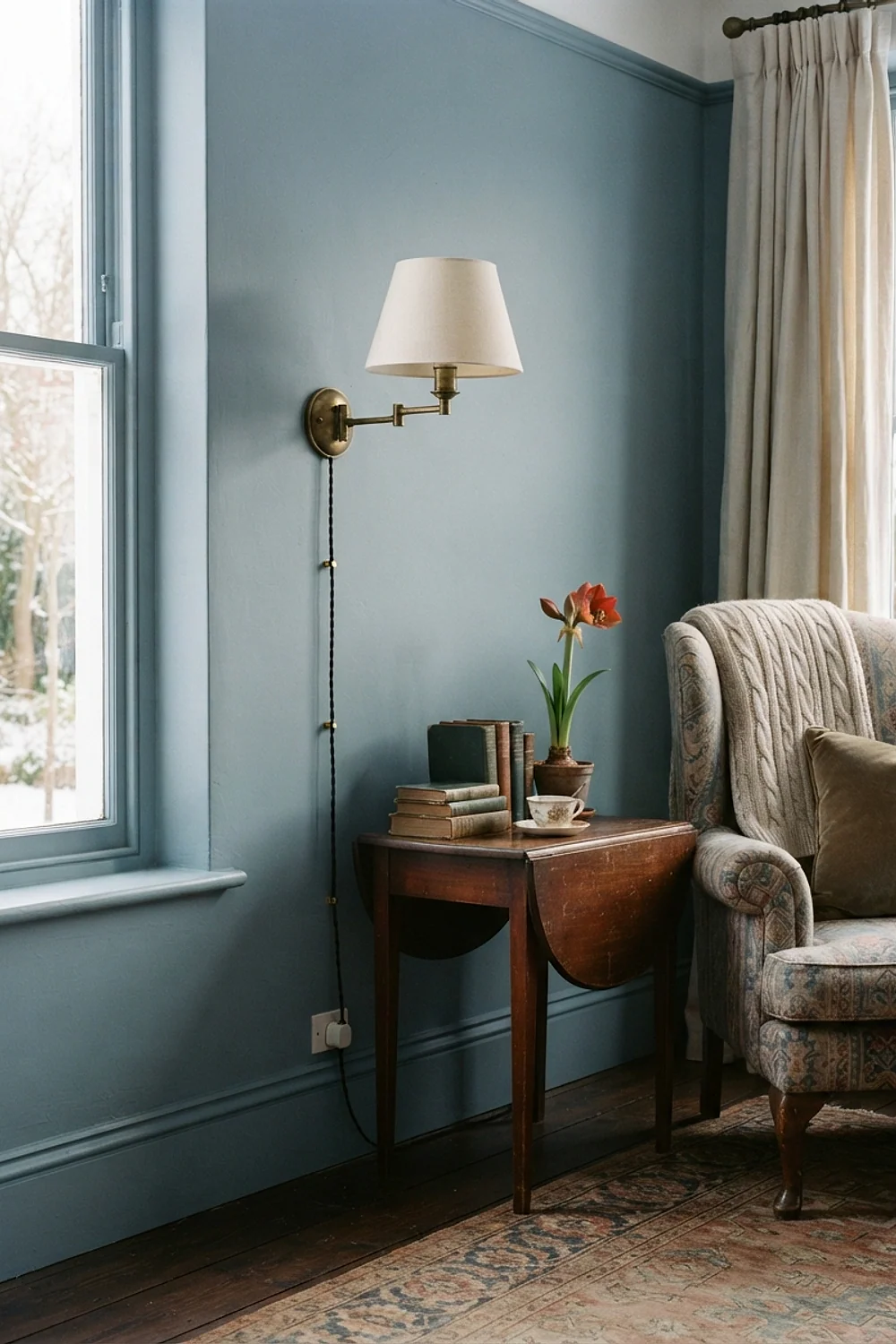
Plug-in wall sconces mounted at about 60 inches from the floor free up a side table and put light where a lamp base would sit. They need no electrician, which suits rentals, and cord covers painted to match the wall make the wire vanish.
Pick a swing-arm model if the sconce flanks a bed or sofa. A fixed shade throws a narrow cone that looks harsh against bare wall.
Secondhand brass candlesticks
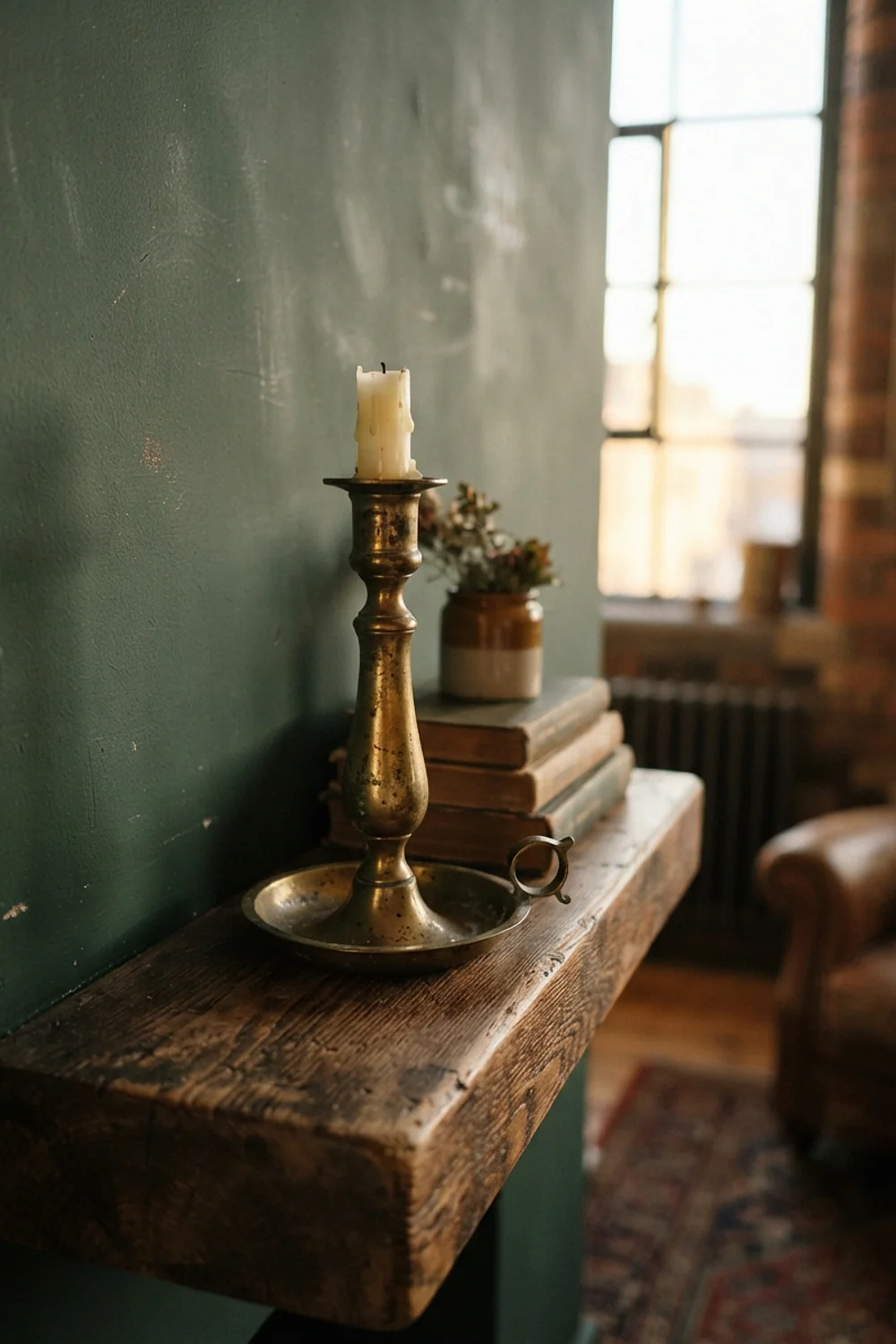
Brass candlesticks from a thrift store or estate sale usually cost $8-15 each and carry a soft patina new ones can’t imitate. Group two or three in different heights on a tray. The metal catches low winter light and gives a shelf a quiet shine.
Check the weight, because hollow plated pieces tip easily. Unlacquered brass darkens with handling, so a quick rub with a polishing cloth every few weeks keeps the glow even.
Fixes for drafts, clutter and January fatigue
The last stretch of winter is when a small apartment starts to feel crowded. These fixes are practical first and pretty second.
Curtains that stop just above the floor
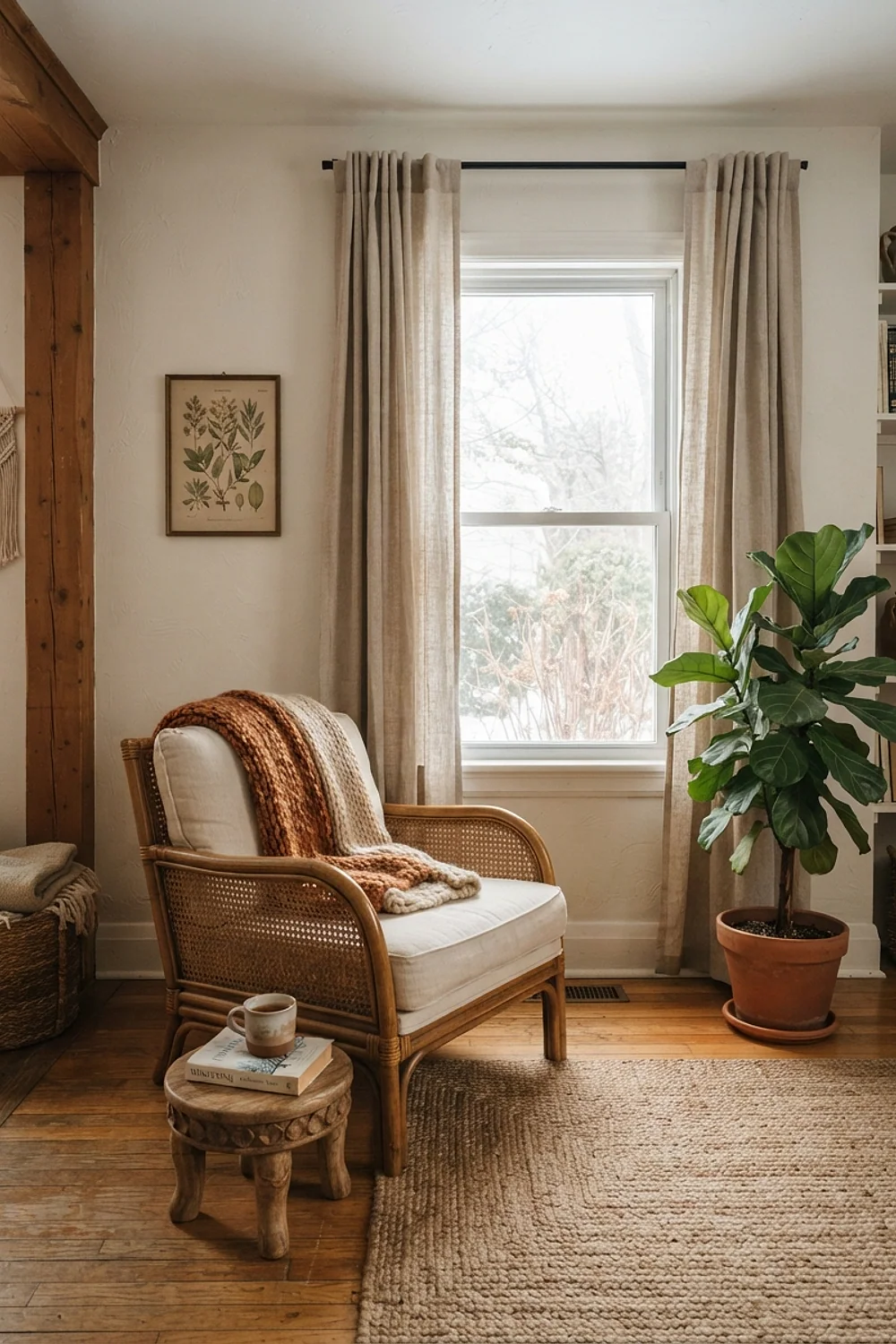
Floor-length curtains should pool slightly on the boards… no, scratch that. In a small room, stop the hem a half inch above the floor, because pooled fabric collects dust and makes the room look shorter.
Hang the rod 4 to 6 inches above the window frame to stretch the wall. Never drape thick fabric over a radiator, because it traps heat against the glass instead of in the room.
A draft snake and a door sweep
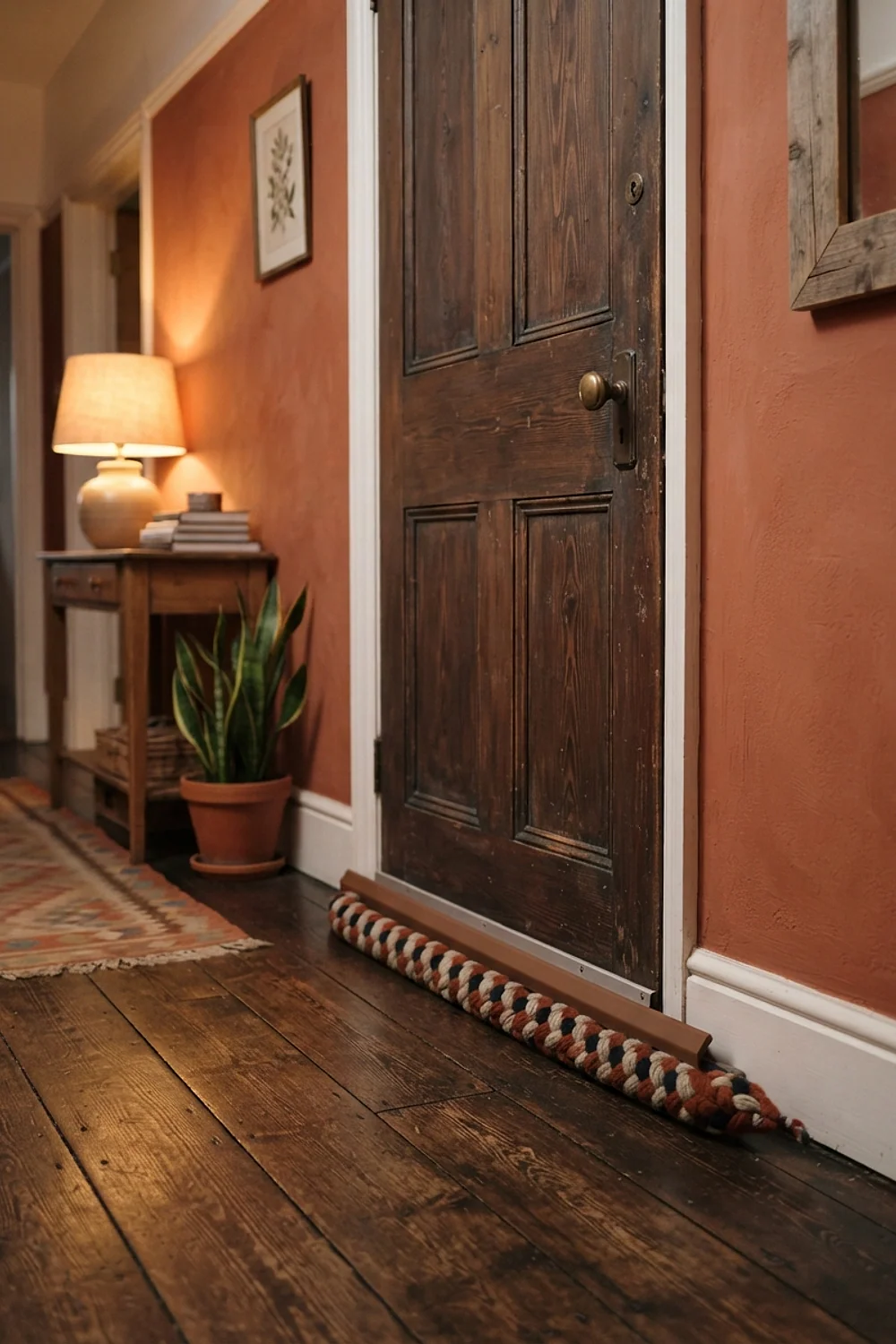
A gap of just a quarter inch under a door leaks enough air to drop the temperature near the floor by several degrees. A 36-inch fabric draft snake filled with sand or polyfill stops it at once, and an adhesive door sweep does the job permanently.
This matters most in top-floor units and ground-floor units alike. Choose a snake in a fabric that matches the rug so it reads as decor and not a fix.
A vintage quilt hung as a wall piece
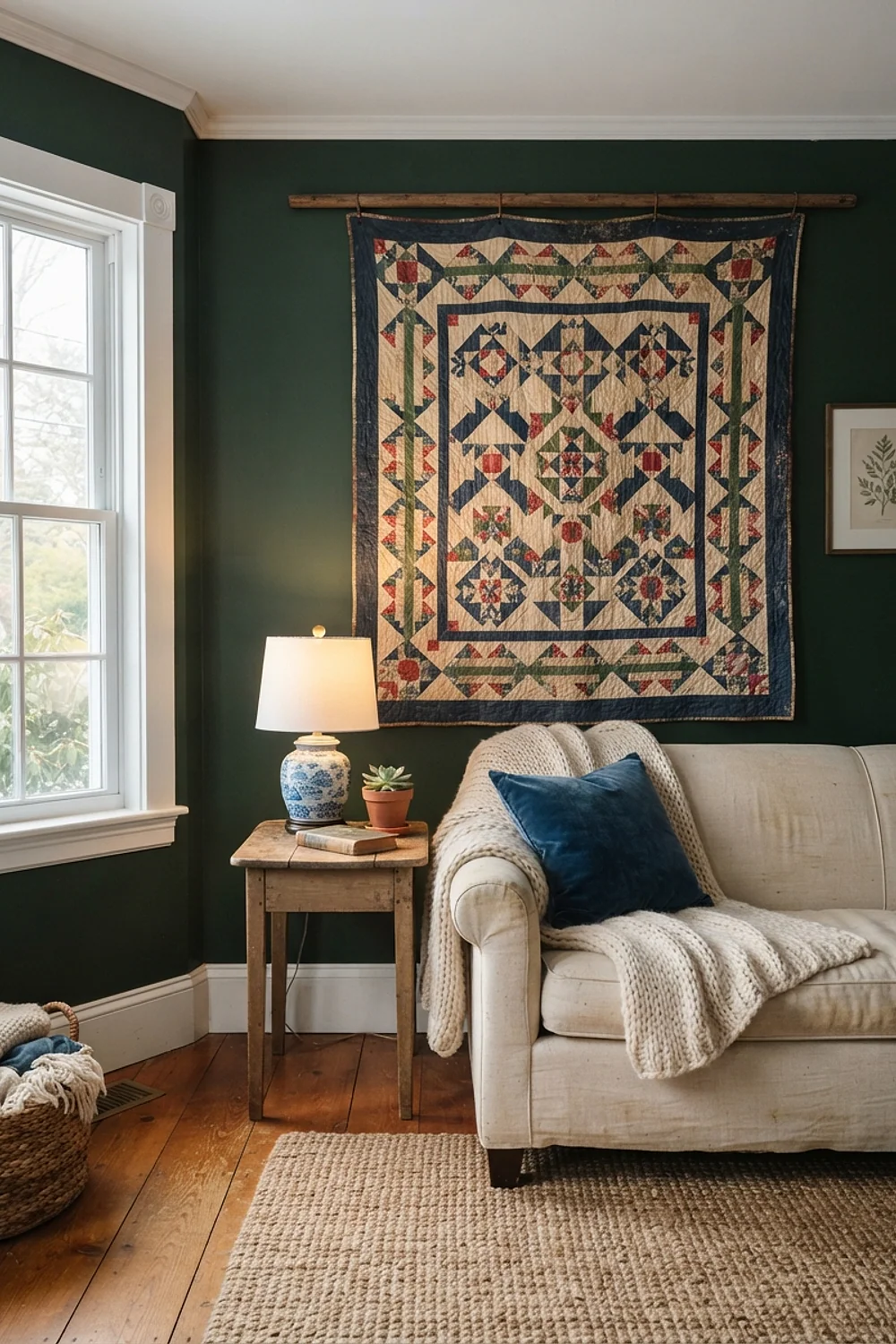
A vintage quilt hung from a wooden dowel or quilt clips turns a bare wall into a soft, textured feature and doubles as sound insulation. Look for hand-stitched pieces in muted reds, creams and blues, which fit a cottage mood without overpowering a small room.
Hang it out of direct sun, since afternoon light fades old dyes within a season. Weigh the quilt first, because heavy ones need two anchors rather than one nail.
A narrow picture ledge for cards and ornaments
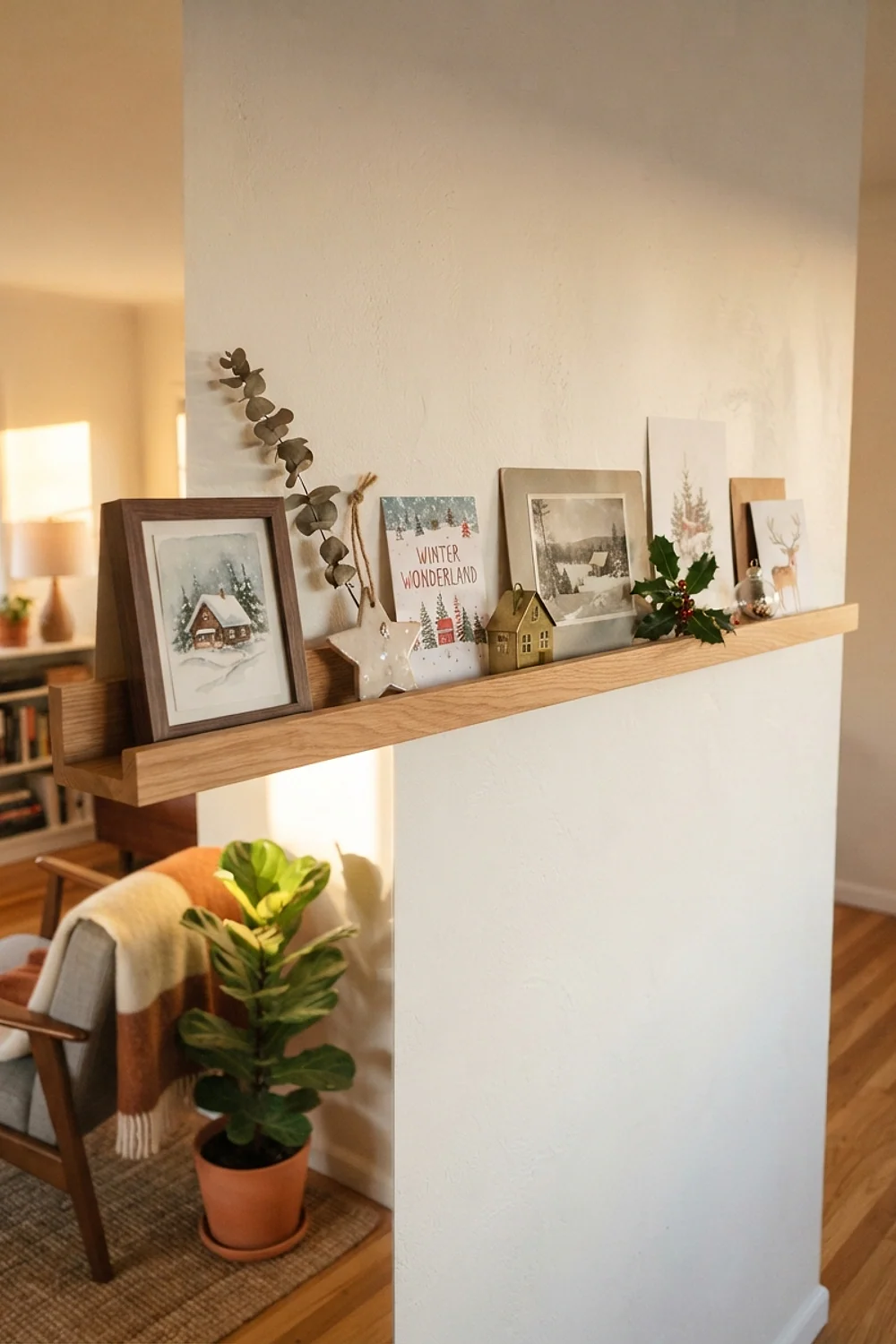
A picture ledge only 4 to 8 inches deep and about 36 inches long holds cards, small frames and a few ornaments off the floor and counters. It runs $12-25, and the objects can be swapped weekly without drilling again. (This only works if the studs or anchors cooperate, so check before mounting anything heavy.)
Keep it above the sofa or desk at eye level. Fewer than five objects looks edited, while ten looks like a drawer that burst open.
A drop-leaf table as a hot-drink station
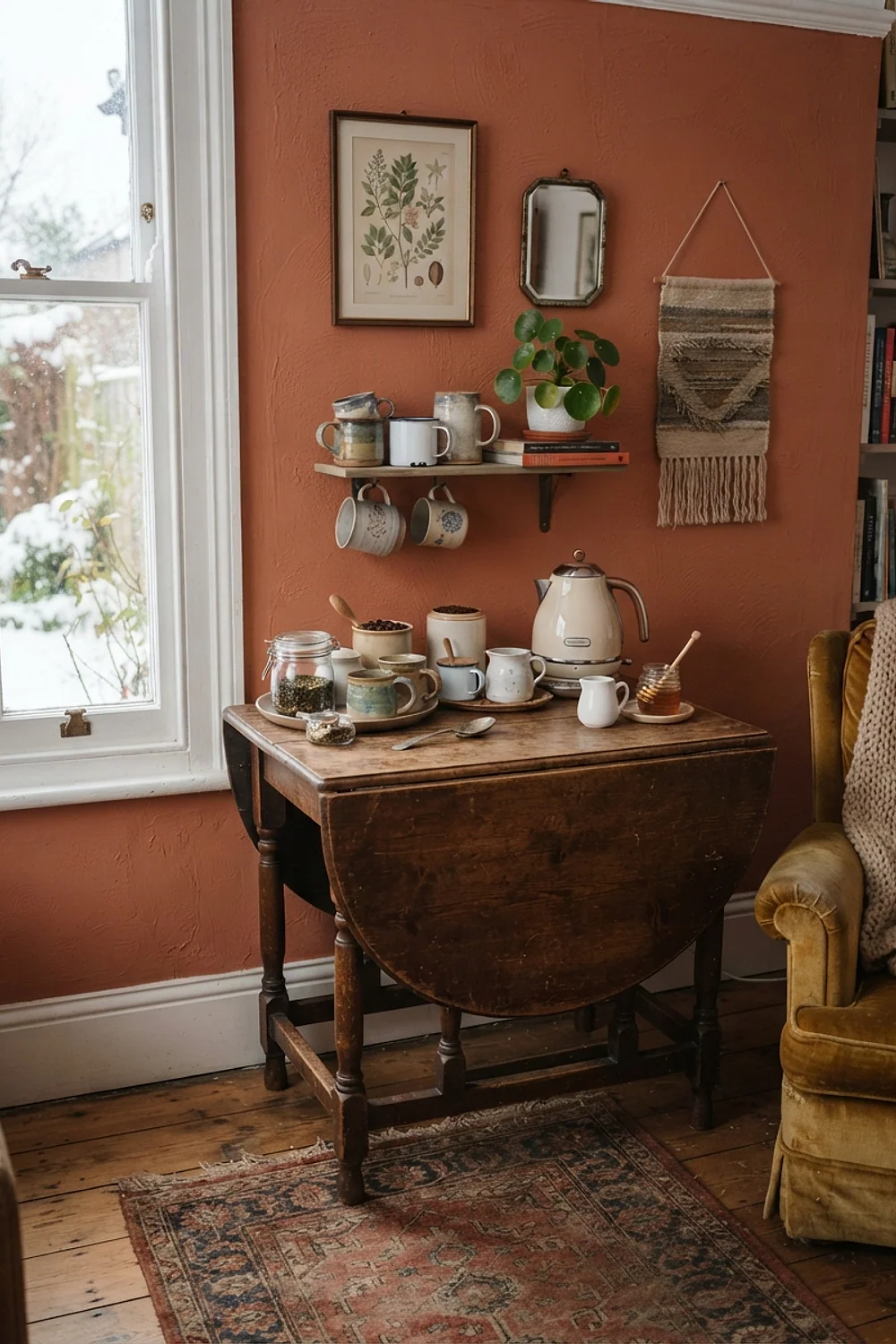
A drop-leaf table that measures 14 inches closed and 36 inches open can serve as a tea station on cold mornings, then fold away when the room needs floor space. Set a tray with a kettle, two mugs and a small plant on top.
It fits best along a wall in a studio or one-bedroom. Check that the hinges are metal, because wooden ones sag after a season of lifting.
Flat under-bed bins for the off-season
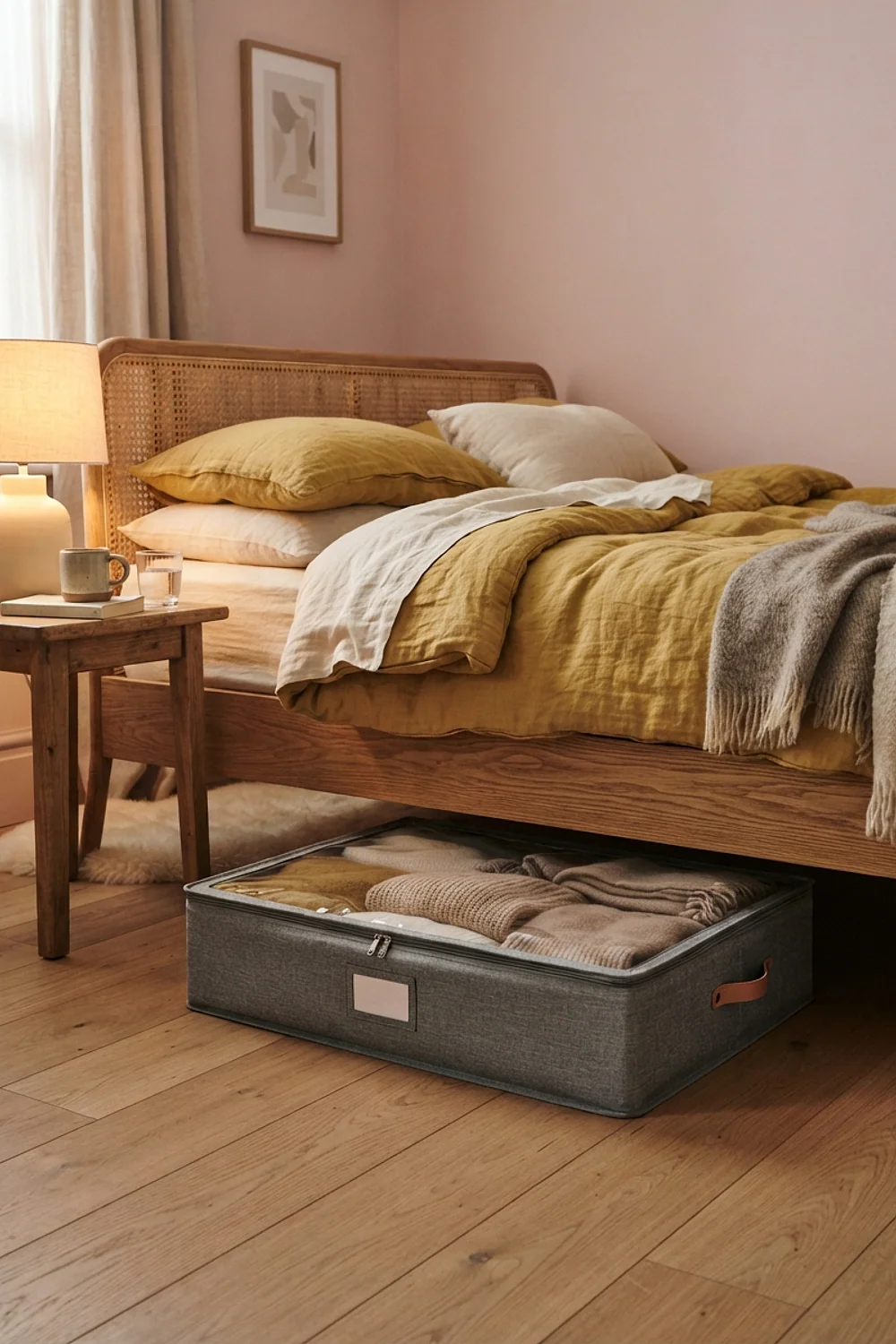
Flat storage bins about 6 inches tall slide under most beds and hold holiday ornaments, extra throws and the pieces that come out in December. Rotating decor in and out in January is how a small apartment avoids feeling stuffed.
Measure the clearance under the bed frame first, since many sit lower than 7 inches. Label the bins on the short end, so you can read them without pulling each one out.
Notes from real rooms
A small room in winter has two enemies: low light and visual weight. The fixes below deal with both without buying a single new piece of furniture.
A good rule in tiny rooms is one bare surface for every styled one. Empty surfaces are what the eye reads as space, and a room with no breathing room feels smaller than its measurements say.
- Hang curtains 4 to 6 inches above the window frame to stretch the wall upward.
- Prop a mirror, at least 24 by 36 inches, across from a window so it bounces daylight back into the room.
- Choose furniture on visible legs, at least 6 inches high, so floor shows underneath.
- Keep large pieces to one color family, then vary the accents.
- Run a rug 8 by 10 feet or smaller so it ends before the walls do.
Mirrors work hardest between 3pm and 5pm, when low sun slants in and a single panel can double the light. Place one opposite a window, never opposite a messy corner, or it will double that too.
Investment buys worth making
Winter decor ideas for the home pay off most when each piece has a second job. A bench that opens, a table that folds and a lamp that sits on a shelf all keep floor space free.
Spend the money on items you touch daily, such as a lift-top storage ottoman, around 36 by 18 inches. It works as a seat, a footrest and a blanket vault. Choose solid frames over particleboard, which sags under repeated sitting.
A nesting pair of side tables is another smart buy. They tuck together when the room is quiet and spread out when guests arrive, so one footprint does the work of two.
Skip anything that needs assembly of more than three parts unless it earns its place every day. A tray table that folds flat behind the sofa is worth keeping; a decorative stool nobody sits on is not.
What to buy first
Winter decor ideas for the home go wrong at the tape measure, not at the checkout. A piece that looks small in a shop can swallow a studio, so confirm these numbers first.
- Walkways: keep at least 30 inches clear between furniture and walls.
- Shelf depth: measure it before buying trees, garlands or candle trays.
- Under-furniture clearance: check the gap beneath beds, sofas and consoles for baskets and bins.
- Window height: measure from the sill to the ceiling to place the curtain rod.
- Door swing: confirm a draft snake or boot tray won’t block it.
Write the numbers on a note in your phone. Having them in hand turns an impulse buy into a confident one.
Where to start this weekend
Winter decor ideas for the home work best when they solve a problem before they decorate. Begin with light and warmth: swap the bulbs, fold one throw, and pull the sofa off the cold wall. Those three moves cost almost nothing and change how the room feels at dusk.
Save or pin this list so it’s ready when you want the next idea, then measure your sofa wall and window before buying anything else.