12 Hosting Thanksgiving Decorations That Look Expensive
Swap, don’t rebuild. Hosting thanksgiving decorations work best as a handful of small changes to a home you already live in, not a full rebrand of the dining room.
Think of the late-October cold snap, when the radiator ticks back on and the first cinnamon-scented candle comes out of its box. That’s the ritual: twelve swaps, each one doable in an afternoon, each chosen for how it feels to use as much as how it looks.
Key Takeaways
- Keep centerpieces under 12 inches tall so guests can see and talk across the table.
- Comfort items like 2-inch seat cushions and a reachable drink station get used more than ornaments.
- Unscented candles and warm 2200K bulbs protect both the food aromas and the mood.
- Store seasonal pieces by category in labeled bins so next year’s setup takes under an hour.
Refreshing your hosting thanksgiving decorations this season
The first four swaps happen at the table itself, where guests spend two to three hours with their elbows, forks, and glasses. Start here, because this is where decoration either helps the meal or gets in its way.
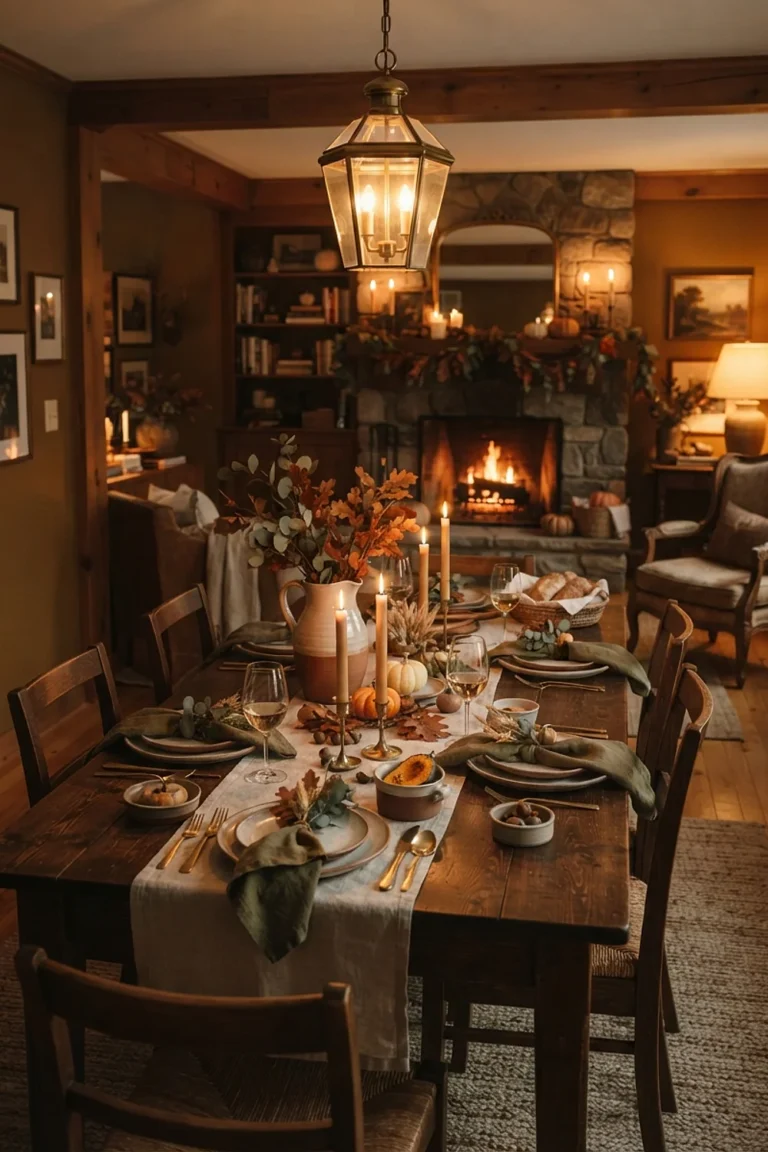
Unscented tapers in place of a scented candle
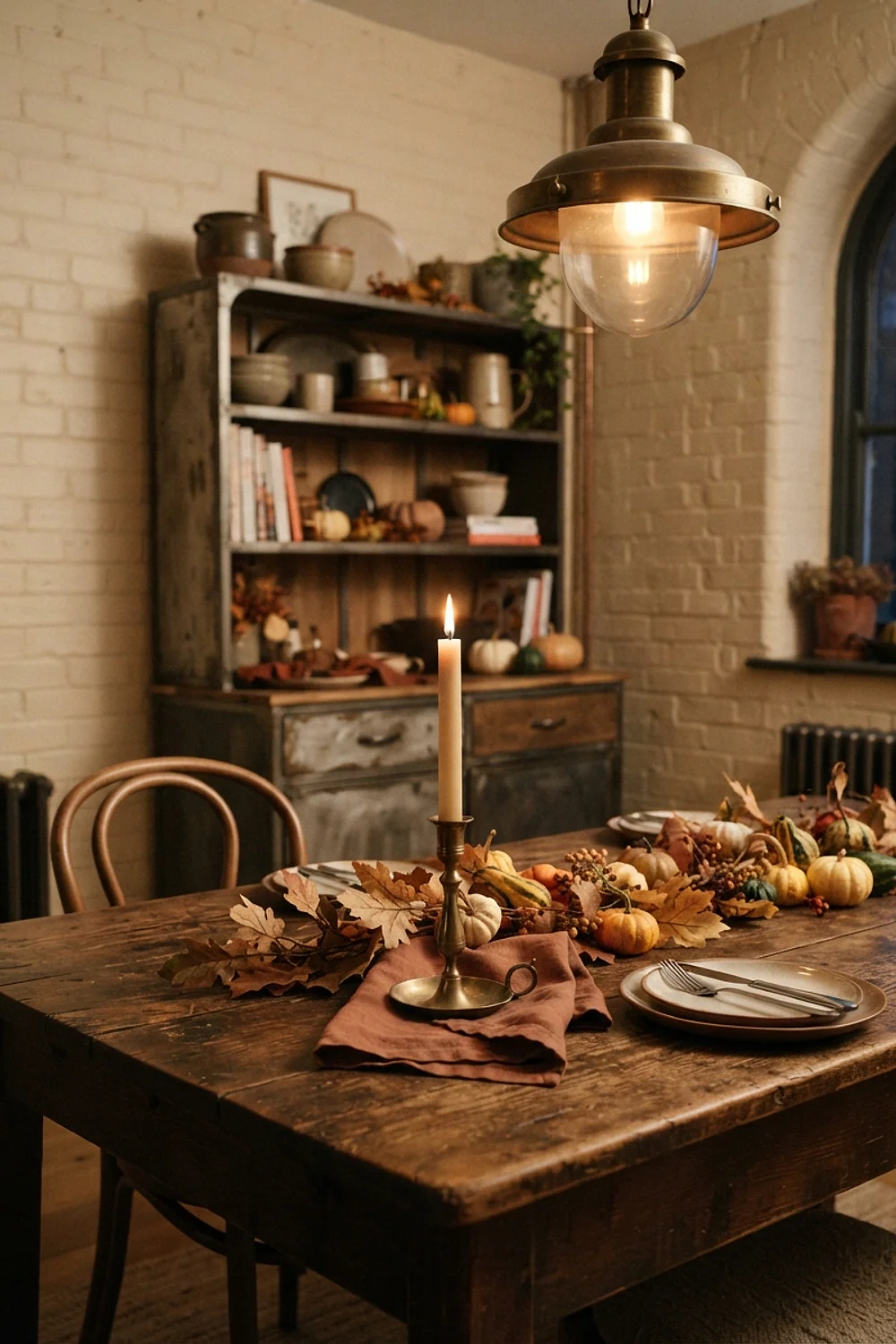
A scented candle in the middle of the table fights the roast for attention. Guests smell cinnamon-vanilla before they smell dinner, and the two clash.
Ten-inch unscented beeswax tapers in plain brass or ceramic holders burn clean and give off only a faint honey note. They suit any host cooking a big meal, and they cost nothing in flavor. Save the scented candles for the entry or powder room.
A low runner and a centerpiece under 12 inches
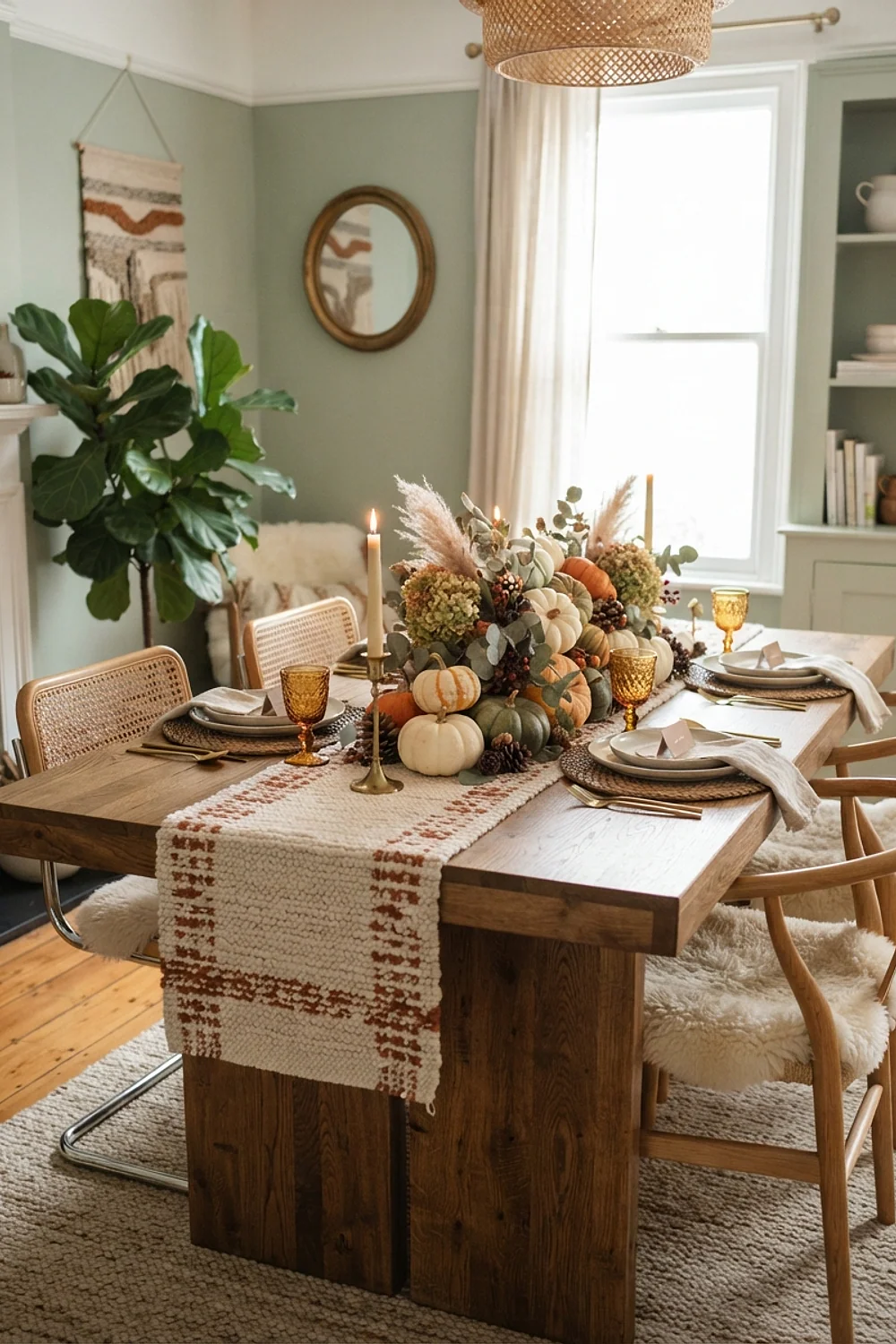
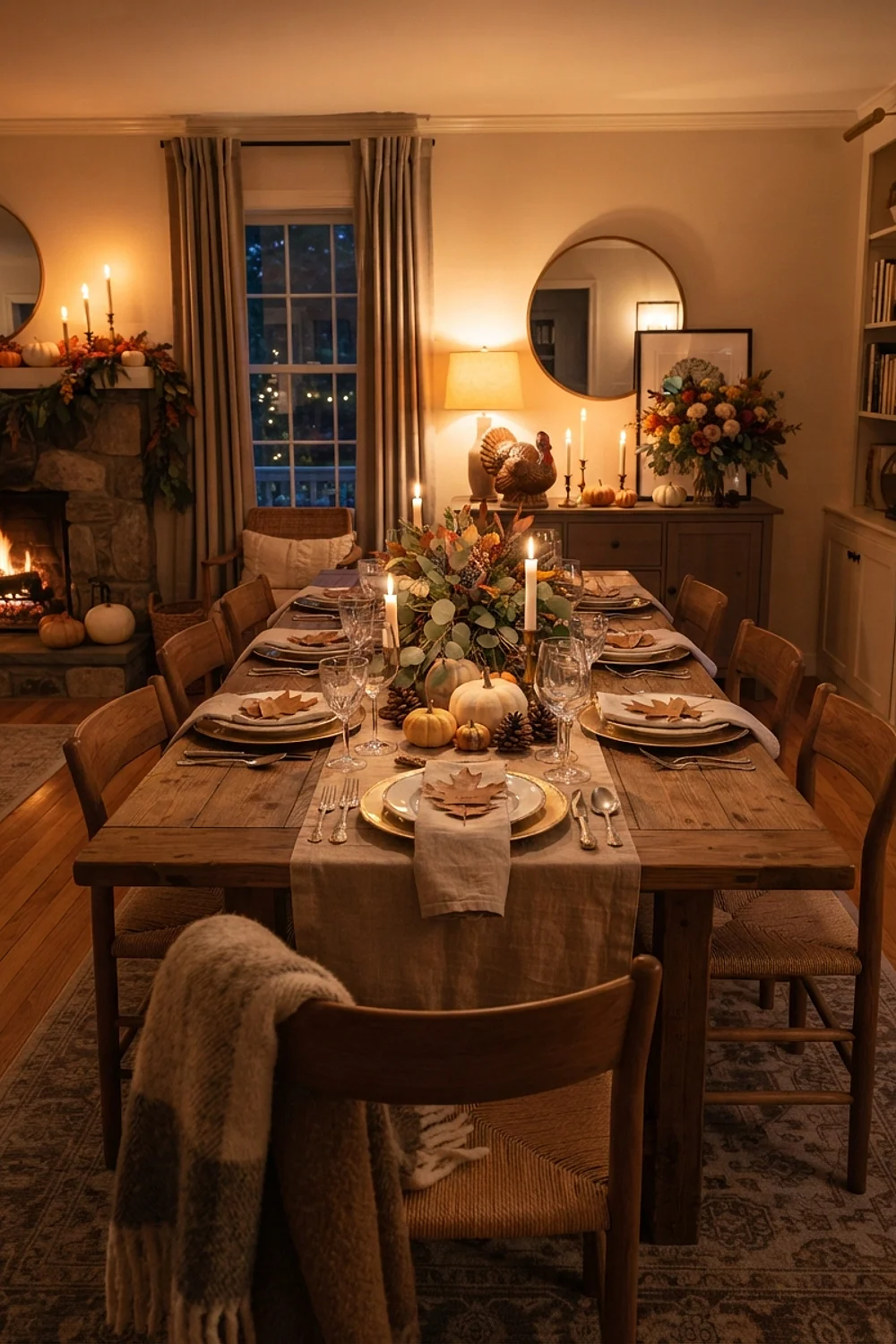
A 14-inch-wide linen runner on a 36-inch table leaves 11 inches of bare wood on each side for plates. Keep anything standing in the middle below 12 inches so eye lines stay open.
Here’s the counterintuitive bit: a sparser, lower table reads as more generous, because the food becomes the focus. A tall arrangement looks grand in photos and gets shoved onto a sideboard by 5 p.m.
Rust and oatmeal linen napkins
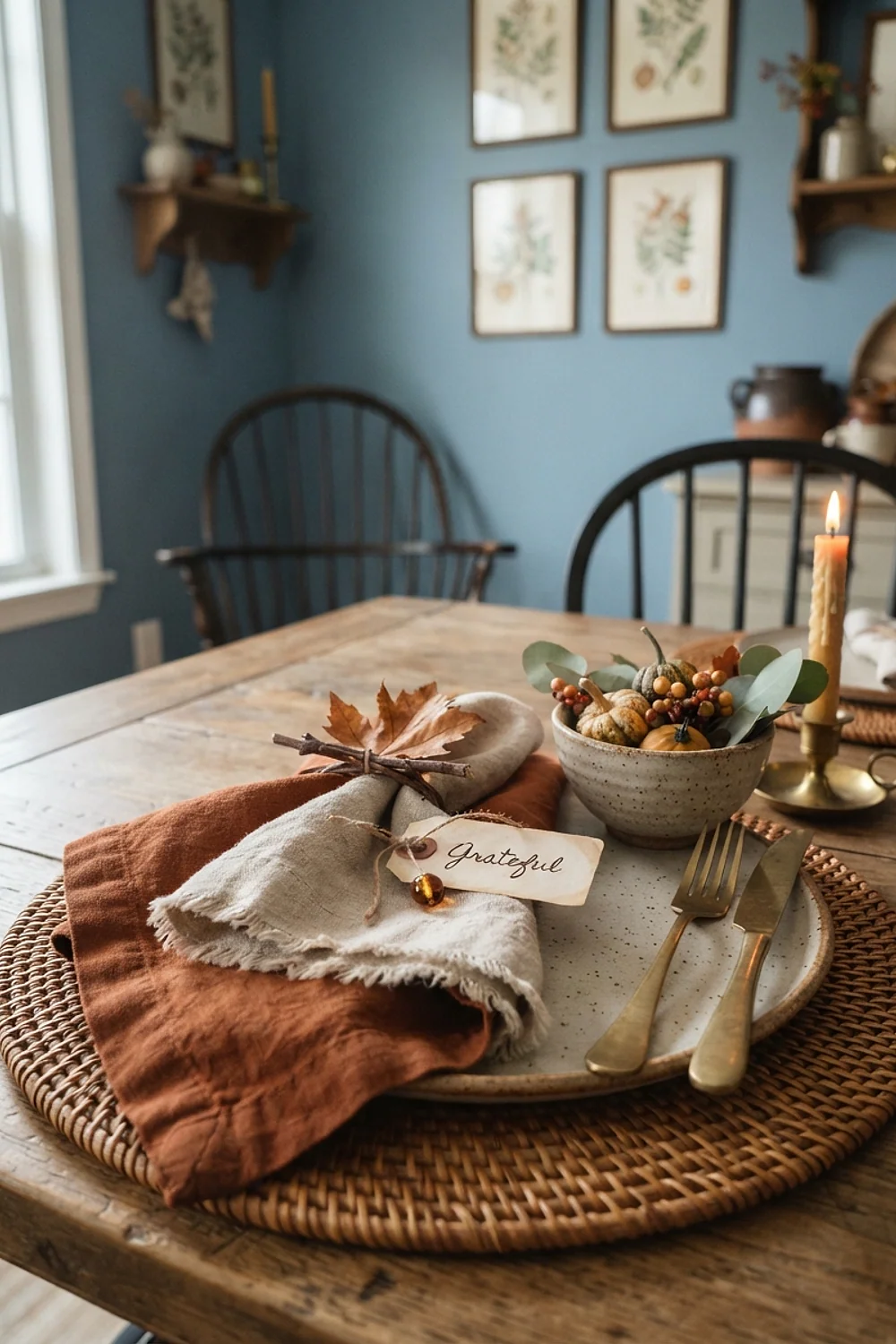
Washed linen napkins feel nubby and slightly cool under the palm, and they soften with every wash. Pick a rust or terracotta shade and fold each into a loose rectangle, with a sprig of rosemary tucked under the fold.
Secondhand sets often run $4-6 per napkin, and old linen is better than new because it has already gone soft. Skip polyester blends. They slide off laps and don’t absorb a spilled glass of cider.
Tie-on seat cushions for the hard chairs
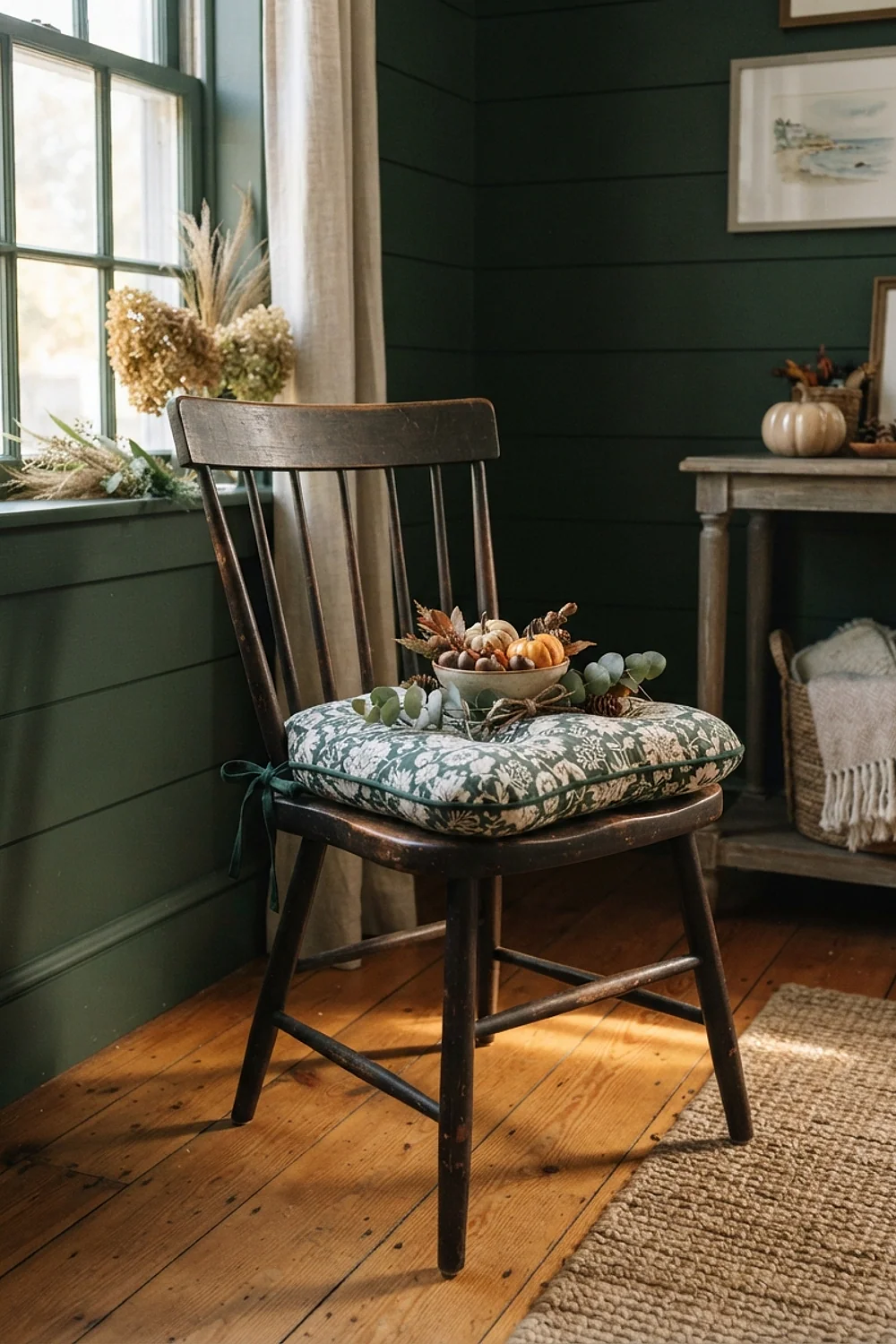
A 2-inch high-density foam pad with fabric ties, cut to roughly 16 by 16 inches, changes a wooden chair from a 40-minute seat to a three-hour one. Wool or heavy cotton in a muted plaid grips better than slick velvet.
Isn’t a good cushion worth more than any centerpiece? Exactly. Guests who sit comfortably stay for second coffee, and the ties keep pads from creeping forward as people shift.
Hosting thanksgiving decorations beyond the table
Once the table works, the rest of the house needs to hold a crowd. These four swaps handle light, traffic, drinks, and the pile of coats.
Warm 2200K bulbs on a dimmer

At 4 p.m. in November, the light through a west window turns amber, then drops away within the hour. Dining rooms often go flat and gray right when the meal starts.
Swap the overhead bulbs for 2200-2700K warm white, and run them at about 40% on a dimmer. Place any lamps at eye level on a sideboard, not up high, so faces glow instead of casting shadows under the chin.
A drink station on a 30-inch-high surface
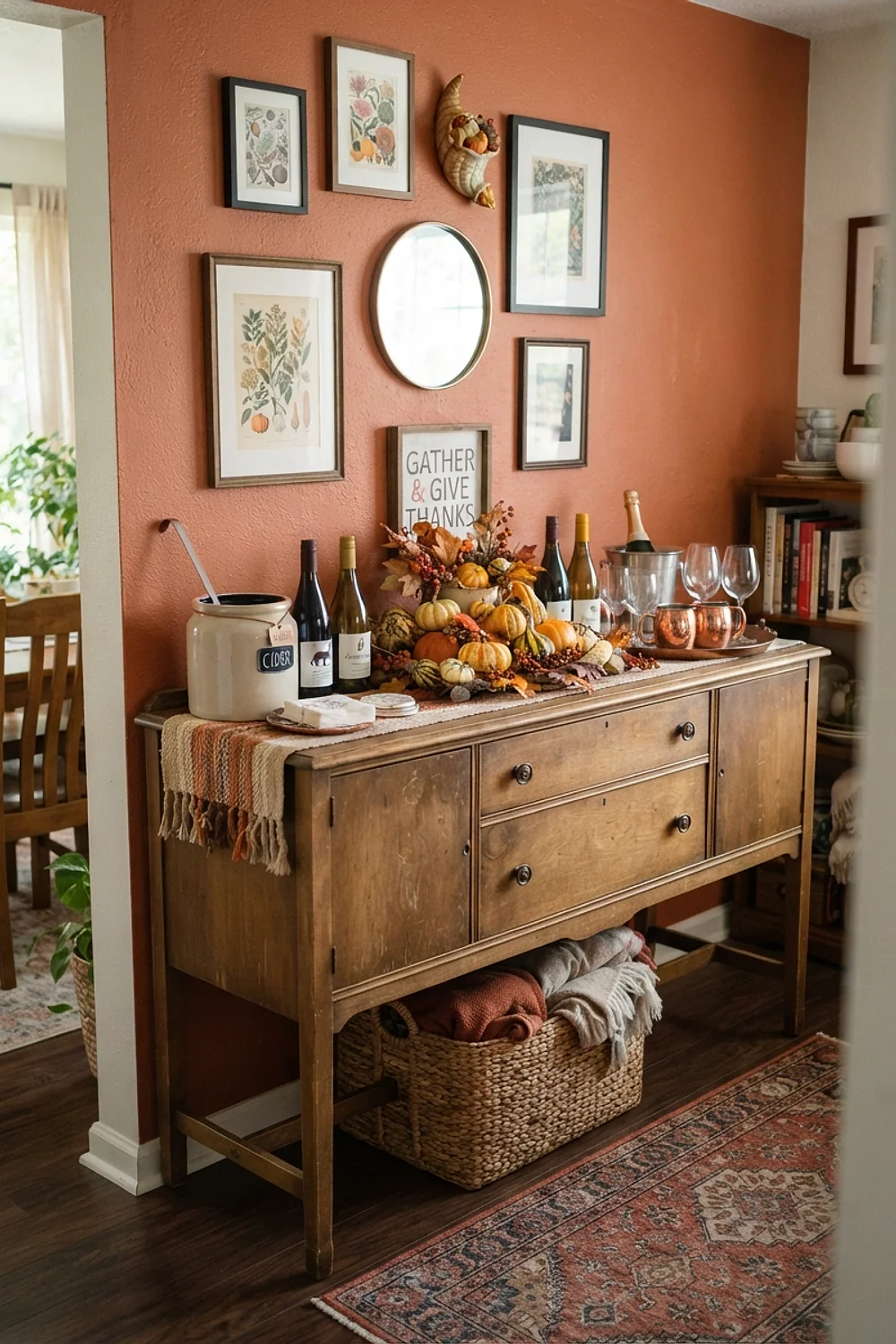
A sideboard or bar cart at 30 to 36 inches puts bottles, glasses, and a pitcher of mulled cider where a hand naturally lands. Guests help themselves and the host stays out of the refill loop.
Set it away from the kitchen doorway, or the traffic jam moves with the cider. A small tray with a cloth coaster underneath keeps rings off the wood and mutes the clink of glass.
A lidded basket by the door for throws and extras

A 24-inch seagrass or rattan basket with a lid, around $20-30, swallows spare slippers, scarves, and the extra throws that otherwise drape every chair. It’s also a seat for pulling on boots.
This suits small entries best, where a coat rack would jut into the walkway. Choose a basket with a flat lid, because a domed one collects mail and loses its purpose by Friday.
A seating layout with 24 inches per person

Allow 24 inches of table edge per guest and 36 inches behind each chair to the wall. That’s the minimum for someone to slip past a seated neighbor with a full plate.
If the numbers don’t work, add a card table at the same height as the main one, with a floor-length cloth to hide the join. Splitting guests across two tables beats cramming one with elbows locked.
The finishing touches
The last four swaps are about color, texture, and the small decisions that stop a table from feeling staged.
Olive, oatmeal, and one hit of oxblood
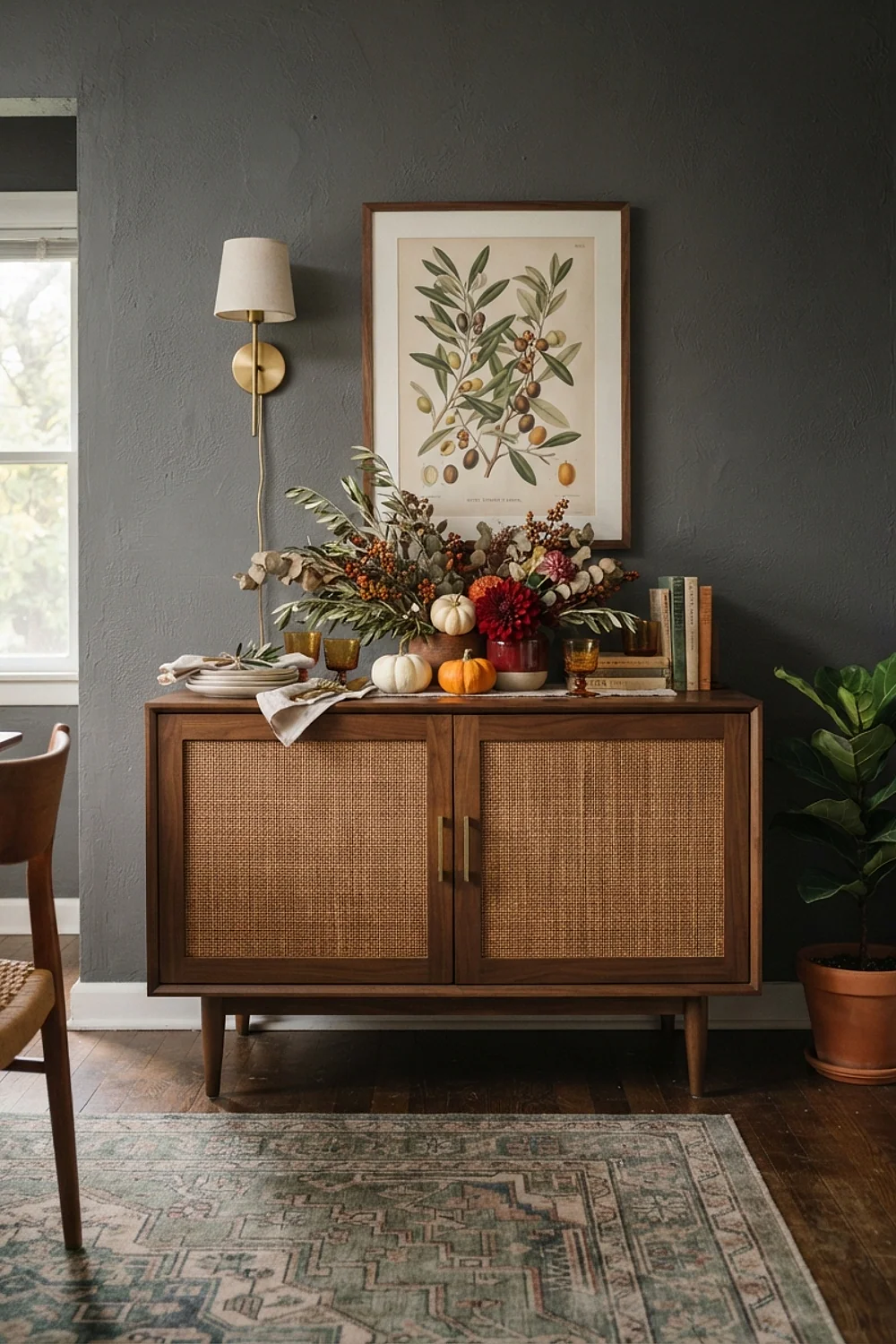
A paint fan strip of soft olive, creamy oatmeal, and a single deep oxblood for napkins or a vase beats the usual autumn trap of orange everywhere. Limiting the palette to three colors works because the eye reads repetition as a plan, so mismatched thrifted plates look intentional instead of random.
This suits renters especially, since walls can’t change and every color lives on movable pieces like linens, plates, and stems. Avoid letting oxblood spread beyond one or two accents. A third or fourth appearance turns the hit of contrast into a competing theme.
Heavy matte stoneware over glossy plates
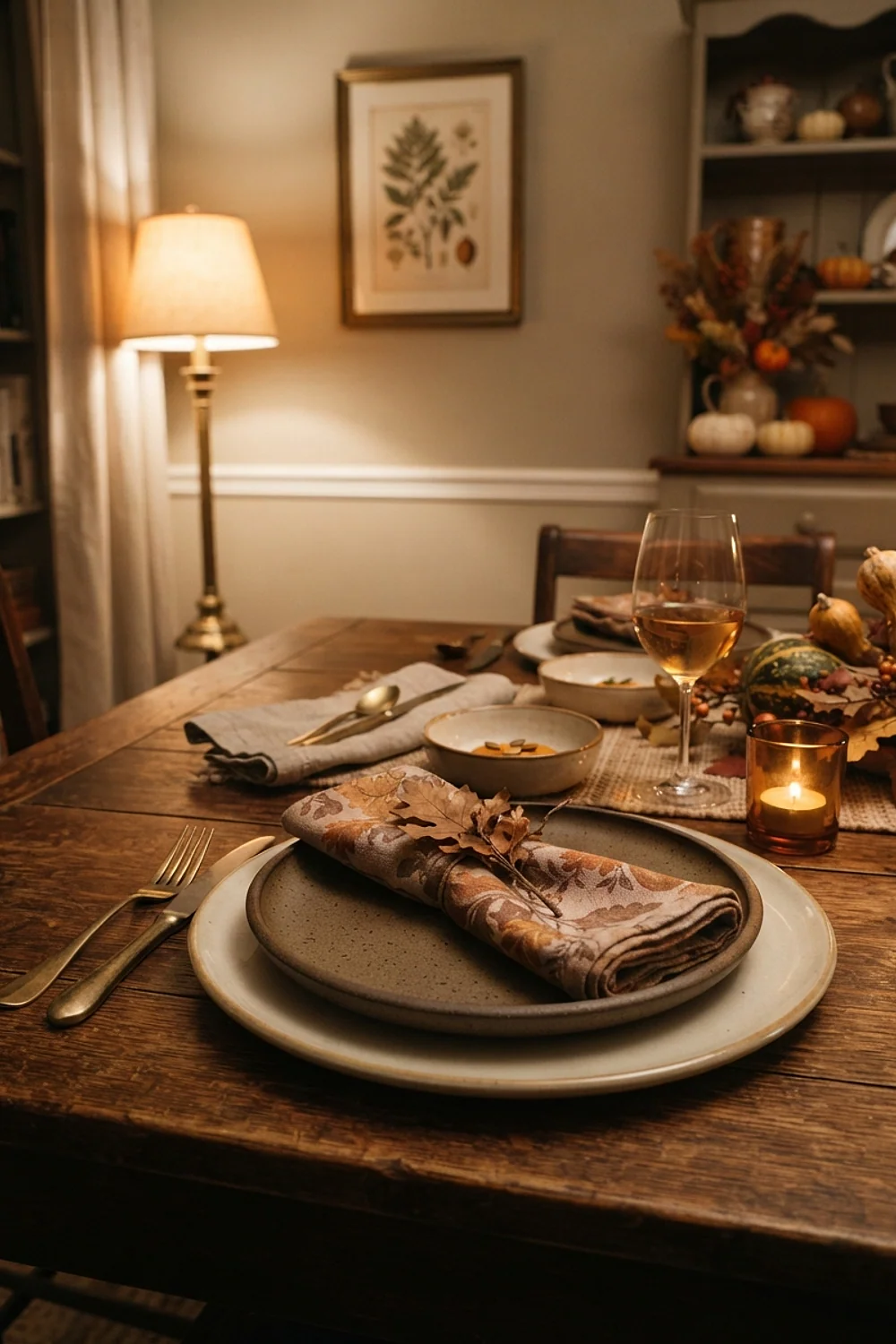
Matte stoneware plates have a satisfying weight and a low, muffled clink against the table. Thin glossy china rings and skids, and it chills a hot turkey slice in about a minute.
Mixed sets from estate sales are fine, as long as the rims sit within a half inch of each other in diameter. Stack height matters for the dishwasher, so check that 12 will fit before committing.
Half the table left clear for serving dishes
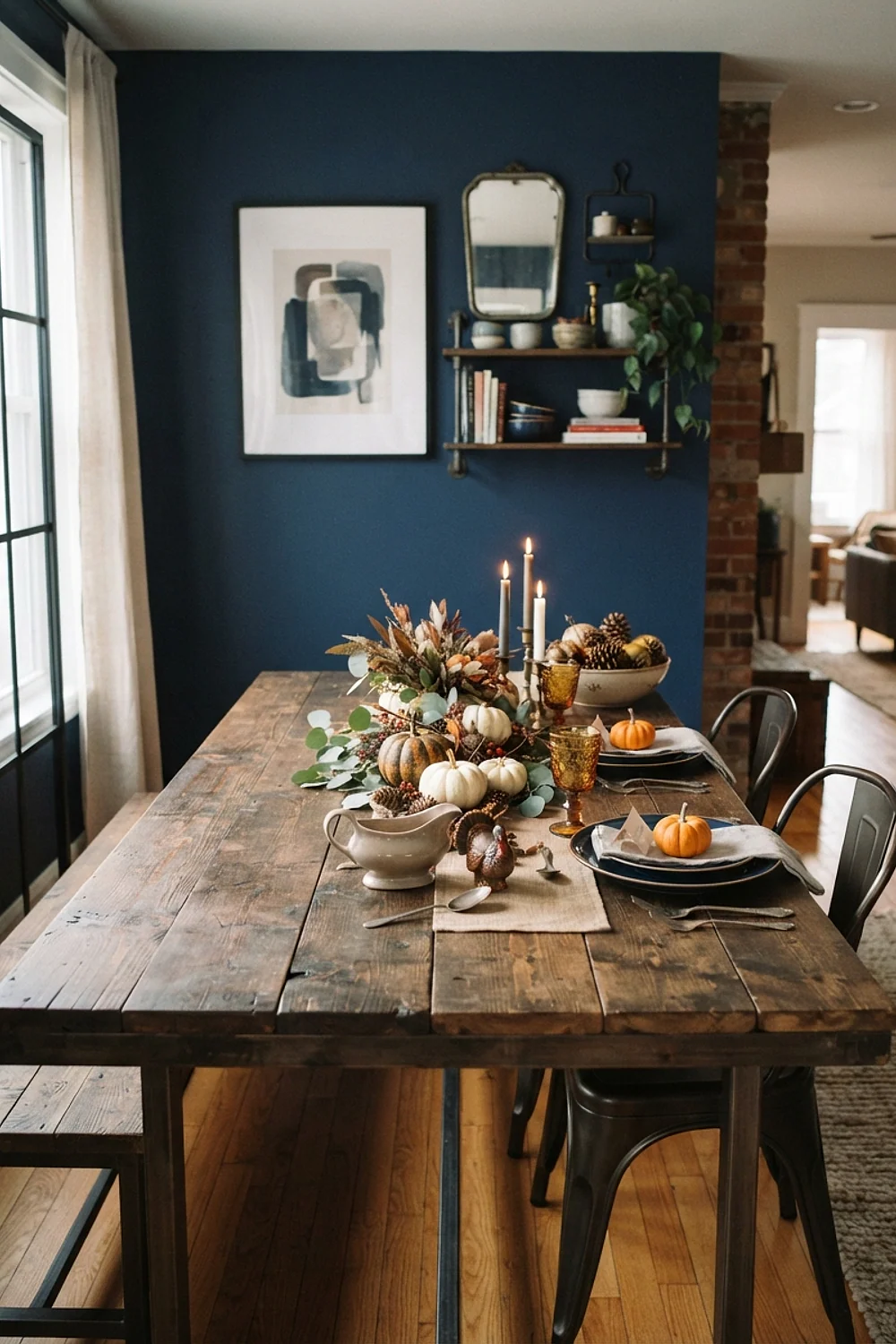
Leaving about 50% of the table surface open for platters and bowls gives the gravy boat somewhere to land. A table packed edge to edge with mini pumpkins and gourds fails once hot dishes arrive and need a spot within reach.
This suits smaller tables and big family meals, where every inch gets used. The common mistake is decorating first and serving second. Set out empty serving dishes during the styling pass, and move any decoration that blocks one.
A 24-inch wreath on a 36-inch door
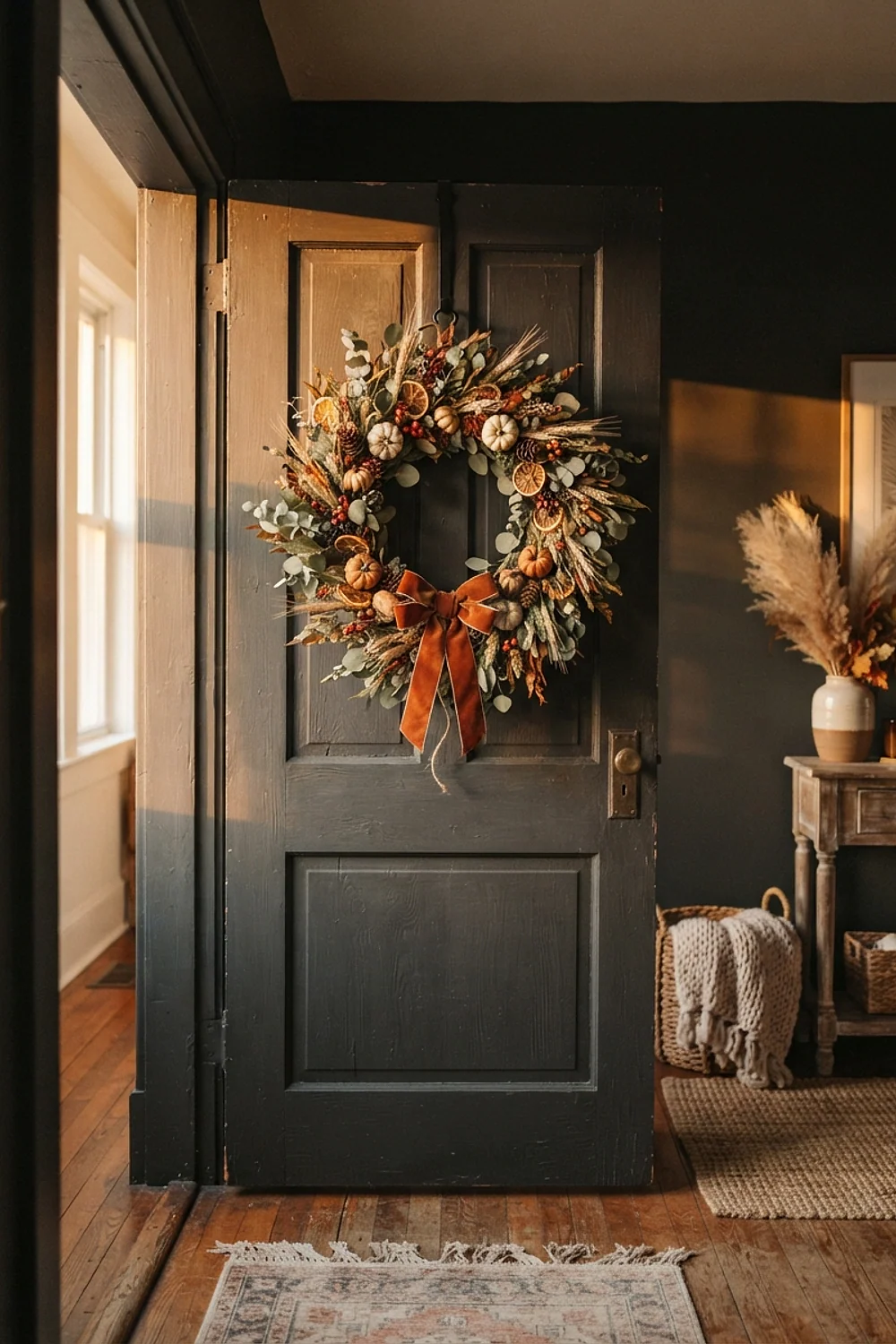
A wreath sized at about two-thirds of the door’s width reads clearly from the driveway, while a 14-inch one disappears. Hang it at eye level, roughly 60 inches from the ground, over a sturdy over-the-door hook.
Dried wheat, magnolia leaves, and faux berries survive a wet week better than real flowers. Match it to the interior palette so guests feel the connection as they cross the threshold.
A swap schedule for the week before
Hosting thanksgiving decorations go faster with a sequence. This order keeps the heavy lifting early and the fragile pieces for last.
- Five days out: clear the dining table, measure it, and set up the drink station.
- Three days out: wash and press linens, then install seat cushions and the door wreath.
- Two days out: swap bulbs and test the dimmer at dusk.
- Morning of: place the candles, lay out serving dishes, and trim greenery.
Storing the off-season pieces
Good storage decides whether next November takes an hour or a whole Saturday. Sort by category, not by room.
- Wrap tapers flat in tissue inside a shoebox, so they don’t bend or crack.
- Fold linens with acid-free paper between layers to prevent yellow creases.
- Stack stoneware with felt rounds between plates, in a bin no deeper than 12 inches.
- Hang wreaths from a hook inside a garment bag, never flat under a box.
Label every bin on two sides. A cedar block tucked in with the linens keeps moths away and smells faintly of pencil shavings when the lid lifts.
Year-round foundations worth keeping
Some pieces earn their place twelve months a year, and they make seasonal swaps look intentional. Hosting thanksgiving decorations are easier when the base is already sound.
- A solid wood or oak table, which hides scratches and takes a runner well.
- Dimmable warm lighting on at least two circuits.
- Neutral stoneware that suits every season.
- A sideboard at 30 to 36 inches for serving all year.
Buy these once and spend seasonal energy on the small swaps above.
Bringing it together
Hosting thanksgiving decorations succeed when comfort leads and ornament follows: a soft seat, a reachable drink, warm light, and a table that still has room for dinner. Start with the cushions and candles, then add color last.
Save or pin this list so it’s handy when the first cold week arrives, and begin with the one step that costs nothing: measure your table and mark where the serving dishes will sit.
Frequently asked questions
How early should I start hosting thanksgiving decorations?
Start about five days before, with the heavy and structural pieces like cushions, lighting, and the drink station. Save candles, greenery, and linens for the day before or the morning of, so they stay fresh.
Can I use hosting thanksgiving decorations in a rental?
Yes, because nearly every swap here is movable: linens, cushions, bulbs, baskets, and a door wreath on an over-the-door hook. Nothing requires drilling or painting.
How tall should a centerpiece be at a Thanksgiving table?
Keep it under 12 inches so guests can see each other across the table. Anything taller should move to a sideboard or a side table nearby.
What’s the best color palette for hosting thanksgiving decorations?
Olive, oatmeal, and a single deep accent like oxblood or rust are easy to repeat across napkins, plates, and greenery. Limiting the palette to three shades hides mismatched thrifted pieces.