
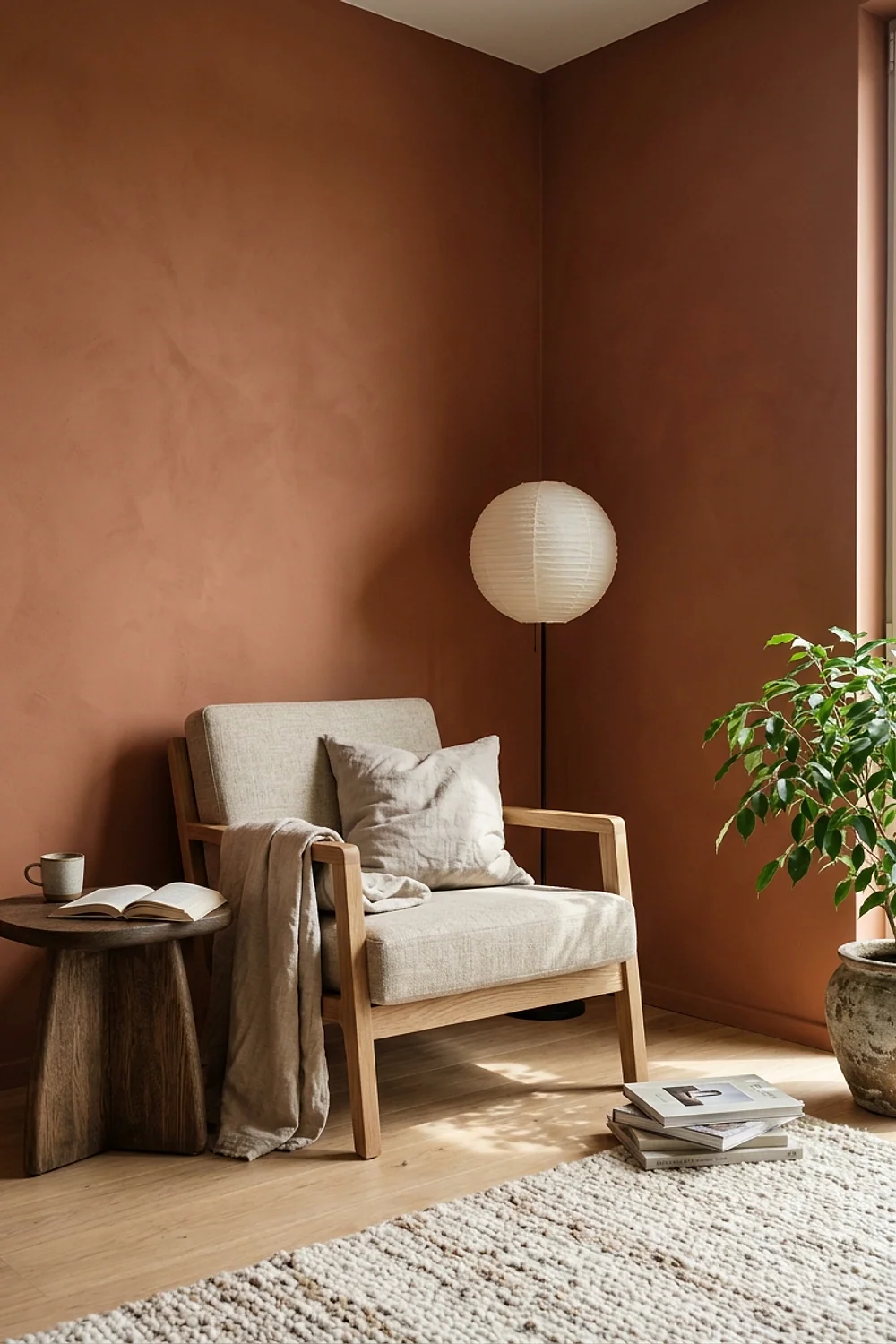
6 Japandi Reading Nook Ideas That Look Expensive
Quiet wins. The 6 japandi reading nook ideas below borrow the hushed, low-slung look of Copenhagen showrooms and Kyoto tea houses, then rebuild it with pieces that cost a fraction of the originals.
Picture oak tones, oatmeal textiles, one paper lantern, and a corner that turns a gray November Sunday at 4pm into a reward. Each idea names the designer original, the dupe, and the one thing that can sink it.
Key Takeaways
- A putty-toned wall color-matched at a hardware store gives the designer paint look for about a third of the price.
- One low chair, one paper lamp, and one object beat a crowded corner every time.
- Bulb temperature around 2700K decides whether paper lanterns look expensive or like a waiting room.
- Splurge on the chair frame and lamp, then save on shelving, cushions, and side tables.
6 japandi reading nook ideas: Starting points for your space
Japandi is Japanese restraint plus Scandinavian softness. Think pale wood, matte surfaces, rounded corners, and almost nothing on display.
The expensive version of this style comes from edit, not purchase. Showrooms get that hushed feel by owning fewer things in better materials, and the six ideas below copy that logic at a lower price.
A putty-toned wall that mimics designer paint
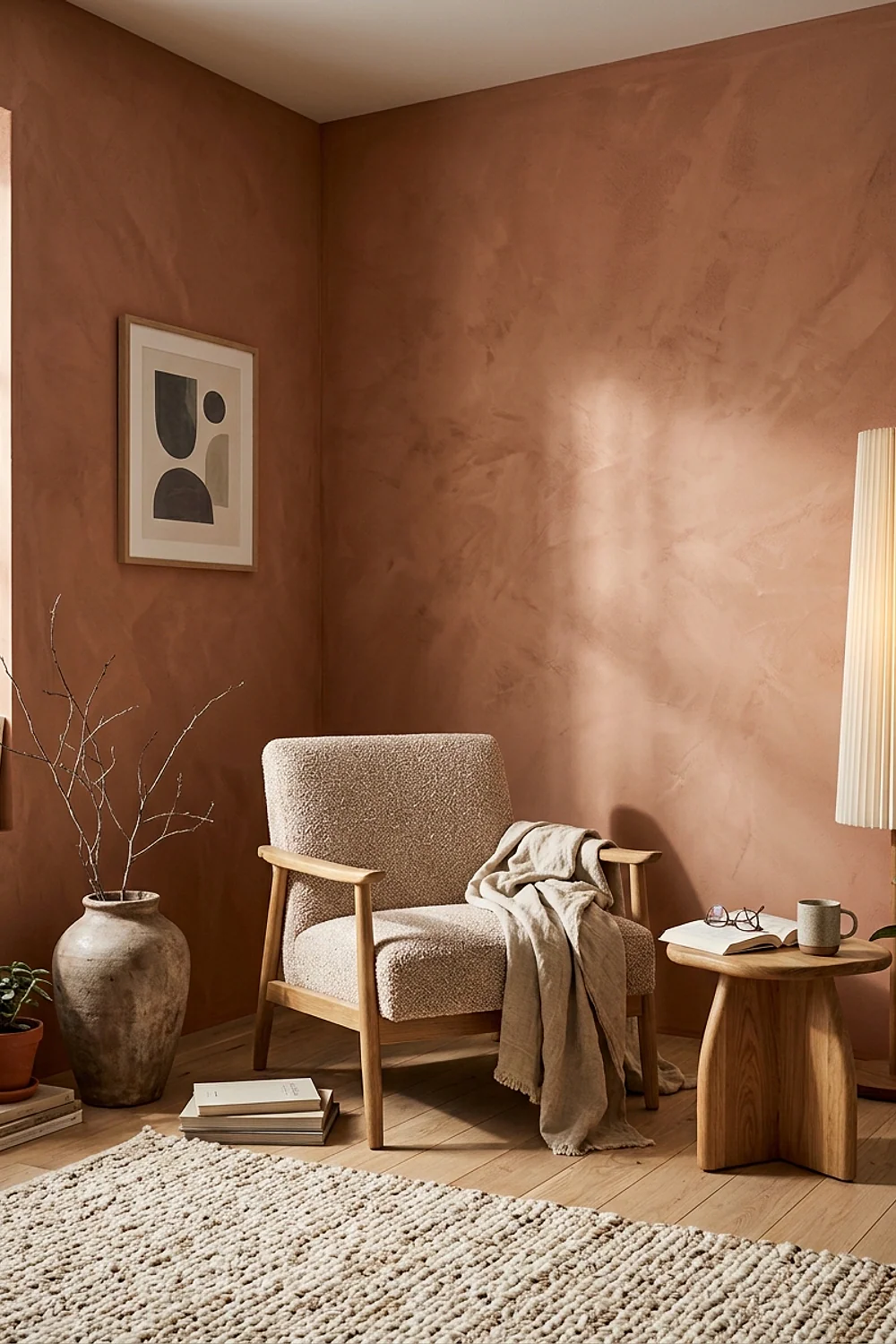
Pale putty, somewhere between oatmeal and wet sand, is the backdrop in most high-end japandi rooms. A color like Farrow & Ball Jitney runs over $100 a gallon, but any hardware store will color-match it into a standard matte formula for about $35-40.
Paint only the nook’s back wall and the adjoining corner, roughly 8 feet wide. In a north-facing room, pick a tone with a yellow undertone, because gray light turns cool putty into concrete.
Test a 2-foot swatch and look at it at 4pm, when the light drops. Skip eggshell, since sheen shows every roller mark and cheapens the whole wall.
One paper-cord lounge chair, angled toward the window
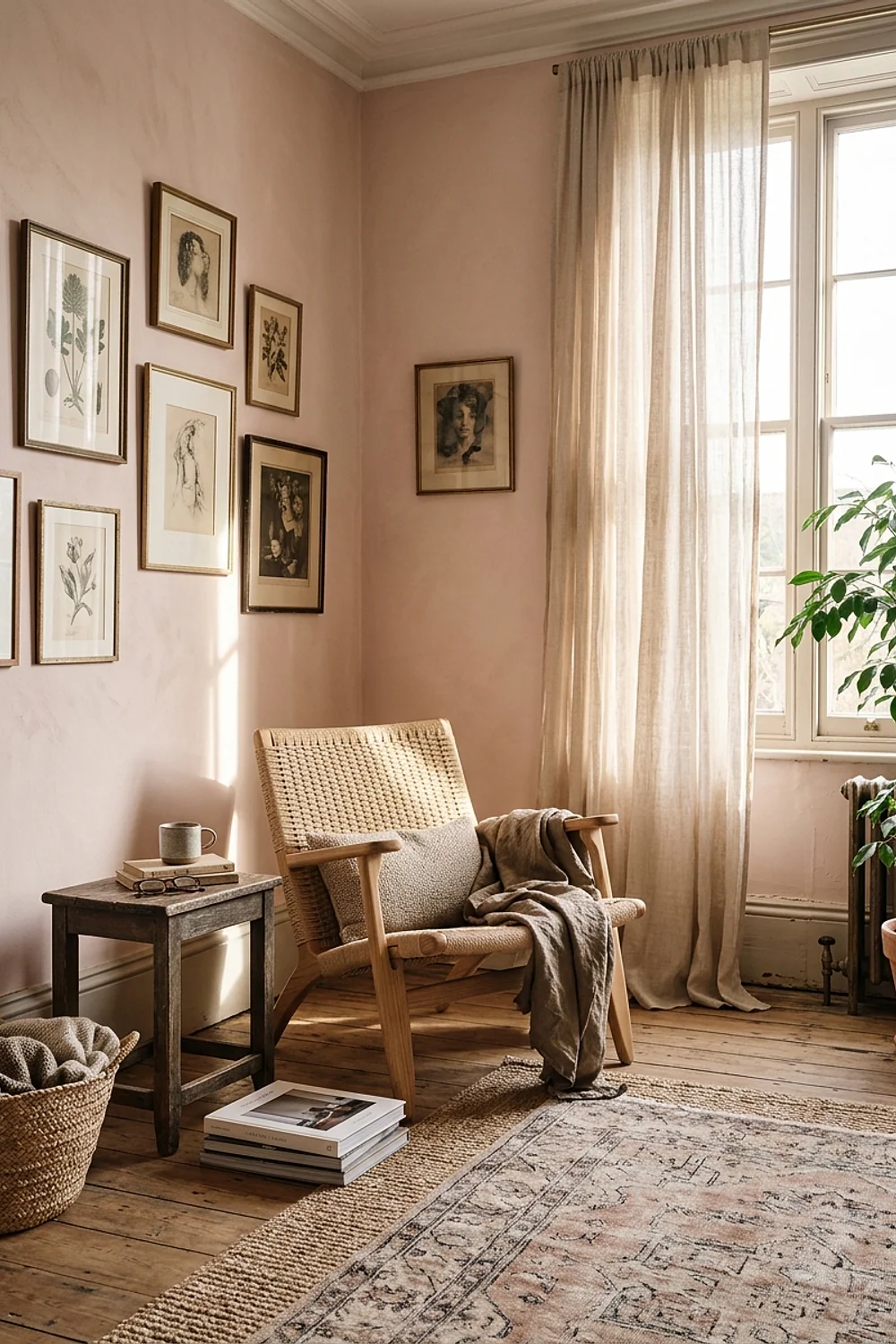
The designer original is a Hans Wegner paper-cord lounge chair from Carl Hansen & Son, which sits well past $1,000. The dupe is a thrifted teak or ash armchair with a low seat (around 14-16 inches high) and a new linen cushion.
Turn the chair about 30 degrees toward the window instead of squaring it against the wall. That angle reads as intentional, like a piece in a gallery, and it catches side light on the wood.
The common failure is the matching ottoman set. A chair plus a matching footstool plus a matching table looks like a showroom floor, so keep one piece as the star.
A rice-paper lantern with the right bulb
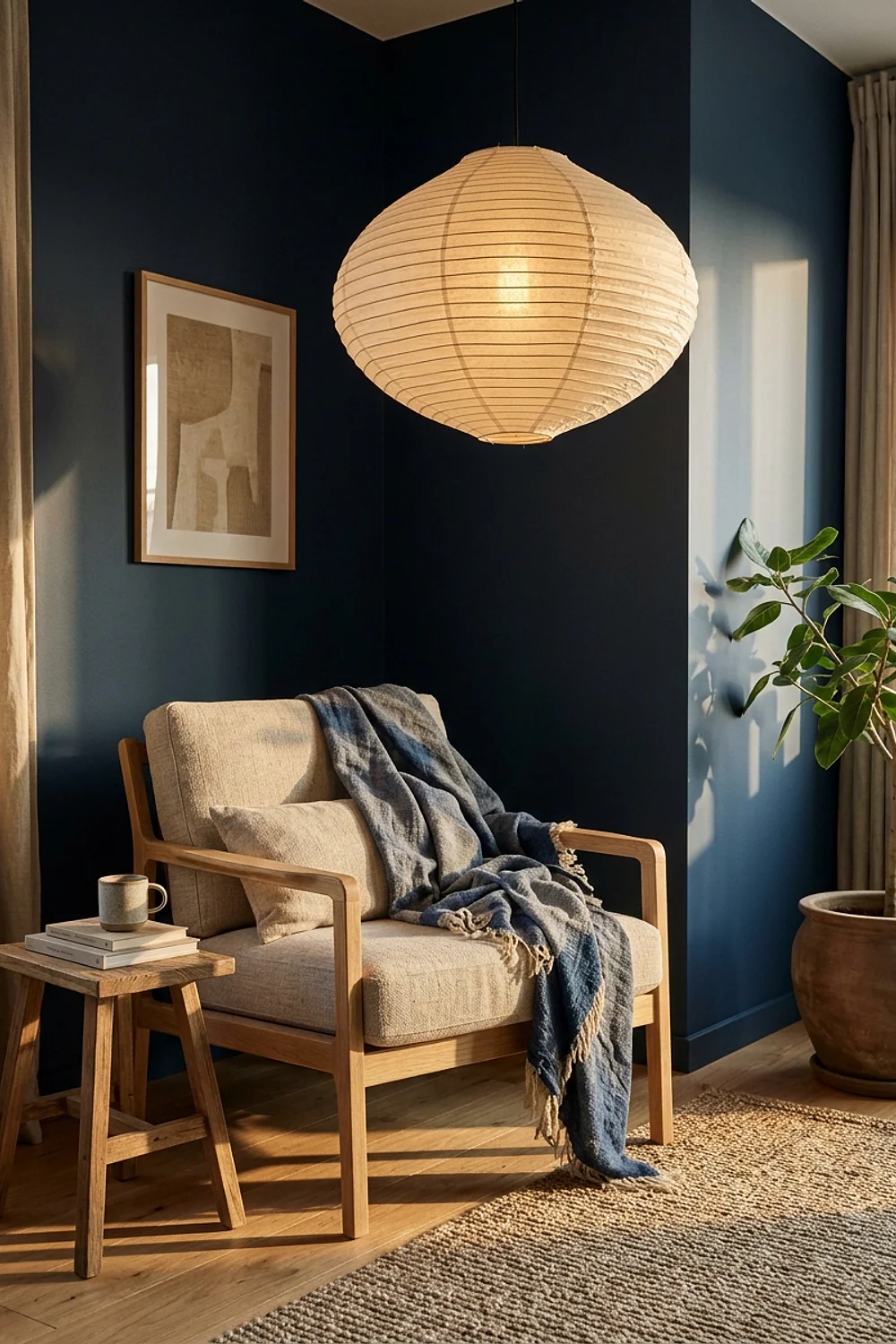
Isamu Noguchi’s Akari lanterns start well over $100 and climb quickly with size. An IKEA rice-paper pendant shade, around $10, gives the same diffused glow when hung from a plug-in cord kit.
Here’s the mistake that sinks it: a 4000K daylight bulb turns the paper blue-white and clinical. Use a 2700K bulb, and the shade glows the color of a candle flame.
Also hide the cord. One dangling across the nook like a garden hose ruins the effect, so run it along the wall with two paintable cord clips.
A low shelf holding a dozen books, not a hundred
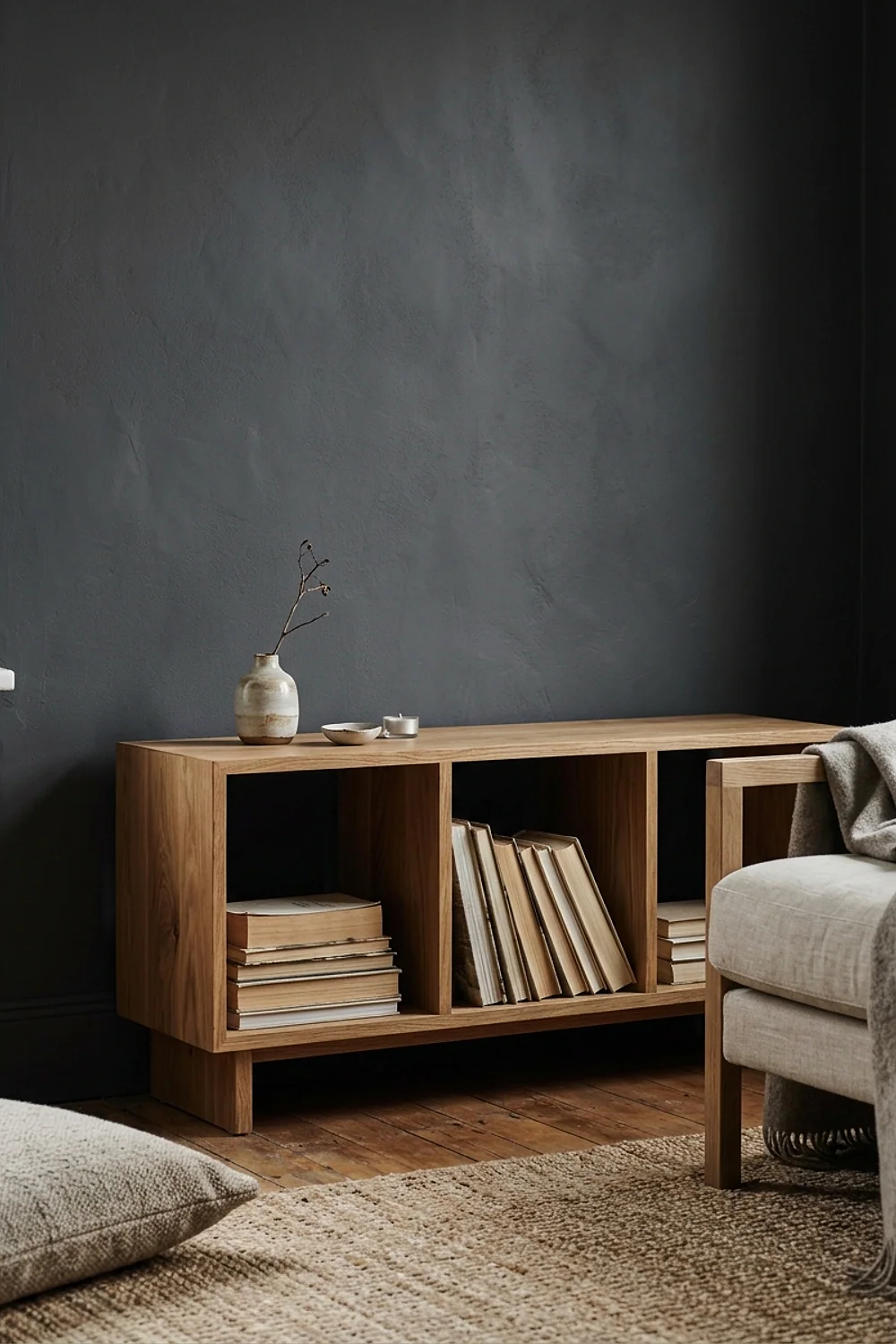
String-style wall shelving or a low oak console from a design house looks calm because it holds little. A plain 30-inch-tall shelf in oak veneer or painted birch plywood does the same job at a lower price.
Keep visible books to about twelve, spines turned toward the wall or wrapped in plain paper if the colors scream. A lidded seagrass basket on the bottom shelf swallows a blanket, a charger, and the loose paperbacks.
This works best for readers who accumulate books fast. Without the basket and the dozen-book rule, the shelf becomes a storage unit instead of a feature.
A side table sized to the chair’s arm
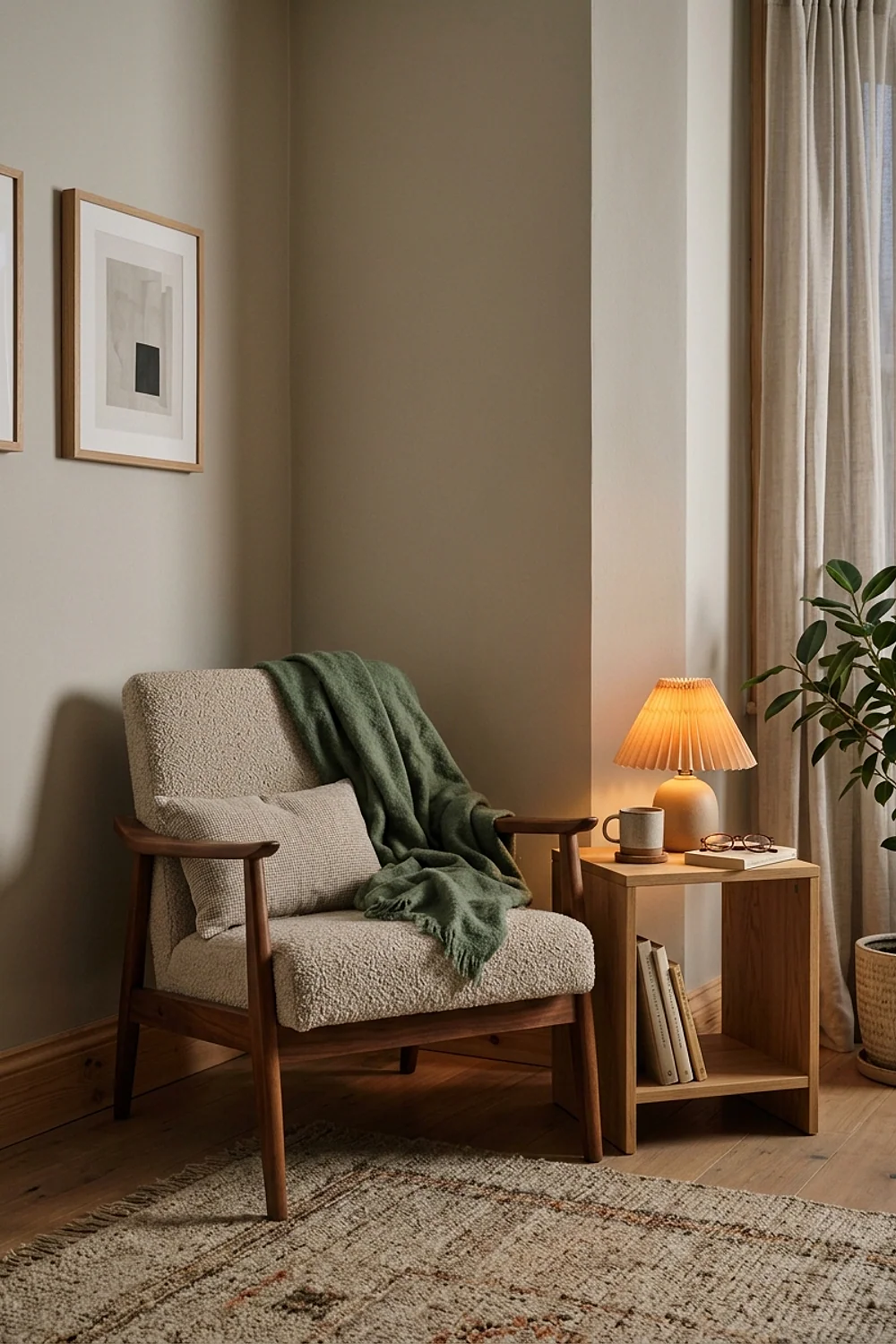
A Ferm Living or Muuto side table can cost $200 to $400. A thrifted wooden stool or a small round table around $25 reaches the same look if the proportions hold.
Aim for a top 14-16 inches across and a height within 2 inches of the chair arm, usually 18-22 inches. Anything bigger swallows a nook that may only be 36-48 inches wide.
Check where a mug will actually land. If a reader has to lean to set it down, the table is wrong, however good it looks.
Linen and wool layers you can feel from across the room
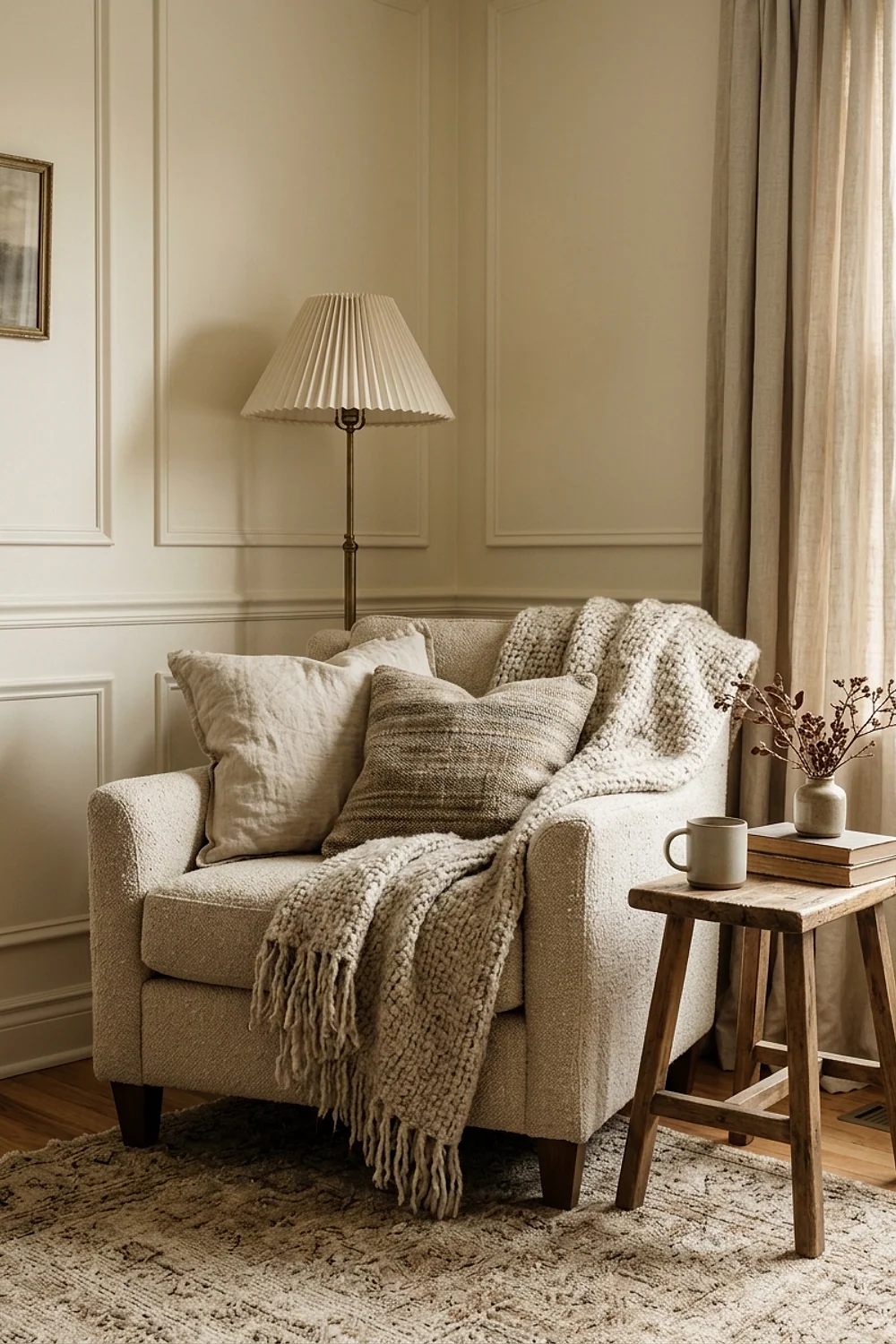
The pricey version uses heavy stonewashed linen and a boiled wool throw. Stonewashed linen cushion covers from big-box stores run in the same oatmeal and flax shades, and they soften with every wash.
Use one 12 by 24 inch lumbar cushion for the back and a 24-inch floor cushion for a second seat. Nubby, slightly wrinkled linen under your hand signals quality, while shiny polyester flattens the whole scene.
This suits anyone who reads for more than 30 minutes at a stretch. Avoid bouclé here, since it leans trendy and fights the plain, matte feel.
Where to splurge and where to save
Half-measures are tempting. A cord taped to the wall, a lamp that almost fits, a chair that is nearly right, and the nook stays unfinished for months.
The fix is to spend on the pieces your body touches or your eye lands on first, and save on the rest.
- Splurge: the chair frame, since solid wood and good joinery last decades.
- Splurge: one real paper or washi lamp if a dupe feels flimsy in person.
- Save: shelving, since oak veneer and painted plywood read the same from 6 feet away.
- Save: cushion covers, throws, and the side table.
Japandi reading nook ideas reward this split because the style depends on two or three strong objects. Everything around them can be plain.
Spotting quality at any price
6 japandi reading nook ideas live or die on joinery and finish, not on brand names. Flip a chair over and look for dowels or mortise joints, then press the seat frame. A wobble means it will loosen further.
Run a hand along wood edges. Good pieces have eased, rounded corners and a matte oil or wax finish, while cheap ones have sharp edges under a plastic-looking gloss.
Here is the counterintuitive part: empty wall space is what makes a nook look costly. A 36-inch bare stretch beside the chair signals that the owner could afford to leave it alone.
Check textiles too. Linen should feel slightly dry and crisp, and a wool throw should have weight, roughly 2 pounds for a 50 by 60 inch size.
Start with the chair, then build out
The 6 japandi reading nook ideas above fit in a corner as small as 3 by 4 feet. Order matters: paint the wall, find the chair, hang the lantern, then fill in shelf, table, and textiles.
Save this list so you can come back when you’re ready to start, and measure your corner and the chair’s seat height before buying anything.




6 Comments