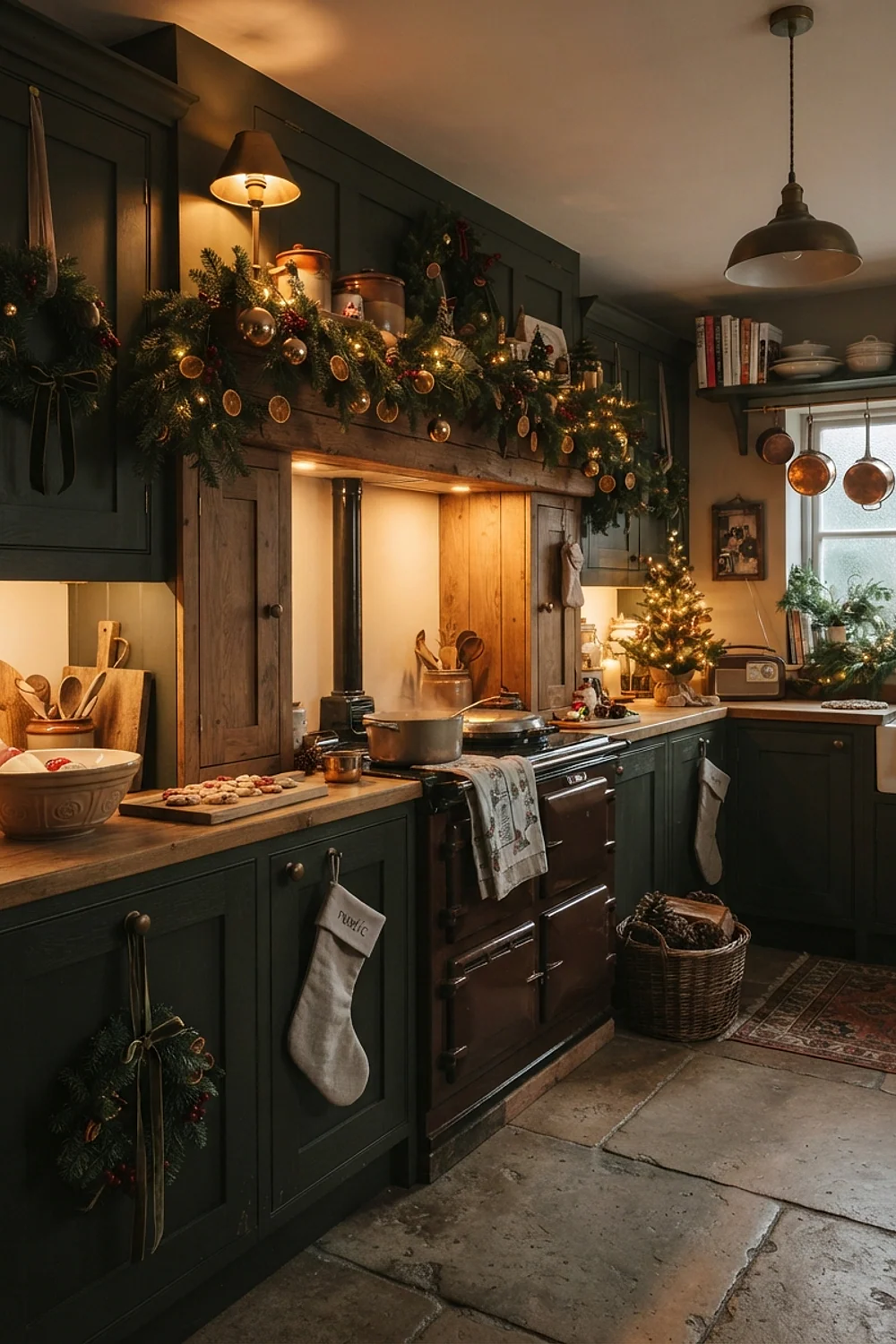
Seasonal Christmas Kitchen Decor Swaps Without Remodel
A fresh cedar sprig snaps with a sharp, resinous smell, and that one sound is often the moment a kitchen tips into December. Christmas kitchen decor works best when it comes from small swaps you can make on a gray Sunday afternoon, not a full overhaul that has to be undone on January 2.
Below are 24 swaps, running from under-cabinet lighting to linens to the pitcher by the sink. Each one gets judged by how it behaves near steam, grease, and a counter that’s used every day.
Refreshing your christmas kitchen decor this season
Christmas kitchen decor is harder than decorating a living room because the kitchen works for a living. Counters need clear space, backsplashes get splashed, and the window light fades around 4:15 in the afternoon in December.
So the order matters. Start with light and linens, add greenery and one or two big shapes, then stop. Everything below can be hung, tucked, or set down in under ten minutes.
A warm-white LED strip under the upper cabinets
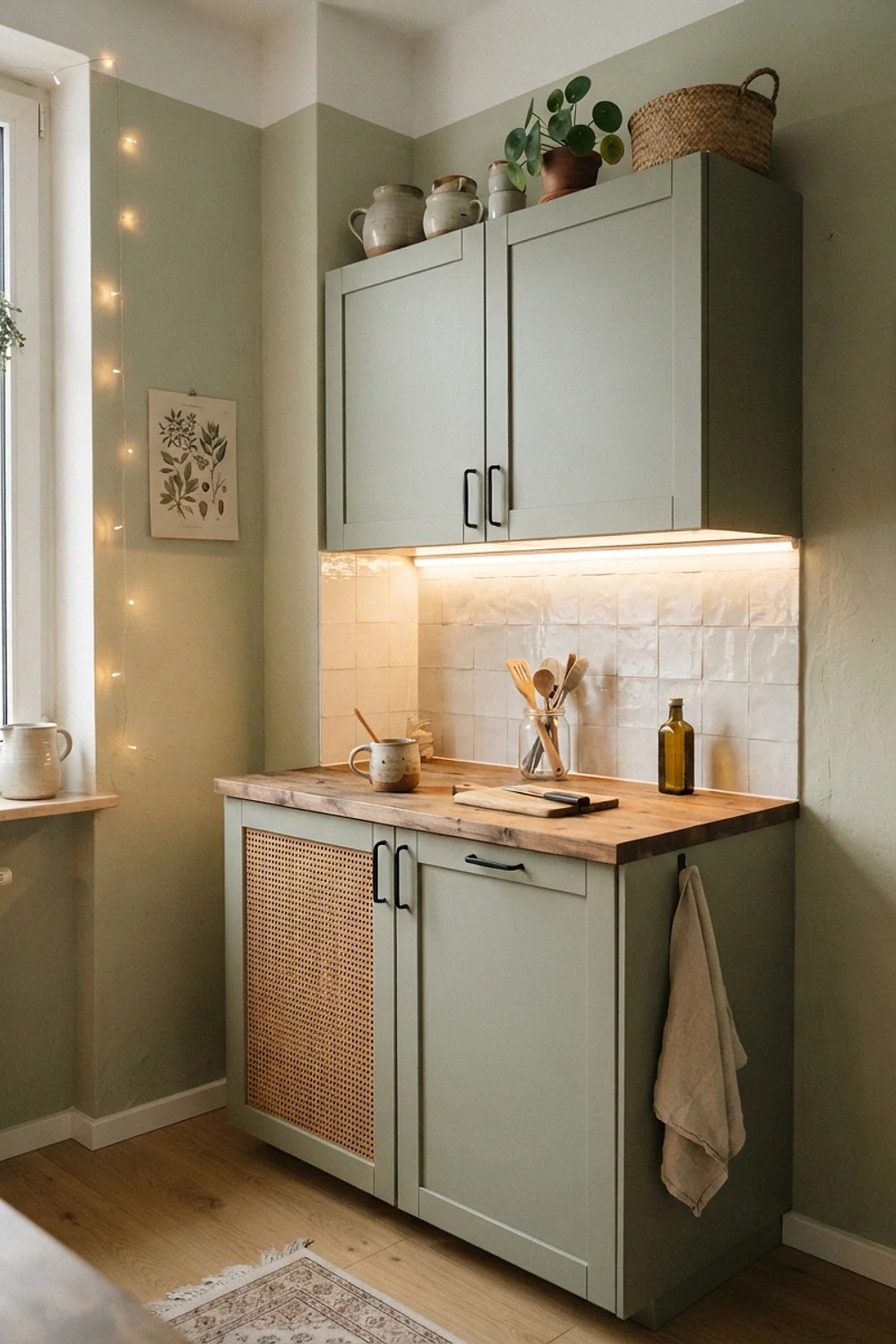
A 16-foot LED strip at 2700K, tucked under the upper cabinets, turns a flat countertop into a glow right when the window light dies. A plug-in set with adhesive backing runs about $15, and it suits renters because nothing gets drilled.
Here’s the counterintuitive part: dim amber light reads as more festive than bright cool white, even though it throws less. Skip anything above 3000K, which turns greenery gray. Wipe the cabinet underside with rubbing alcohol first, or the adhesive lets go within a week.
Lidded glass canisters filled with ornaments
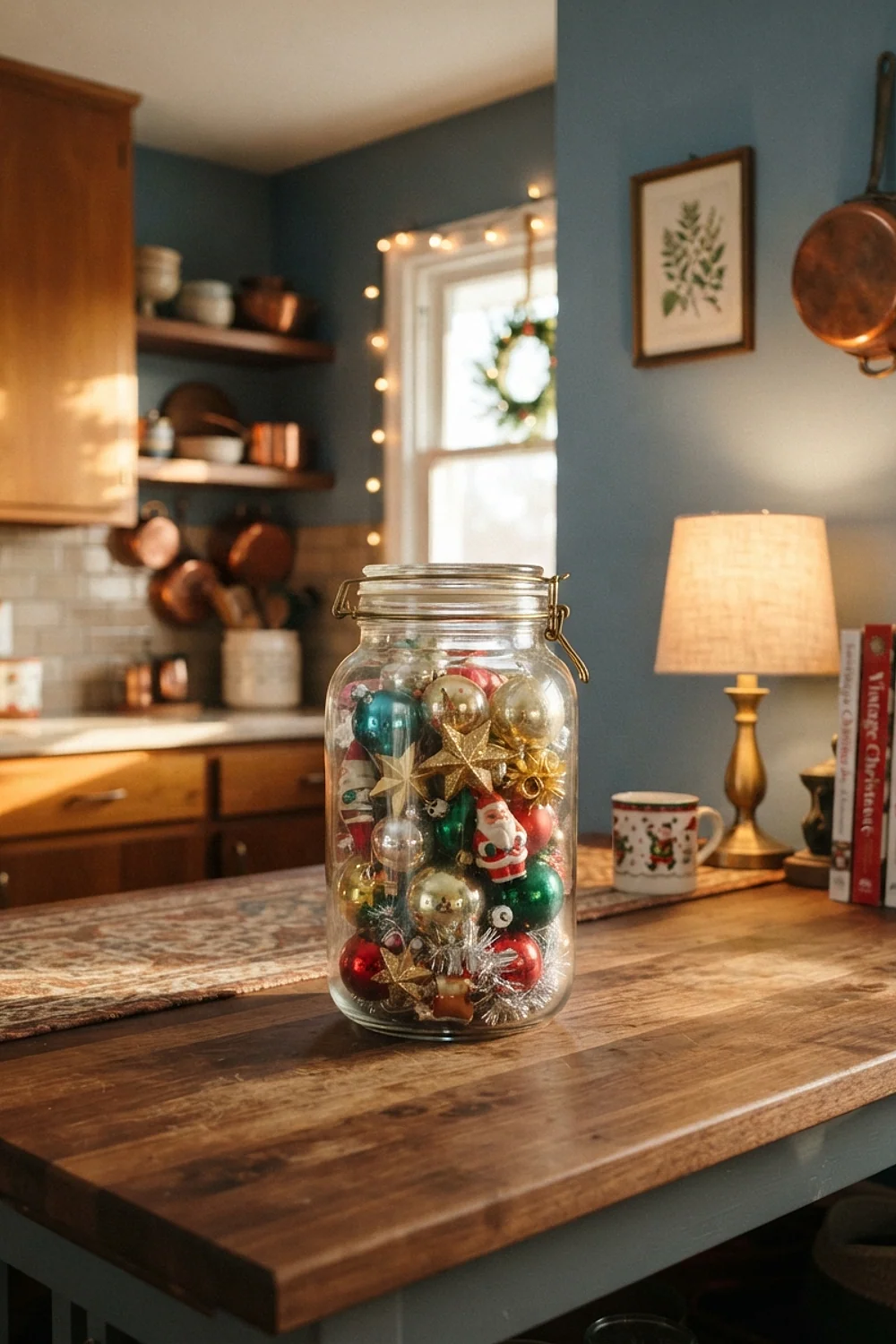
Lidded glass canisters, 8 to 12 inches tall, sit where everyday canisters already live, so a swap costs no new counter footprint. Fill them with shatterproof ornaments, pinecones, or plastic-wrapped peppermints.
The lid keeps dust and grease film off the contents, which is why glass beats an open basket near the range. Skip real candy canes in a humid kitchen, since they turn sticky within days. In homes with kids, shatterproof ornaments also stop the chip-and-clink problem.
Plaid and linen tea towels on the range handle
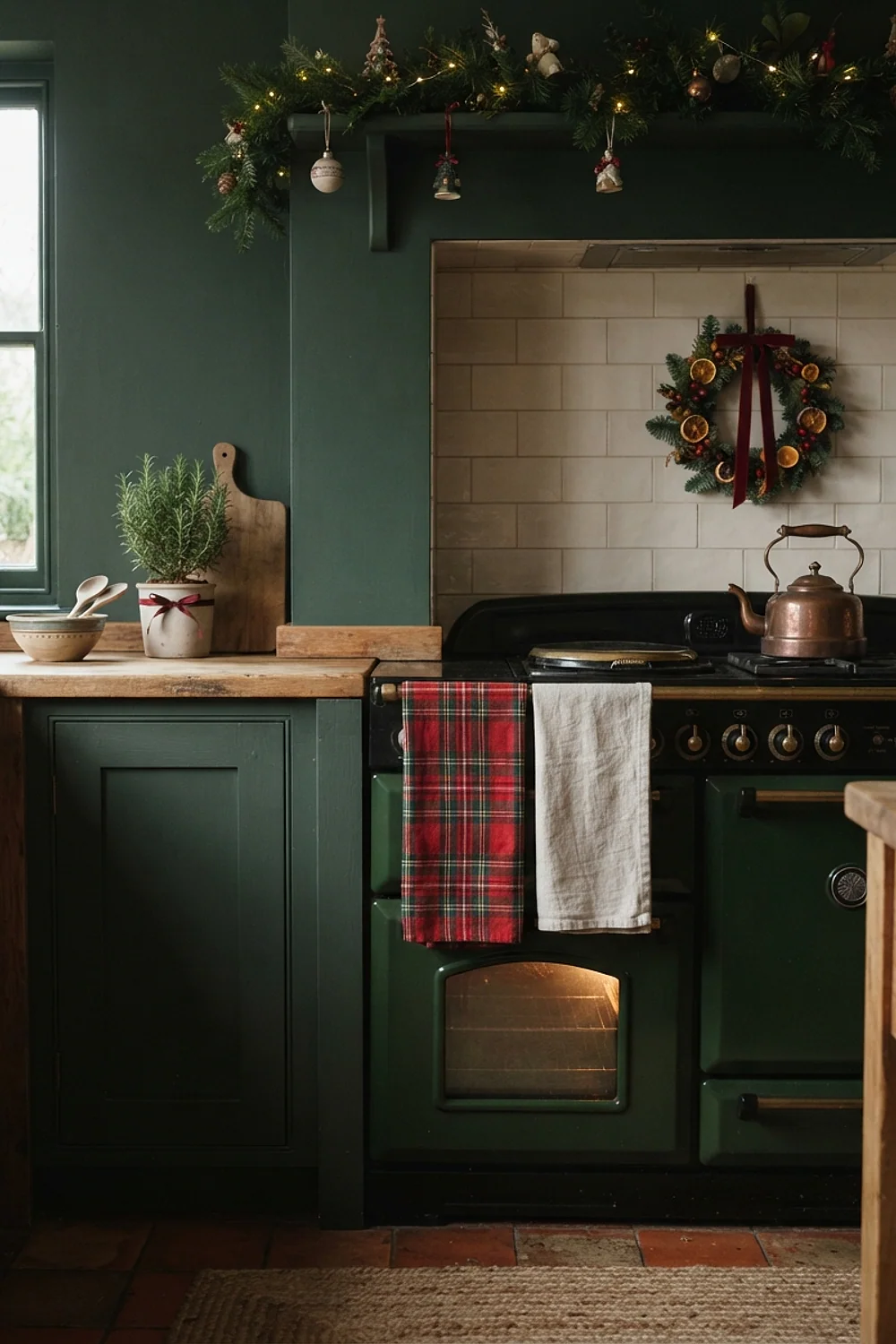
Two tea towels in different patterns, one plaid and one solid, hung from the range handle and a drawer pull do more color work than a dozen small figurines. Linen dries in roughly 30 minutes, while waffle-weave cotton soaks up more but stays damp longer.
Pair a plaid with a plain cousin, such as buffalo check beside oatmeal linen, so the set reads as styled rather than matched. Keep the decorative pair separate from the working pair. Metallic-ink prints and hot pans don’t mix.
Olive wood boards leaned against the backsplash
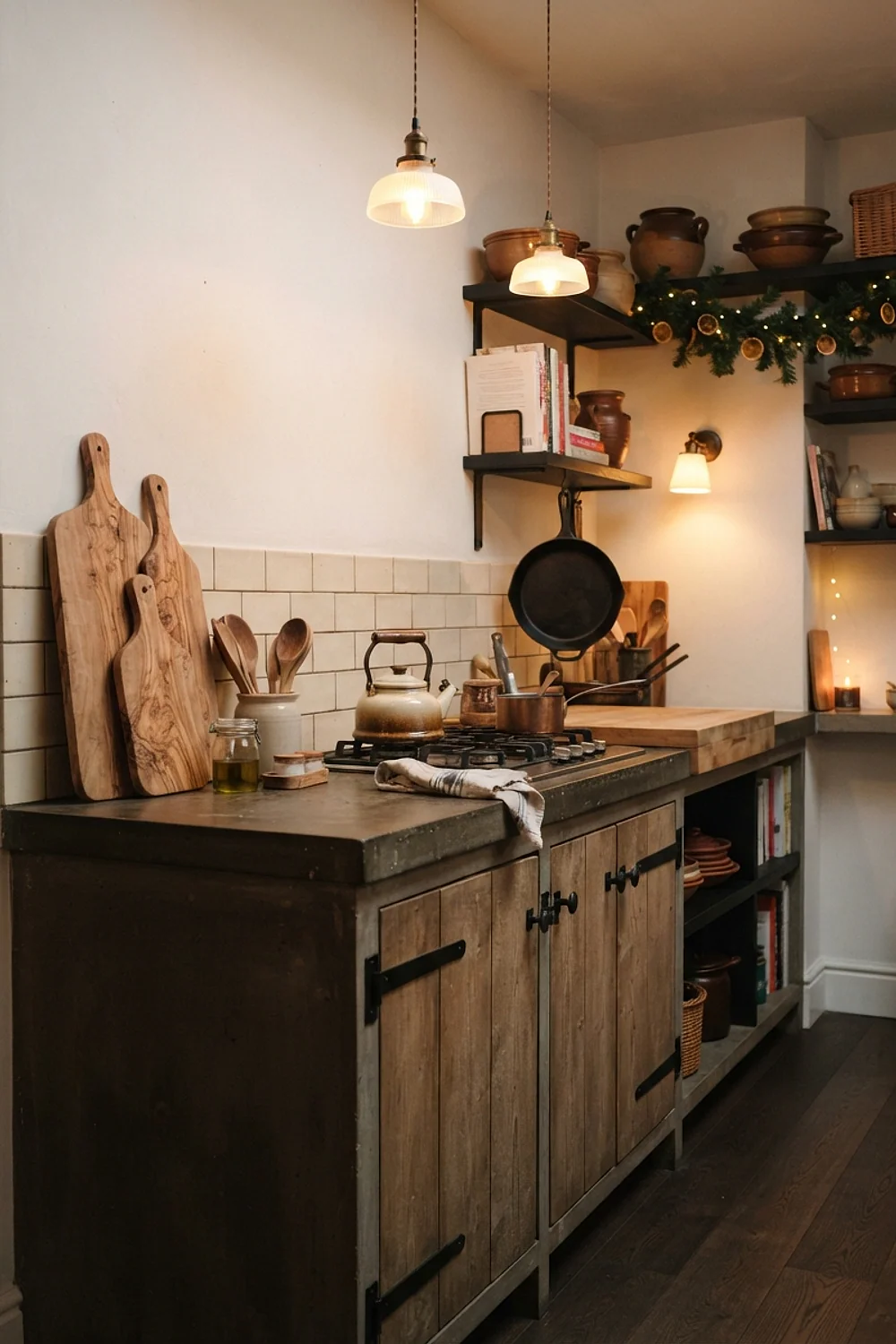
A 12 by 18 inch olive wood board leaned against the backsplash brings grain and visual weight, and a decent one costs around $30. Wood reads as winter because the color deepens under lamplight and the grain hides smudges.
Lean one large board and one small board at different angles, with a strip of cedar garland tucked behind. Thin bamboo slides on tile, so use a rubber foot or a dab of museum putty. Keep raw wood away from the sink edge, where it can warp.
A garland swag draped over the window
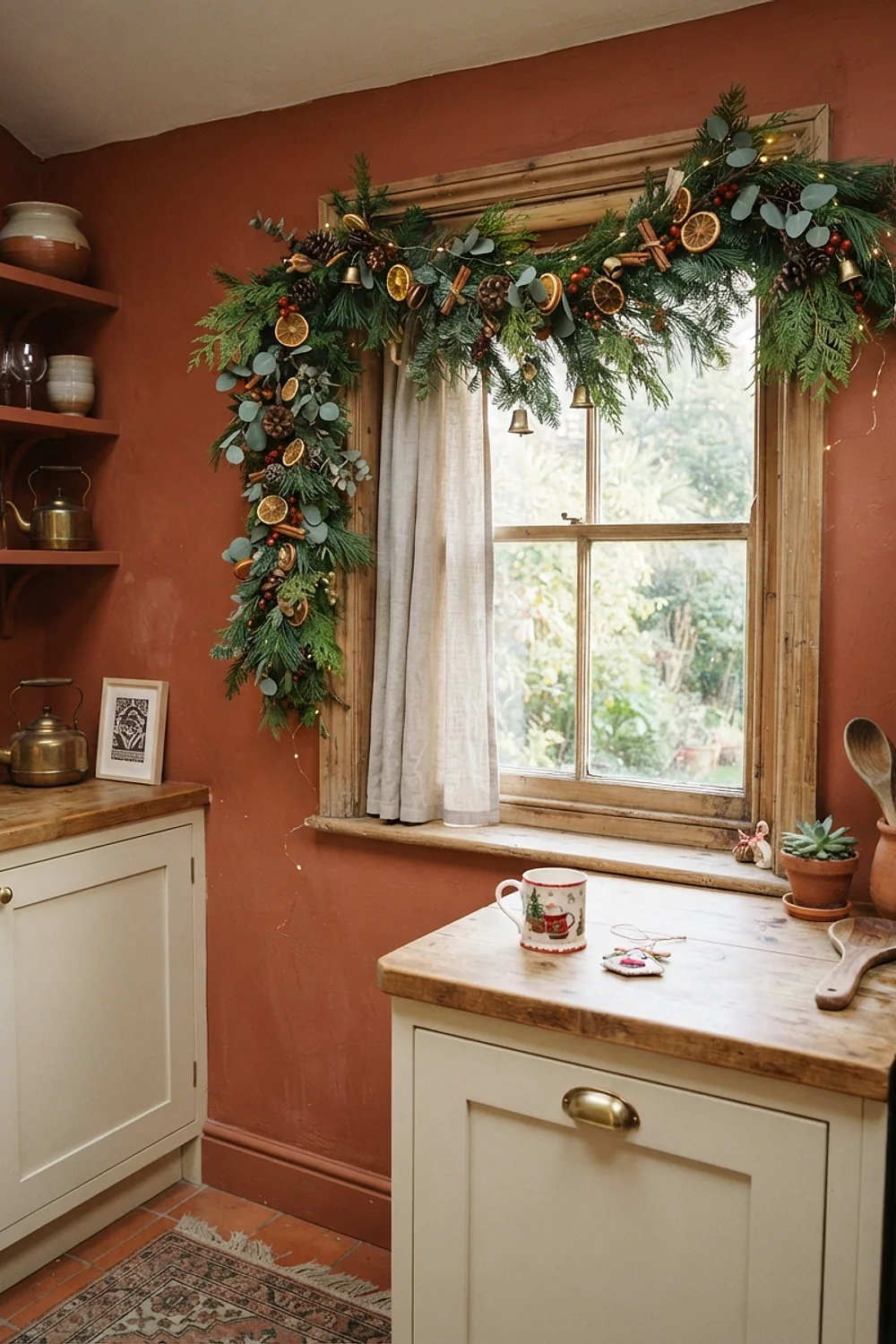
A 9-foot cedar-look garland over the window is the classic move, and the common mistake is hanging it taut like a clothesline. A 6 to 8 inch dip in the center looks natural, while a straight line looks like a hurdle.
Fluff each branch outward from the ends and secure it with removable hooks every 18 inches. Keep it at least 12 inches from the range hood and any open flame, since faux needles melt. It works best on windows wider than 30 inches.
One oversized wreath on a cabinet door
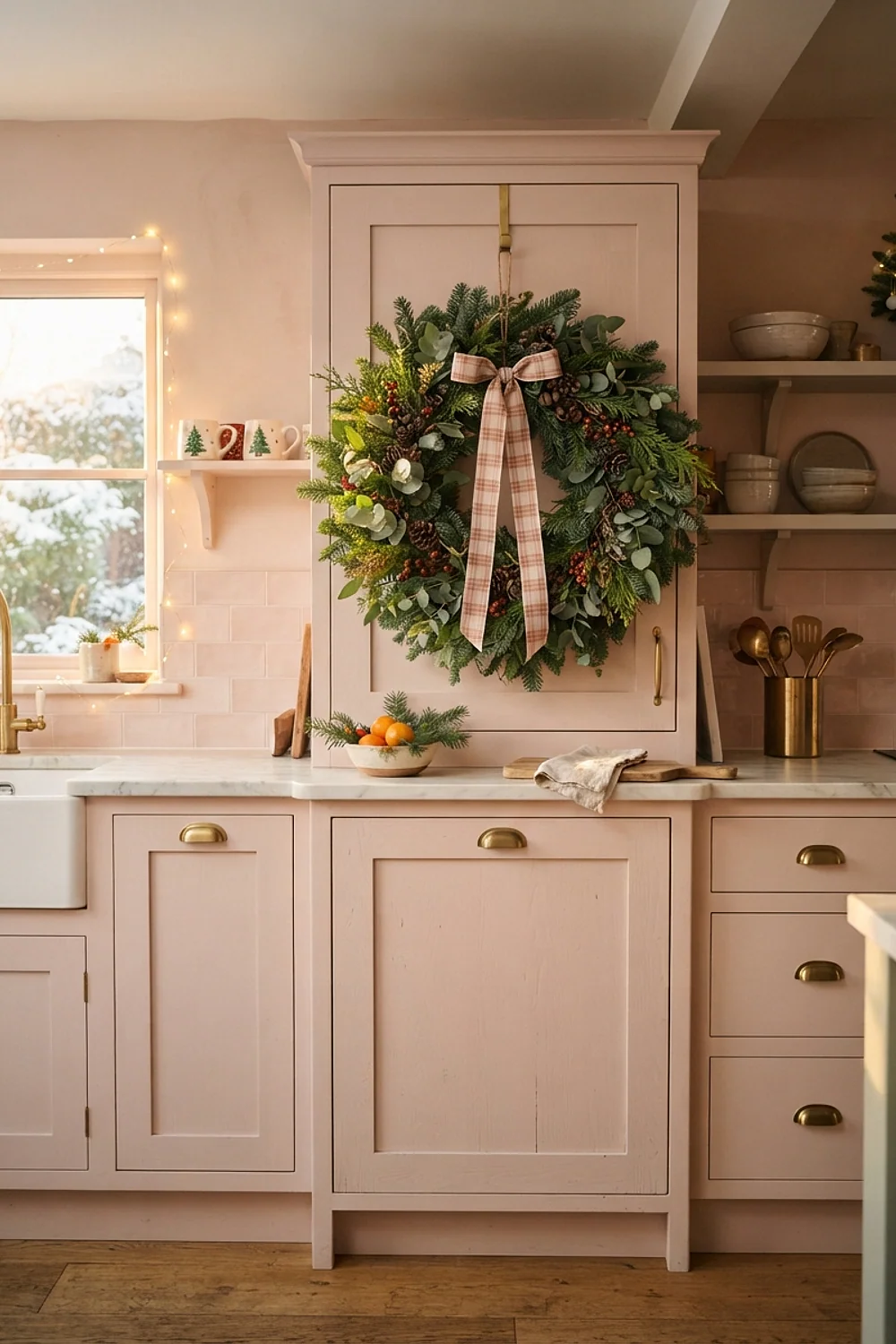
A 24-inch wreath on a glass-front cabinet or the pantry door gives the room one big shape to rest the eye on. Twelve-inch wreaths on every door read as clutter, while a single large one reads as a decision.
Hang it from a 2-inch velvet ribbon looped over the top edge of the door so no nails go in. Ceilings over 9 feet can handle a 30-inch wreath. Check that the door still closes fully, or the wreath will dent against the frame.
A wool runner in muted plaid
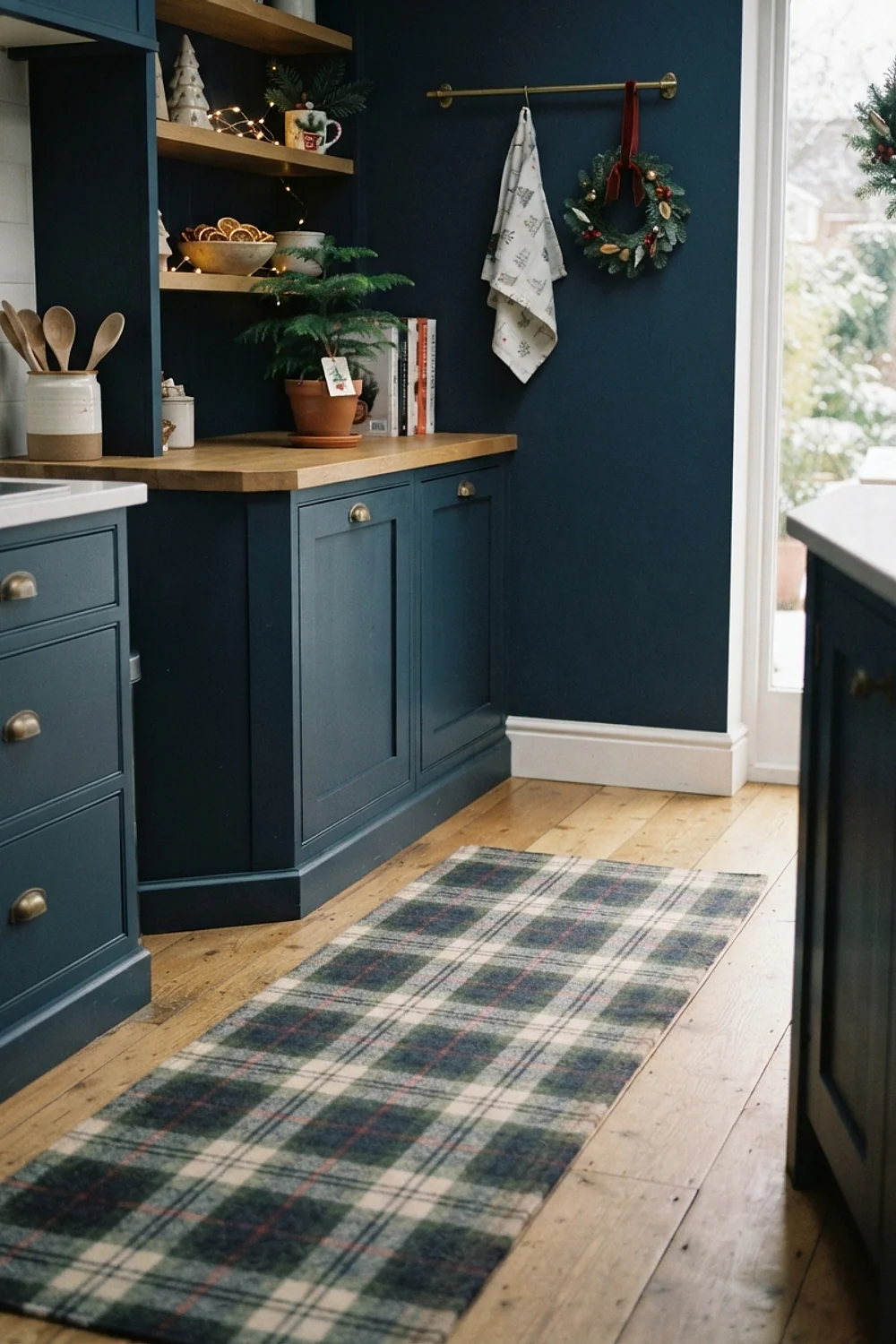
A 2 by 6 foot wool-blend runner in front of the sink takes the chill off a tile floor and catches the drips. An hour of prep at the counter hurts less on a rug with 3/8 inch of felt padding than on bare tile.
It suits galley kitchens where the walkway is only 36 to 42 inches wide. Skip any runner without a non-slip pad, because a sliding rug in a kitchen is a hazard, not decor. Choose flat weave over shag so chair legs and doors don’t snag.
A two-color palette with one metal
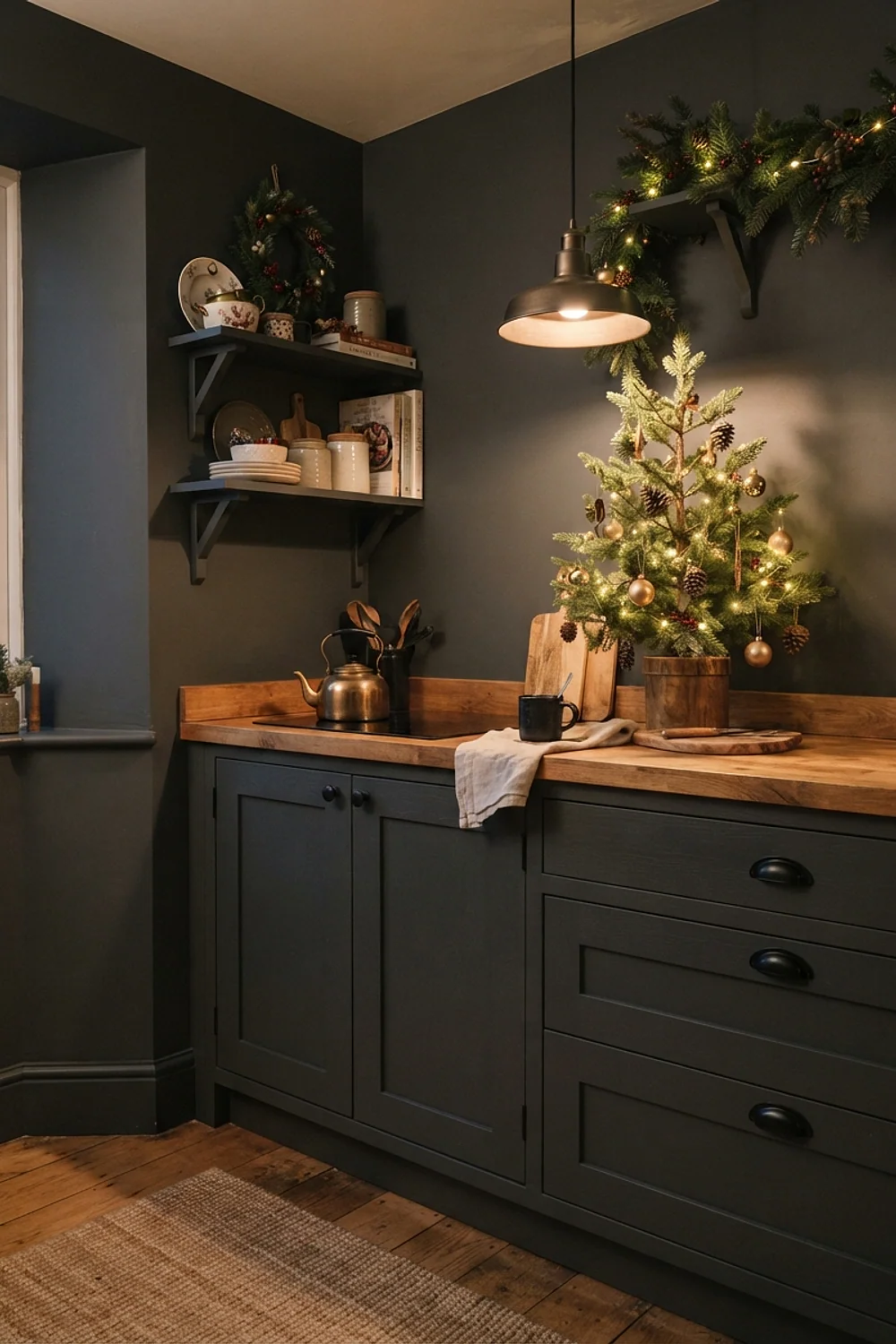
The usual advice says to pick three colors. Actually, no, scratch that: two colors plus one metal finish is the better rule for a kitchen, because cabinets, tile, and appliances already supply plenty of competing color.
Forest green and cream with brass suits white shaker cabinets, while deep red and oatmeal with pewter suits dark ones. Hold a fabric swatch against the backsplash before buying anything, since cool white tile can turn tomato reds orange.
A low tray centerpiece on the island
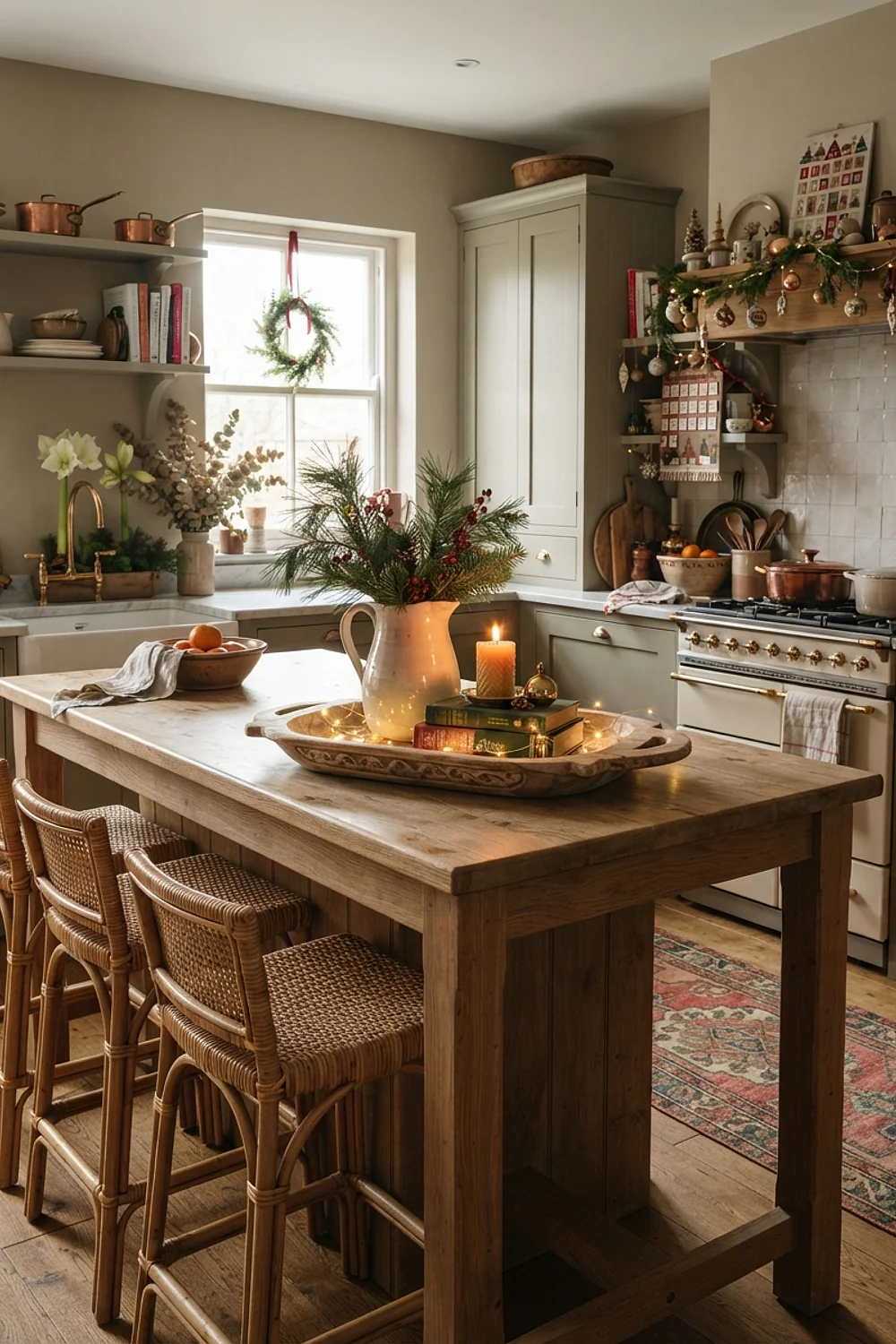
A tray 18 to 24 inches long, holding a cluster of pillar candles, a few pinecones, and a small bowl of ornaments, anchors an island without eating the work surface. Keep it to one third of the island’s length so a prep zone stays open.
A centerpiece has to survive a Sunday of homework, wet coats, and guests leaning on the counter, so a low, wide, rimmed tray beats a tall arrangement. Anything above 12 inches blocks sightlines and gets knocked over. Use flameless pillars if kids are around.
A mug rail for a hot cocoa corner
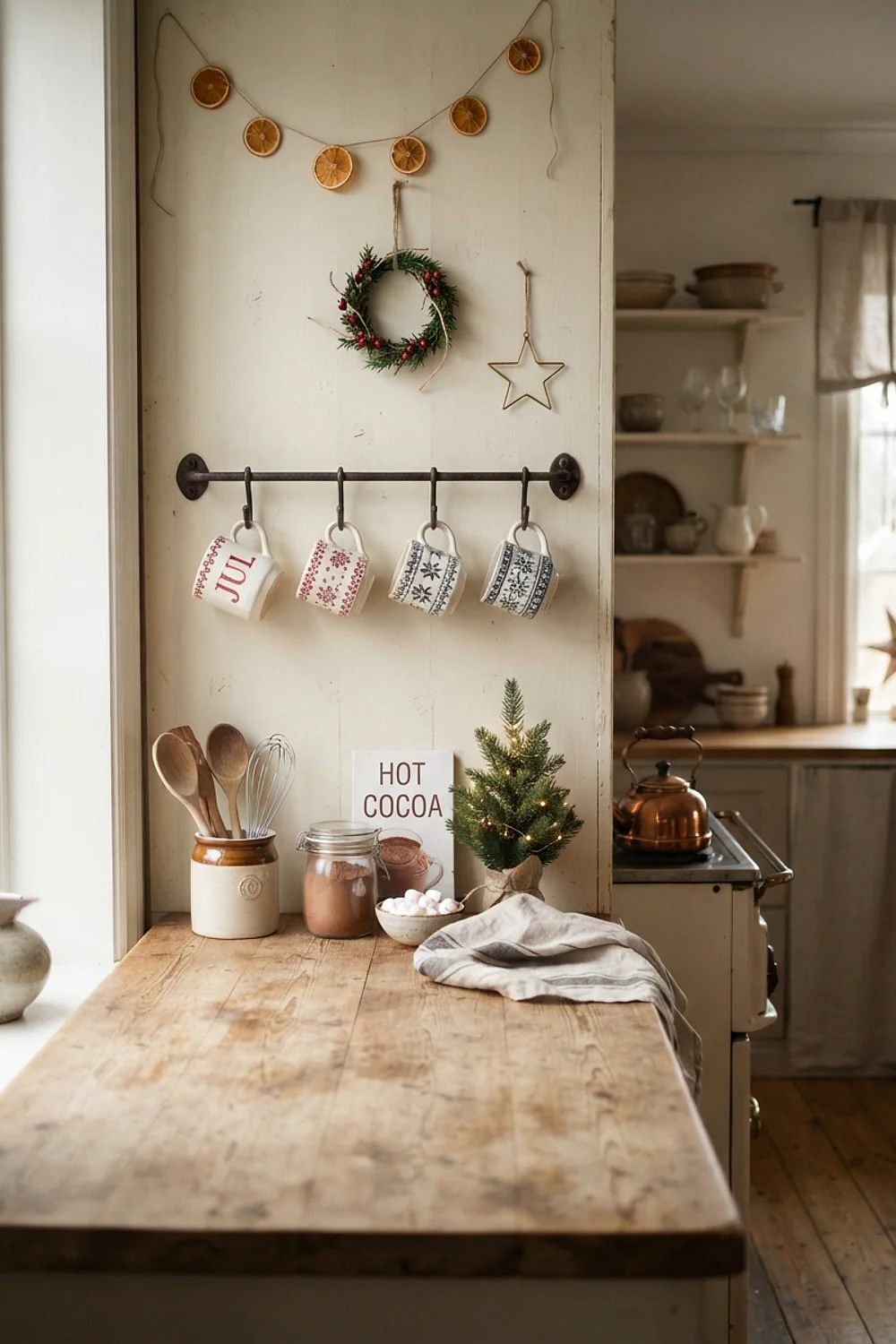
A brass or black rail with five or six hooks costs about $12 and holds holiday mugs at reaching height beside the kettle. Hanging mugs frees a cabinet shelf and turns daily use into the display.
Choose mugs with a handle opening of at least 1 inch so fingers fit. Add a small tray below with a tin of cocoa, marshmallows in a lidded jar, and stir sticks. Mount the rail into studs or use anchors rated for 20 pounds, because ceramic is heavy.
Flameless tapers in the window
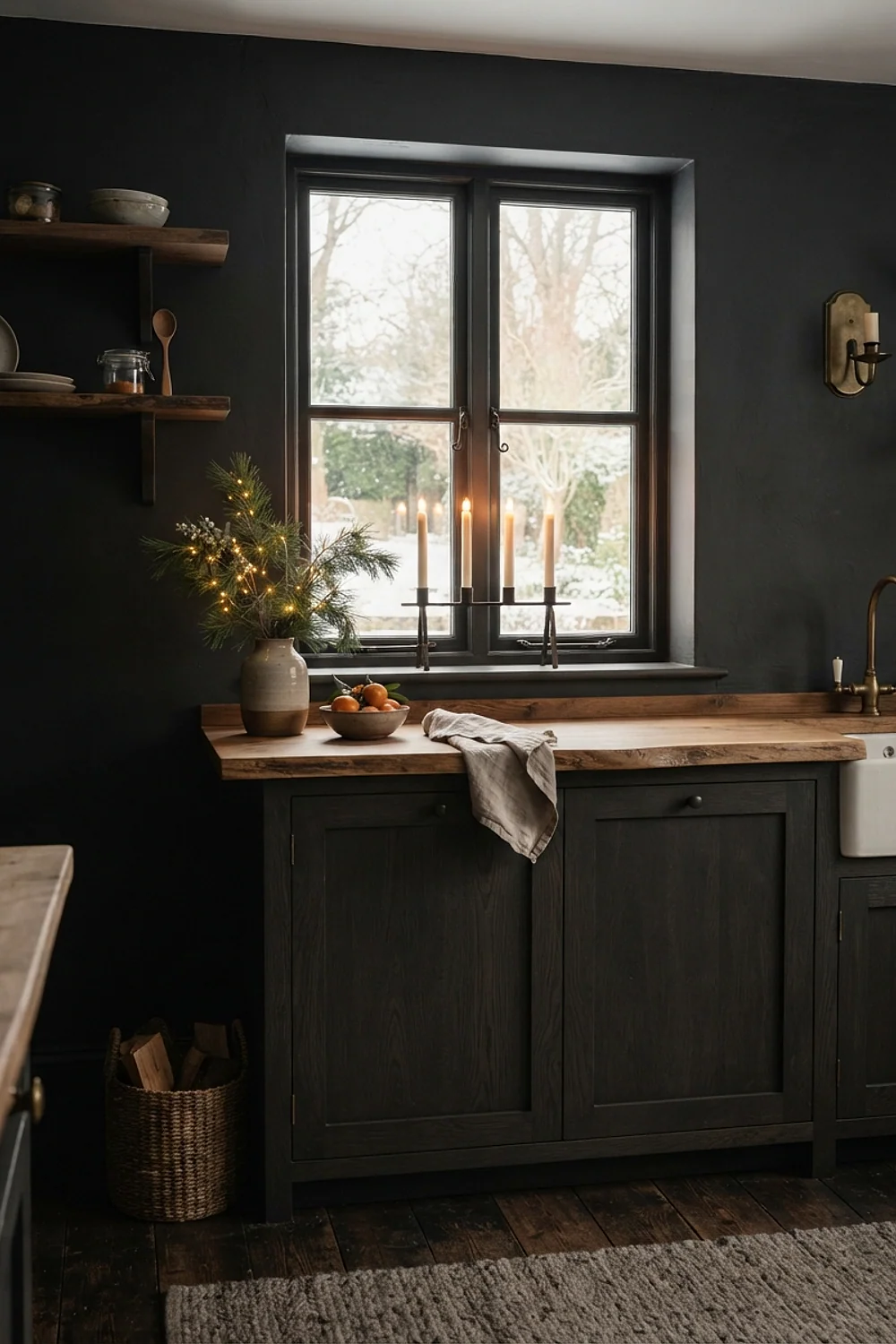
Battery taper candles in brass holders on the windowsill catch the last light of the afternoon and keep glowing after it’s gone. A built-in timer set to 6 hours switches them on at dusk without anyone touching them.
They suit kitchens with a sill at least 4 inches deep, and homes with cats or small children. Pick a flicker setting with an amber tone, because a steady blue-white tip looks clinical. A shallower sill needs a small tray to keep the holders from tipping.
One open shelf rotated for the season
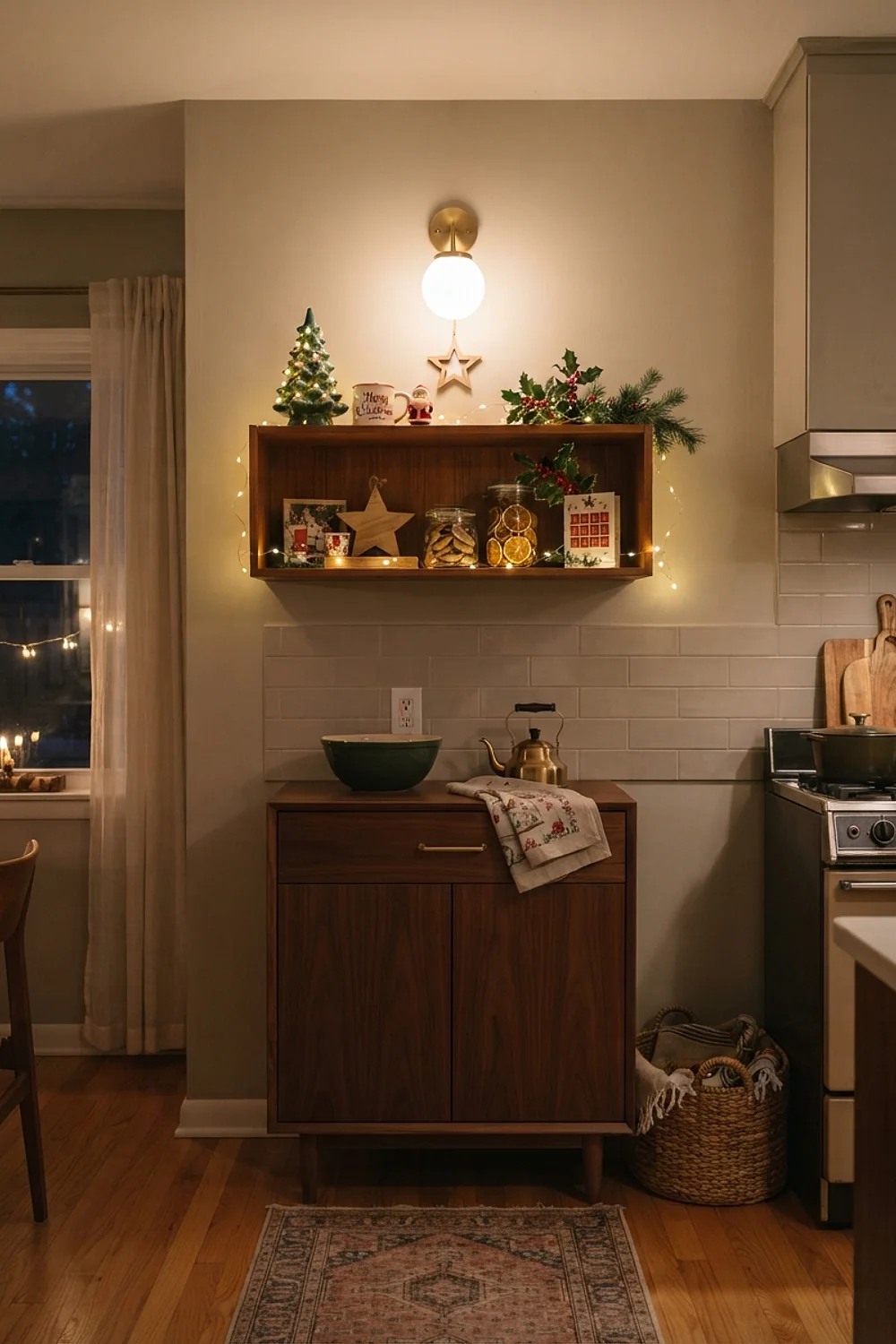
Open shelves are the quickest place to swap. Remove the everyday bowls from one shelf and put in a ceramic tree, a stack of cream plates, and ornaments in a wooden bowl.
Change only one shelf out of three, so daily use stays easy and cleanup stays a 5-minute job. Grease and dust settle on open shelves, so wipe pieces with a damp microfiber cloth before storing them. Shelves 10 to 12 inches deep hold this without crowding. Keep fragile heirlooms away from the range.
Mini trees in a set of three
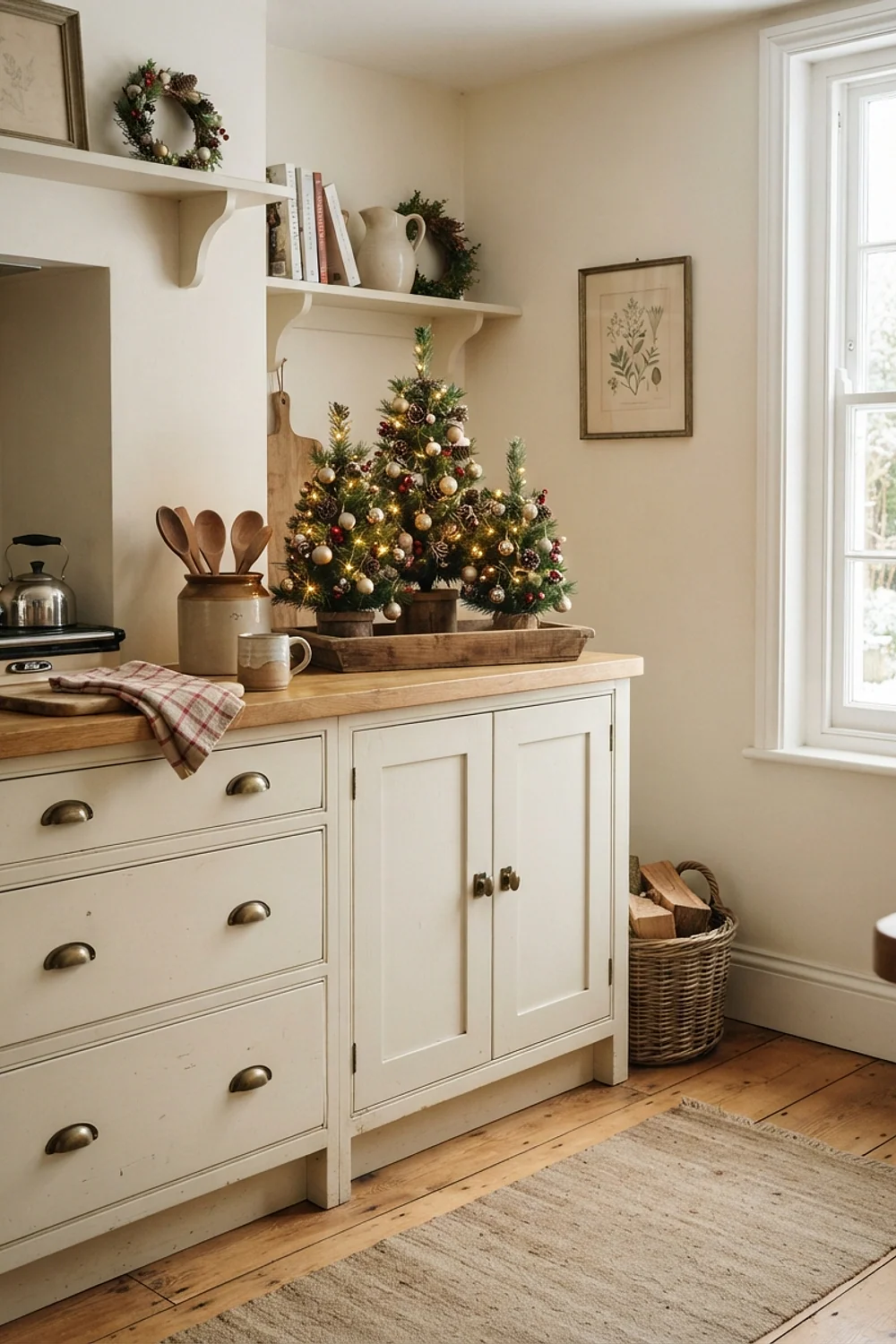
Mini trees at 8, 12, and 16 inches, grouped in a counter corner, look intentional because odd numbers and stepped heights read as a composed set. Matching sets look catalog-flat, so mix white, flocked green, and pale wood finishes.
Leave about 3 inches between them so branches don’t tangle. Keep the group at least 18 inches from the range, where steam and spatter coat the branches within days. This works for any counter corner that’s otherwise dead space.
Velvet ribbon bows on cabinet knobs
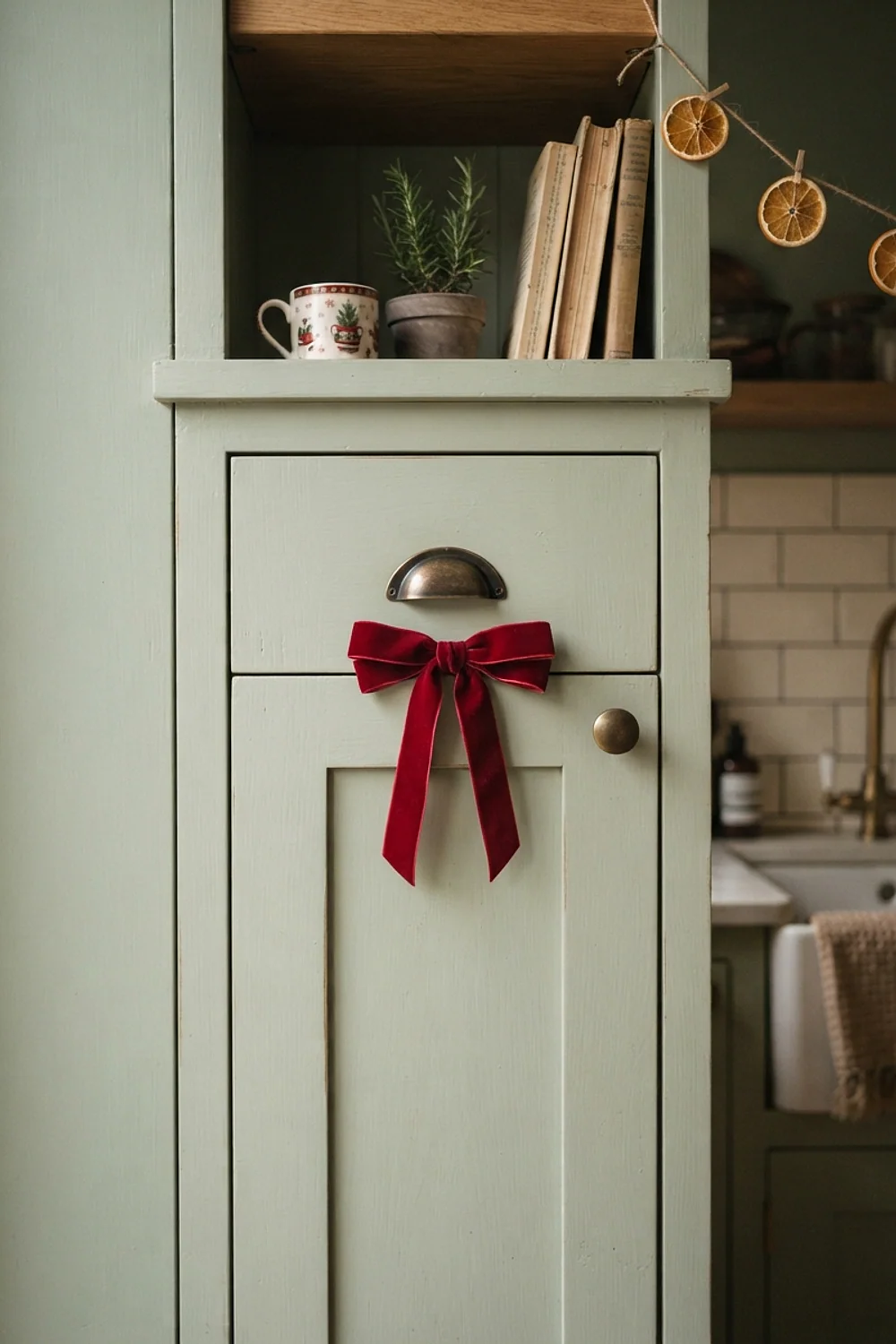
Velvet ribbon, 1.5 inches wide, tied in small bows around cabinet knobs brings texture into a room full of hard surfaces. A 10-yard spool runs about $8 and covers a full run of uppers.
Velvet’s pile deepens in angled light, while satin glints and looks flat under overhead bulbs. Tie bows only on cabinets across from the range, since knobs near it collect grease. Wire-edged ribbon holds the loops in shape. Nothing gets drilled, so it’s ideal for rentals.
One lightly scented candle, not three
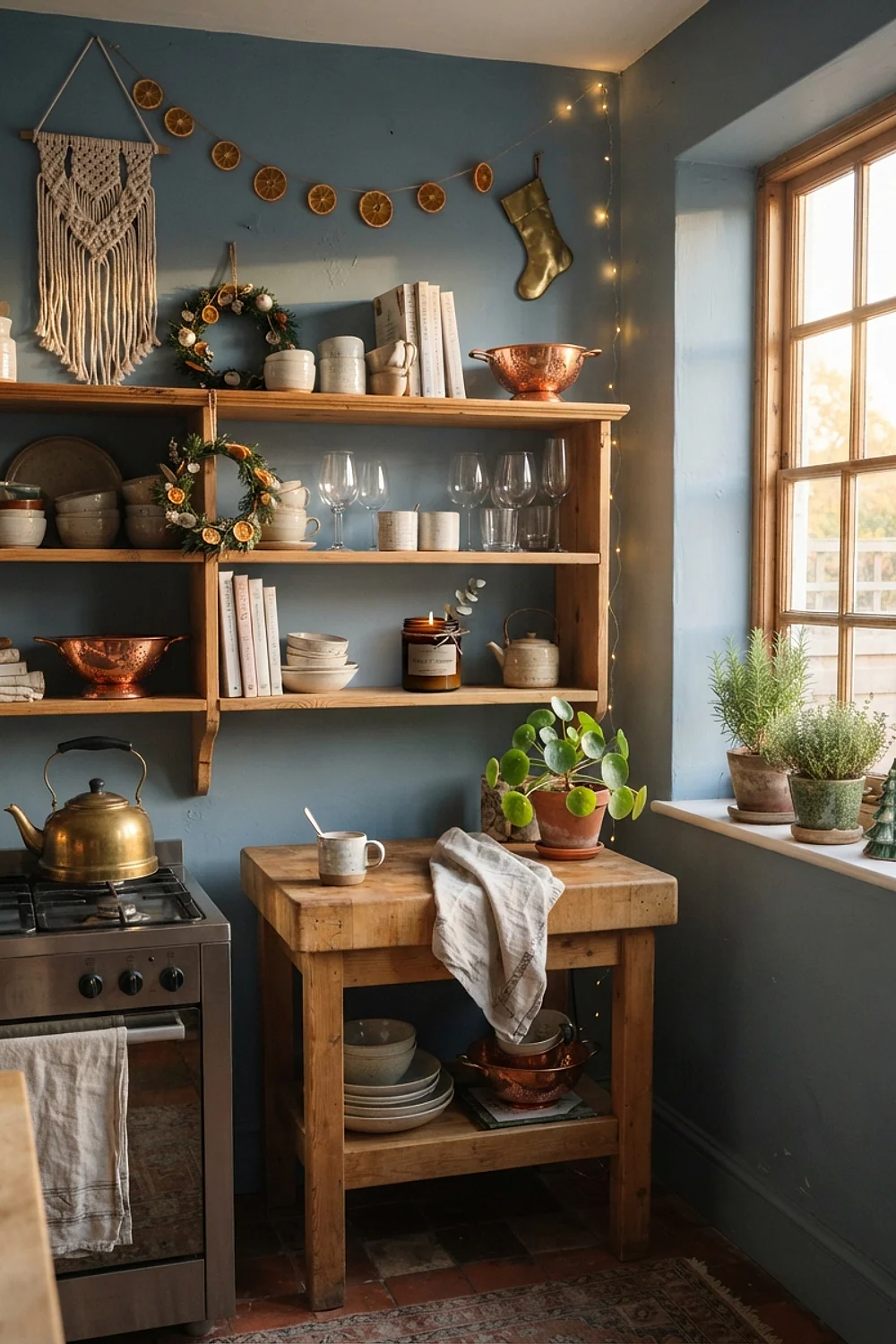
Scented candles are the most common mistake in a Christmas kitchen, because a heavy balsam or clove fragrance fights whatever is on the range and smells muddy by dinner.
Look, one light scent in the room is plenty. Choose pale fir or orange peel, burn it under 2 hours at a stretch, and keep it 3 feet from the range hood intake. Unscented beeswax tapers are the quiet option for anyone sensitive to smell.
A pedestal stand under the ornament bowl
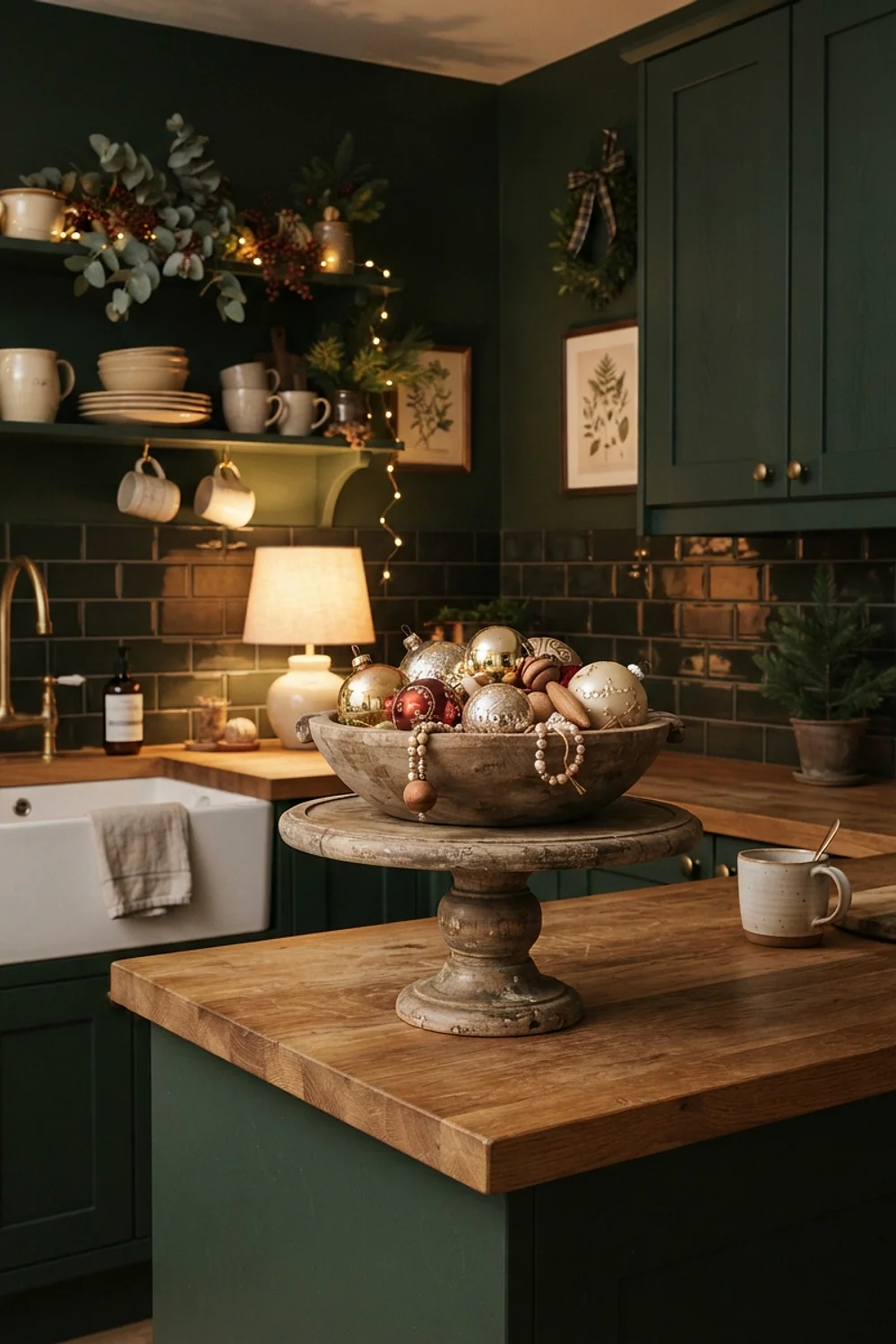
A 10-inch pedestal stand, about 6 inches tall, lifts a bowl of ornaments off the counter so it reads from across the room. Low objects disappear against a busy backsplash on a standard 36-inch counter, and height gives them a stage.
White ceramic or aged brass both work. Fill the bowl with ornaments in two or three sizes, each 2 to 3 inches across. Skip glitter-heavy balls here, since they shed onto the counter and end up everywhere. This is the move for small kitchens with limited surface.
A chunky throw over the breakfast bench
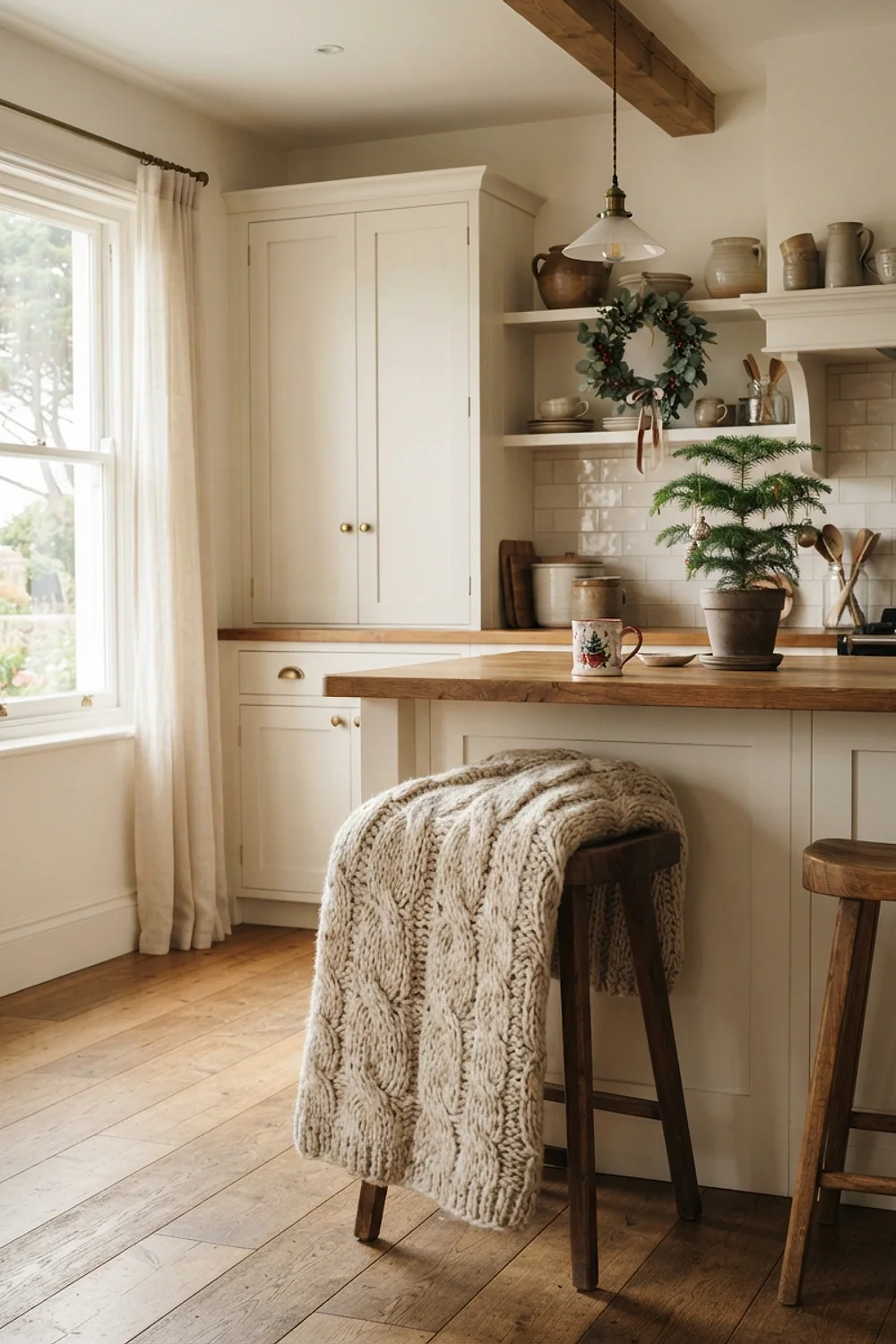
A chunky knit throw, about 50 by 60 inches, folded over the back of a breakfast bench or draped across a stool turns the sit-down corner into a place people linger. The nubby stitch feels good under a palm, and that invites touch.
Choose wool or a wool blend that can be spot cleaned and aired, because kitchen throws collect steam and smells. Keep it off the seat itself, where spills land. Cream or oatmeal hides marks better than pure white.
A bowl of dried oranges and cranberries
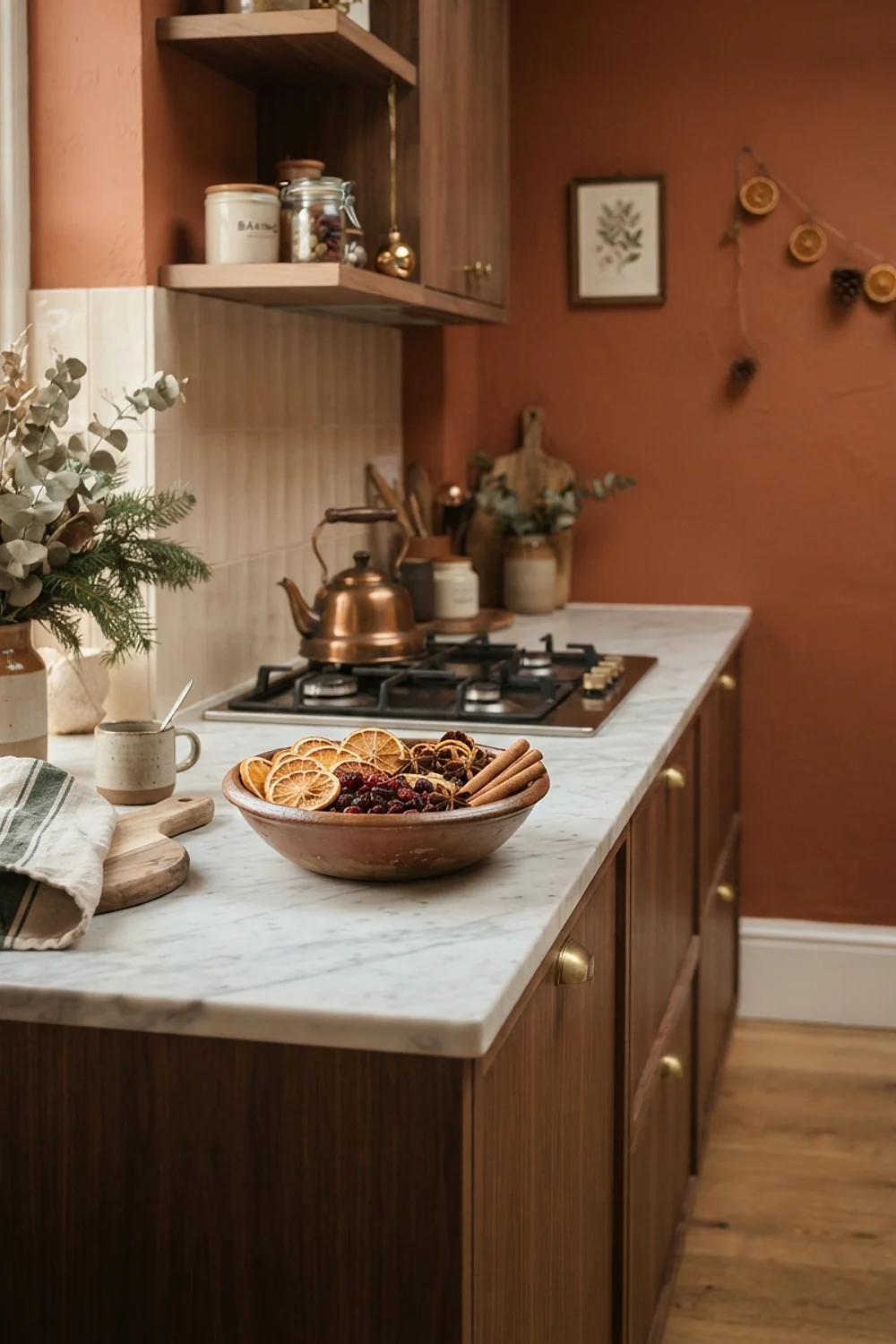
A wide 10-inch wooden bowl of dried orange slices, fresh cranberries, and a few cinnamon sticks brings red and amber into a white kitchen for roughly $10 of produce. Dried oranges last the whole season, and cranberries hold about 3 to 4 weeks in a cool room.
The color sits well beside green garland and brass. Keep the bowl out of direct window sun, which browns cranberries in about a week. Add a few clementines the week guests arrive, since the smell does half the work.
A triangle of three pieces on one stretch of counter
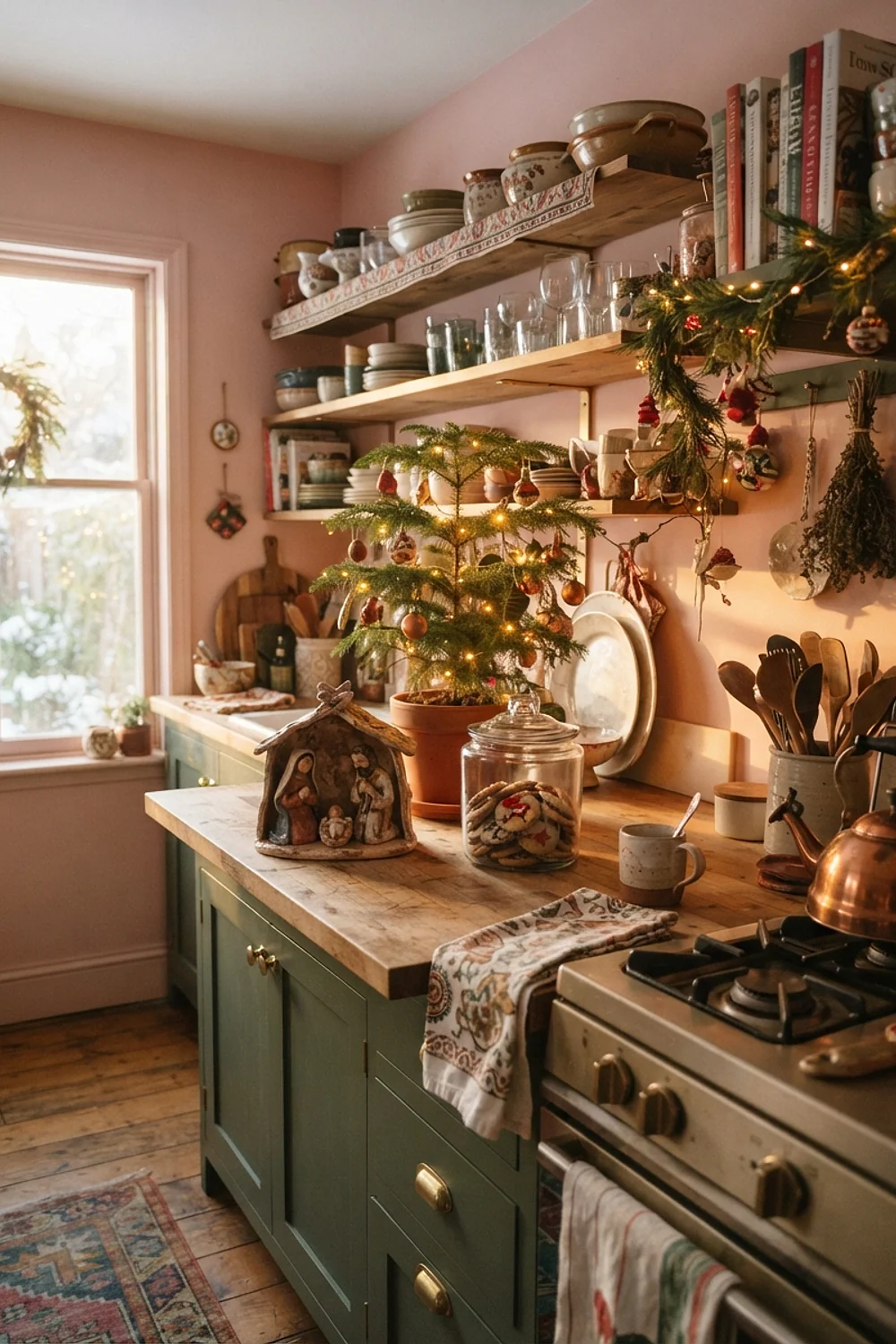
Three decor pieces, say a tree, a candle, and a bowl, set in a triangle on one stretch of counter keep the other 80 percent clear. The eye travels between the points, so a small group still looks full.
Leave at least 24 inches of open counter beside the range and next to the sink. In an L-shaped kitchen, place the group at the corner, where foot traffic is lightest. Spreading the same pieces evenly makes the whole counter feel crowded.
A glass pump bottle and linen hand towel at the sink
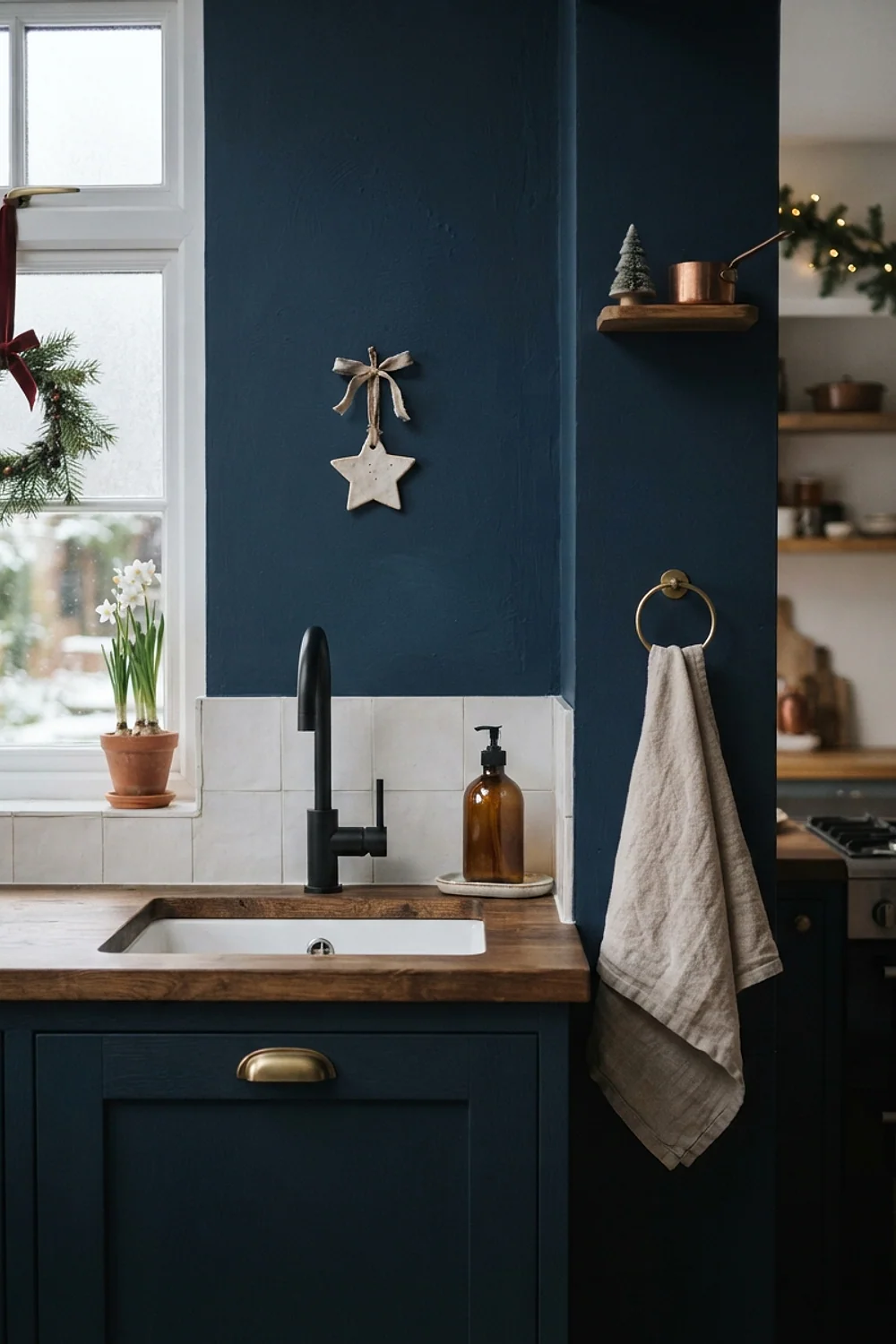
A holiday-scented hand soap in a glass pump bottle, plus a small linen hand towel, makes the sink a decorated spot that still works. Refillable pumps hold about 12 ounces and show the soap’s color through the glass.
This suits households with guests coming and going, since everyone washes hands. Skip decorative bar soap on a plate, which turns to mush near the faucet. Pick a plain pump over a foaming one so the liquid looks thick and colored.
Lanterns in three heights on top of the cabinets
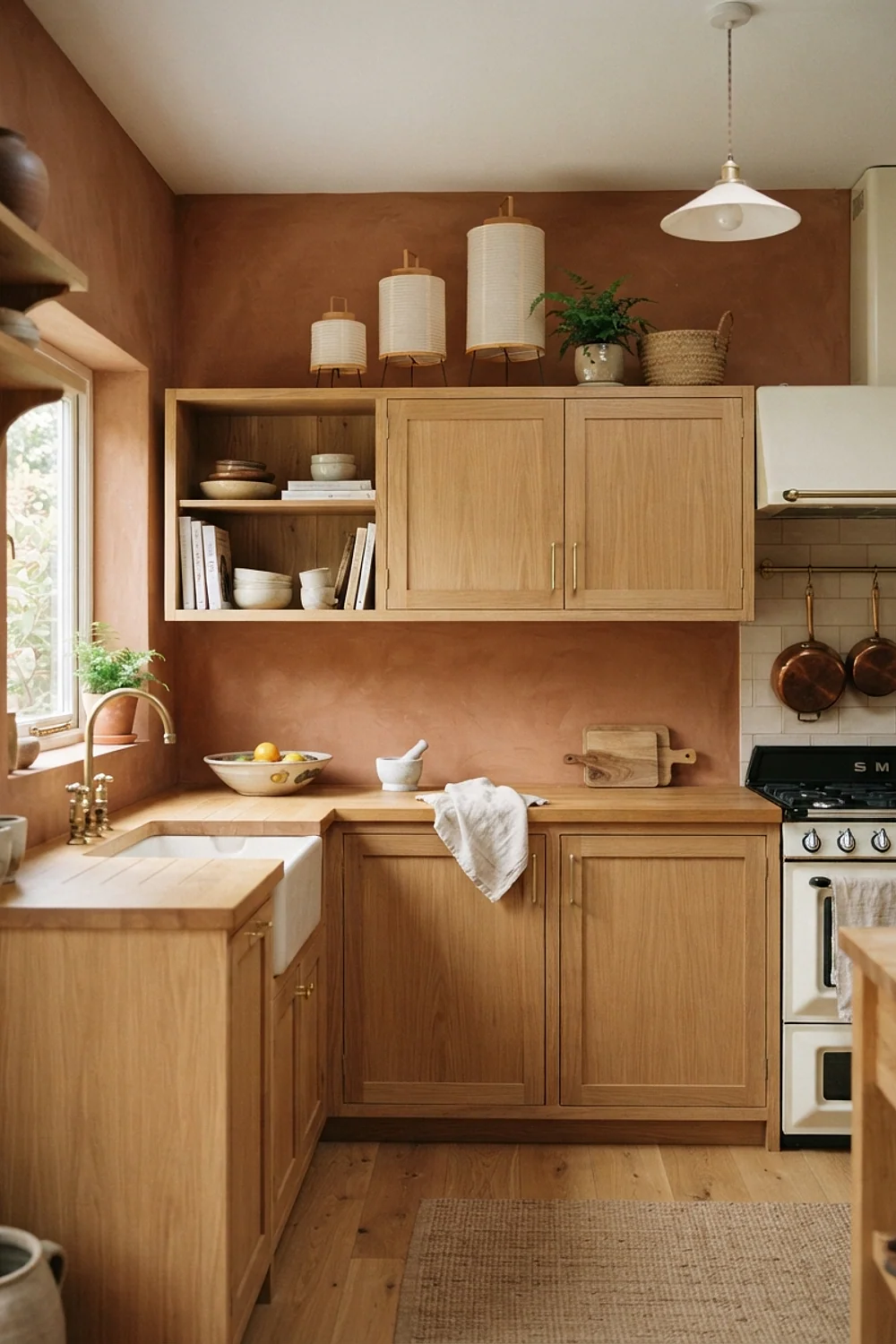
Lanterns in three heights, set on top of the upper cabinets with battery LED candles inside, throw a low glow across the ceiling and fill dead space. The reflected light softens the room after dark.
Aim for kitchens with at least 12 inches between the cabinet tops and the ceiling, ideally with a pale ceiling that bounces the glow. Stay away from real flames, since heat collects up there. Dust the lantern tops before packing them away in January.
A slim rolling cart for a holiday station
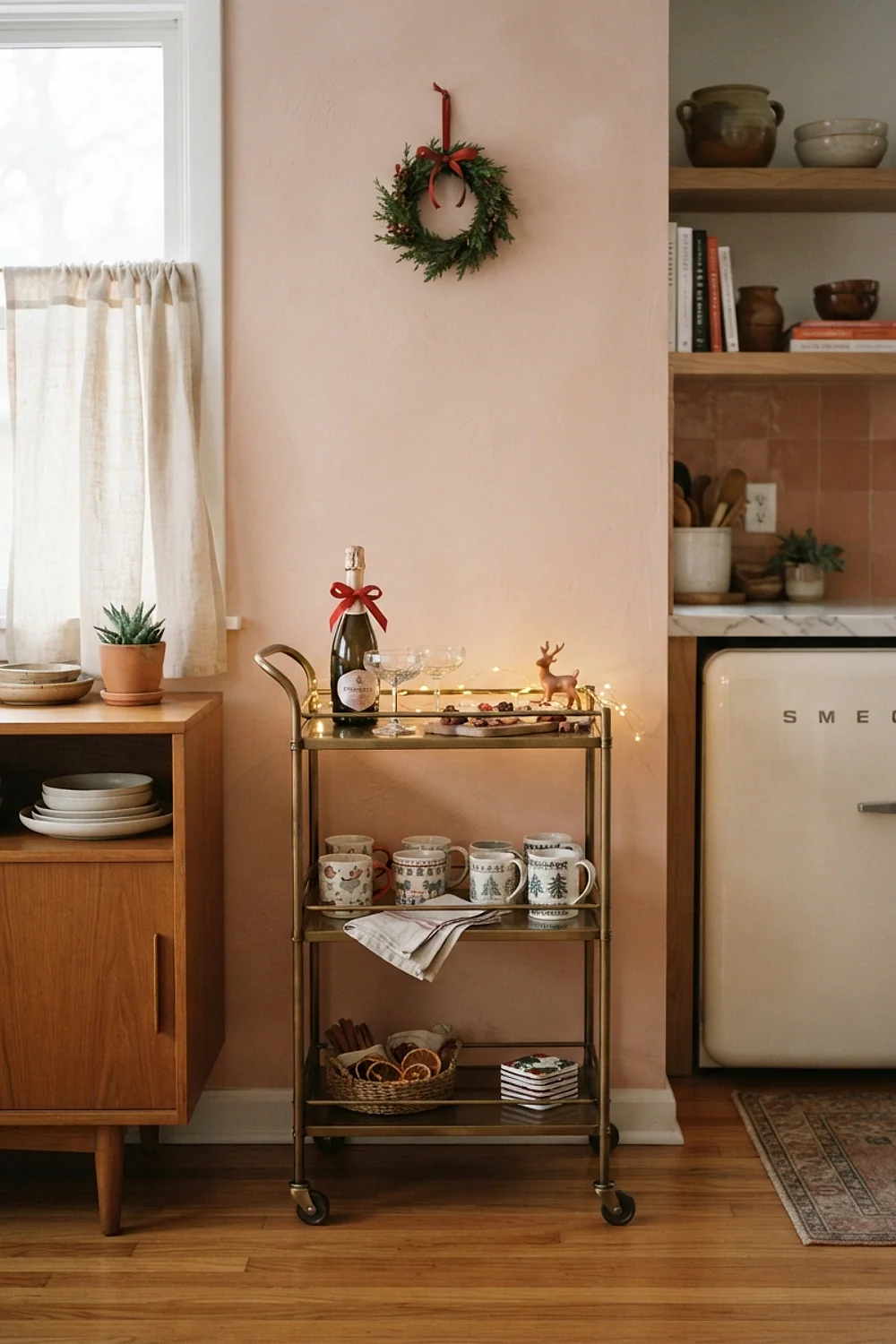
A slim rolling cart, 14 inches wide, costs about $60 and turns a gap beside the pantry into a holiday station that rolls out for guests and away afterward. It can hold a tray of glasses, a pitcher, napkins, and a small tree.
It works best in open-plan homes where the kitchen is visible from the living room. Measure the gap first, because a 14-inch cart needs about 16 inches of clearance for the handle. Put heavy items on the bottom shelf and lock the casters.
A small chalkboard on an easel
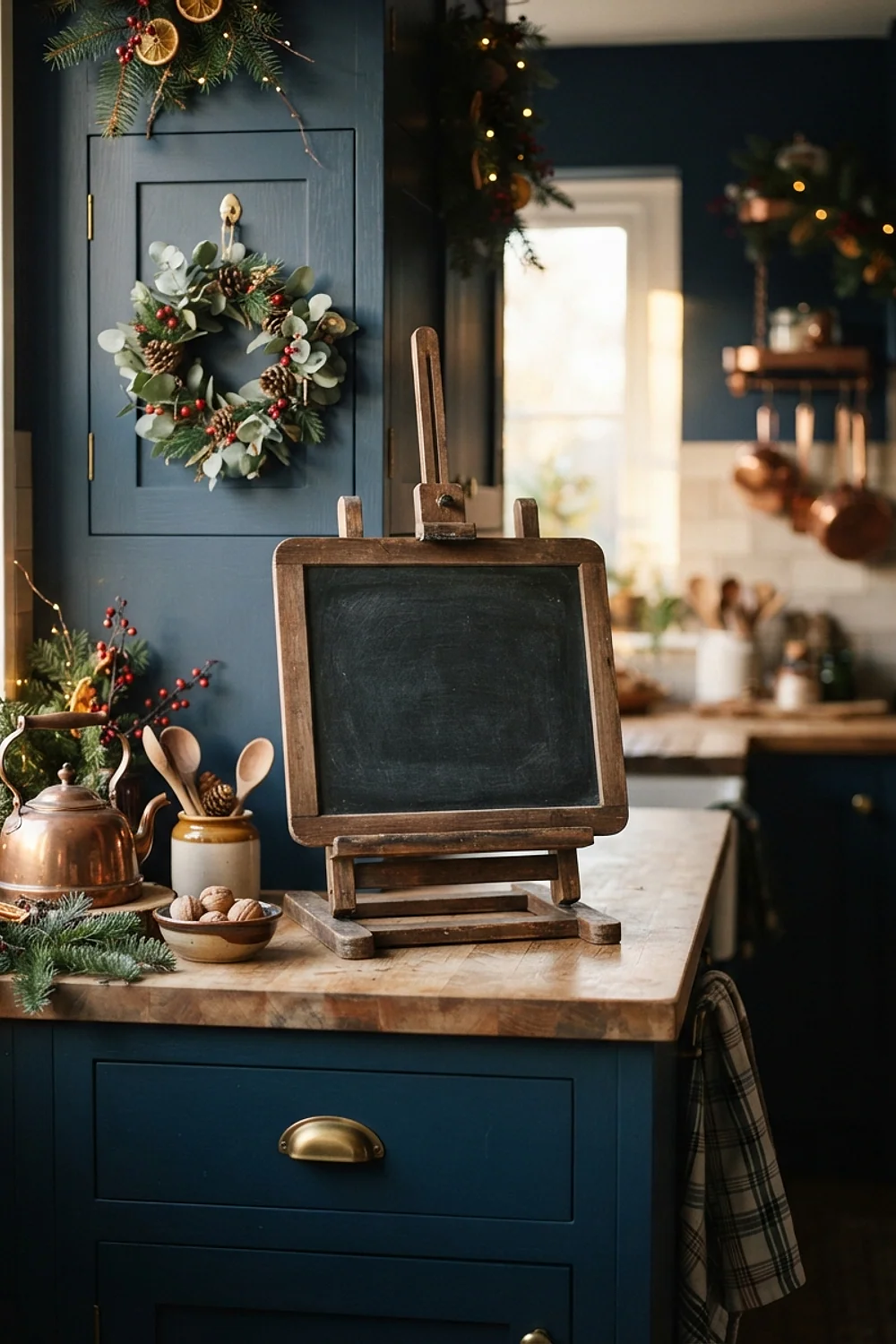
Set at the back of the counter, a 12 by 16 inch chalkboard on an easel gives the room a hand-lettered voice. Use it for a countdown, a line from a carol, or the week’s guest list.
Write with a white chalk marker, not dusty chalk, which smudges onto sleeves. It suits families who enjoy changing the message daily. On narrow counters, avoid a board wider than 16 inches, which crowds the backsplash.
A speckled enamel pitcher of eucalyptus
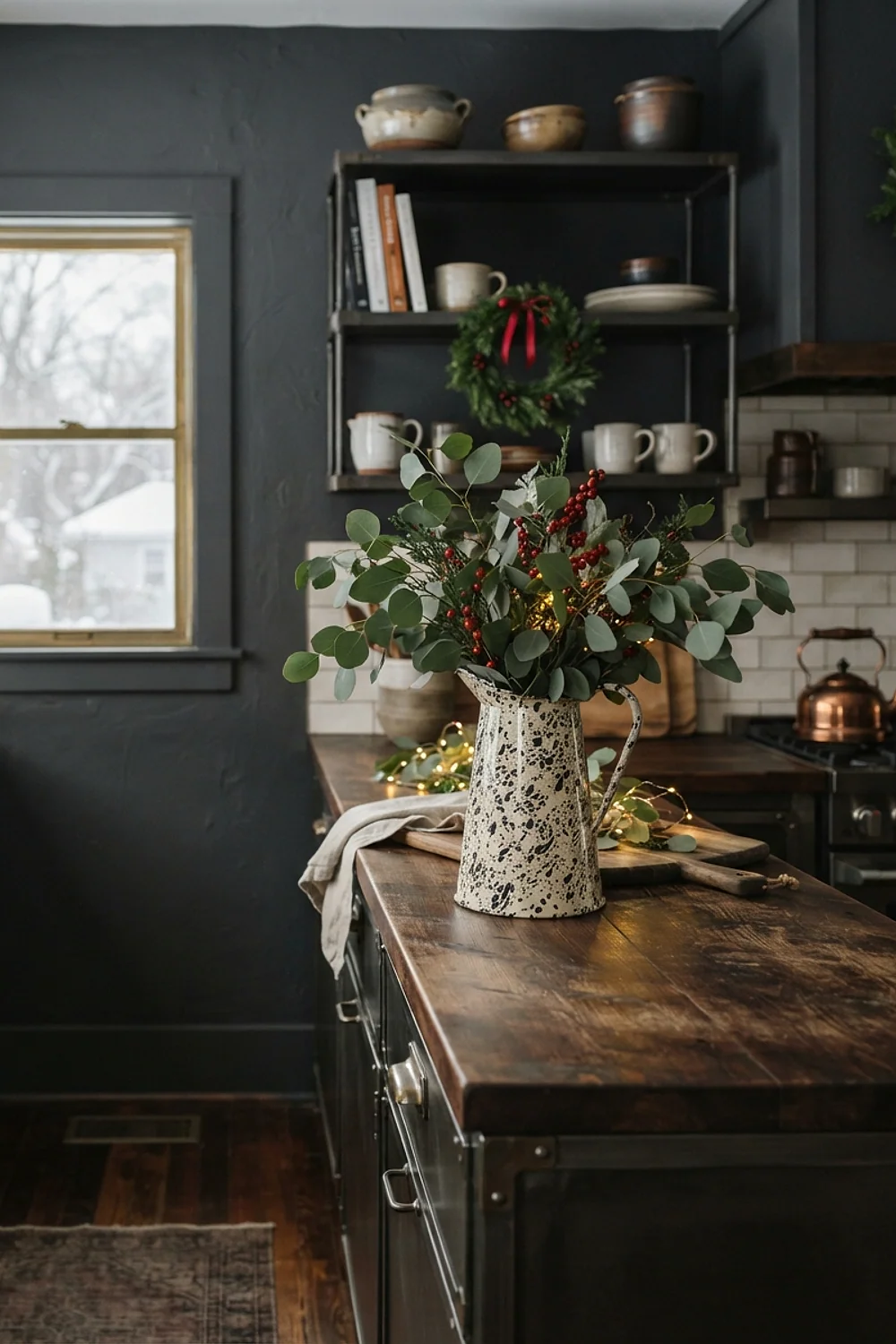
A speckled enamel pitcher holding eucalyptus or cedar stems by the sink gives a metal-and-green contrast that suits both farmhouse and modern rooms. Enamel is light and chip-resistant, which glass vases aren’t in a busy kitchen.
Cut stems to about 14 inches and change the water every 3 days. Eucalyptus dries to a silvery green that can last through January. Keep it out of reach of cats and dogs, since the plant is toxic to them.
Storing christmas kitchen decor so next December starts easy
Christmas kitchen decor lasts longer when it’s packed by zone, not by whatever fit in the box. A tidy pack-down on the first weekend of January takes about 45 minutes and saves an hour of untangling next year.
- Wash tea towels and hand towels before storing, because stains set over eleven months.
- Coil garland loosely in an 18 by 24 inch bin so the needles don’t flatten.
- Remove batteries from flameless candles, since leaked acid ruins the holders.
- Wrap glass canisters and ornaments in tissue, not newspaper, which transfers ink.
- Label each bin by zone: lights, linens, greenery, tabletop.
Store the bins somewhere cool and dry, not a damp garage corner. Velvet ribbon should be rolled onto a cardboard tube, since creases from folding never fully steam out.
Year-round foundations that make christmas kitchen decor easier
Christmas kitchen decor looks best against a calm base, and a few permanent pieces make every seasonal swap easier. Neutral surfaces and good hooks do most of the work.
- A large wooden tray (18 to 24 inches) that works for any season’s centerpiece.
- Under-cabinet lighting on a dimmer, so December can run amber and July can run bright.
- A row of sturdy hooks for towels, mugs, and aprons.
- A wide bowl on a pedestal stand, which holds lemons in spring and ornaments in winter.
- Neutral linen towels in oatmeal or white, which pair with any palette.
These pieces earn their place twelve months a year. Seasonal items then become small, cheap-to-store additions rather than a second kitchen’s worth of stuff.
Combining the swaps without crowding the room
Twenty-four ideas are a menu, not a checklist. A kitchen of 150 square feet comfortably holds five or six of them before the counters start to feel busy.
- Pick one light source: under-cabinet strip, window tapers, or cabinet-top lanterns.
- Choose one big shape: a 24-inch wreath or a window garland.
- Add one textile layer: tea towels, a runner, or a throw.
- Set one tabletop group in a triangle, with 24 inches left clear beside the range.
Stand in the doorway at dusk with the lights on. If your eye has nowhere to rest, remove one item.
Ready for December
Good christmas kitchen decor leaves the counters usable and the cleanup short, and it relies on swaps that come out as easily as they went in. Light, linens, and one big shape cover most of what a kitchen needs.
Save or pin this list so it’s ready when the first cold weekend arrives. Then measure the underside of your upper cabinets and start with the warm-white light strip.
Frequently asked questions
How early should christmas kitchen decor go up?
The weekend after Thanksgiving is the usual window, and it leaves about four weeks of enjoyment. Fresh greenery and cranberries should wait until the first week of December so they don’t dry out before Christmas.
Can christmas kitchen decor work in a rental?
Yes, almost every swap here is damage-free. Adhesive LED strips, ribbon-hung wreaths, leaning boards, and ribbon bows on knobs all come off cleanly. Test adhesive hooks on a hidden spot first, since some paints peel.
How do I keep greenery from getting greasy near the range?
Hang or place greenery at least 12 to 18 inches away from the range and hood. Wipe faux garland with a barely damp microfiber cloth weekly. Real cedar near the range dries out faster, so keep it on the far side of the room.
How much garland does a standard kitchen window need?
A 9-foot garland covers a window up to about 36 inches wide with a natural swag. Wider windows or a bay need 12 to 15 feet. Measure the width and add 2 to 3 feet for the drape.