
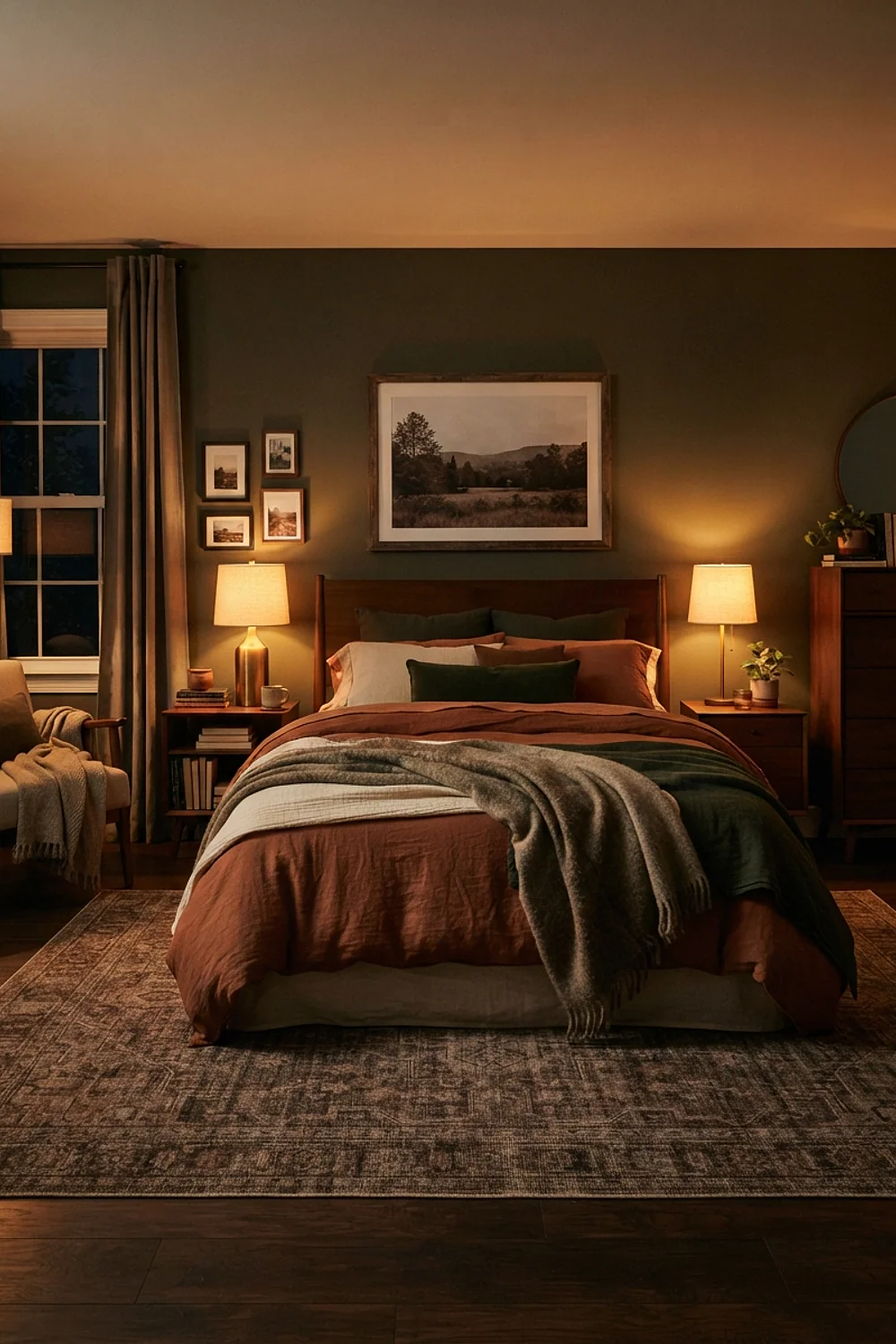
9 Master Bedrooms Decor Ideas on a Budget
Brushed linen drags under your palm with a dry, slightly nubby grain, and a well-filled duvet settles onto the mattress with a slow exhale. Those two small sensations separate hotel-grade master bedrooms decor from a room that simply contains furniture.
Most of the visual weight in a luxury suite comes from proportion, bedding, light and drapery, not from a $9,000 bed frame. Below, nine designer originals sit beside dupes that survive real daily use.
Key Takeaways
- A headboard 8 to 10 inches wider than the mattress makes any bed look custom-built.
- Dimmable plug-in sconces and 2700K bulbs do more for mood than any expensive fixture.
- Spend on what you touch and use daily; save on frames, lamp bases and art.
- Durable fabrics rated 25,000+ double rubs outlast pets, kids and weekly washing.
The high-end master bedrooms decor look, decoded
An oversized upholstered headboard
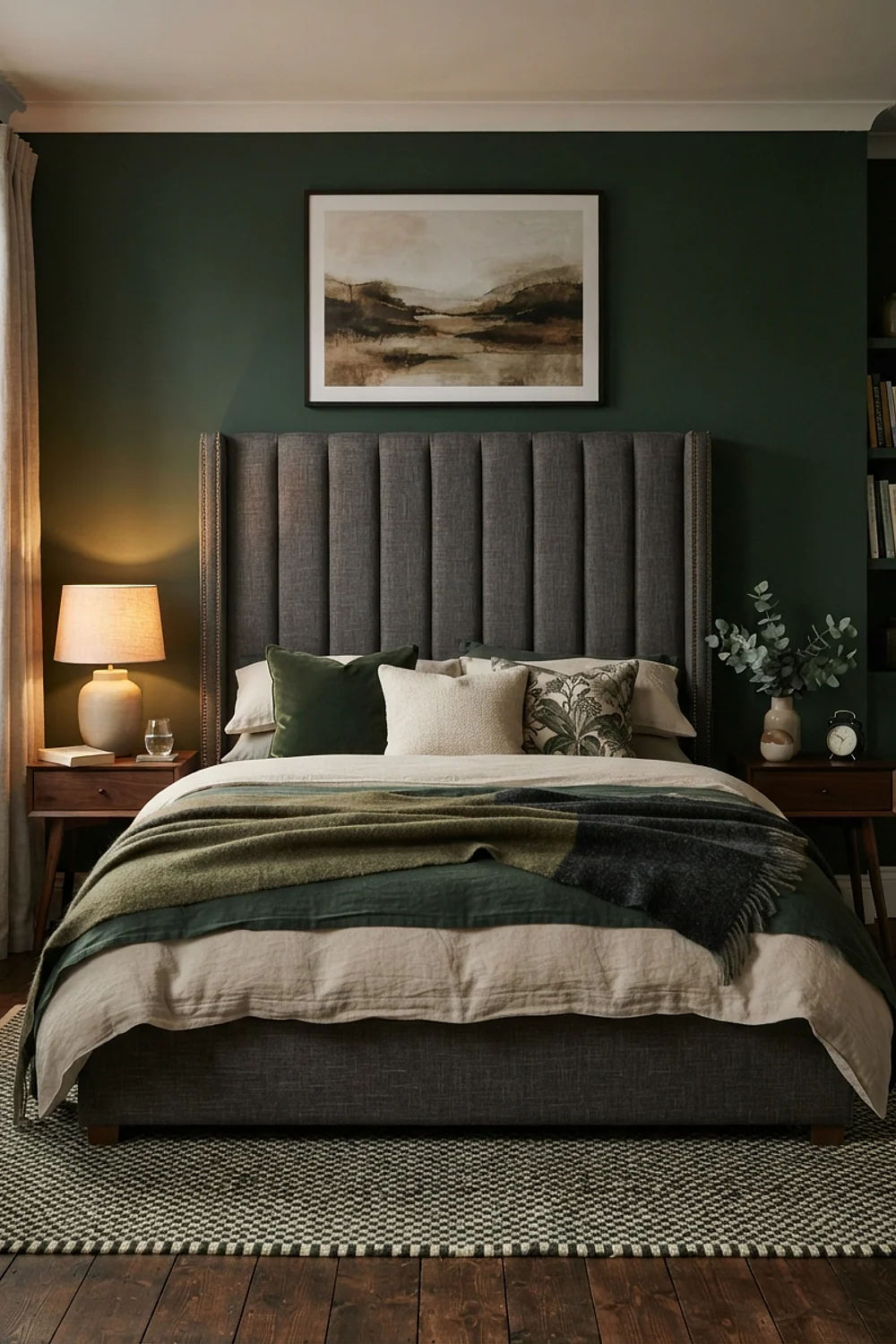
A headboard that runs 8 to 10 inches wider than the mattress on each side is the fastest way to make a bed look custom. On a queen (60 inches wide), that means a panel around 76 to 80 inches, the proportion in showroom beds from RH and Crate & Barrel that run well past $3,000.
The dupe is a 3/4-inch plywood panel, 2 inches of high-density foam, batting and fabric, stapled tight and hung on a French cleat. Materials land near $150.
Choose a performance chenille or polyester velvet over linen if pets sleep on the bed, because claws snag loose weaves. Skip the idea entirely in a room with 8-foot ceilings if the panel would stand taller than 54 inches, since it will crowd the wall.
A king-size duvet insert in a queen cover
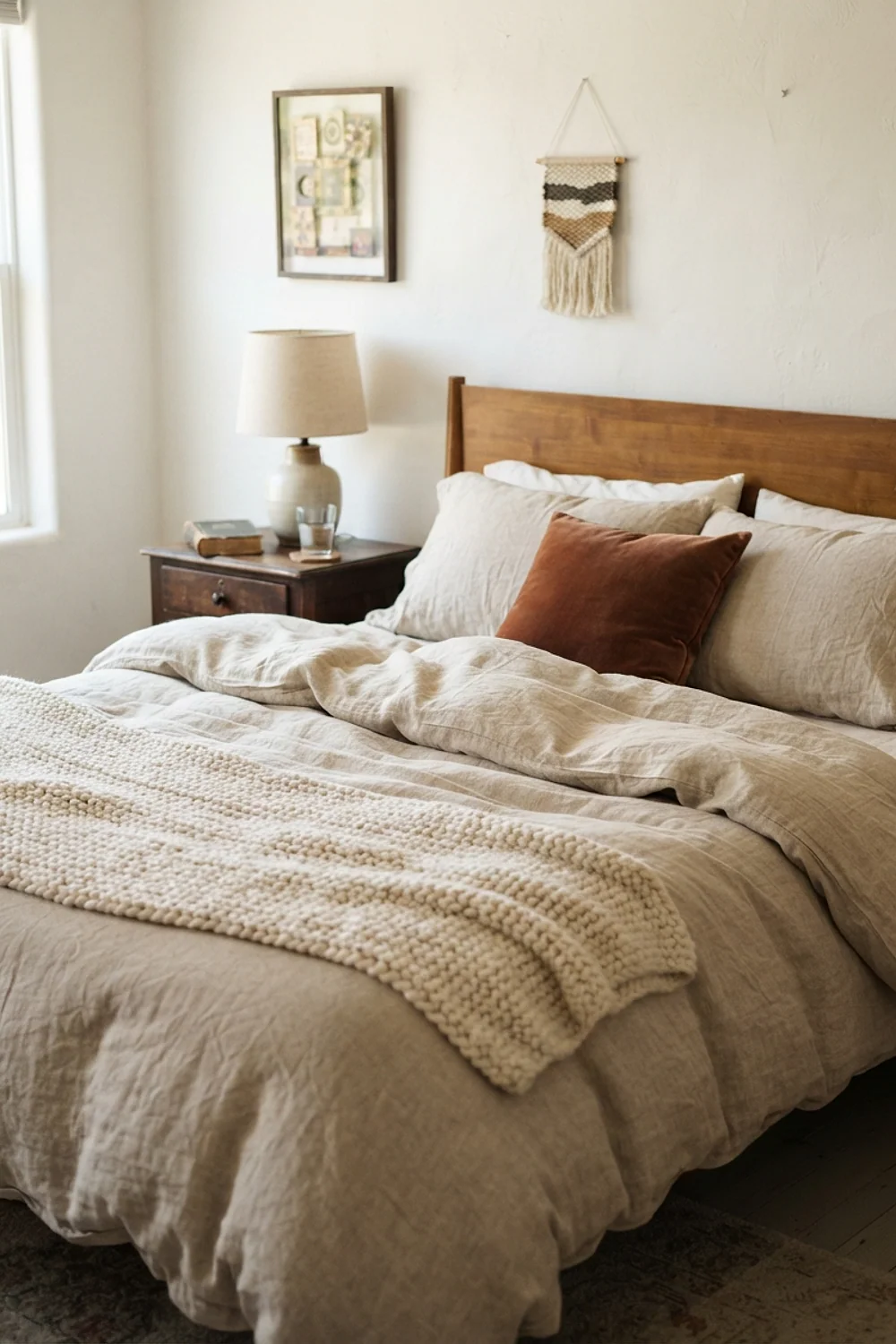
Here’s the counterintuitive part: a bigger insert makes the bed look fuller, not messier. A king insert (about 106 by 90 inches) stuffed into a queen cover gives the plump, slightly slouchy look of a Frette-dressed hotel bed.
The sheet layer matters just as much. Crisp 300-thread-count cotton percale from Target’s Casaluna line copies Frette’s cool, papery hand, while IKEA‘s washed linen blend gets close to Parachute’s relaxed look.
Hot sleepers should pick percale, and anyone with kids should pick something that survives a 40°C wash weekly. Finish with two 26-inch euro shams and one 12 by 24 velvet lumbar cushion, and stop there. A pile of eight pillows reads as clutter, not luxury.
Wardrobes trimmed into built-ins
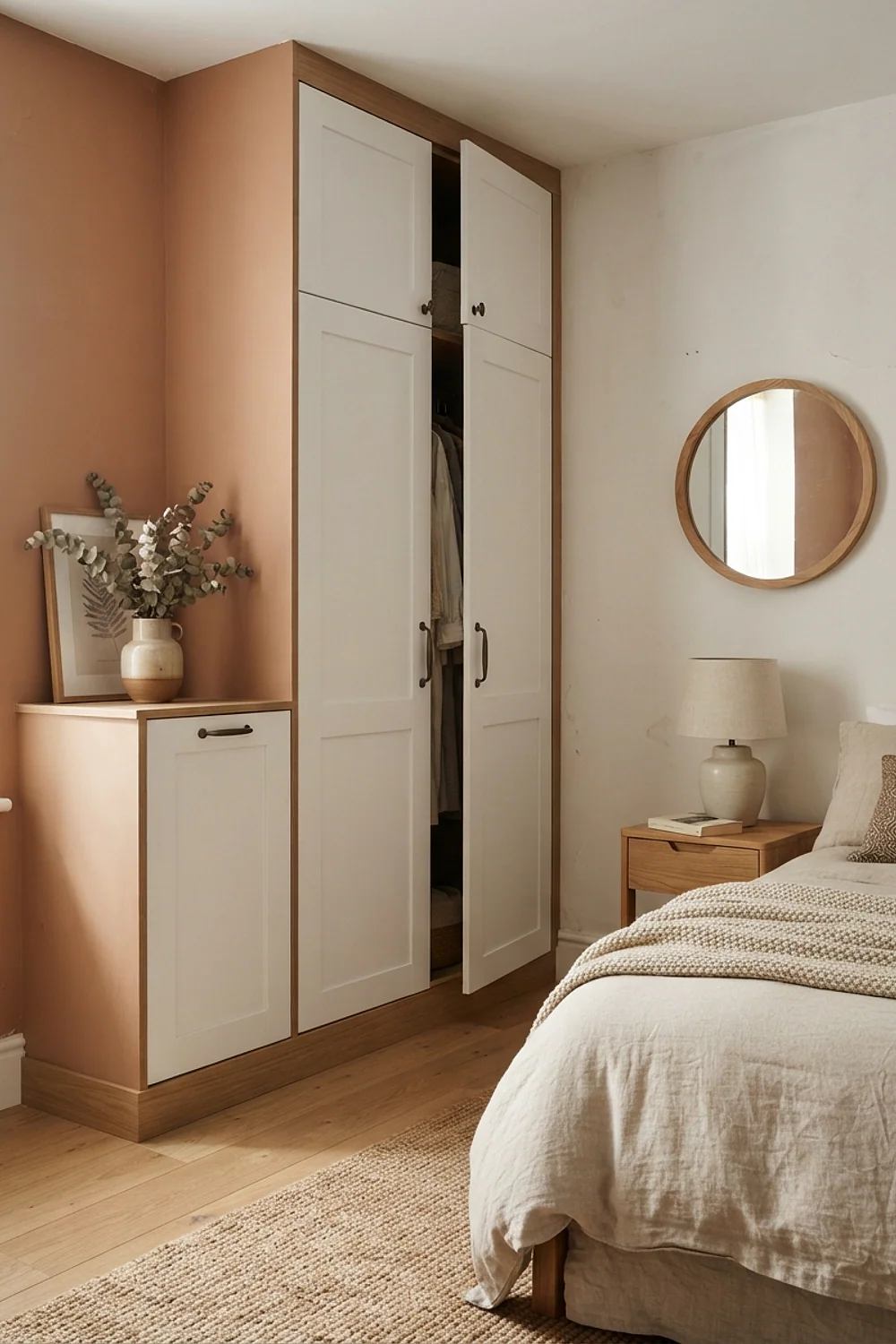
Two IKEA Pax wardrobes, each about 39 inches wide, can pass for custom millwork once they’re trimmed out. Add a 1×4 baseboard skirt, run crown molding to the ceiling, caulk every seam, and paint the whole run the wall color.
The finished wall costs roughly $700 to $900 against $5,000 or more for a carpenter’s version. The standard 93-inch Pax height leaves a gap under most 8-foot ceilings, and the crown is what hides it.
This suits a bedroom that’s short on closet space and long on one blank wall. The common mistake is leaving factory-white doors against a colored wall, so they read as flat-pack furniture. Swap the pulls for solid brass ones that feel heavy in the hand.
Layers and lighting that make master bedrooms decor feel custom
Plug-in swing-arm sconces
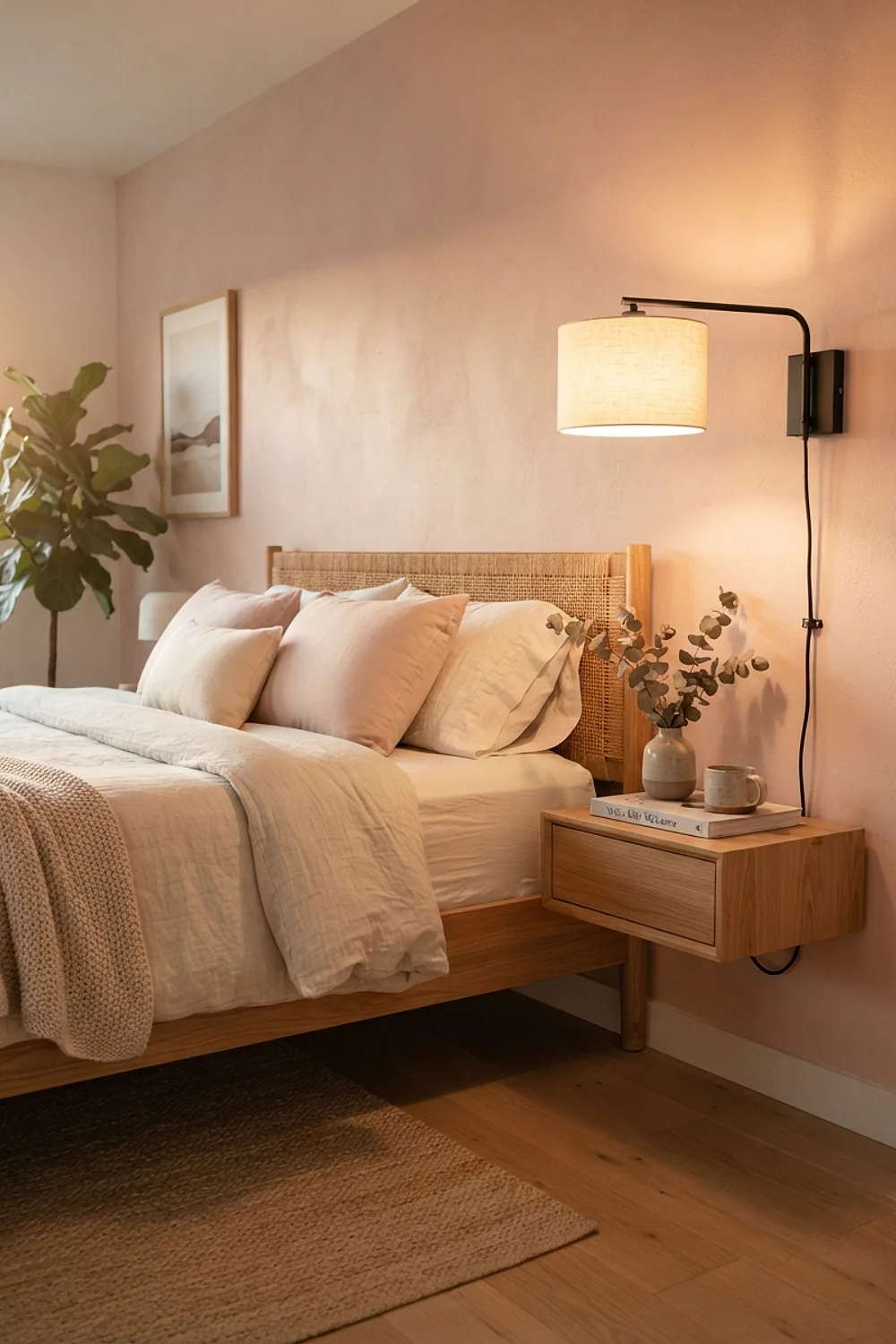
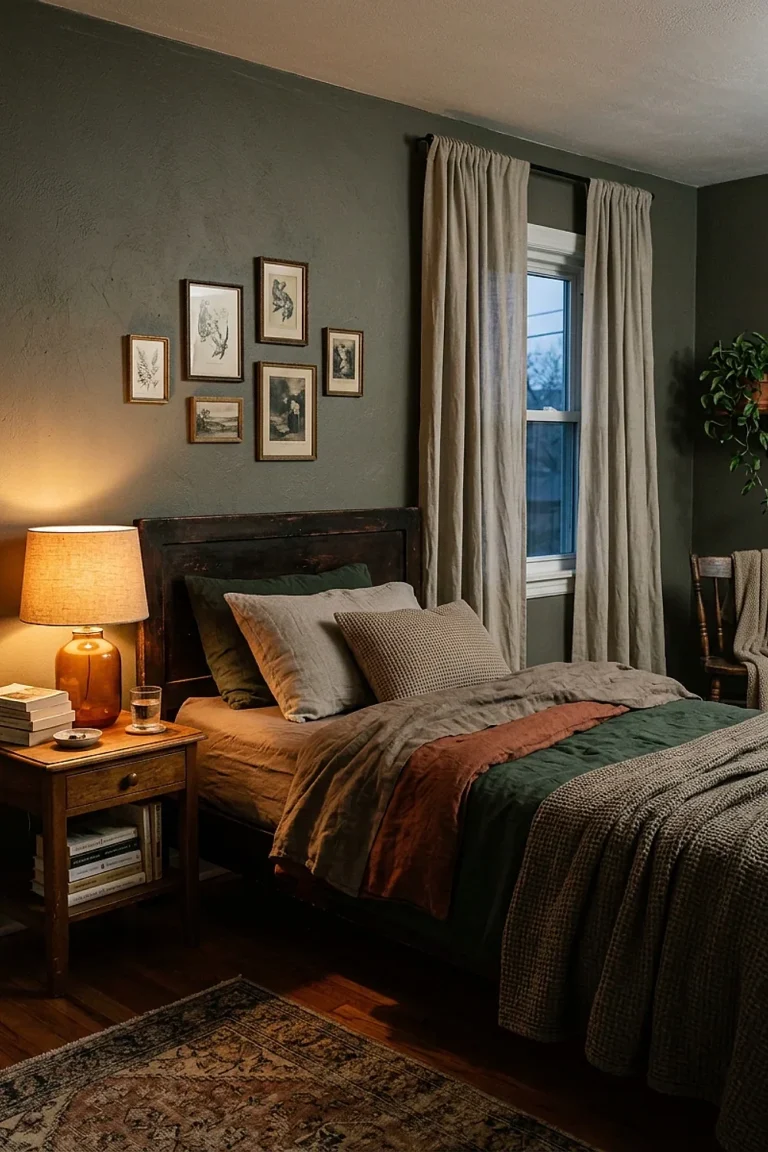
Plug-in swing-arm sconces centered about 60 to 66 inches off the floor free up the nightstand and put the glow at reading height. The designer original is a hardwired Visual Comfort sconce. The dupe is a plug-in arm from Lamps Plus or Amazon, with the cord hidden in a paintable cover strip.
On a gray November afternoon, a 2700K bulb at 40 percent on a dimmer turns the whole wall the color of toast. Cooler bulbs make the same room feel like a dentist’s waiting area.
Choose this for rooms where two people read at different hours, or where nightstands are too narrow for lamps. Renters get the same result because there’s no wiring involved.
Mismatched nightstands at the same height
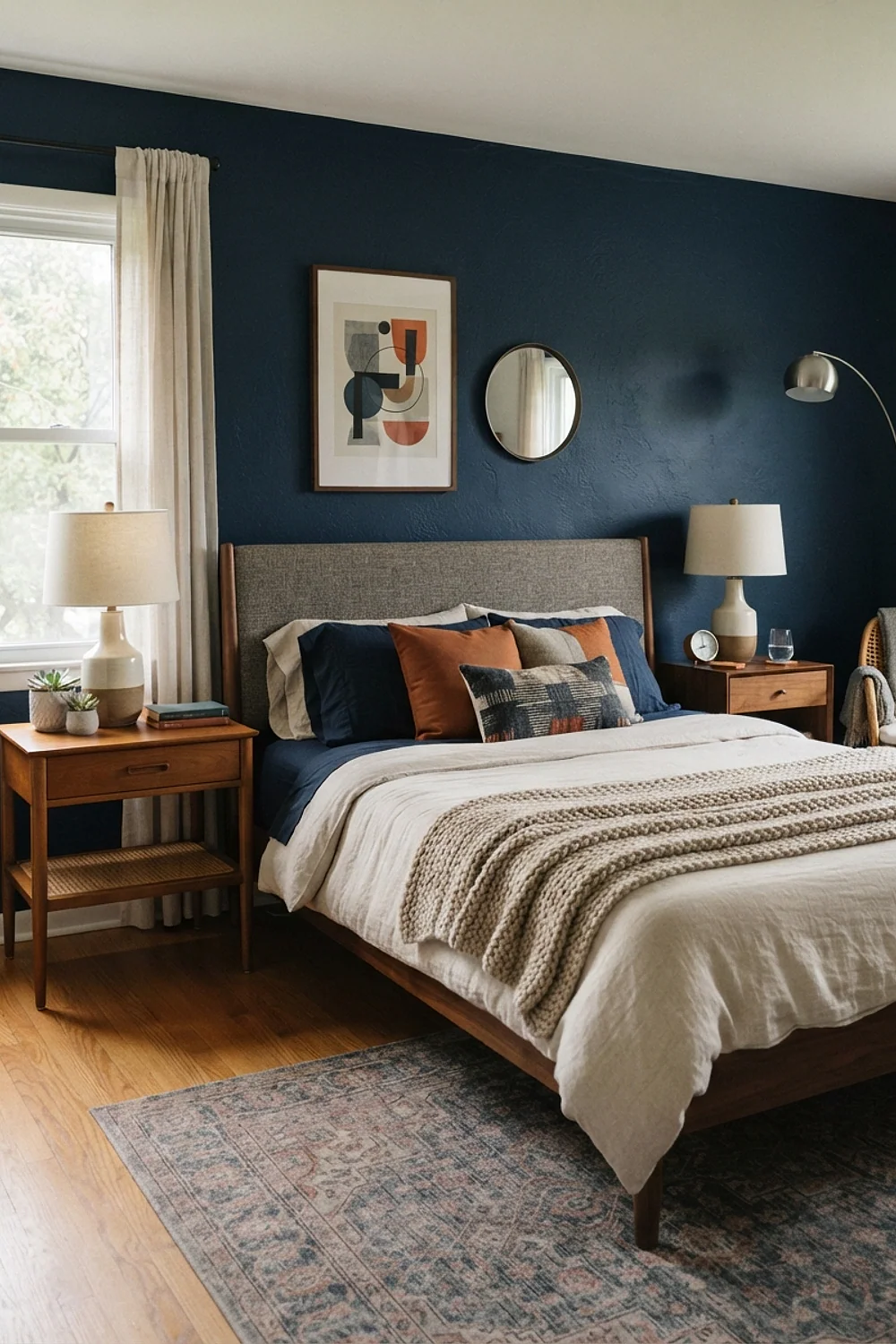
A matched five-piece bedroom set in one wood tone is the quickest way to make a suite look like a showroom floor. Designers mix finishes, and secondhand shops hand over solid-wood nightstands for $40 to $90 each.
Nightstands should match the mattress top exactly. Actually, no, scratch that: within 2 inches either way is fine, and a mismatched pair reads as intentional when the heights roughly agree.
Solid wood beats veneer or laminate here because it sands and refinishes, while chipped laminate can’t be repaired. In a house with toddlers or a dog that jumps up, that repairability matters more than the finish.
Walls, trim and ceiling in one deep color
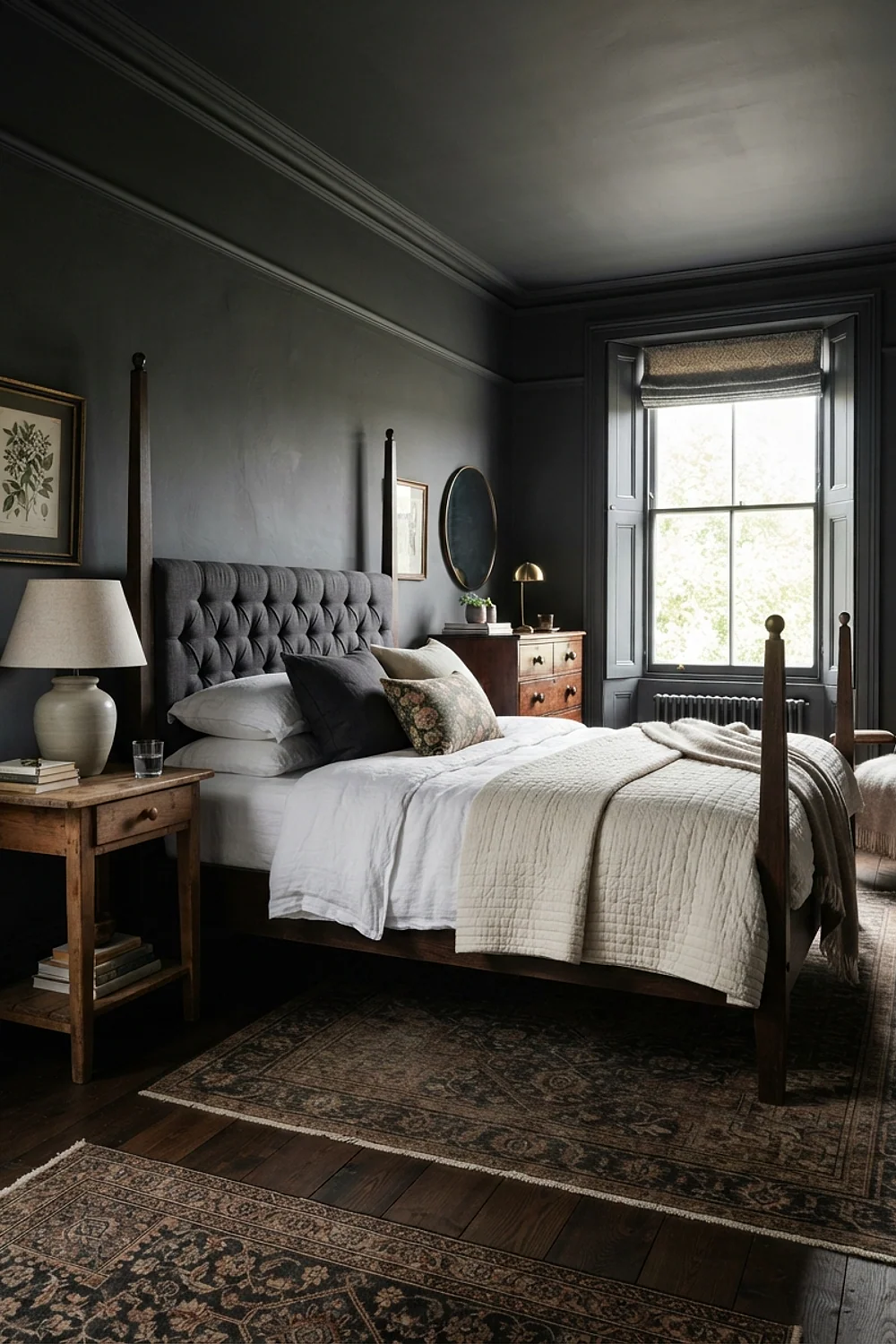
Painting walls, trim and ceiling the same deep tone, such as Benjamin Moore Hale Navy, is called color drenching, and it’s how boutique hotels make rooms feel wrapped and expensive. The dupe is color-matching that shade in a mid-priced line from Behr or Valspar.
Light decides everything. A north-facing room at 4 pm goes inky and moody, while a south-facing one glows. Test a 2-foot square on two different walls for three days before committing.
Use a scrubbable matte on walls and satin on trim, because fingerprints and pillow-fight scuffs show on cheap flat paint. This works best in rooms over 12 by 12 feet. In smaller ones, drench only the headboard wall.
The finishing touches
A rug that reaches past the bed
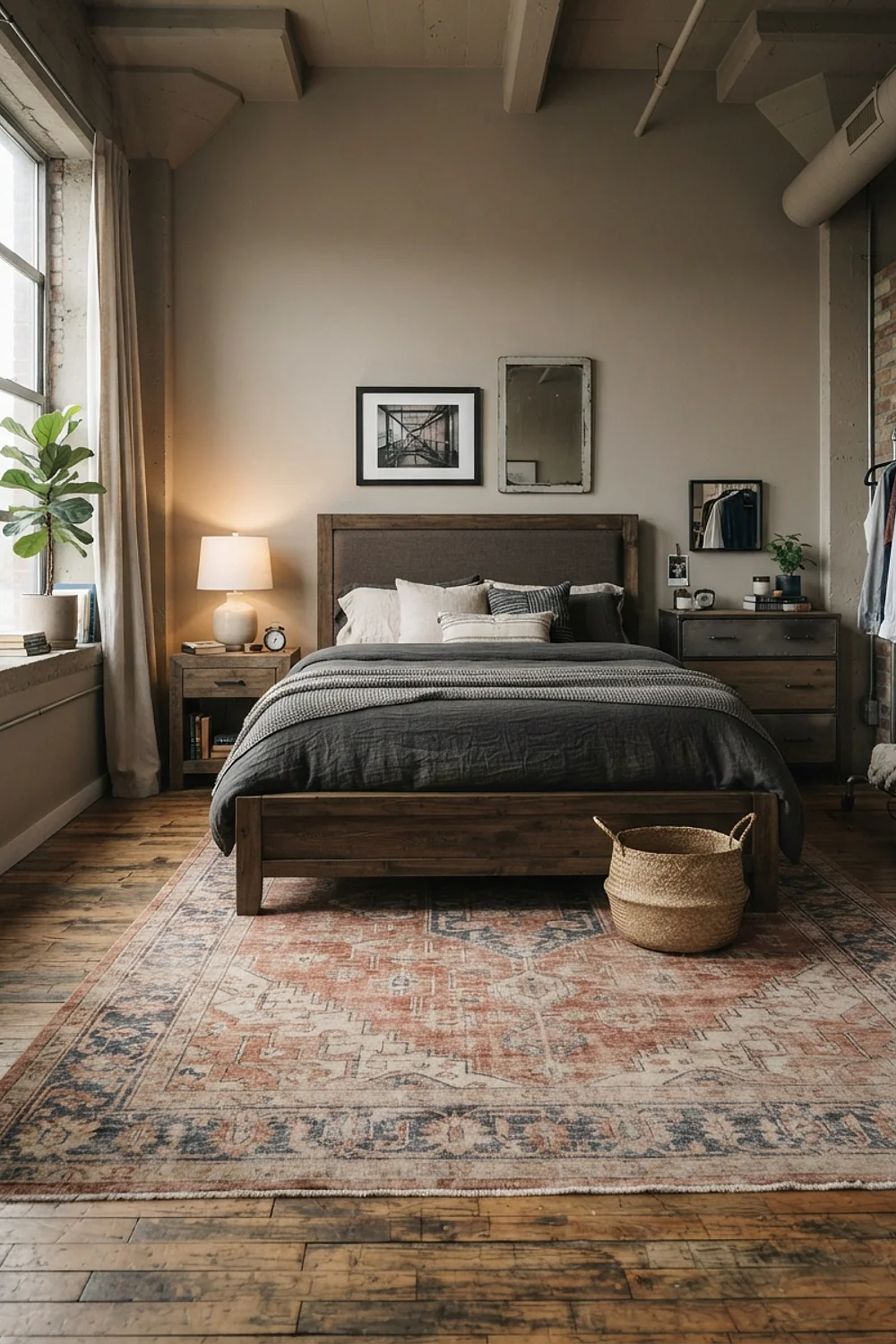
A rug sized 8 by 10 for a queen or 9 by 12 for a king, with at least 24 inches showing at the sides and foot, gives bare feet something soft at 6 am. Hand-knotted wool-and-silk rugs from a luxury dealer run into the thousands.
The dupe is a flatweave wool blend or a washable polyester rug around $300 to $500 for an 8 by 10. Low pile hides pet hair and vacuums cleanly, which a shag version never does.
Put only the front two legs of the bed on the rug if the room’s tight. A rug that stops under the nightstands makes the whole floor look undersized.
Thirty-six inches of clear floor around the bed
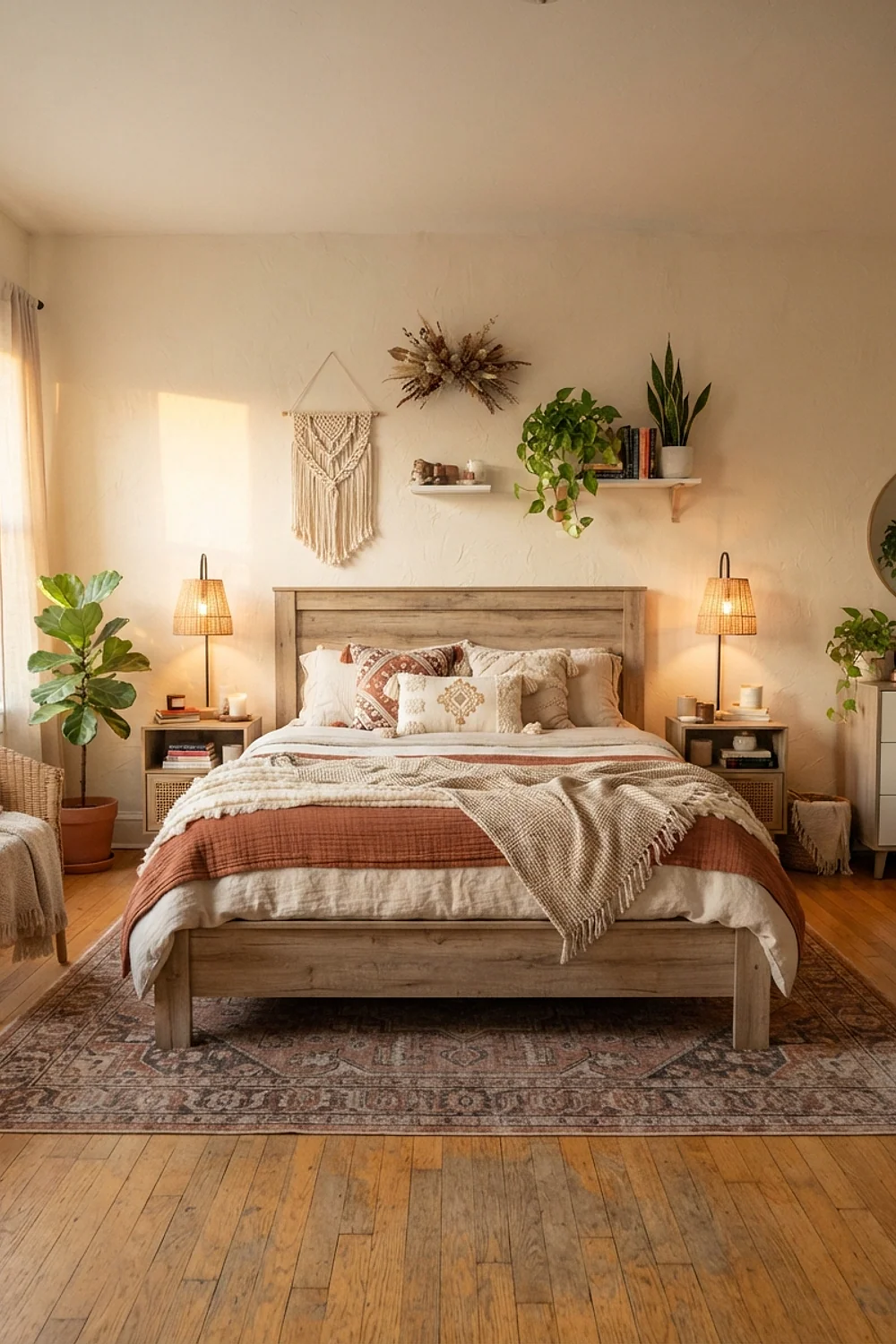
Thirty-six inches of walkway on both sides of the bed is what makes a master bedroom feel like a suite instead of a storage unit. Pushing the bed into a corner for “more floor” backfires because it wrecks the symmetry.
If the room allows, carve out a window nook with two chairs and a 28-inch round table. The original is an Ethan Allen or Ralph Lauren pair. The dupe is a secondhand barrel chair pair reupholstered in a tough bouclé, or IKEA’s Strandmon wing chair.
Rooms under 11 by 13 feet should skip the nook and use one chair with a floor lamp. That’s enough to say “hotel suite” without blocking the closet door.
Floor-to-ceiling drapes on a high rod
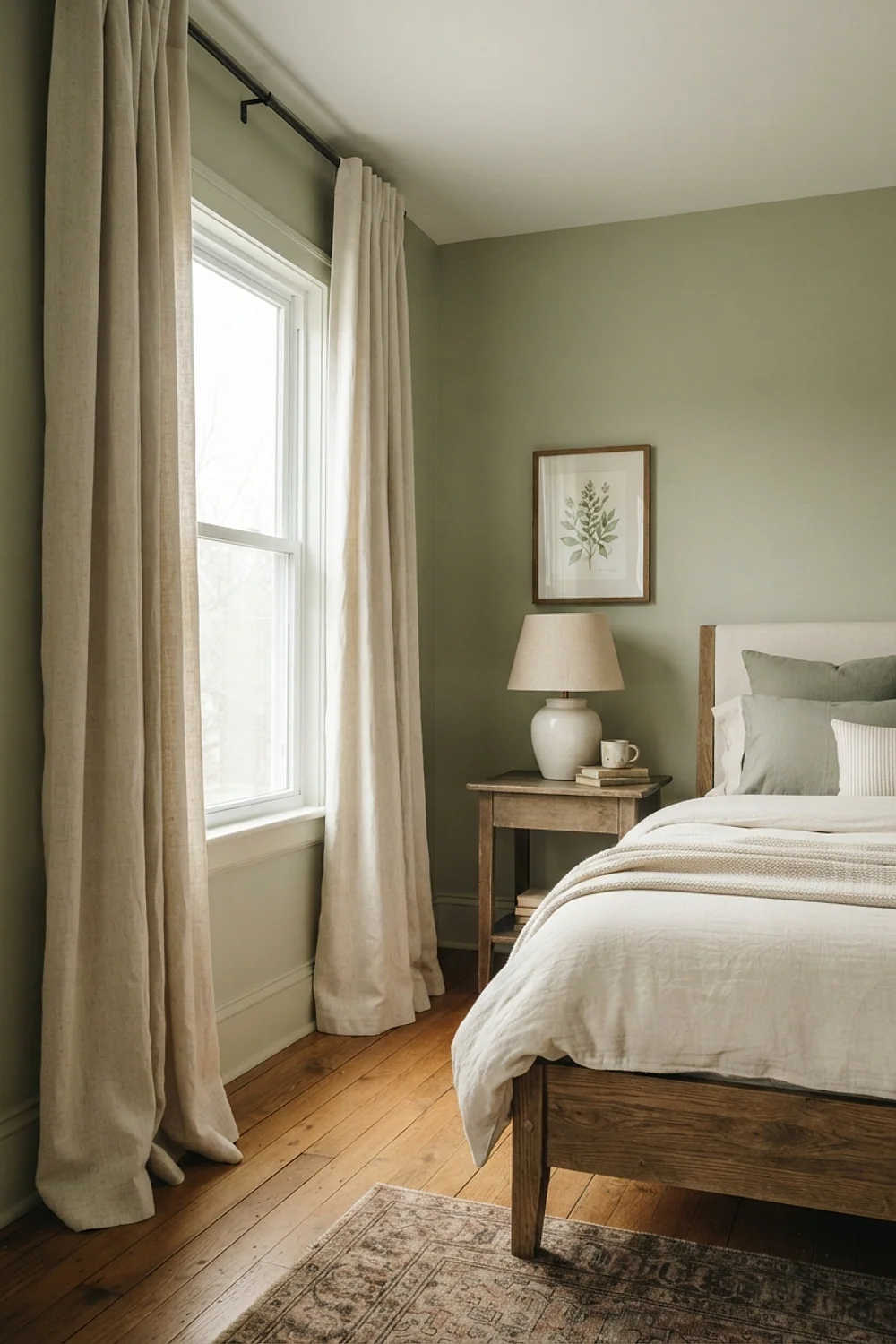
Curtain rods mounted 4 inches below the ceiling, with panels that just touch the floor, add visual height and block morning light. Custom pinch-pleat drapes from a workroom or Kravet fabric cost hundreds per panel.
The dupe is ready-made 108 or 120-inch panels with a blackout lining, hung with clip rings and fullness at twice the window width. Expect $60 to $90 per panel.
Lined linen-blend panels breathe, while polyester velvet blocks sound and light but weighs a lot. Velvet suits a bedroom beside a busy street. Linen works better for sunny rooms where drapery gets opened daily.
Where to splurge and where to save
Master bedrooms decor rewards a split budget. Spend where hands, backs and eyes make daily contact, and save where nobody looks twice.
- Splurge: the mattress, the sheets you sleep in nightly, the dimmer switches, and the upholstery fabric on anything that takes abuse.
- Splurge a little: drapery lining and rod hardware, since thin lining lets in light and cheap rods sag within a year.
- Save: bed frames, lamp bases, frames for art, and throw pillows, all of which can be thrifted or DIY’d.
- Save with care: rugs, which are fine as flatweave but suffer if the pile is shedding.
Durability should tilt every close call. A $400 performance fabric chair outlasts a $250 linen one with a dog in the house.
Spotting quality at any price
Price tags lie, but construction doesn’t. Use this checklist in a store, on a marketplace listing or in a thrift aisle.
- Upholstery fabric should be rated 25,000 or more double rubs (Martindale or Wyzenbeek). Under 15,000 pills quickly.
- Sheet thread count above 600 is often padding from thin multi-ply yarn. A 300 to 400 percale feels better and lasts longer.
- Drawers should have dovetail or solid wood joints, not staples and glue.
- Hardware should feel heavy. A magnet that sticks to a “brass” pull means plated steel.
- Lined drapery panels should hold a fold without slumping, which signals proper weight.
Here’s the deal: a mid-priced piece with solid joinery and a tough fabric beats a gorgeous one that falls apart in two years. Check the back and the underside first.
Start with the bed wall
Master bedrooms decor works because proportion, light and layered textiles do the heavy lifting, and every one of those has a dupe at a fraction of the original price. Begin with the headboard or the sconces, since both change the room in a single weekend.
Save or pin this list so it’s ready when you start, then measure your bed wall and mattress width before buying anything.

One Comment