
Thoughtful Living Room Decor the Minimalist Way
A 12-by-15-foot living room can hold roughly nine pieces of furniture and decor before the eye stops finding anywhere to rest. Thoughtful living room decor treats that number as a ceiling, not a target.
What follows is a twelve-step edit built around removing and replacing, not shopping. Keep a tape measure nearby, plus a laundry basket for everything that leaves the room.
Less but better: Thoughtful living room decor the minimalist way
Thoughtful living room decor asks one question of every object: does it earn its spot on the floor, shelf, or wall? If the answer is a shrug, it goes. The twelve steps below show how to edit down, one decision at a time.
Choose one sofa between 78 and 84 inches
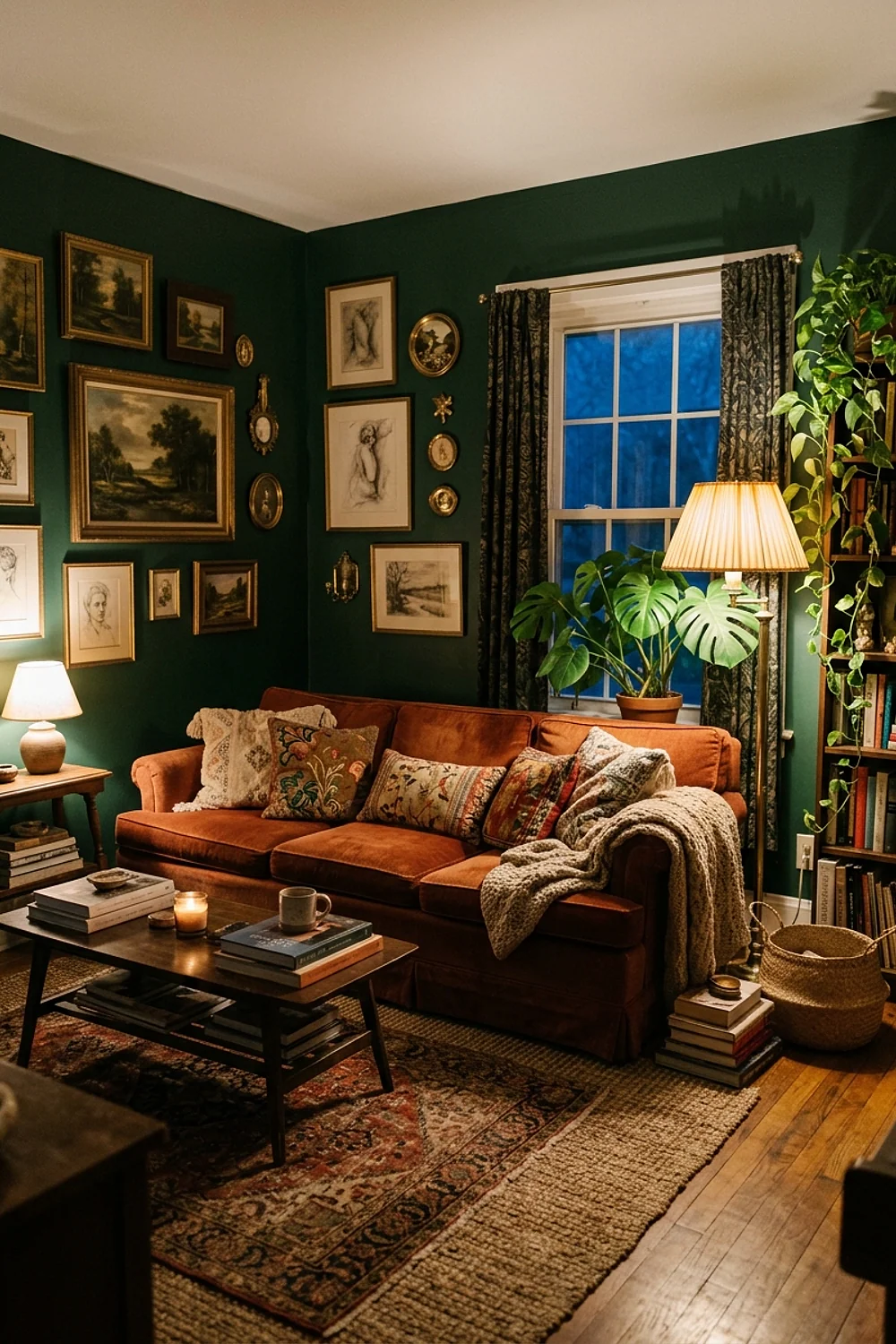
A sofa in that range seats three adults and still leaves a walkway in a 12-by-15 room. Past 90 inches, it starts to claim the floor, and everything else in the room has to shrink to compensate.
For a household with weekend guests and a dog, a tight-weave performance fabric (about $900-1,400 for a decent one) survives red wine and claws far better than velvet, which shows every brushed-the-wrong-way streak.
Repeat two or three materials until they feel like a habit
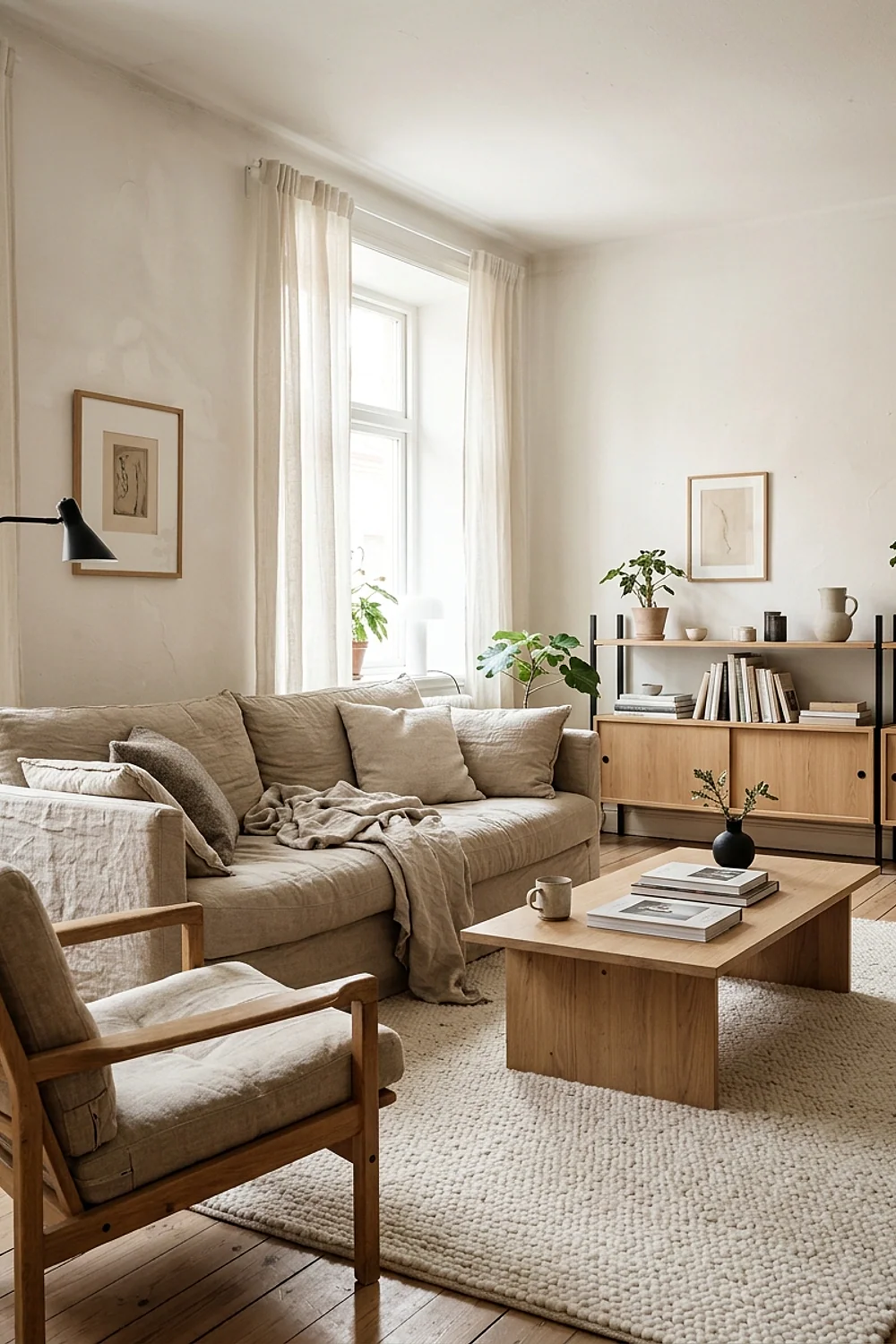
Oak, wool, and linen, each showing up at least twice, read as calm. Oak in the coffee table and a picture frame, wool in the rug and a throw, linen in the curtains and a cushion cover. Seven materials read as a showroom.
Avoid mixing chrome, brass, and black metal in one sightline. The finishes argue with each other, and the room starts to feel busy even when it’s nearly empty.
Swap the ceiling fixture for two lamps at 2700K
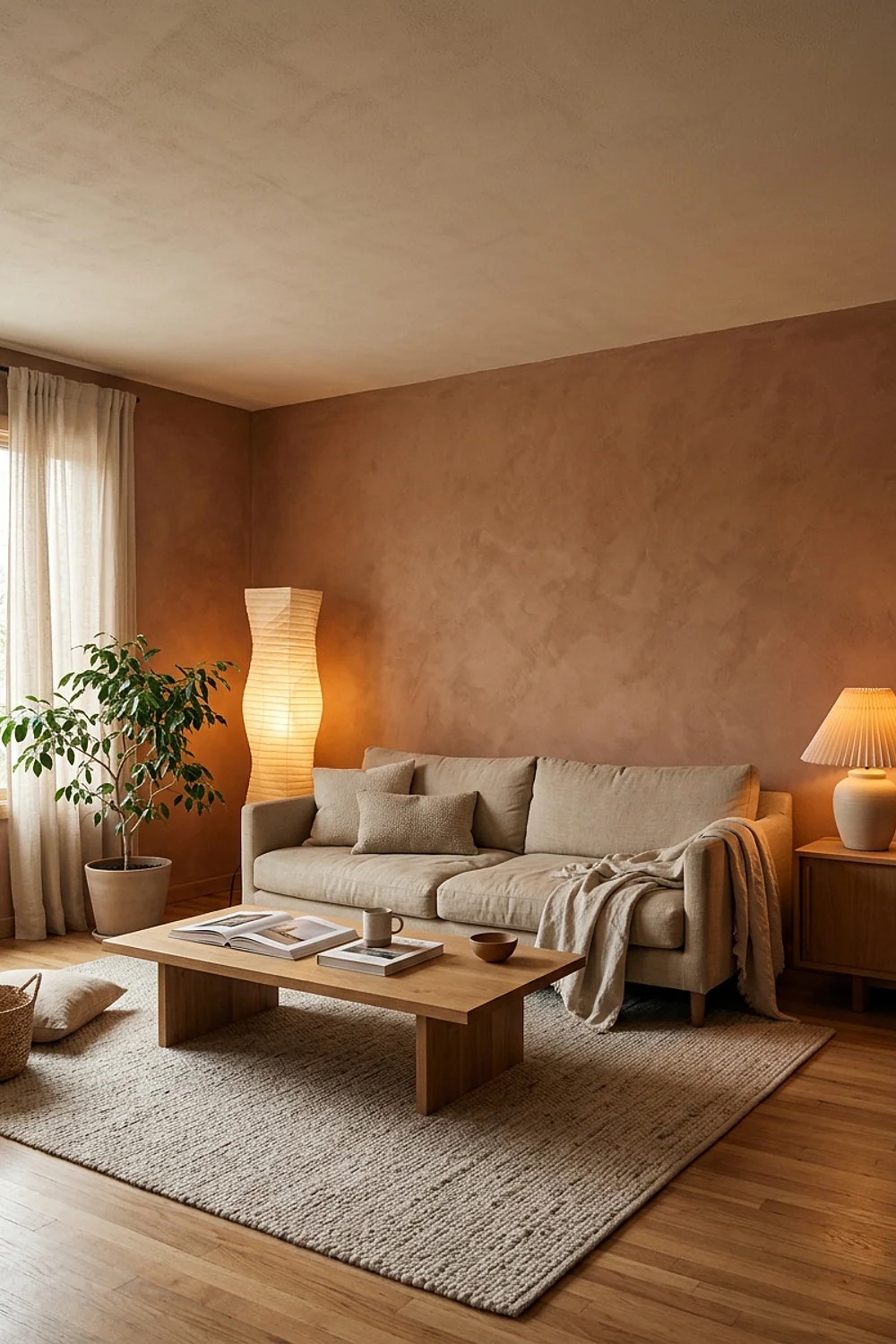
On a gray November afternoon around 4pm, an overhead light flattens a room into a single bright sheet. Two lamps with linen shades, placed at roughly eye level when seated, throw pools of amber light and let the corners fall away.
Use the same bulb temperature in both. Pairing a 2700K bulb with a 4000K one makes the room look like two different houses stitched together.
Hide the daily clutter behind one closed cabinet
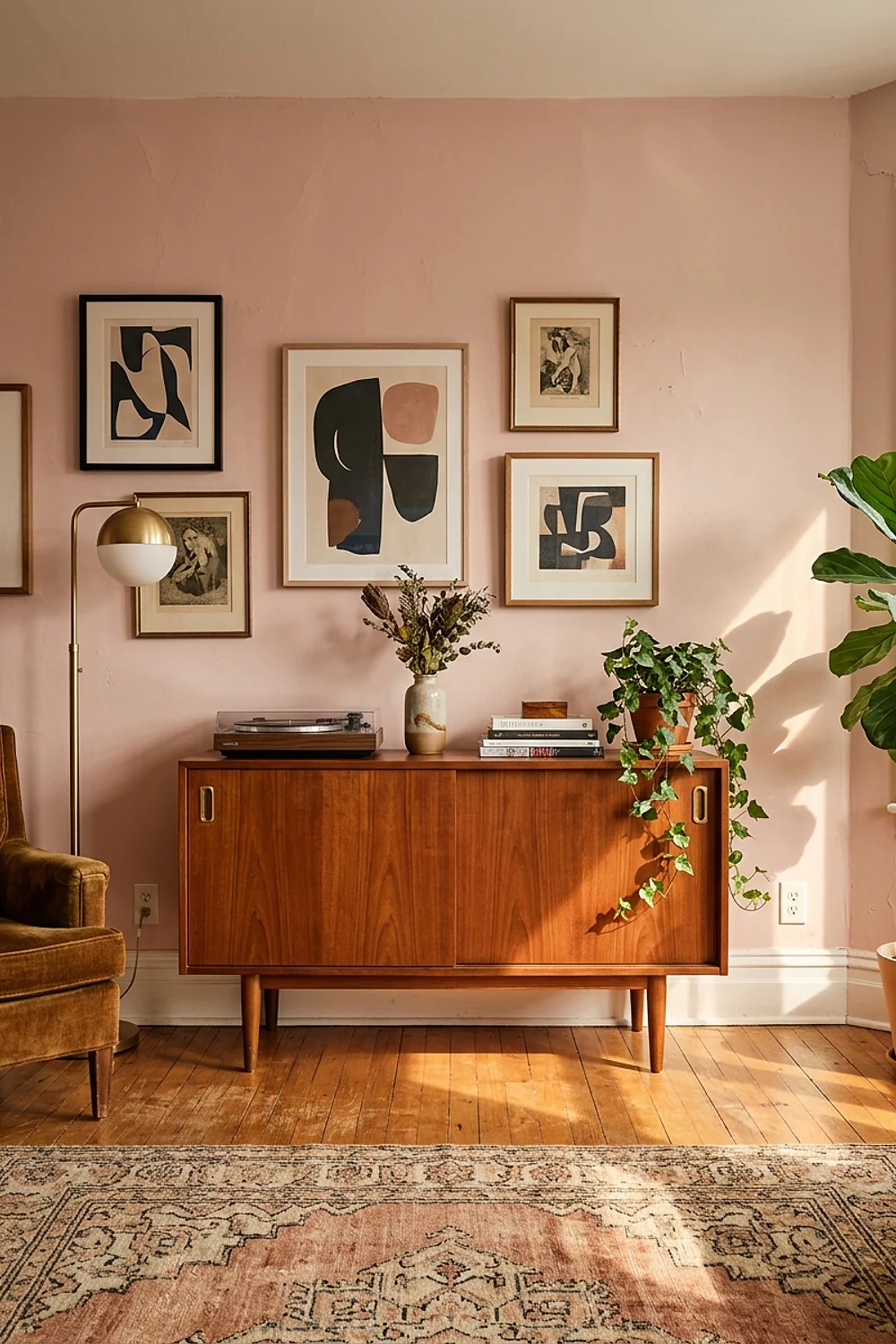
A closed credenza about 30 inches tall and 16 inches deep swallows remotes, chargers, board games, and the dog’s leash. Expect to pay $350-500 for solid construction with soft-close doors. The top surface then stays nearly bare.
Open shelving suits only people who enjoy rearranging daily. For everyone else, it turns into a display of mail and cables within a fortnight.
Push the sofa flat against the wall
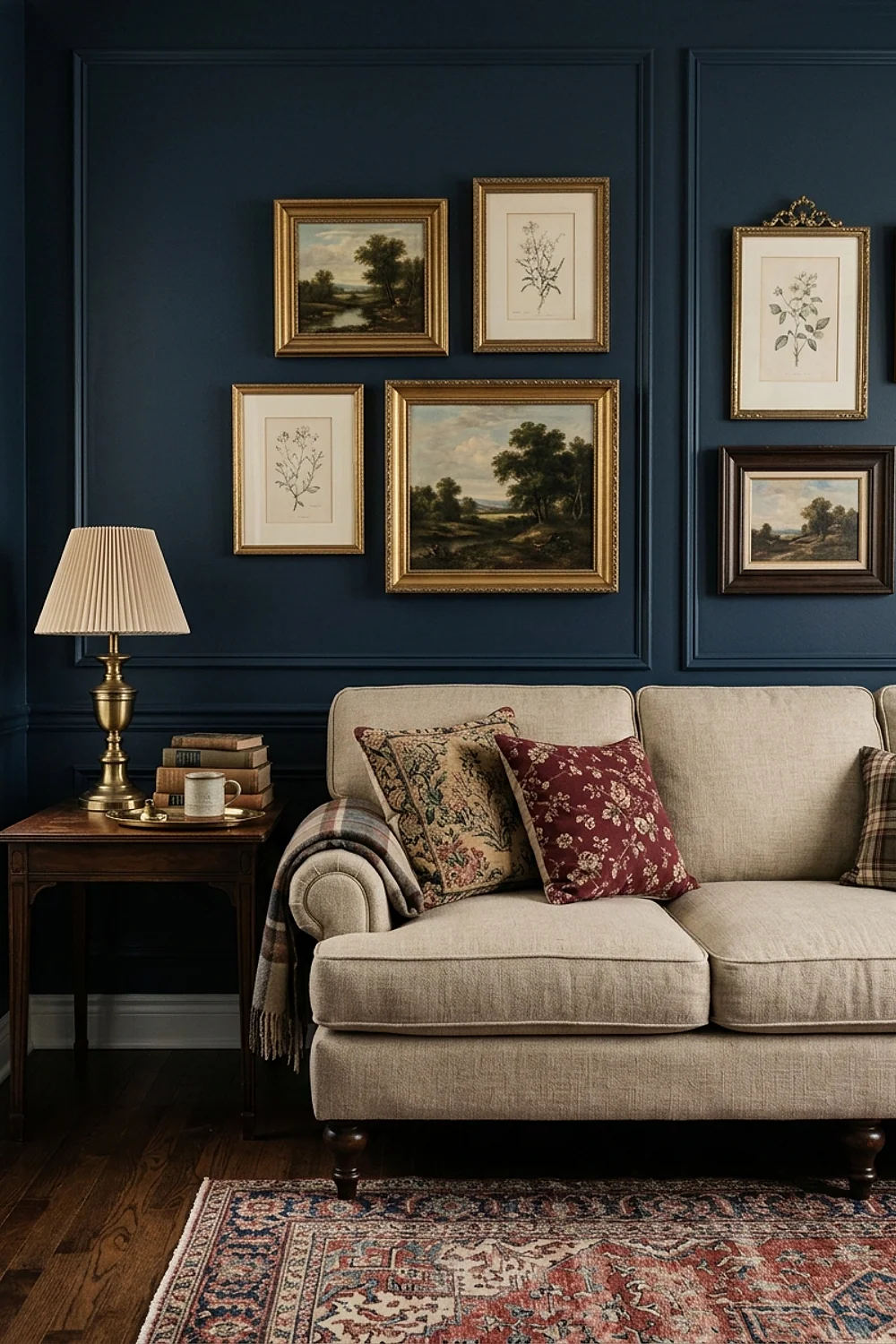
Conventional advice says to float furniture 18-24 inches from the wall. In a room under 14 feet wide, that rule backfires. The gap behind the sofa becomes a dead strip, and the main floor shrinks into a cramped island.
Flush against the wall, the floor opens into one clear rectangle with a 36-inch path to the window. Floating only pays off once the room passes about 15 feet in width.
Group three objects on one tray
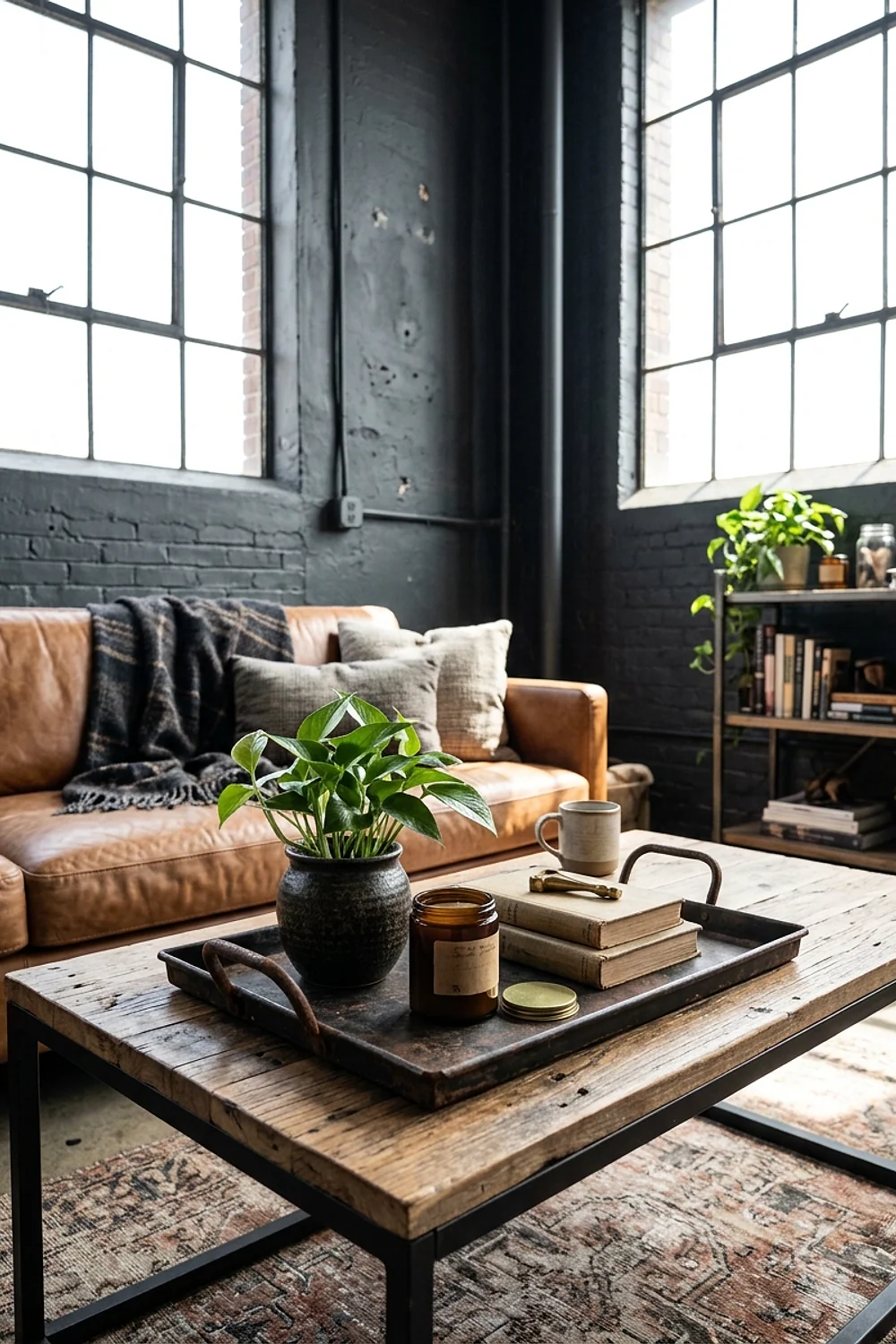
A 14-inch wooden tray on the coffee table, holding a candle, a book, and a small bowl, gives the eye a boundary. Loose objects scatter across a surface and each one competes for attention; a tray makes them read as one unit.
It suits a small living room where the coffee table also holds mugs and remotes, since the tray lifts off in one move. Stop at three. A fourth item turns the tray into a collection, and collections are where clutter starts. Avoid a tray wider than half the table.
Replace a bulky end table with a nesting pair
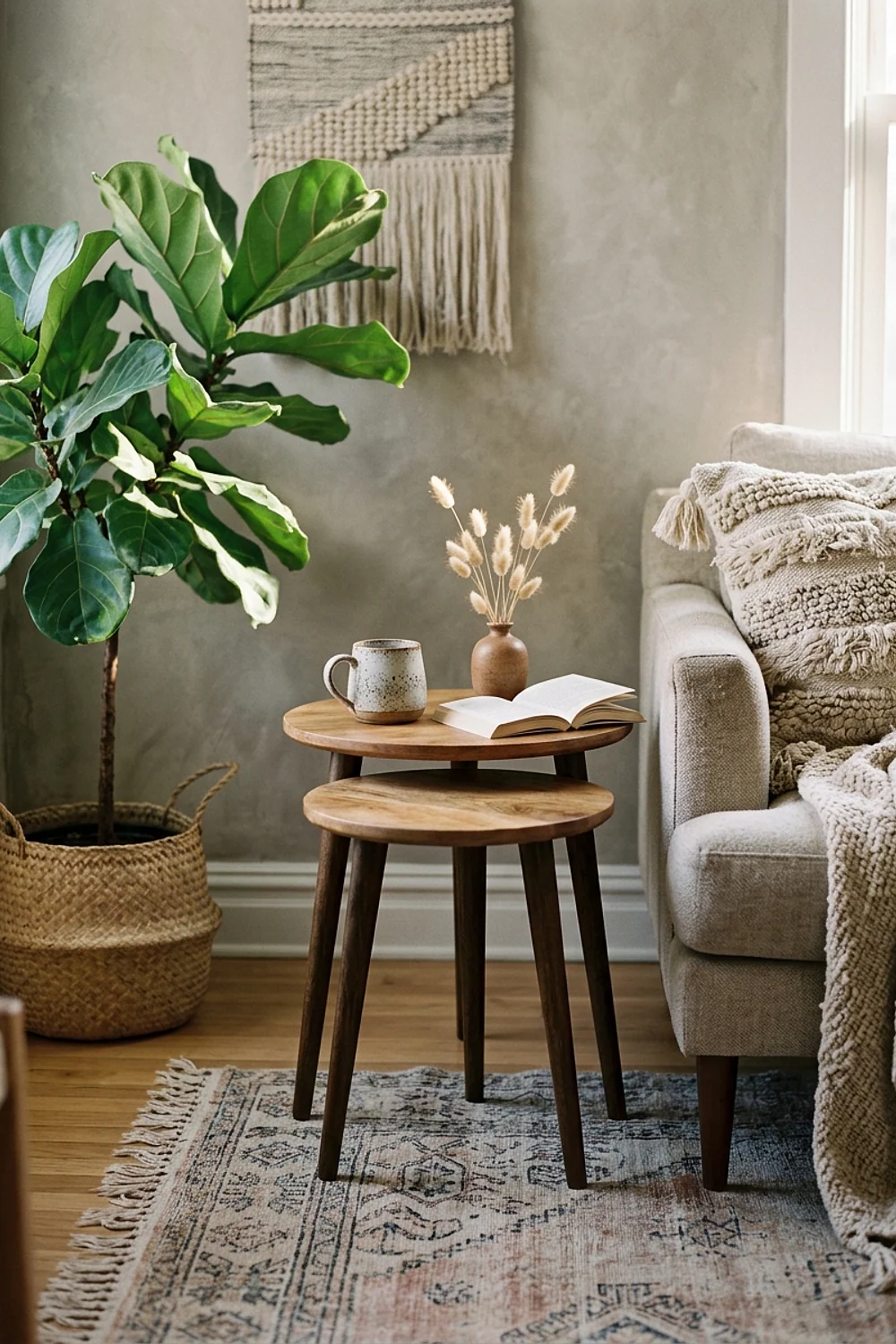
Nesting side tables with 18-inch tops tuck together on an ordinary Tuesday and spread apart when guests need a place for a drink. Aim for a height within 2 inches of the sofa arm, so a mug is reachable without leaning.
They suit small rooms and frequent entertainers. Skip the ones with thin, wobbly legs, because a glass of water will tip on the first bump.
Retire the matching furniture set
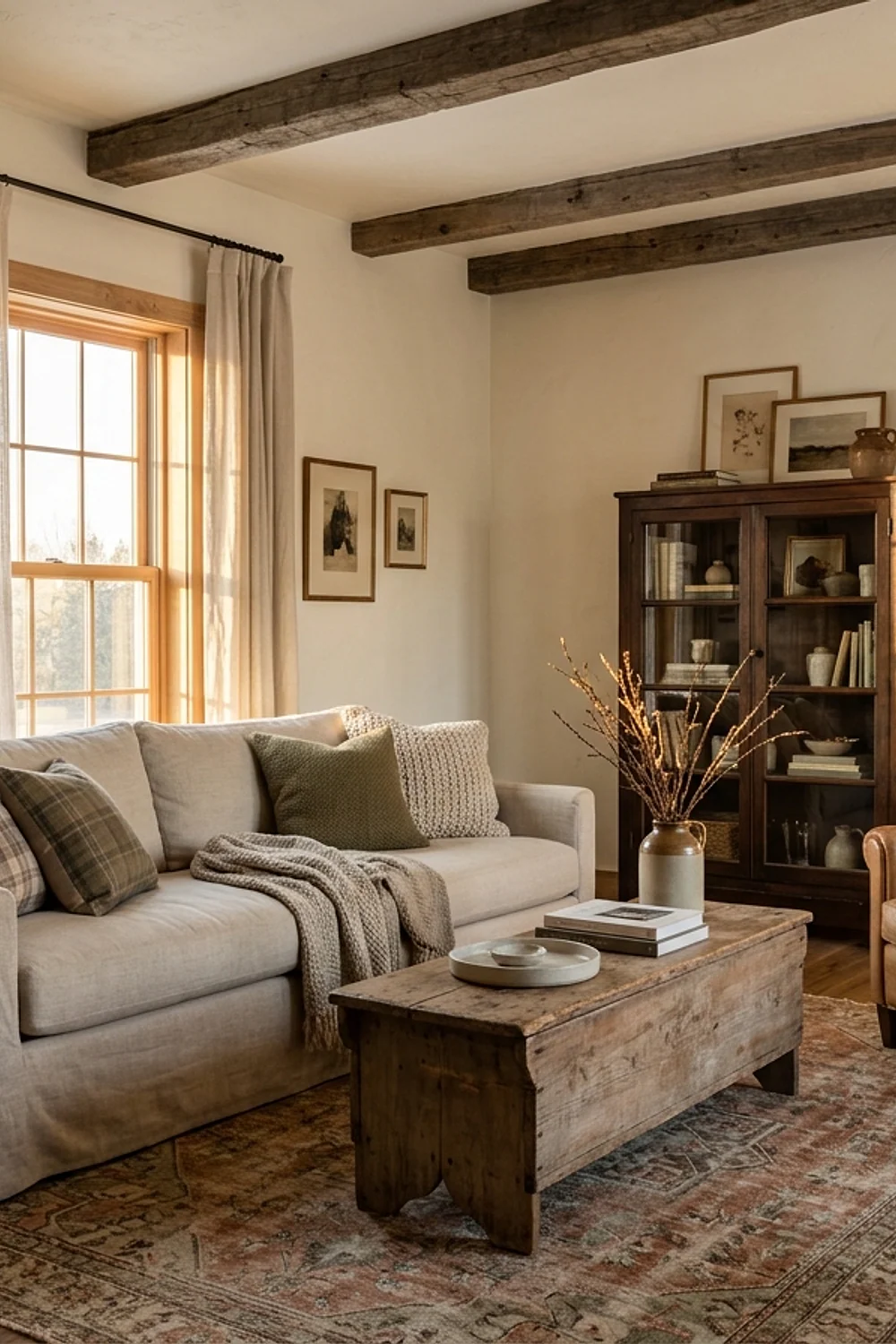
A coffee table, side table, and console in the identical finish look like a catalog page, and they flatten the room because the eye has no contrast to travel between. Let one piece differ, such as a pale oak coffee table beside a dark walnut console.
This helps most if furniture is bought slowly over time, since each new piece can bring its own tone. Chasing an exact match later is expensive and rarely works anyway. Keep the pieces within one warm or cool undertone so the difference reads as intentional.
Cut the cushion pile to two
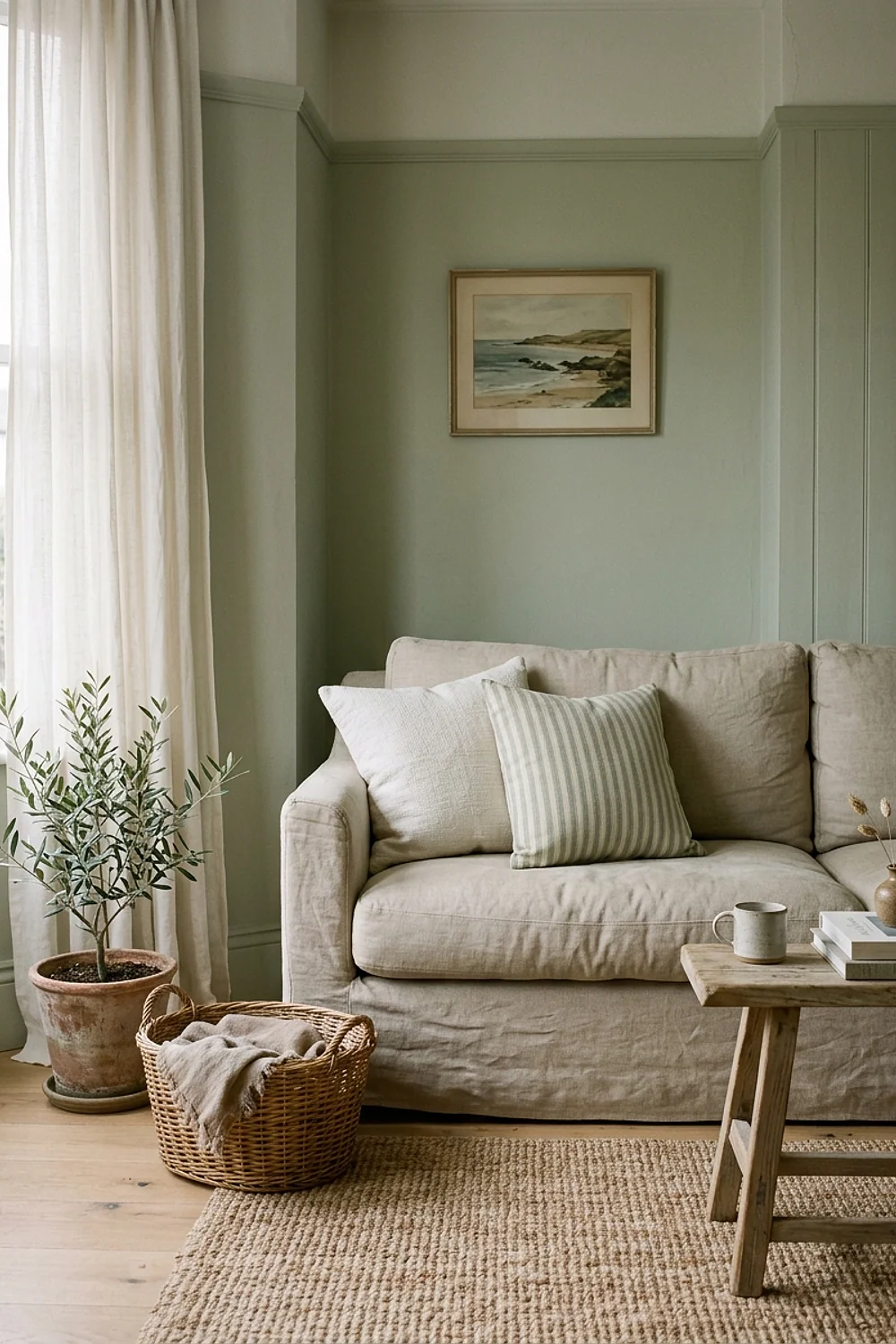
Two 22-inch cushions and one 50-by-60-inch throw, folded over the sofa arm, are enough. Five cushions mean someone has to relocate all of them before sitting, and they usually end up on the floor. Two give the sofa some softness without turning it into storage.
This suits a family sofa used daily, where nobody wants a cleanup before sitting. Choose heavy wool or washed linen for the throw. The weight under your hand is a comfort that a thin acrylic fleece never delivers, though fleece does cost less and washes easily.
Paint the walls a soft greige with a yellow undertone
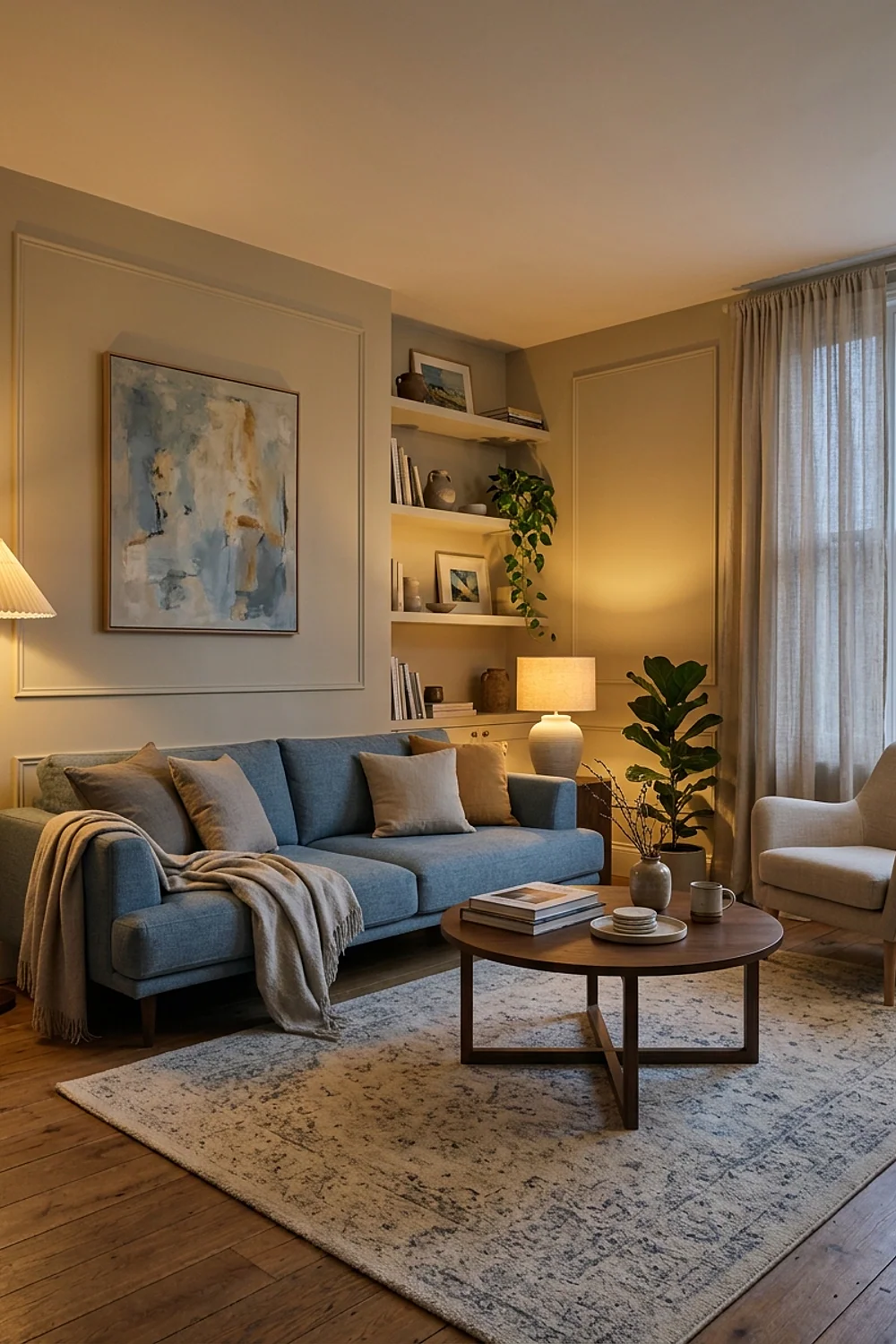
A greige such as Benjamin Moore Pale Oak holds its color across the day. Stark white turns blue-gray in north light and glares in south light. It also shows every scuff in the first month.
Brush a 2-foot-square swatch on the wall and check it at 9am and again at 4pm. Limit deeper accent color to one object, like a rust-colored cushion.
Buy the 8-by-10 rug, not the 5-by-8
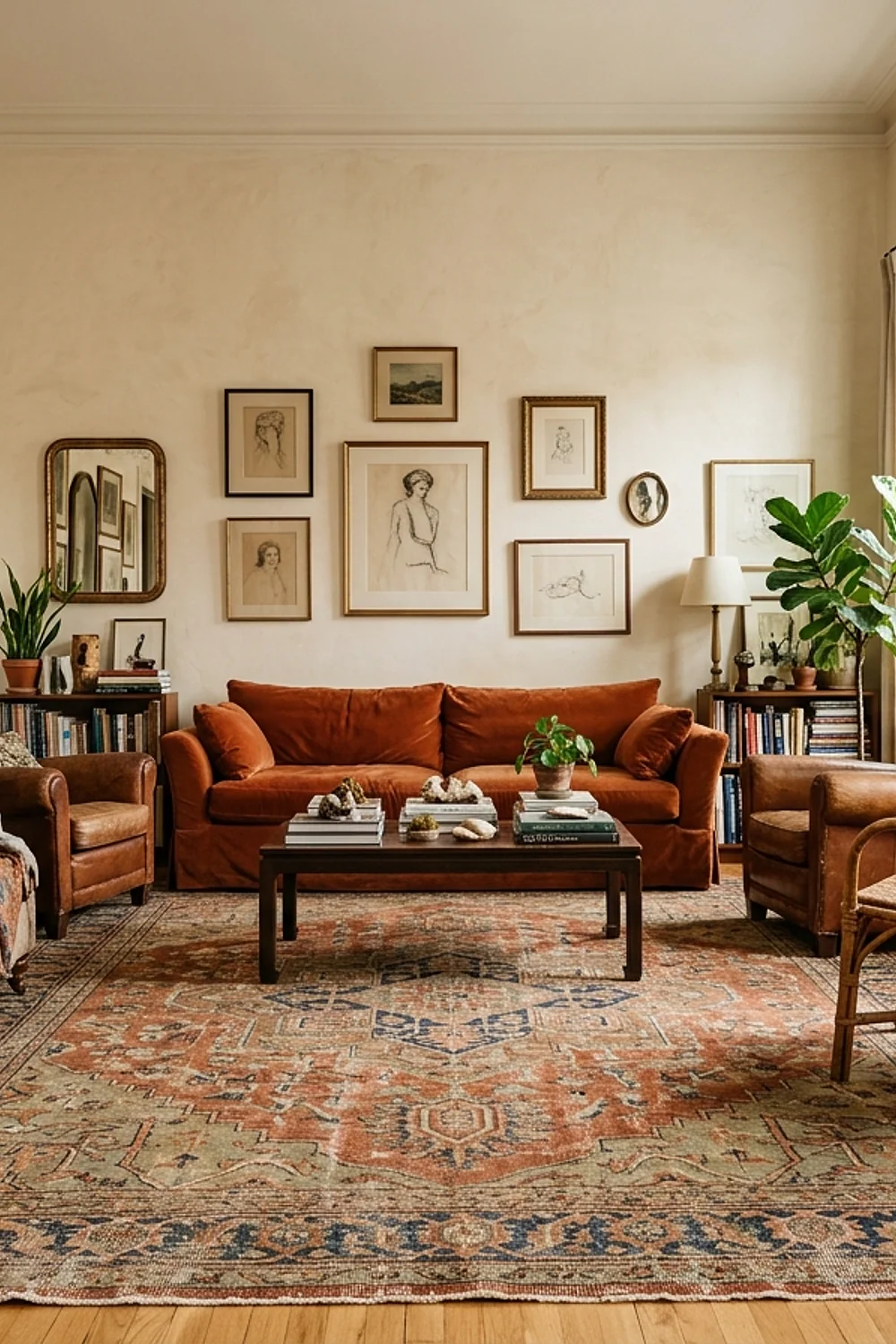
An 8-by-10 flatweave wool rug ($300-500 for a good one) lets at least the front legs of the sofa and chairs rest on it. That anchors the seating area and makes the floor read as one piece.
A 5-by-8 floats in the middle like a placemat and chops the floor into strips. It’s the most common sizing mistake in a living room under 200 square feet.
Keep one large plant in a matte pot
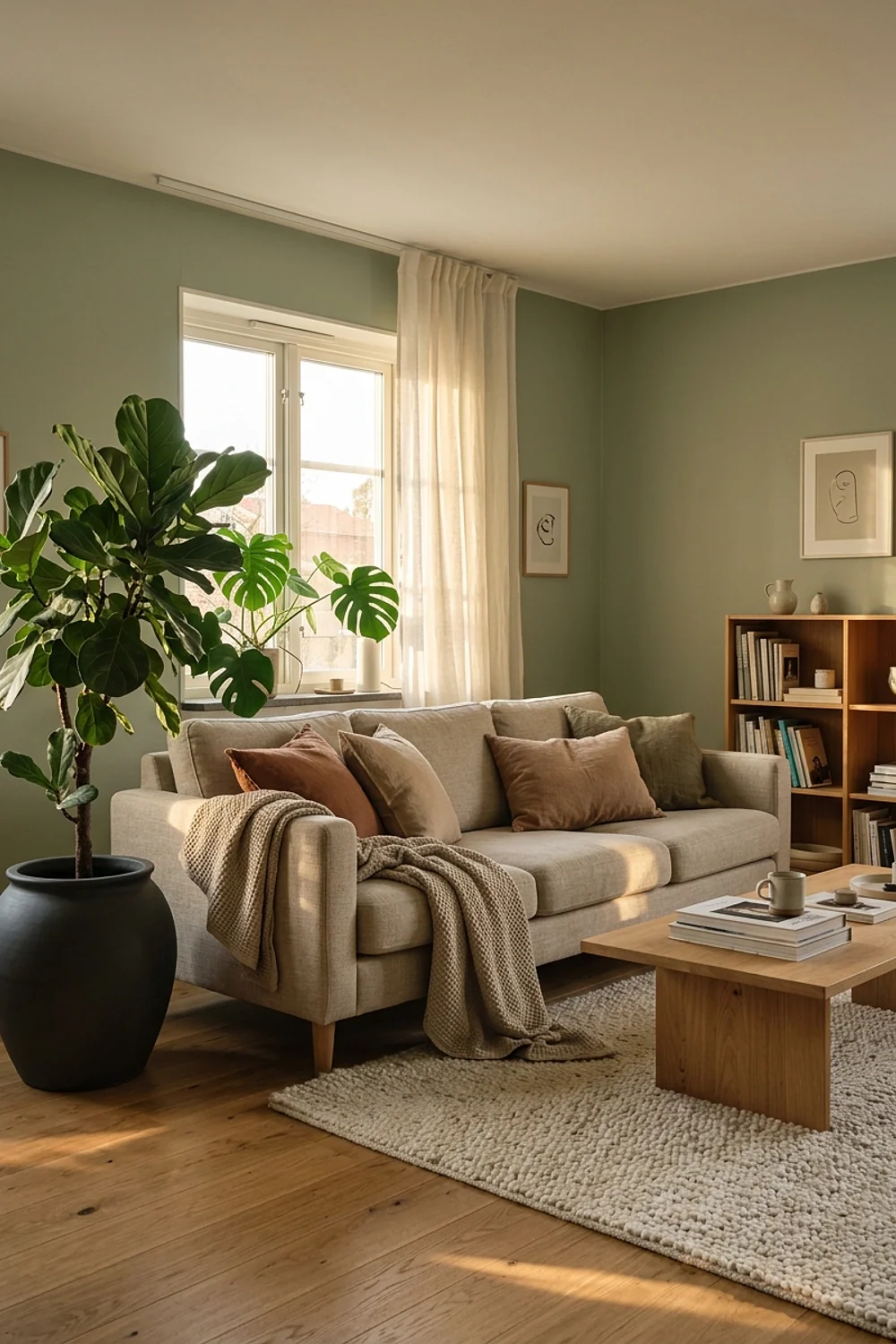
One 4-to-5-foot olive tree or fiddle-leaf fig in an unglazed terracotta or matte ceramic pot (14-16 inches wide) does more than a windowsill of small ones. The pot’s dull finish absorbs light, so the plant stays the focal point.
Place it within 3 feet of a bright window. For anyone prone to forgetting water, a snake plant tolerates a missed fortnight without complaint.
What to remove first
Thoughtful living room decor gets easier once the obvious offenders are gone. Start with this order, because it shows the most change for the least effort:
- Extra side tables and poufs that block the walkway
- Cushions beyond the two that actually get used
- Small frames hung in scattered clusters
- Themed knickknacks that don’t mean anything to anyone
- Visible cords, tucked behind furniture or into a cable box
Here’s a counterintuitive one. A single 30-by-40-inch piece of art makes a wall look larger than six small frames, because the eye reads one big shape instead of a scattered jumble.
Pull items into a basket instead of the trash. If nothing has been missed after two weeks, the decision is made.
Keeping thoughtful living room decor from feeling cold
Thoughtful living room decor turns cold when editing strips out texture along with clutter. A white wall, a gray sofa, and a glass table are tidy, but nobody wants to linger there.
Empty is not the goal.
The fix is rarely more objects. It’s better surfaces: a nubby wool throw, a linen curtain that diffuses afternoon light, a wooden bowl with a worn rim. These materials soften a room without adding to the count.
One living thing, one handmade or secondhand piece, and one lamp with a warm bulb are usually enough. A thrifted stoneware vase for $15 has more character than a boxed set of six.
Where to stop
Thoughtful living room decor ends when each remaining piece has a job, a place to live, and some quality in the hand. Everything else was only taking up floor.
Pin this list so it’s waiting when the weekend edit begins, and start with one measurement: the width of the room, which decides whether the sofa goes flush to the wall or floats.
Frequently Asked Questions
How many decor pieces are too many in a small living room?
In a room around 12 by 15 feet, more than nine furniture and decor pieces usually starts to crowd the eye. Count large items, such as the sofa, rug, tables, and lamps, then treat small objects in a grouped tray as one.
Can I do thoughtful living room decor in a rental?
Yes, because most of the work is subtraction and furniture choice, not construction. Swap overhead lighting for plug-in lamps, use a large rug to cover bad flooring, and lean art on a shelf instead of drilling.
Is thoughtful living room decor expensive to start?
It’s usually cheaper than a full refresh, since the first step is removing things, which costs nothing. Fewer, better purchases such as a rug or sofa cost more individually, but you buy fewer of them overall.
What should I do with sentimental items that don’t fit?
Keep the best one or two on display and store the rest in a labeled box. Rotate a different piece out every season so nothing sits forgotten for years.
One Comment