
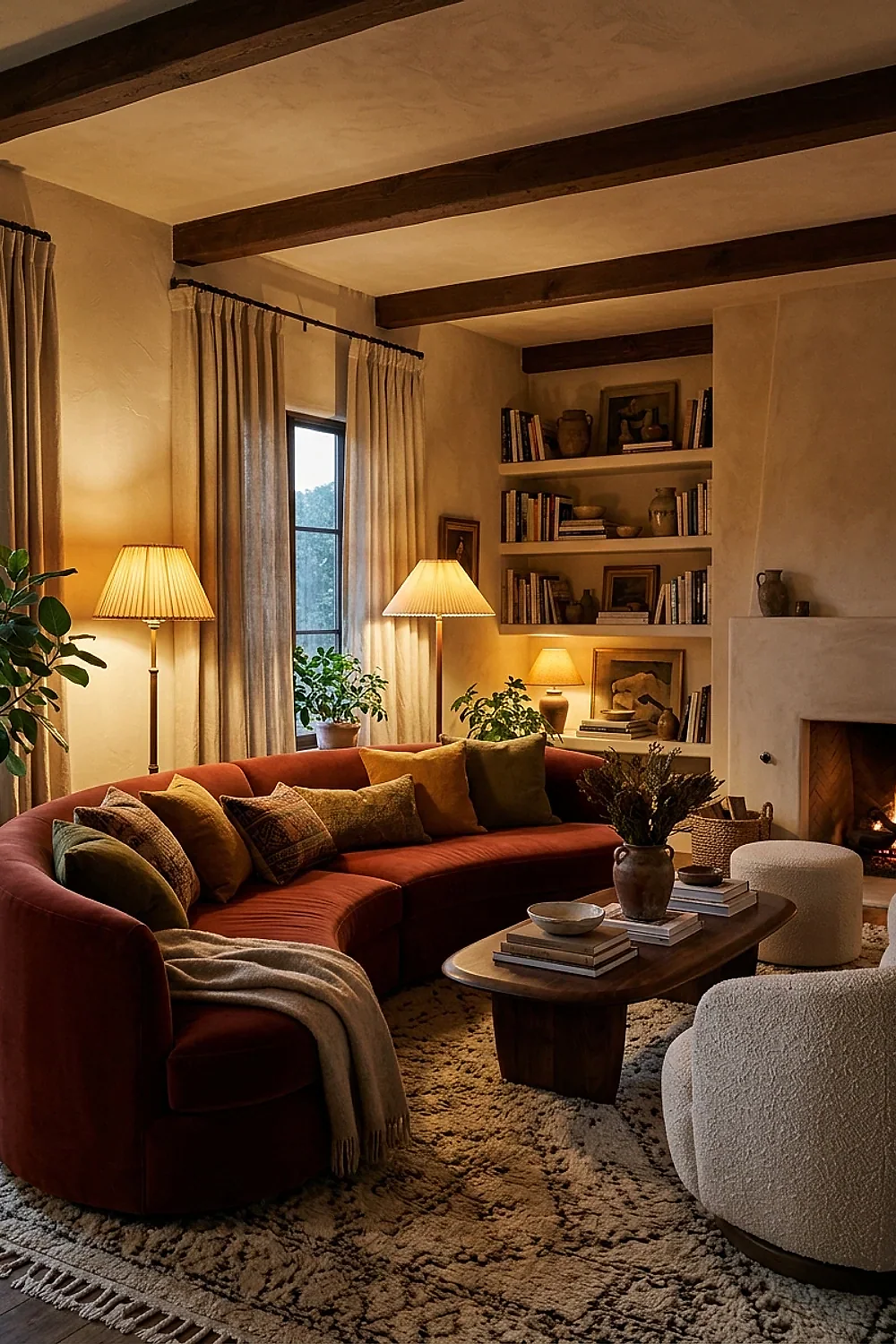
Curved Furniture Living Room Layouts That Transform for Luxury Look
Bouclé has a nubby, slightly sandy feel under your palm, and at 4pm the low sun rakes across a curved sofa arm and turns it into a soft gradient of cream and shadow. The 7 curved furniture living room layouts that transform a boxy room below all borrow from showroom pieces that cost thousands.
Each idea names the designer original, then gives a dupe that gets about 90 percent of the effect. The reasoning leans on proportion, because a curve only looks expensive when it’s sized correctly for the room around it.
The 7 Curved Furniture Living Room Layouts That Transform Your Space, Decoded
Straight lines dominate most living rooms: rectangular sofa, rectangular rug, rectangular table. Curves break that grid, and the eye reads the break as intention. That’s the entire trick behind the luxury look.
A floating curved sofa in performance fabric
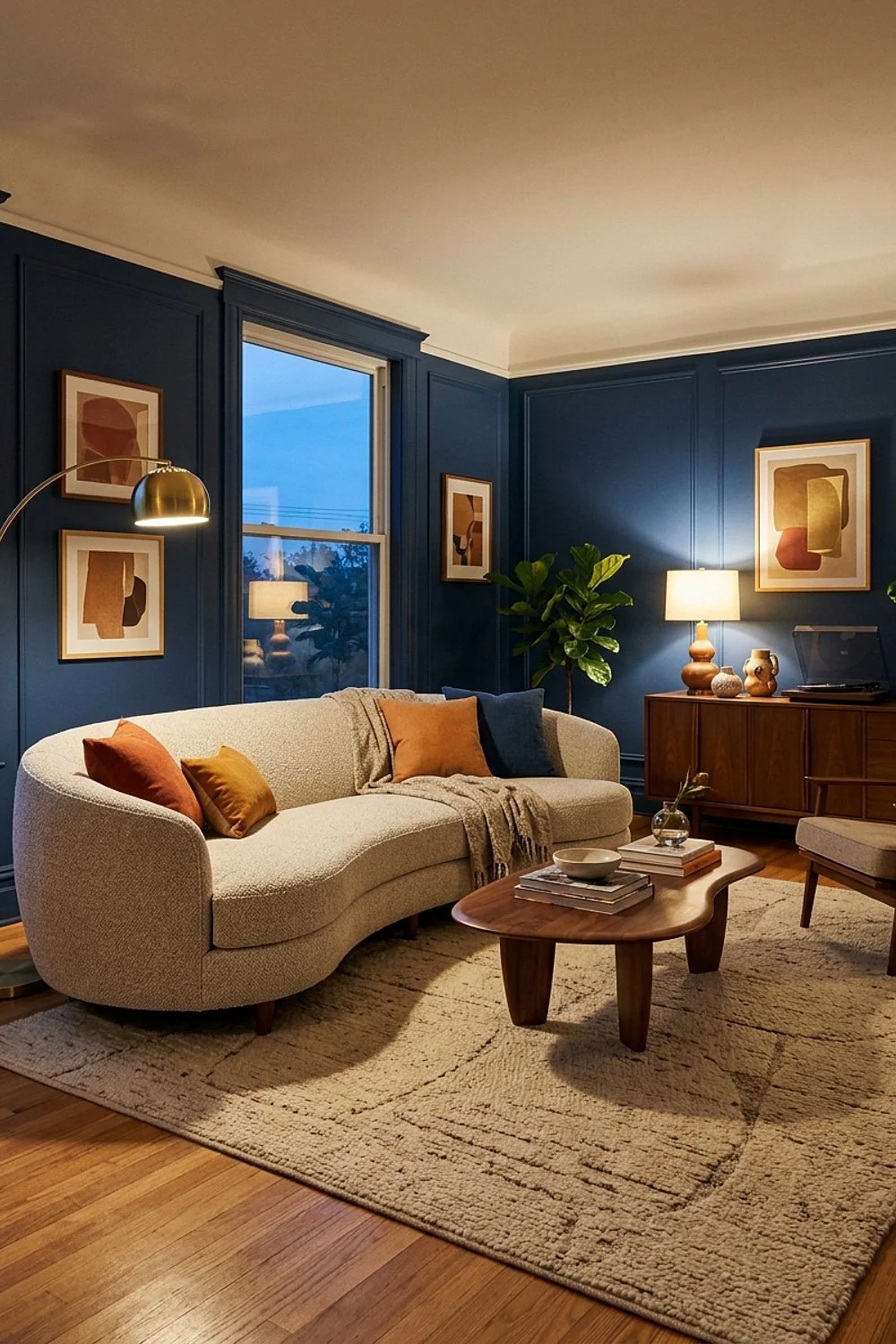
Vladimir Kagan’s serpentine sofa is the original reference, and it runs well into five figures. The dupe is a curved three-seater in a tight-weave performance fabric, which typically lands between $1,200 and $1,800 at mainstream retailers.
Choose the fabric first. Loose bouclé snags on pet claws, while a tight-loop poly blend keeps the sculptural look and survives a dog or a toddler.
Pull it 8-12 inches off the wall so the back curve shows. (A floating curved sofa only works if the room is at least 12 feet wide, otherwise it eats the walkway.)
Nesting round tables with a hidden shelf
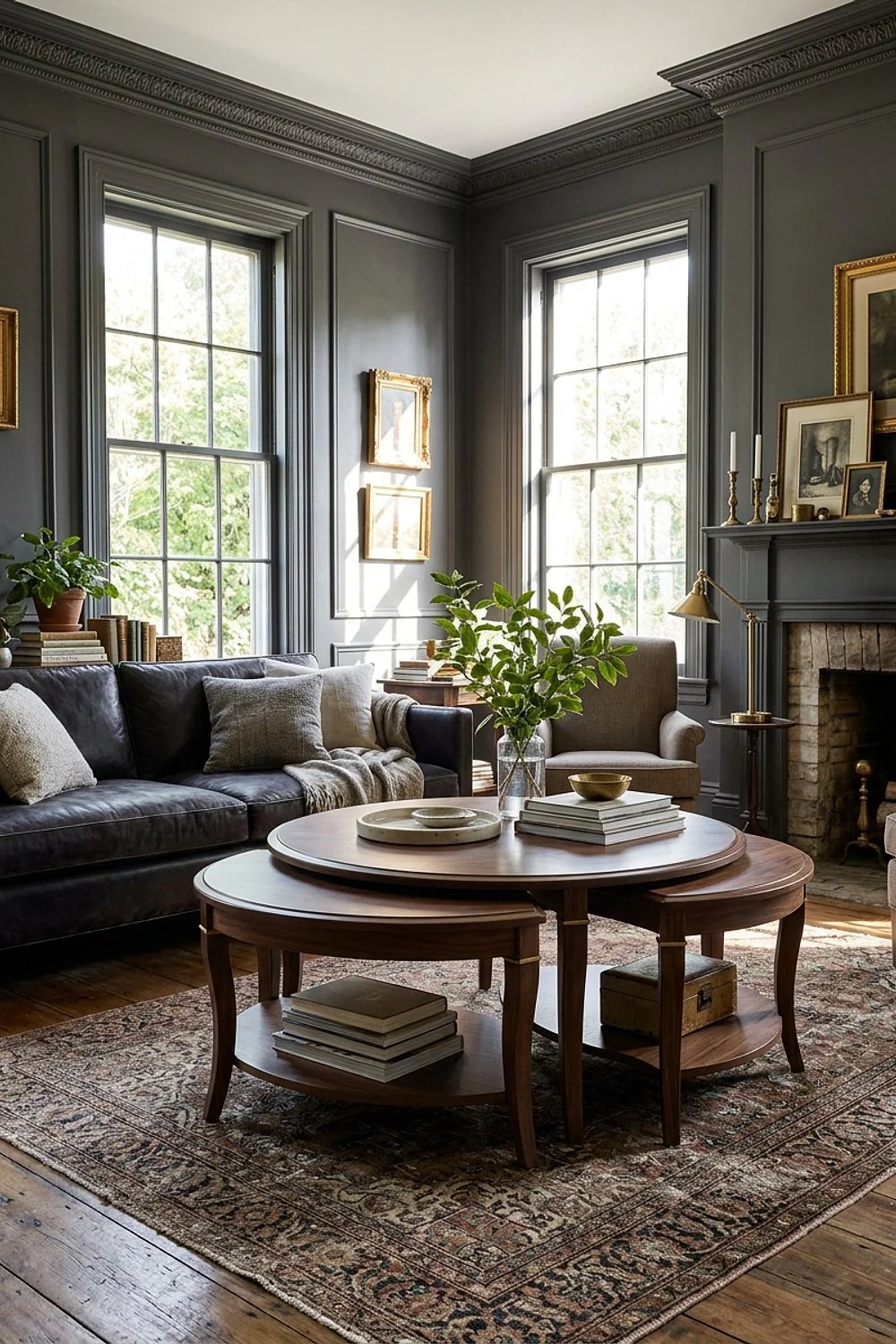
A Noguchi-style coffee table is glass on a sculpted wood base, and the real one costs well over $2,000. Two nesting round tables in walnut veneer, around 30 and 22 inches wide, cost a fraction and hide a second surface for remotes and coasters.
Here’s the counterintuitive part: a round table weighs less visually than a rectangle of the same width. That makes it the better pick for a room under 150 square feet.
Look for a lower shelf or a lift-top version if the room has no other storage. Keep the top about 2 inches below seat height.
Two barrel chairs facing the sofa
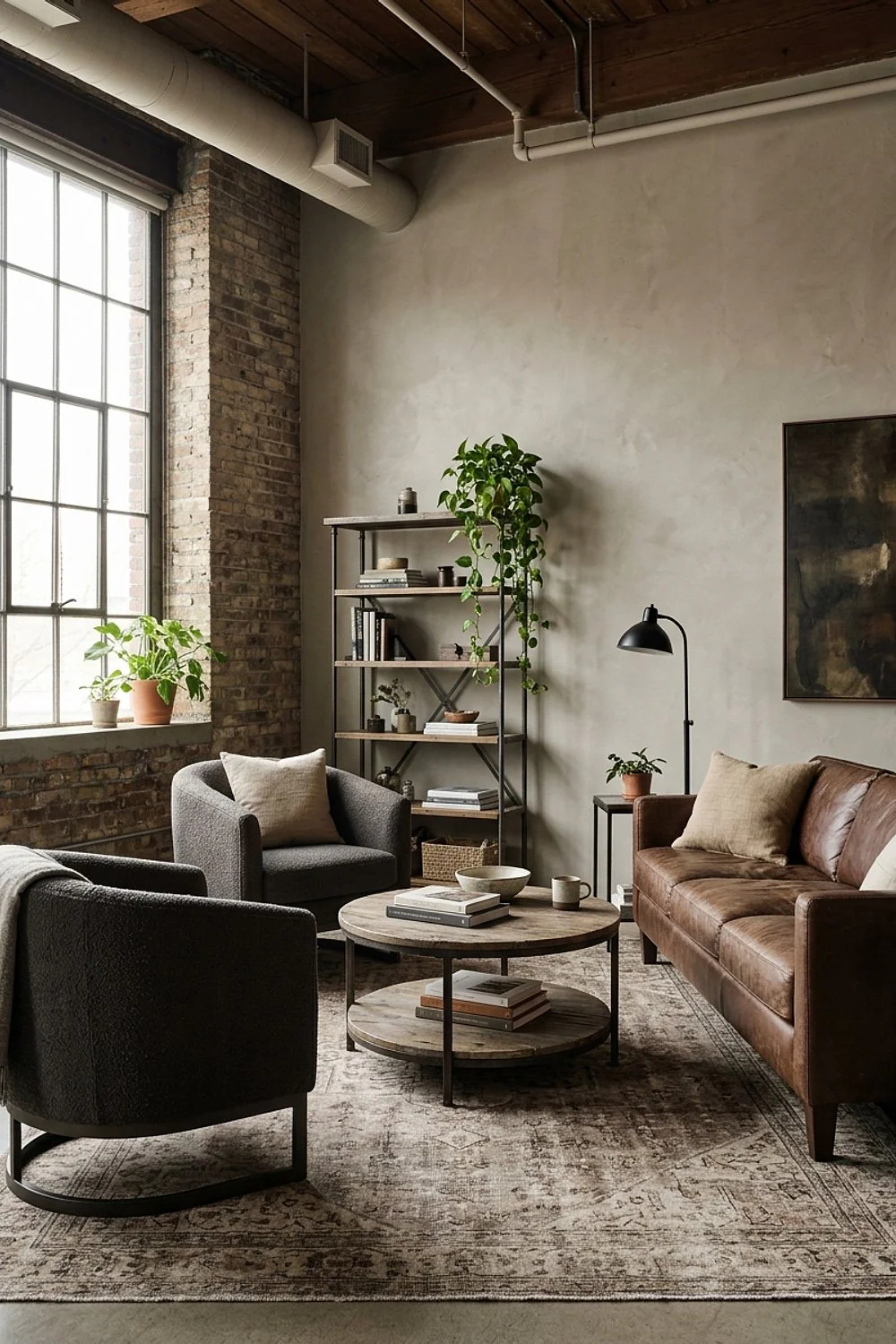
The common mistake is pushing curved chairs against the wall like dining chairs. They need to float, angled about 30 degrees toward the sofa, with 36-48 inches of clear floor between them and the table.
Designer barrel chairs from the big showroom names start around $2,500 each. A pair of bouclé or textured-chenille barrel chairs from Target or Wayfair-tier retailers runs $350-500 each.
This layout suits living rooms where conversation matters more than a TV wall. Skip it if the TV is the main event, because those backs will block sightlines.
A round mirror above a curved-front sideboard
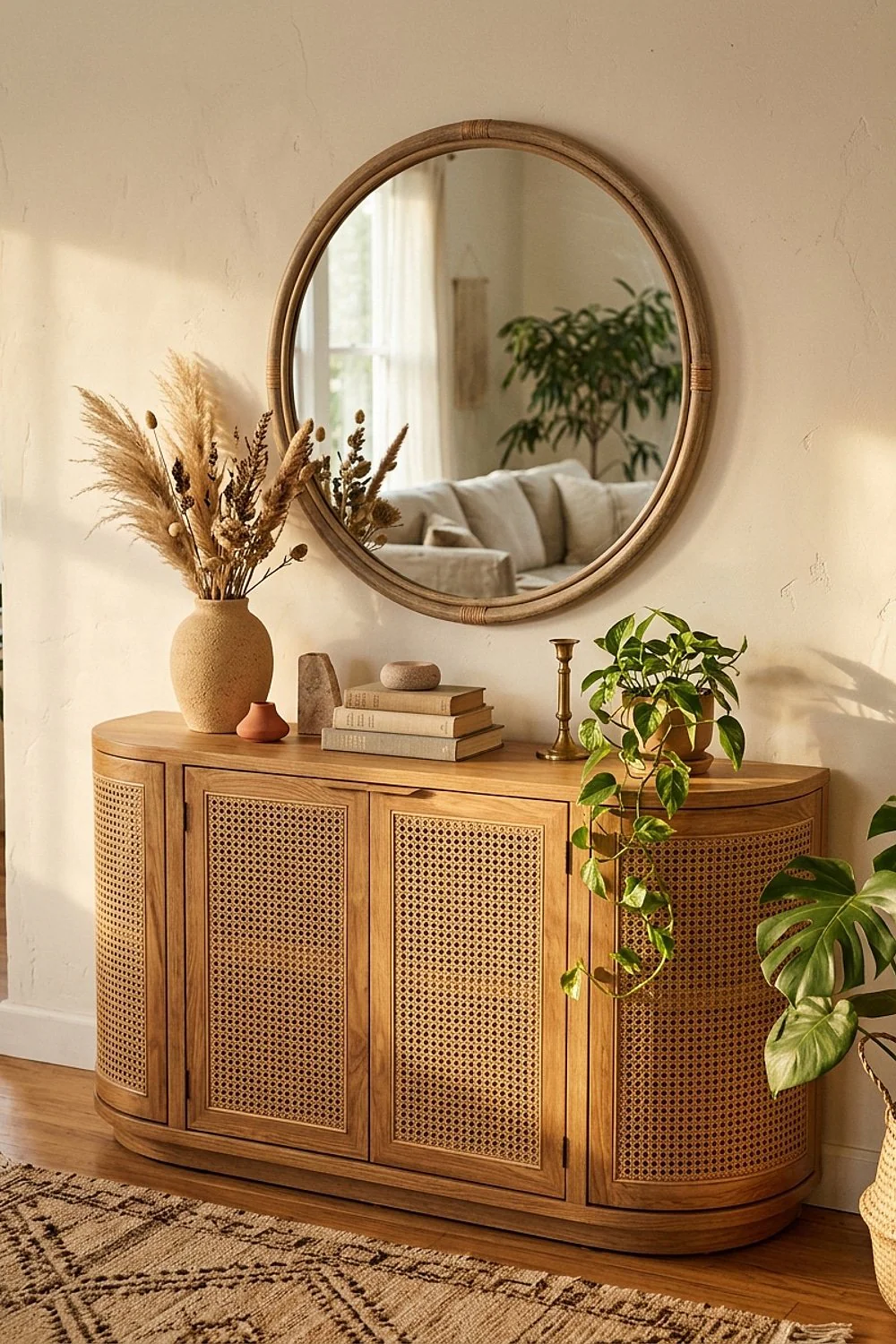
Picture a scalloped or bow-front sideboard in fluted oak with a 36-inch round mirror centered above it. High-end versions sit in the $3,000 range, but a secondhand bow-front chest, repainted in a deep olive, gets you there for under $300.
The mirror should be about two-thirds the width of the sideboard. Any bigger and the arrangement looks top-heavy, any smaller and it floats like a coin on a tray.
Add one tall ceramic lamp on one side and a low stack of books on the other. Uneven weight looks more collected than a matched pair.
An arc floor lamp reaching over the sofa
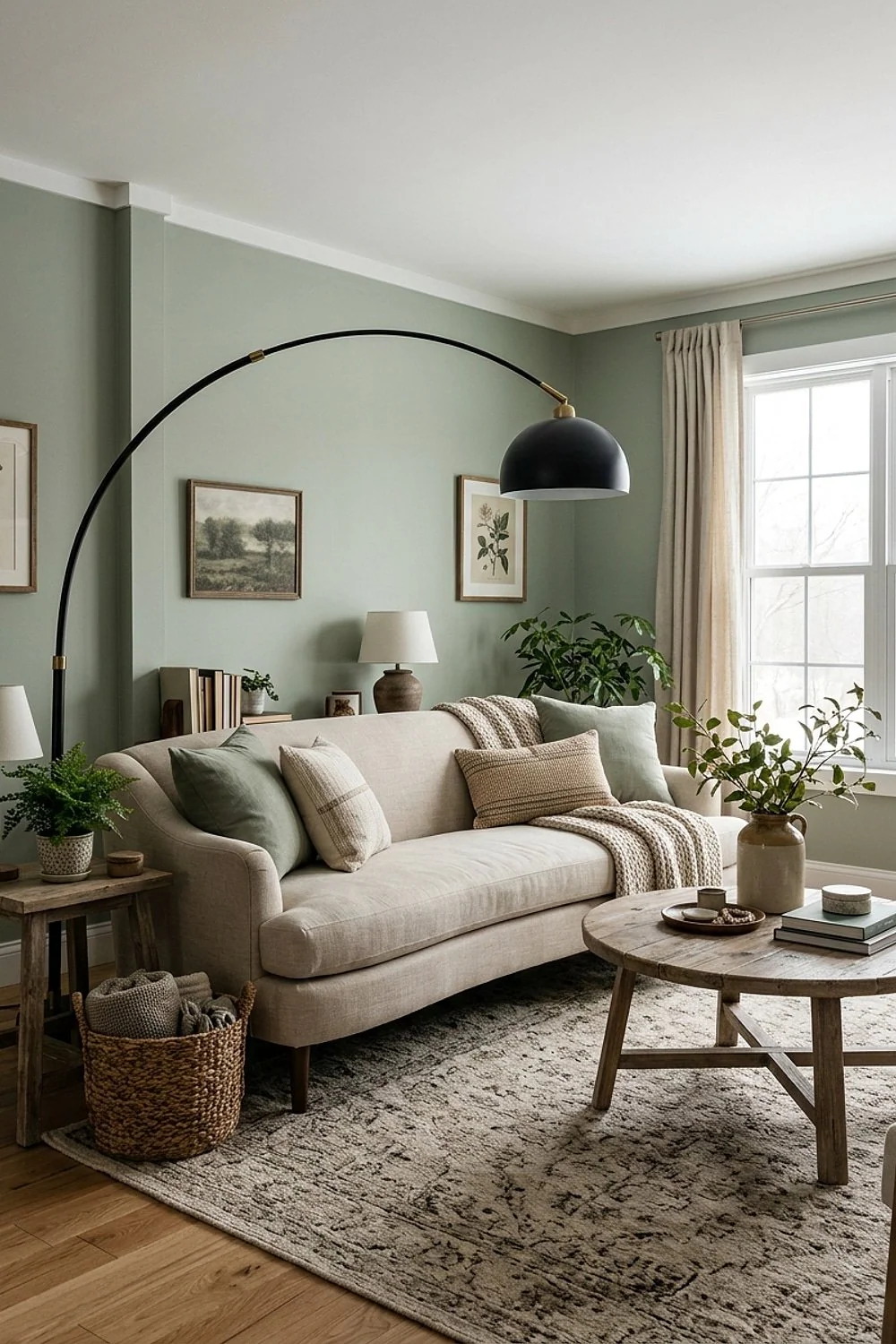
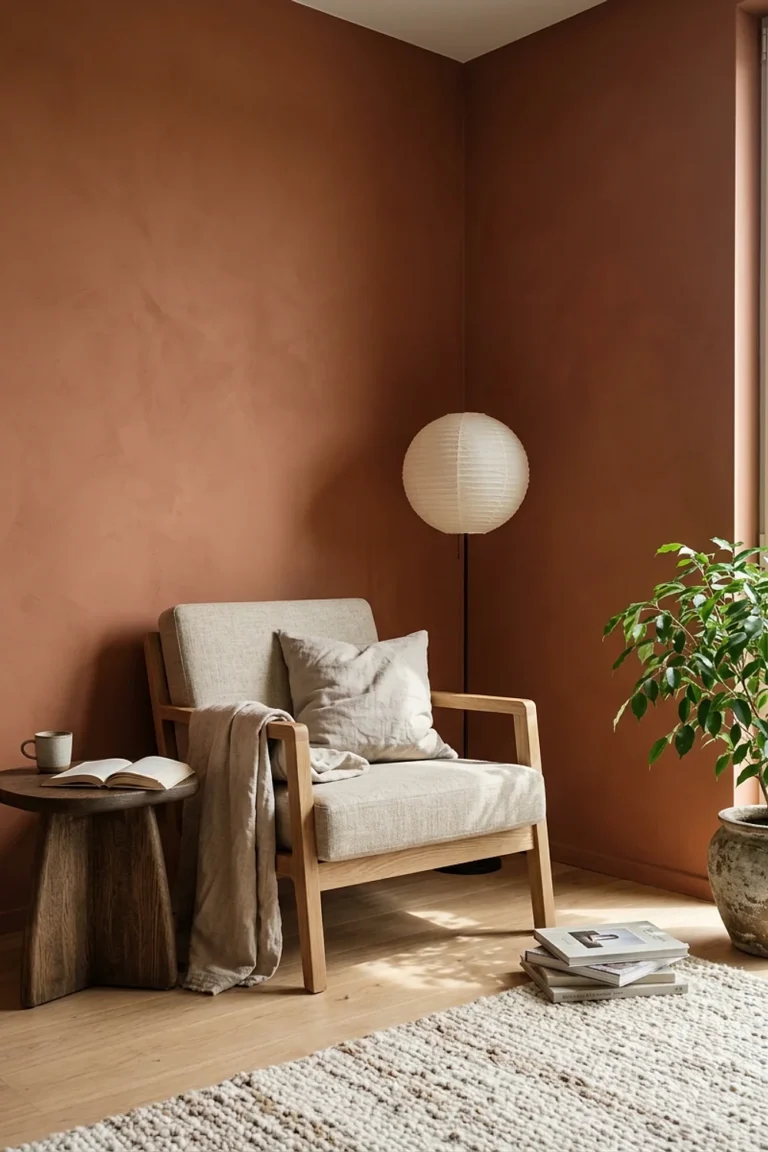
The Arco lamp by Flos is the icon here, with a marble base and a steel arc that cost several thousand dollars. A weighted-base arc lamp with a 72-inch reach runs $100-200 and does the same job of putting light where a ceiling fixture can’t.
The warm pool of light it throws on a gray November afternoon makes a corner feel finished. Use a 2700K bulb, since anything cooler flattens the curves you just paid for.
Check the base weight before buying. A base under 15 pounds tips when someone bumps the shade.
A round rug under a curved sectional
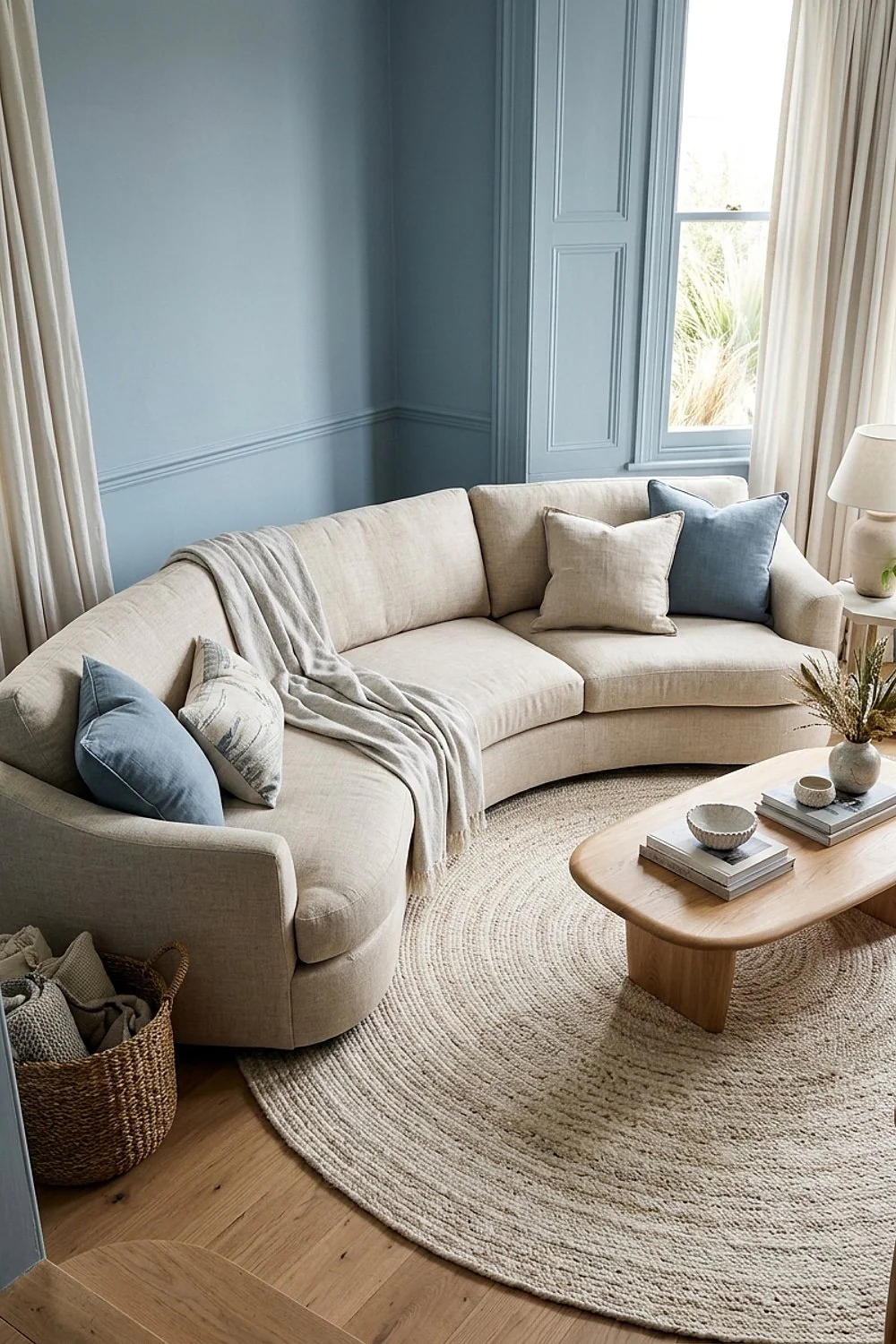
A curved sectional sitting on a rectangular rug leaves awkward corners of bare floor. A 9-foot round jute or wool-blend rug follows the sofa’s arc and costs roughly $250-400, versus well over $1,500 for a custom hand-knotted version.
Front legs of every seat should rest on the rug, so measure the sofa’s chord width and add about 18 inches. A rug that’s too small makes the whole arrangement look like it’s floating in a lake.
This layout fits open-plan rooms best, where the circle defines the sitting zone without a wall.
Swivel chairs and a curved ottoman for lounging
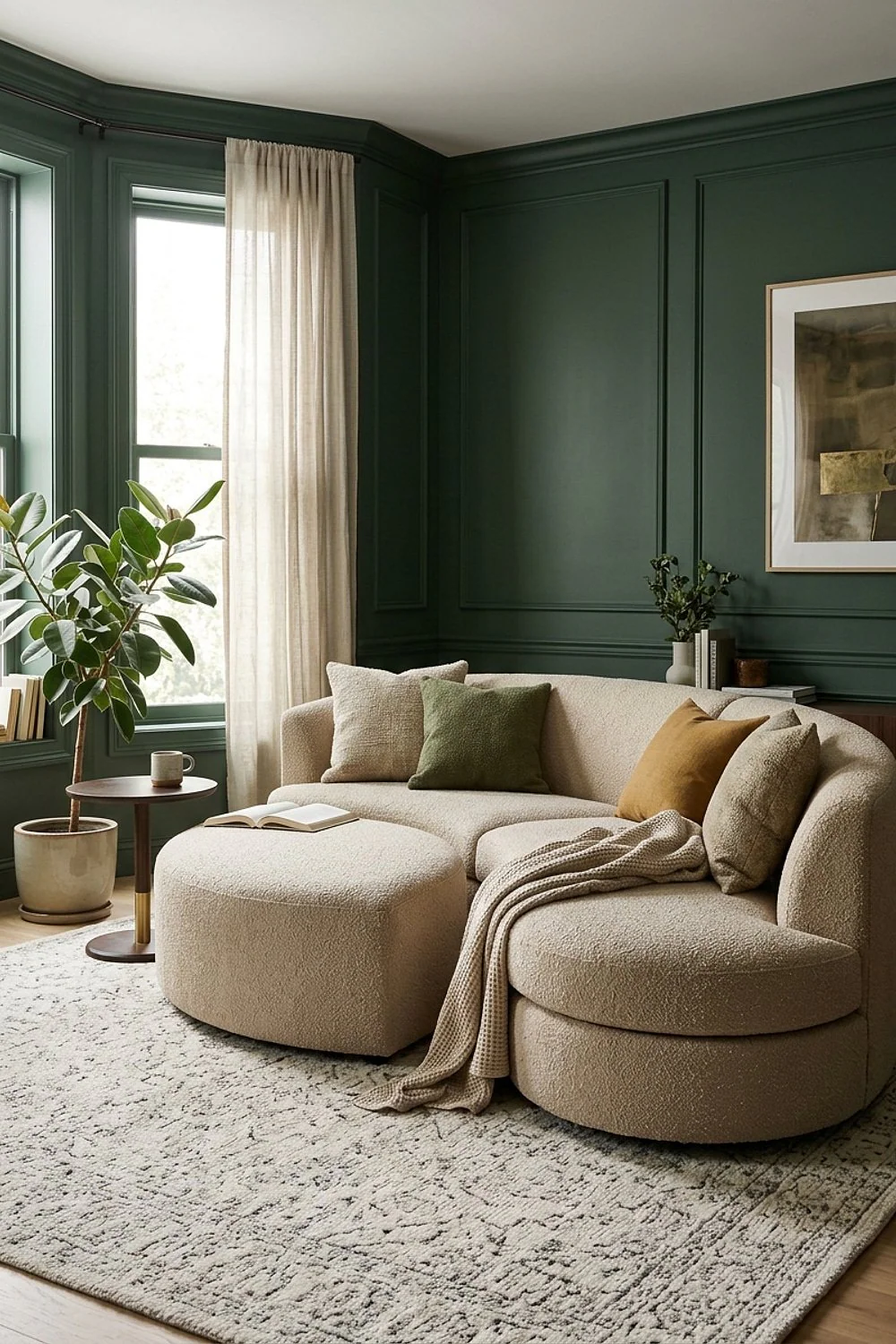
Designer swivel chairs with a deep, hugging seat feel like a hotel lobby and cost $3,000 or more. Mid-priced swivels with a 28-inch-deep seat and a high-resilience foam core give the same cradle for a fraction.
Pair them with a kidney-shaped ottoman at 16-17 inches high. It works as a footrest, a tray base, or a seat for a guest.
Test the seat depth in person if possible. Anything over 30 inches swallows shorter people, and anything under 24 inches feels perched.
Where to splurge and where to save
The 7 curved furniture living room layouts that transform a room don’t all deserve the same budget. Money belongs where hands and bodies touch the piece every day.
- Splurge: the sofa frame and cushion core, since sagging foam ruins a curve fast.
- Splurge: a floor lamp base with real weight.
- Save: side tables, mirrors, and nesting tables, which are all easy to find secondhand.
- Save: the rug, as long as the size is right.
A secondhand shopper’s rule applies here: curved wood pieces from the 1970s and 80s are often better built than new flat-pack versions. Check the drawer runners and the joinery before haggling.
Dupe fabrics can also be treated. A $40 can of fabric protector turns a $900 sofa into something that handles red wine better than the original. It’s not foolproof. But it works.
Spotting quality at any price
Curved furniture hides weak construction better than straight furniture does, which is exactly why it’s worth inspecting. Use a tape measure and your hands before you commit.
- Seat depth between 22 and 25 inches for a standard sofa, and a back height near 33 inches.
- Kiln-dried hardwood frame, not particleboard, under the curved rail.
- Foam density of at least 1.8 pounds per cubic foot for seat cushions.
- Seams that follow the curve without puckering.
Press down on the arm of a curved sofa and listen. A creak means the frame is stapled instead of joined.
And lift one corner. A solid curved frame feels heavy, while a hollow one wobbles.
Combining curves without losing the plot
Curved furniture living room layouts fall apart when everything is round. Pair each curve with at least one straight line, like a rectangular bookshelf or a squared window frame.
A good ratio is two curved pieces to every three straight ones in a room under 250 square feet. Past that, the room starts to look like a theme restaurant.
Keep the palette tight, too. Three tones, say oatmeal, walnut, and one deep green, let the shapes do the talking.
Bringing the curves home
The pattern across all seven layouts is the same: pick one curved anchor, size it against the wall and the walkway, and let cheaper supporting pieces repeat the shape. Curved furniture living room layouts reward restraint far more than budget.
Save or pin this list so it’s handy when shopping starts, and measure the widest wall in the room before buying anything. That single number decides which of these seven ideas to try first.
Frequently Asked Questions
How much space does a curved sofa need?
Plan for at least 36 inches of walkway around the curve and a room width of 12 feet or more if the sofa floats. In smaller rooms, push the flat back against a wall and keep the curve on the front side.
Do curved furniture layouts work in a small living room?
Yes, and the 7 curved furniture living room layouts that transform small rooms work best with round tables and a single barrel chair. Rounded corners cut down on bruised shins and visual bulk.
Is bouclé practical with kids or pets?
Tight-loop bouclé in a polyester blend holds up well, while loose wool bouclé snags. Spot-clean with a damp microfiber cloth and avoid scrubbing, which pills the loops.
Can curved furniture be mixed with a traditional room?
It can, if the curved piece shares a color or wood tone with something already in the room. A round walnut table beside a rolled-arm sofa reads as deliberate rather than random.

One Comment