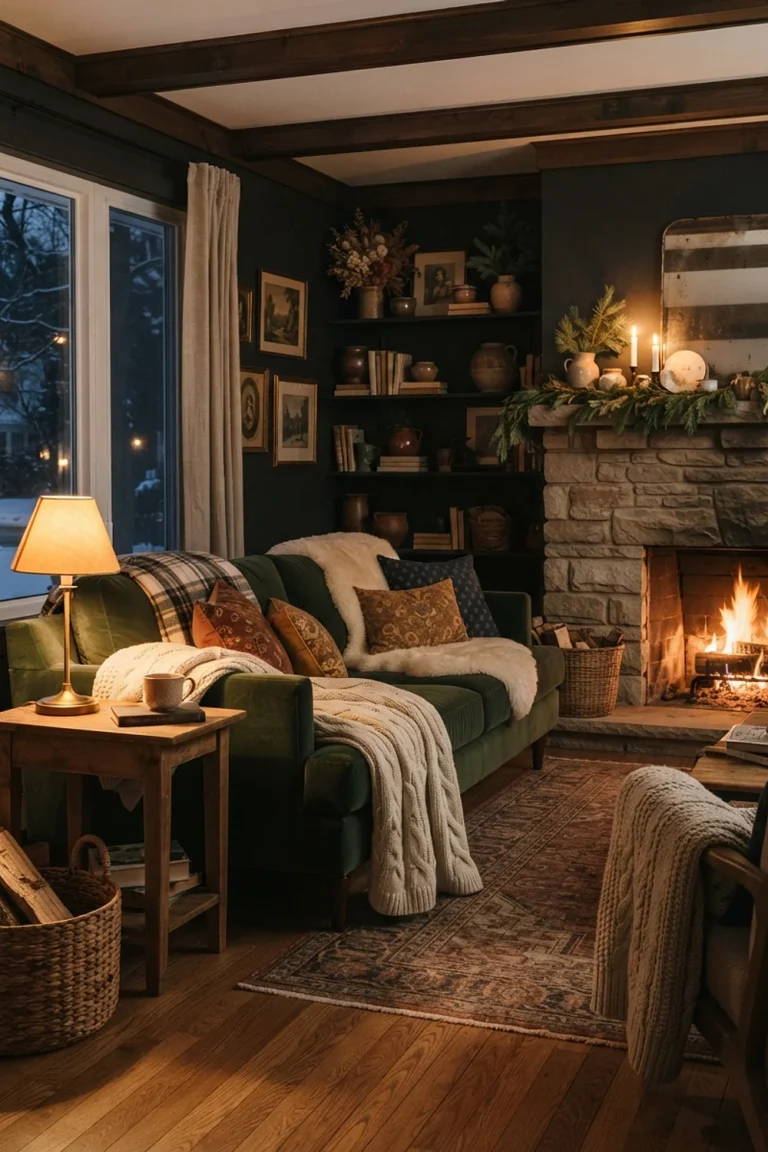
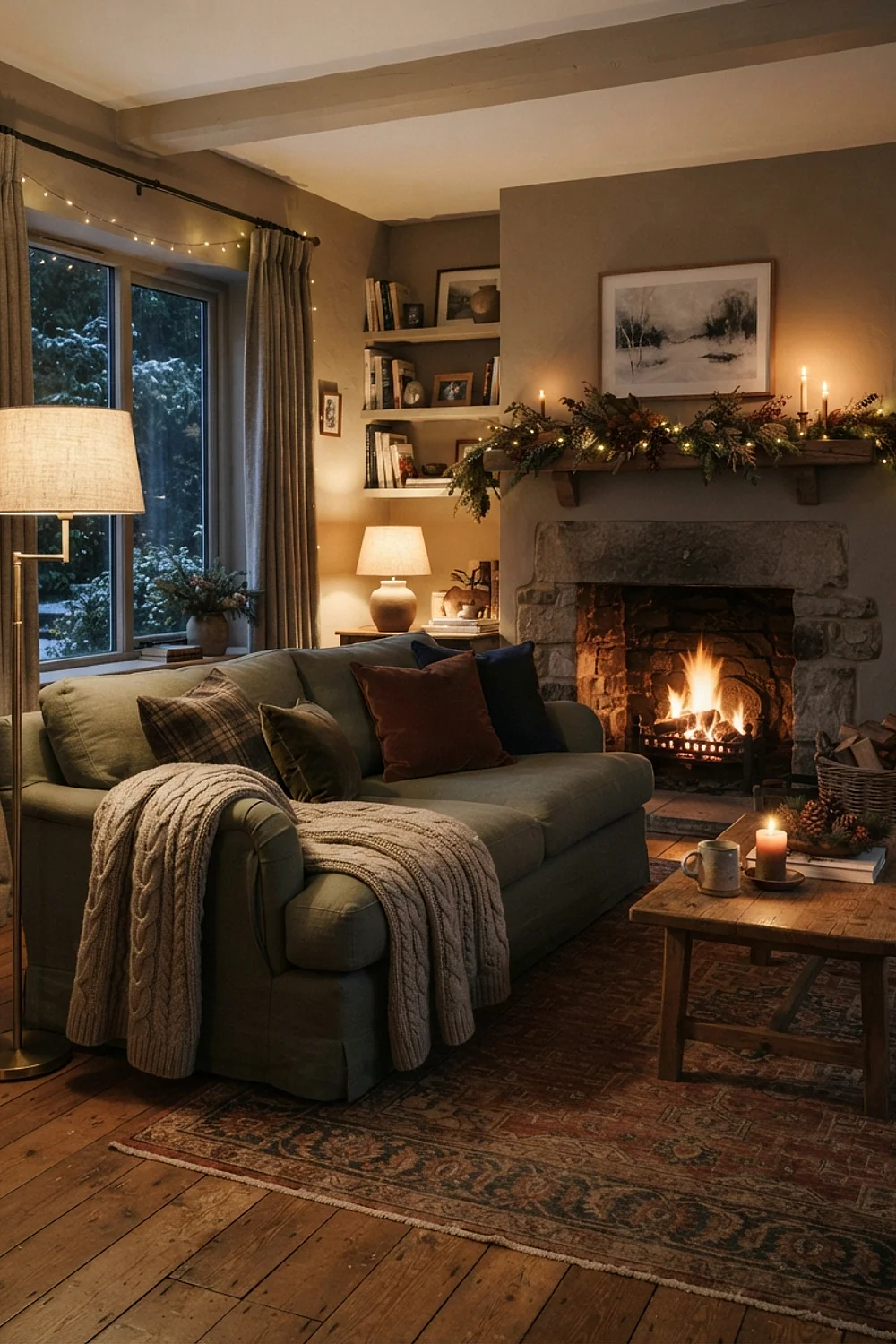
Classic Winter Decor Ideas for a Timeless Home
By the last page, a flat, bare January living room can look layered, lived-in and finished, using nine pieces that were already old news in Georgian drawing rooms. These winter decor ideas all pass the same test: they solve a real cold-weather problem first and look good second.
The “before” is familiar. One overhead bulb, a bare mantel, a thin throw, a wreath the size of a dinner plate. The “after” relies on proportion, material and patience, and it needs very little shopping.
Winter decor ideas: Mood board breakdown
Winter decor ideas that last all began as tools. Candles gave light, wool held heat, thick curtains stopped drafts, and evergreens were the only green thing alive in December.
Fashion changes the finish. The function stays put, which is why a brass candlestick from 1790 still looks right next to a modern linen sofa.
Proportion is the first test for every piece below. Ask how big the object is against the wall, the mantel and the furniture beside it. A garland that’s too thin or a wreath that’s too small fails on scale, no matter how nice the materials are.
Gray light at 4pm in January also shows every weakness. Anything that only looks good under a bright bulb won’t survive an honest winter afternoon.
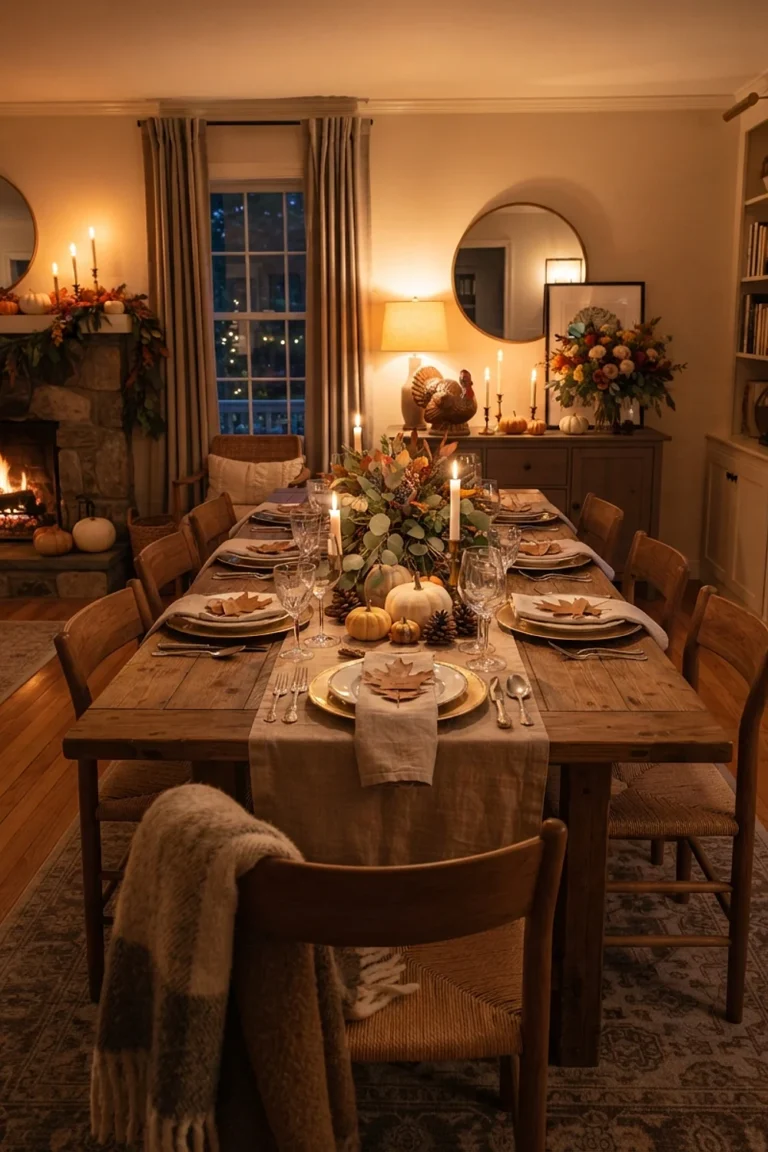
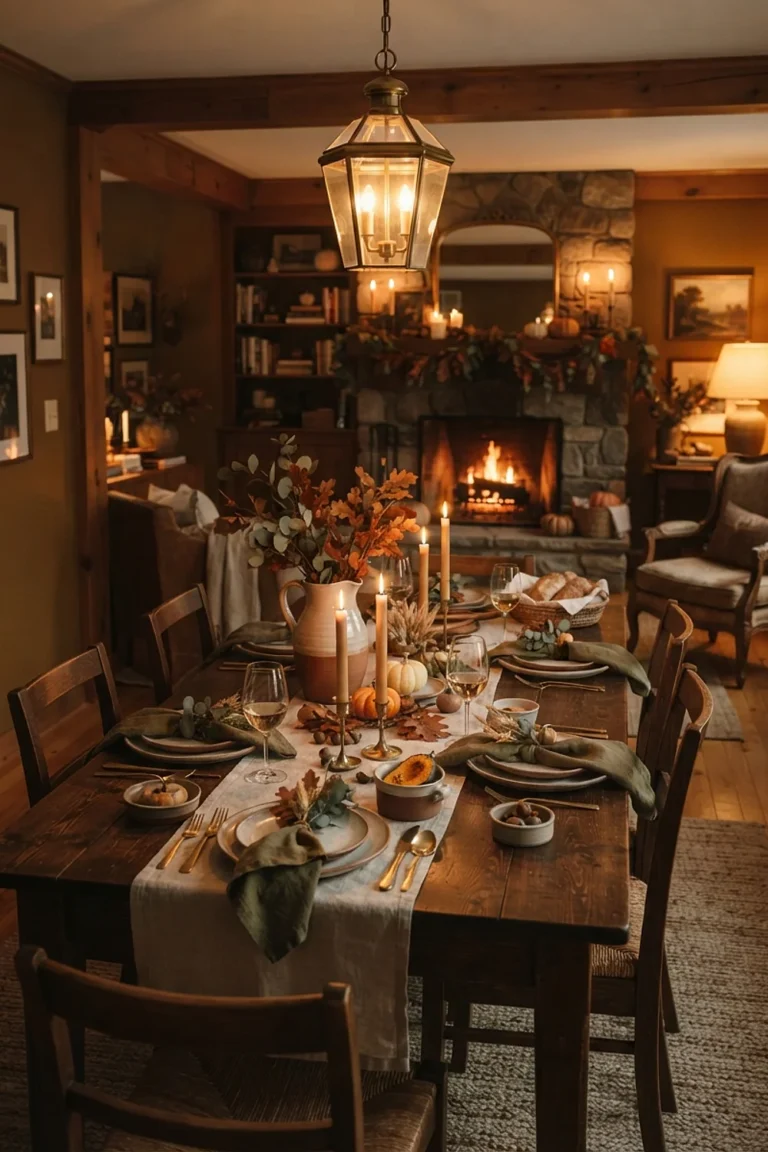
Beeswax tapers in brass candlesticks
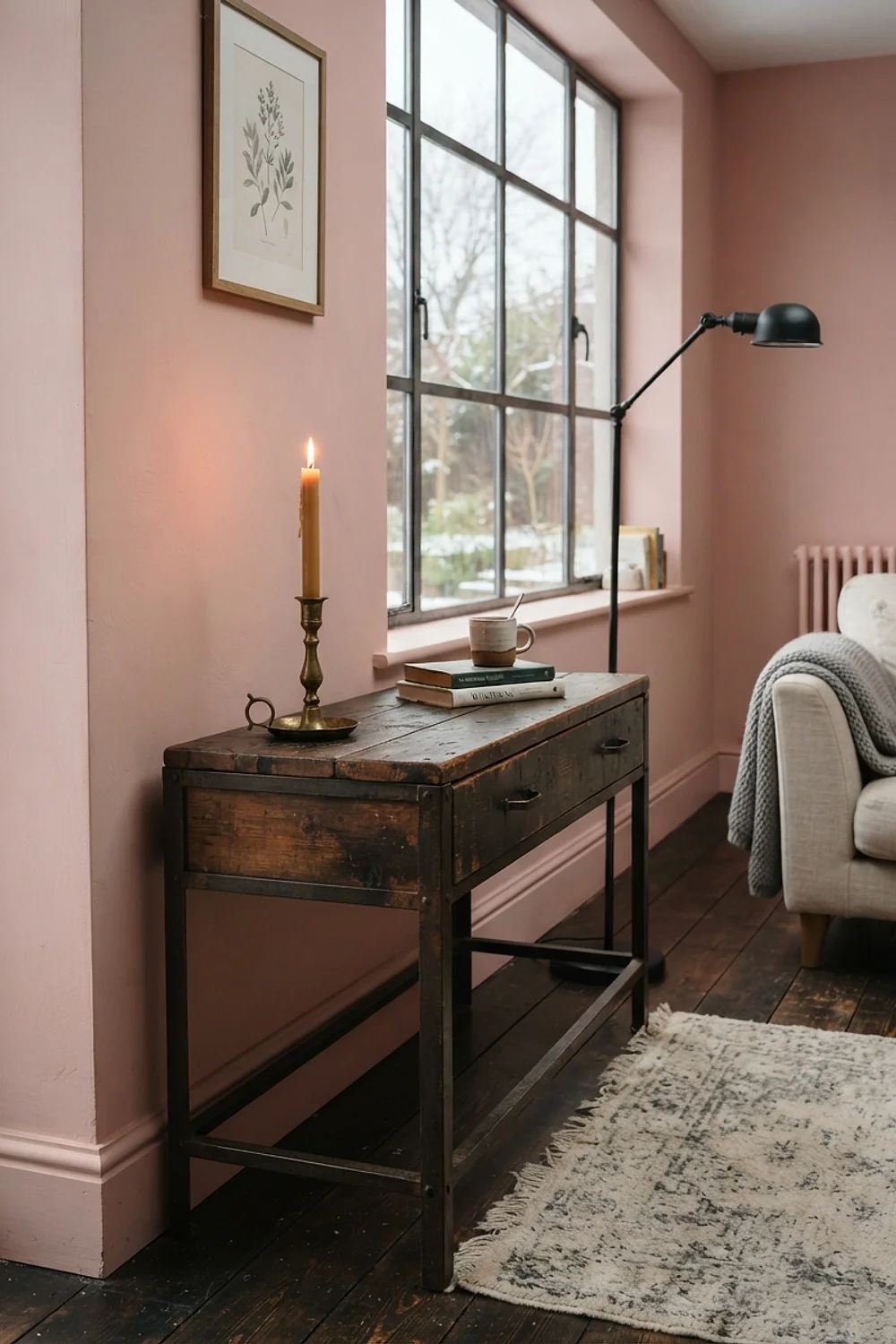
A pair of 12-inch beeswax tapers in brass candlesticks throws a low amber glow, around 1900K, that no overhead fixture matches. When the sky turns slate at 4pm, that light fills the corners a ceiling bulb leaves flat.
Georgian hosts burned wax because tallow smoked and stank, and the habit stuck. Beeswax also burns slower than paraffin and smells faintly of honey.
Vary the heights between 8 and 14 inches, since candlesticks under 6 inches look stubby on a mantel. Trim each wick to a quarter inch, and keep flames well away from any fresh garland.
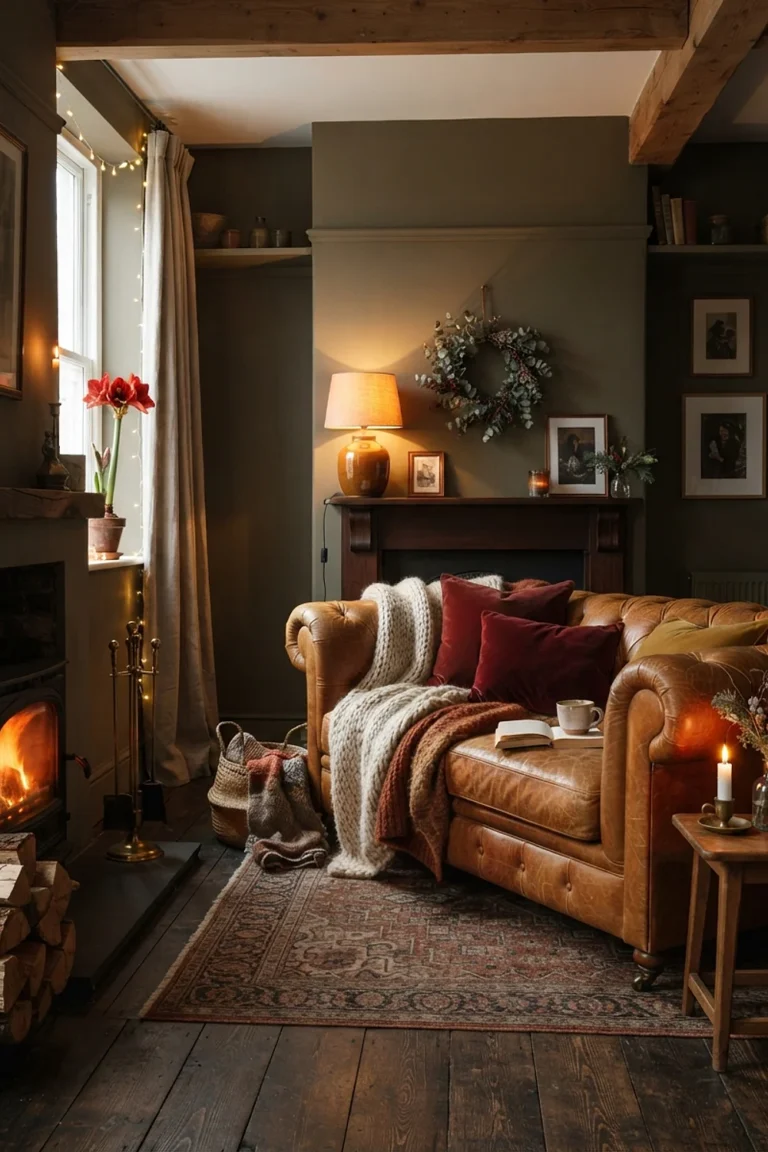
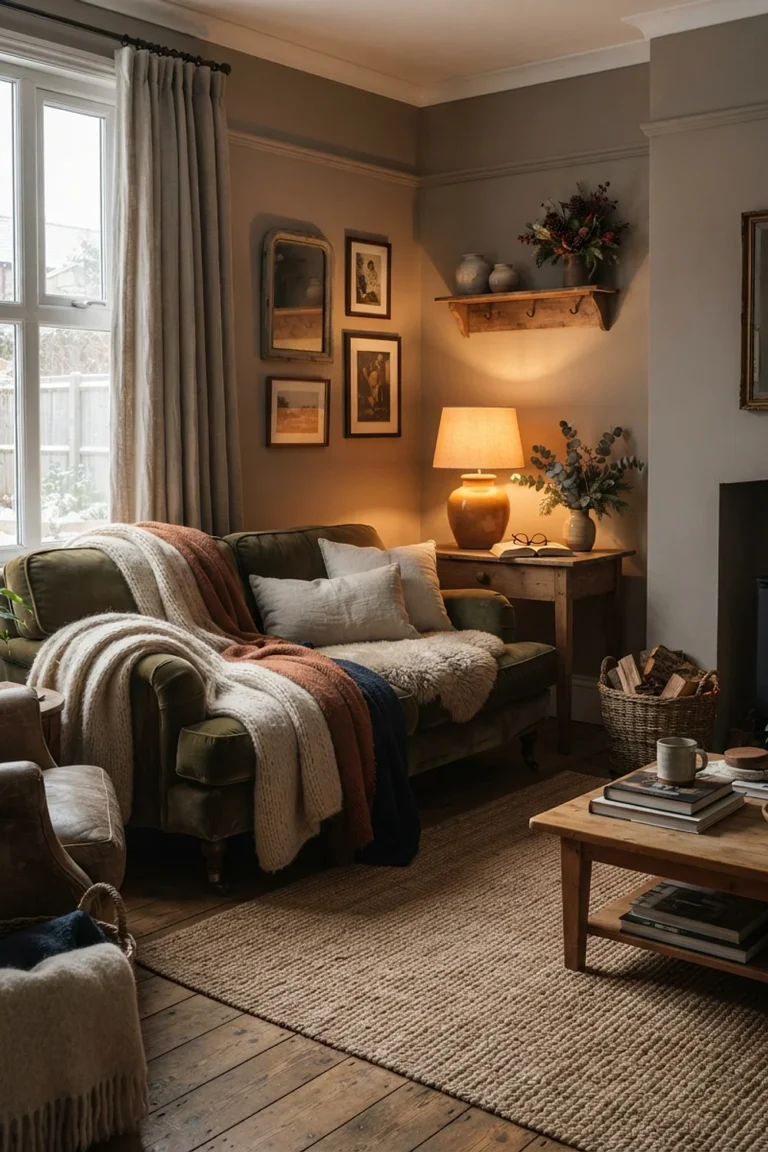
A heavy wool point blanket over the sofa arm

A striped wool point blanket feels dense and a little scratchy at first, then softens with every wash. Wool can take on roughly 30 percent of its weight in moisture before it feels damp, which is why it still feels dry on a clammy February evening.
Genuine wool runs about $150-$300 for a queen size. Acrylic lookalikes cost a third of that, but they pill within a season and never drape the same way.
Fold it lengthwise into a band about 18 inches wide and lay it over the sofa arm. Draped loosely over a whole sofa, it swamps the piece and looks like laundry.
Fresh evergreen garland along the mantel
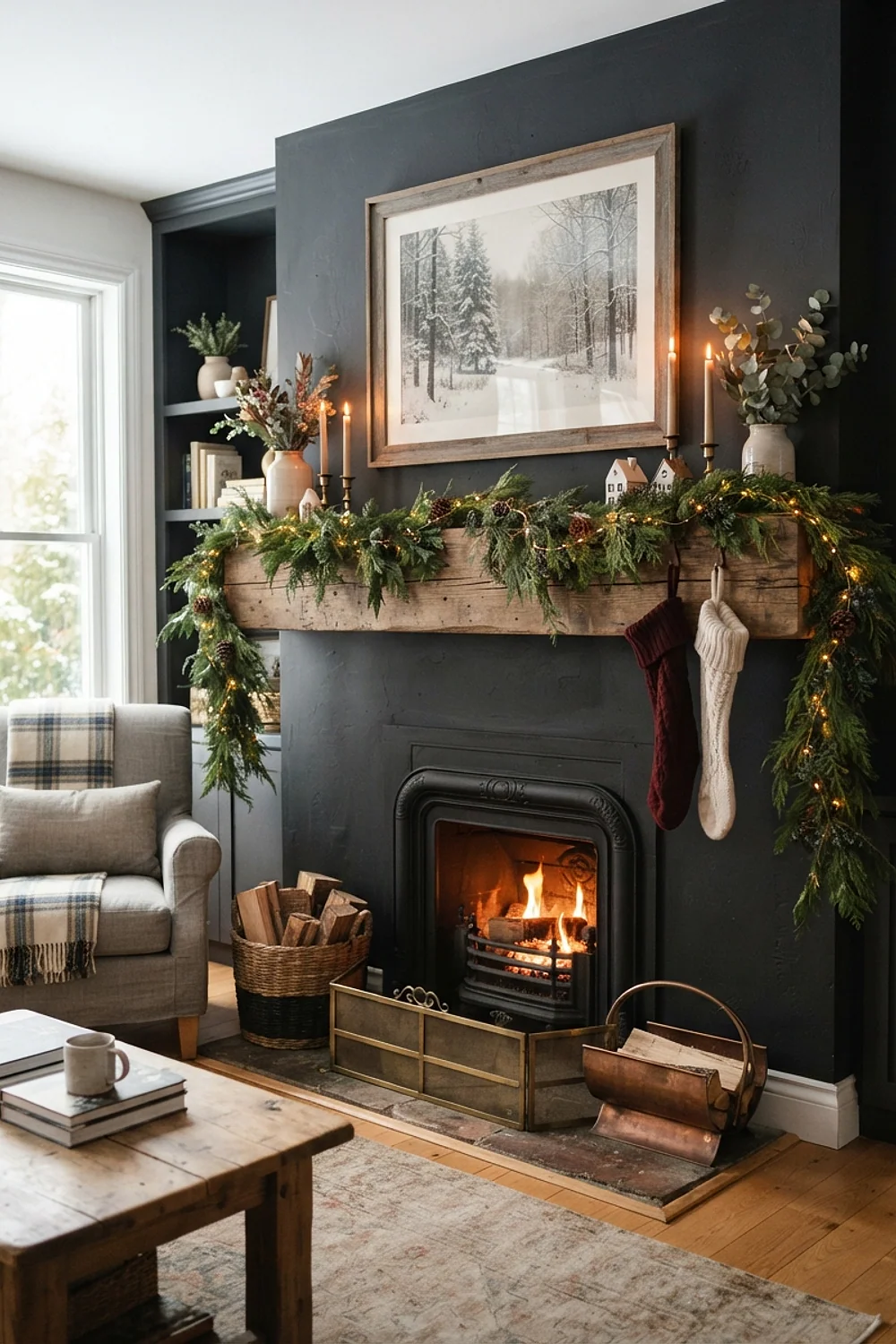
A mantel 60 inches wide wants about 9 feet of garland, so the ends can drop 12-16 inches at each side. Anything shorter ends at the corners and looks like a stripe of piping.
Thickness matters just as much. A garland 10-14 inches deep gives a mantel real presence, while a thin 6-inch string vanishes against a big chimney breast.
Here’s the counterintuitive part: cut greenery dries out fastest over a working fireplace, not in a cold hall. Mist it every other day, or plan to swap it around day 10.
Bottle green and oxblood velvet cushions
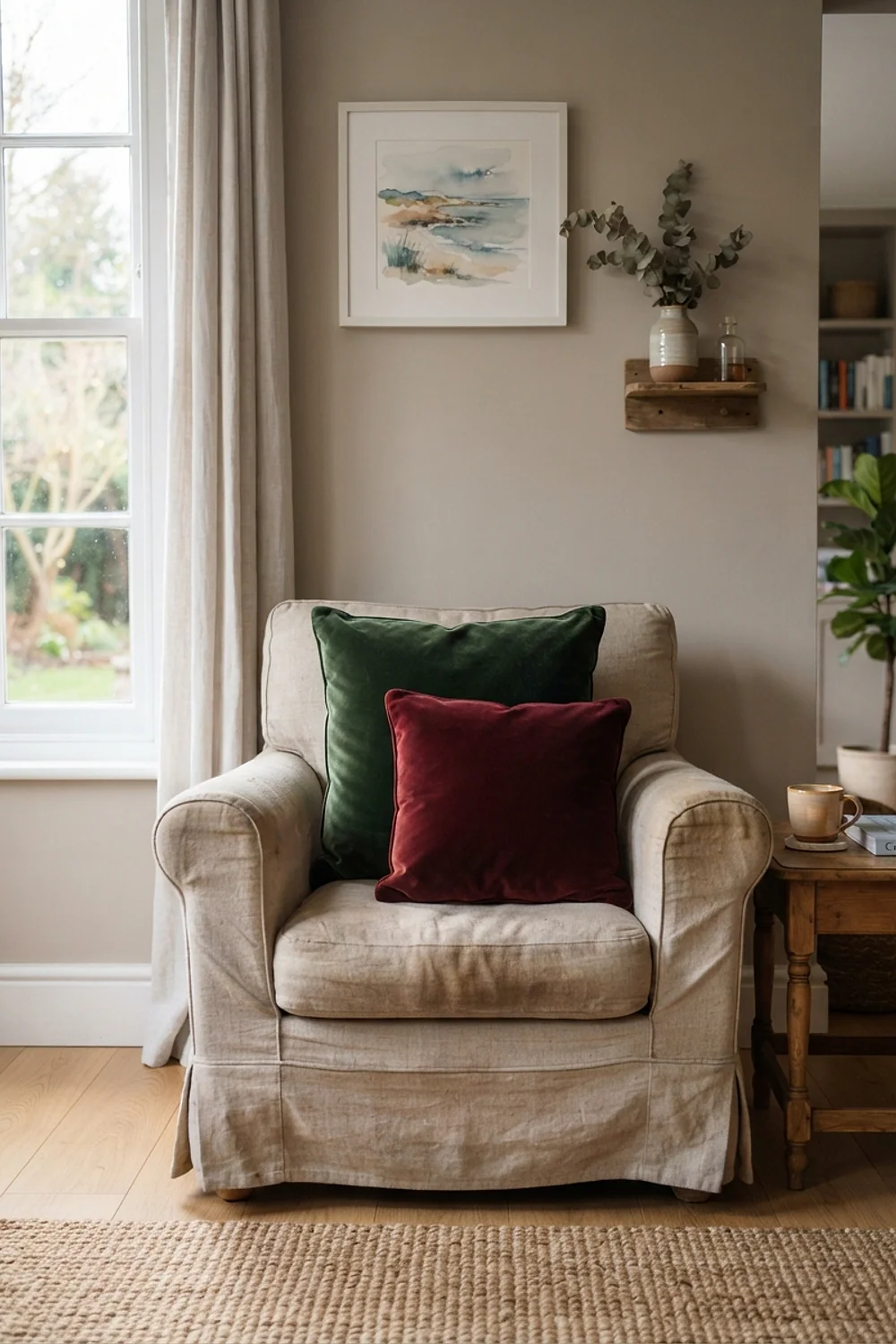
Oxblood and bottle green sit near opposite sides of the color wheel, so they hold each other steady. Velvet shifts shade as the light moves, going nearly black at dusk and glossy by a window at noon.
Old English country houses leaned on these colors for good reason. They read as moody rather than festive, so they still look right when the tree is long gone.
Choose muted, brownish reds. A bright primary red turns the sofa into a department store display. On an 84-inch sofa, two 20-inch squares and one lumbar pillow are plenty.
A single oversized wreath on the front door
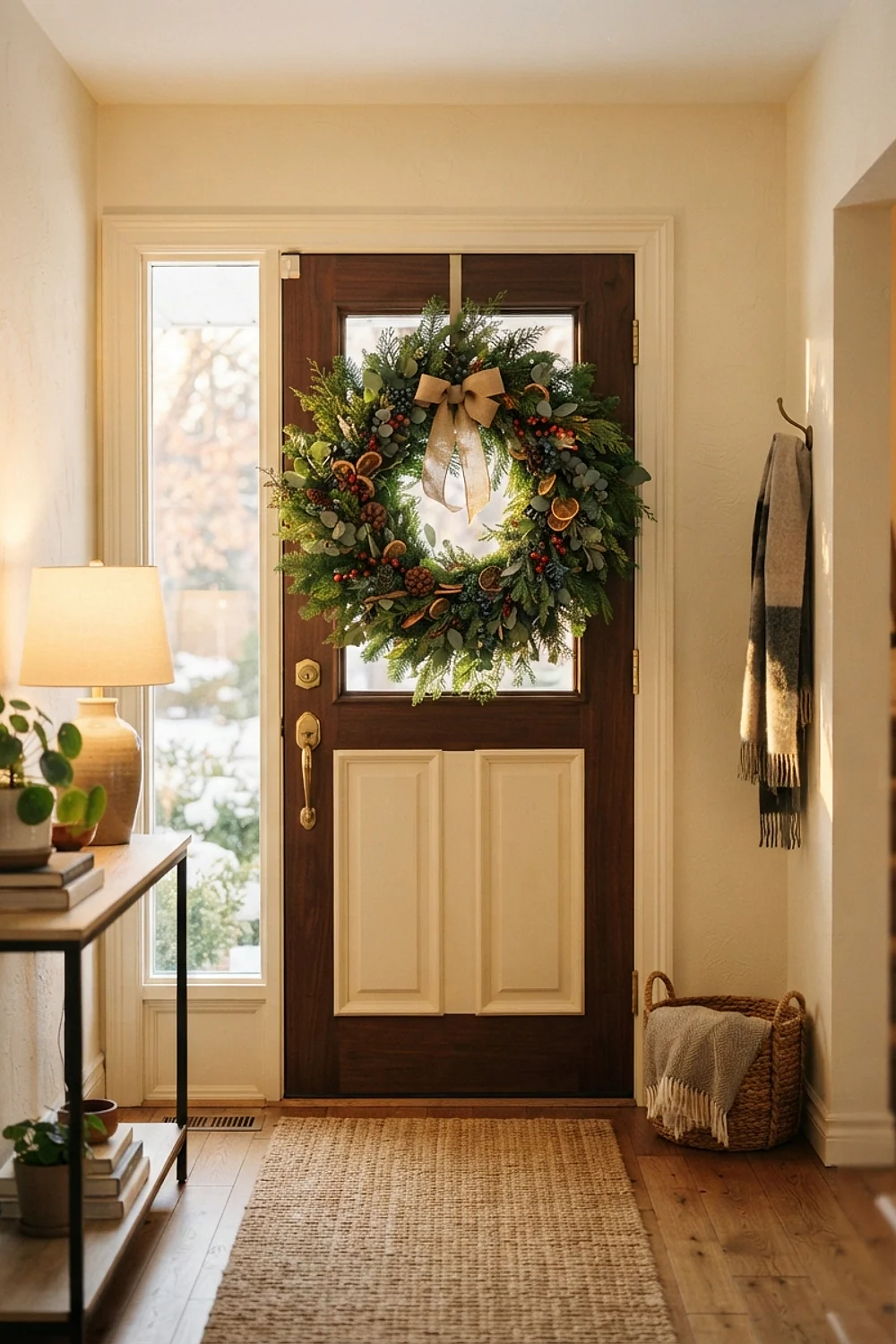
An 18-inch wreath on a standard 36-inch door looks like a plate hung on a barn. Go to 26-30 inches and the door finally has a focal point at the right size.
Hang it so the center sits around 60-65 inches from the floor, roughly eye level. Fresh fir or boxwood costs about $60-$90, and a plastic sheen gives away a cheap one at ten paces.
This suits homes with a flat-fronted door and little else on the porch. A wreath that big needs breathing room, so skip the cluster of lanterns beside it.
Two armchairs angled toward the fireplace
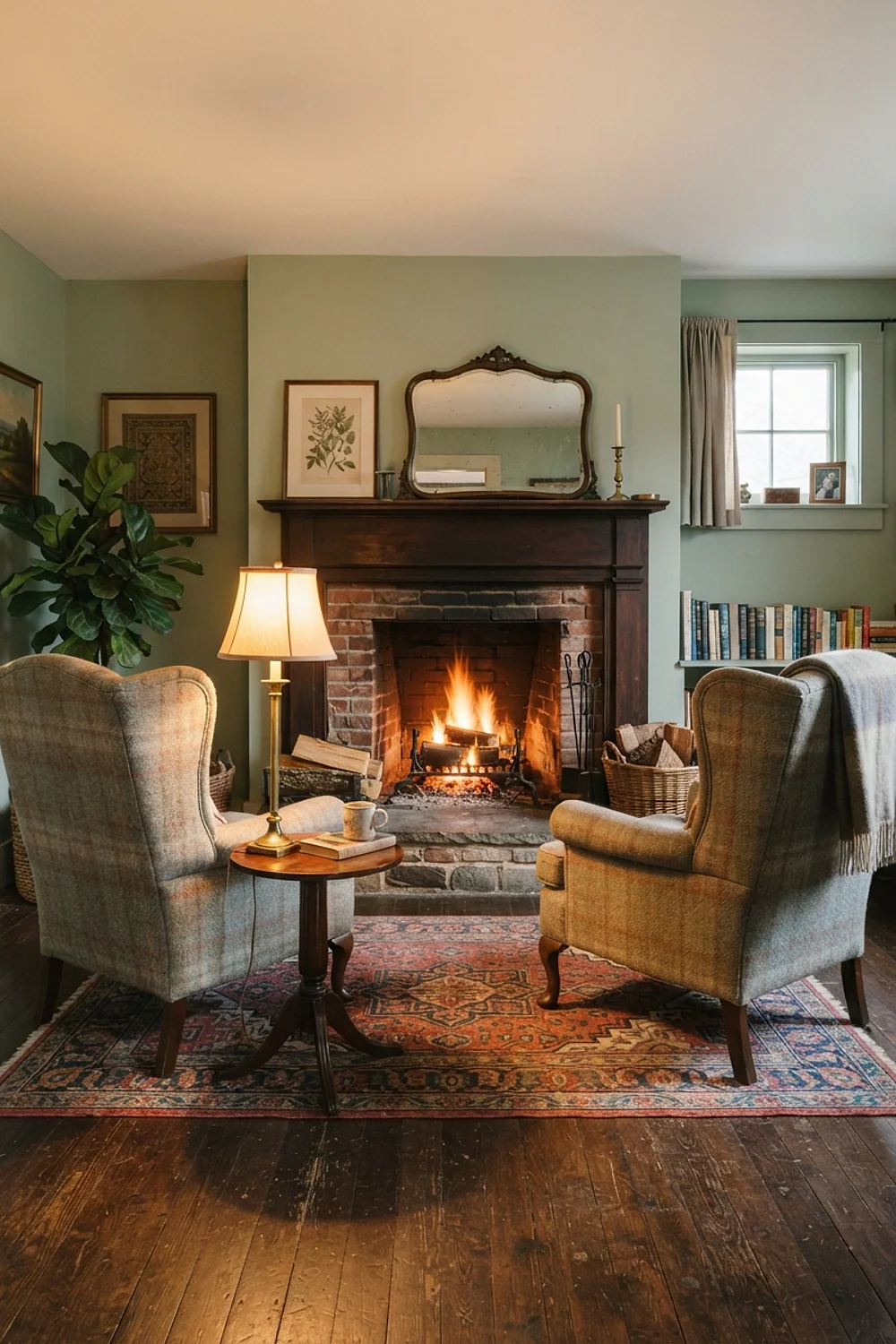
Two armchairs turned about 30 degrees toward the hearth pull the whole room into a conversation circle. The fire becomes the focus, just as it was before screens took over the wall.
Keep seating within 8 feet of each other so people can talk without raising their voices. Leave 14-18 inches between a seat edge and the coffee table.
The usual mistake is pushing every chair flat against the wall. That leaves a dead zone in the middle of the room, and no throw or candle fixes bad furniture placement.
Interlined linen curtains
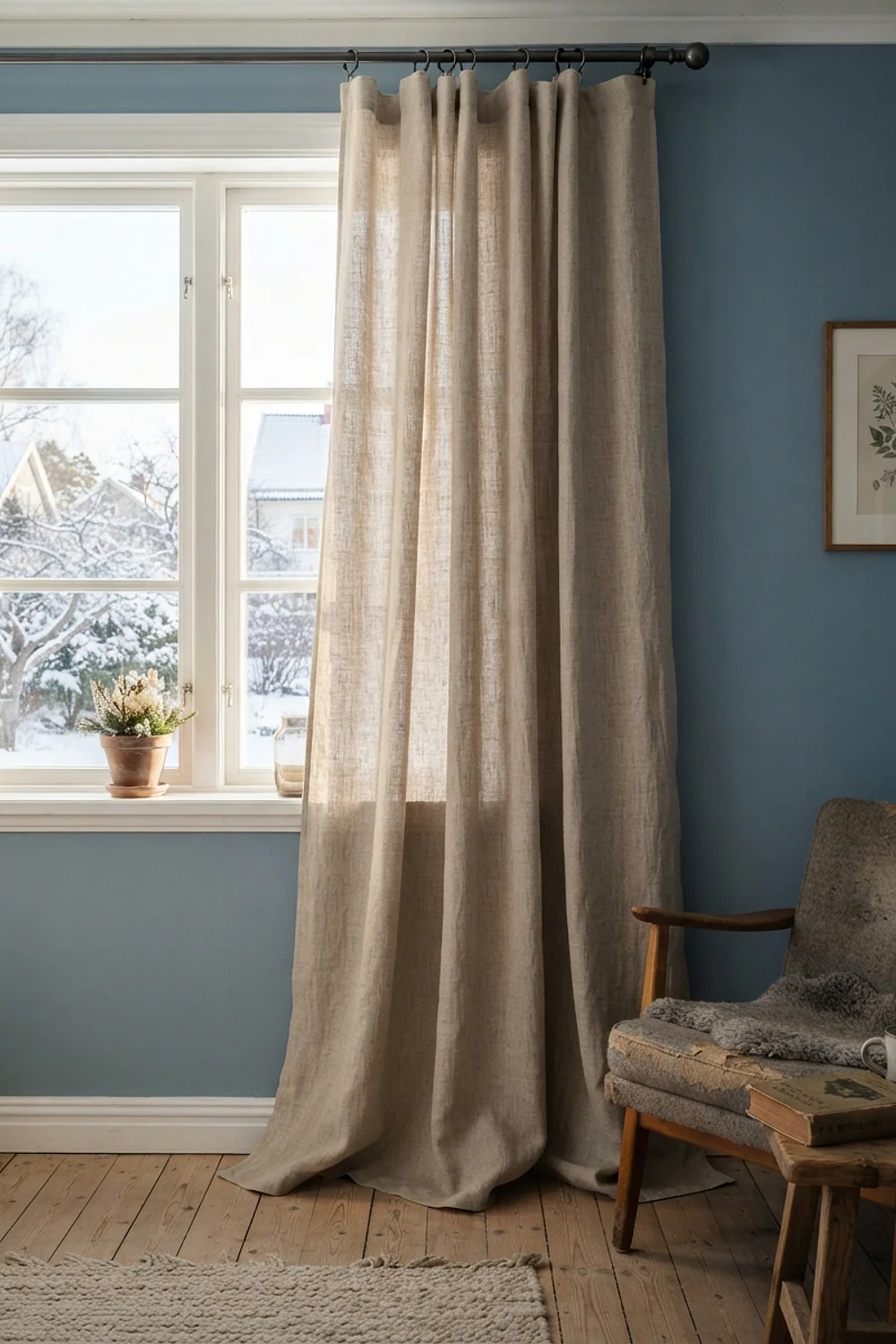
Linen curtains with a flannel interlining hang heavy and quiet, and they block drafts around old single-pane windows. The extra layer between face fabric and lining traps air the way a good coat does.
Set the rod 4-6 inches above the window frame and let the hem just kiss the floor. Make each panel about twice the width of the window, or the curtains look stingy when closed.
A 1-inch rod will sag over spans wider than 48 inches, so add a center bracket. Renters can get a similar effect from clip-on thermal panels behind plain linen.
Amaryllis bulbs in a white ironstone pitcher
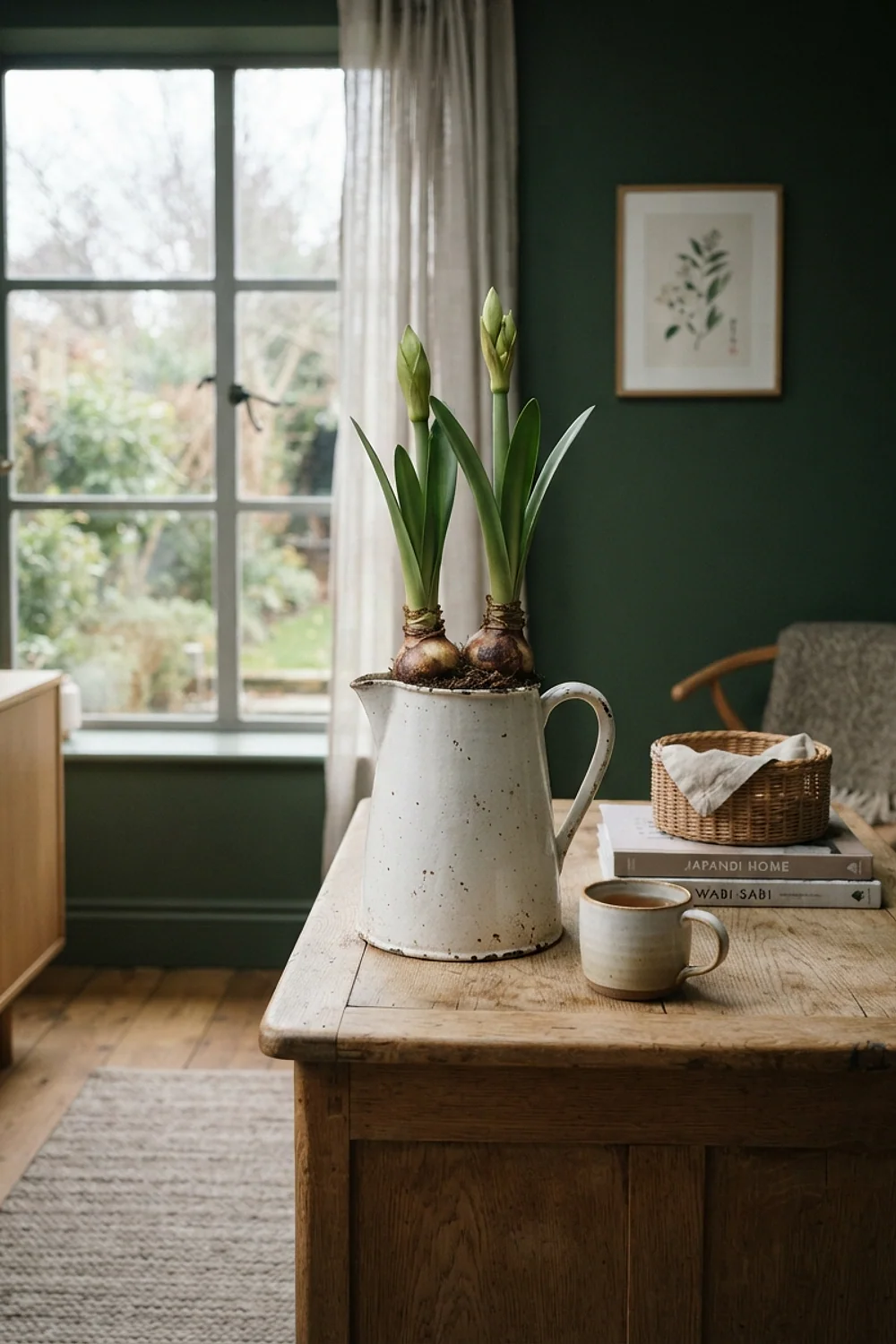
Does a bulb that takes six weeks to bloom really count as decor? Exactly. The stem can gain an inch or more a day, and watching it climb is half the reason to bother.
Group the pitcher with two other objects on a 14 by 20 inch tray, in odd numbers and mixed heights. Stems reaching 20-24 inches give the tray a clear tall point.
The big blooms get top-heavy and flop sideways. Push a bamboo cane into the pot early and tie loosely with twine.
A willow log basket by the hearth
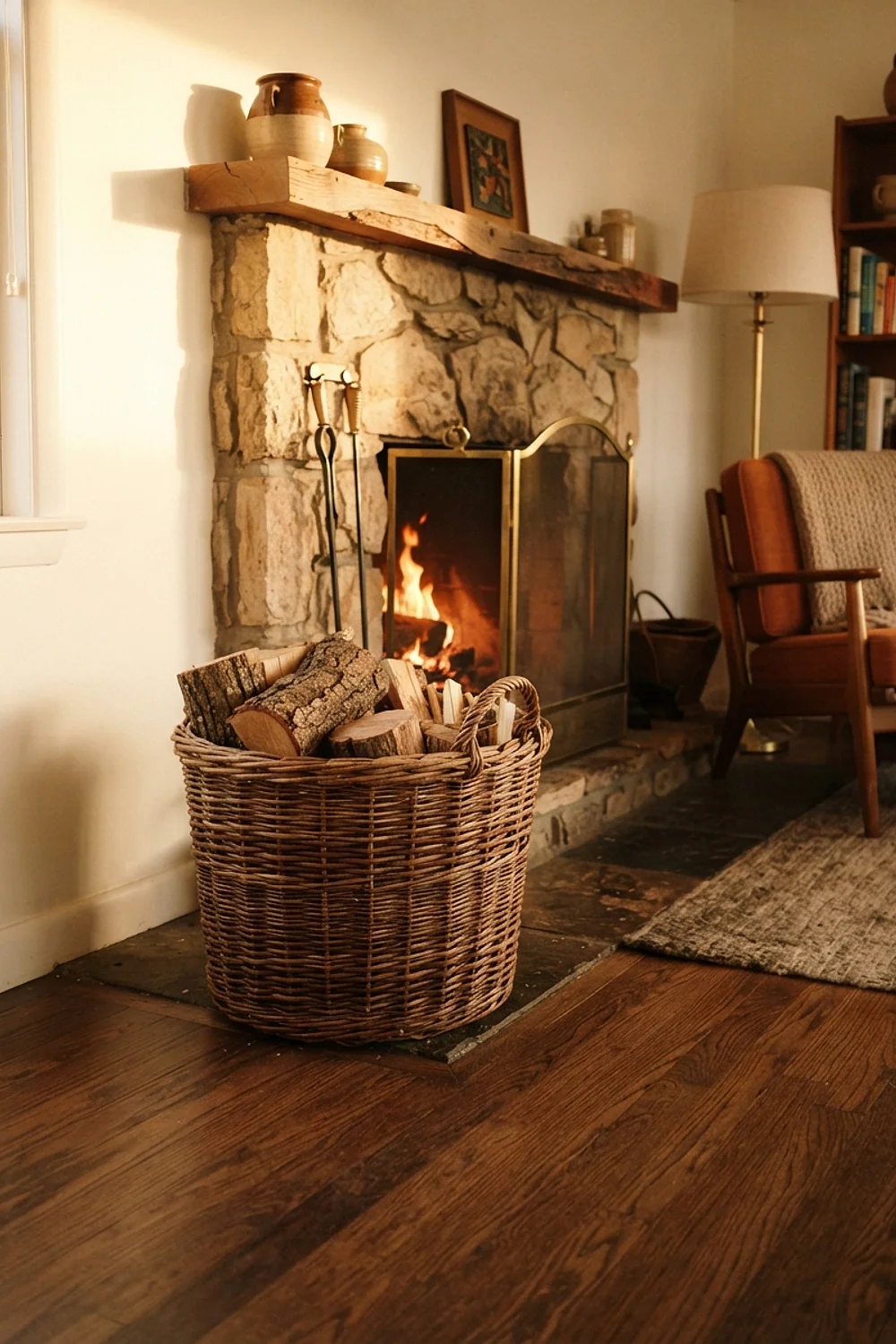
A wide-mouth willow basket, about 18 inches across and 20 inches tall, holds six to eight split logs and looks better than a pile on the floor. Willow weathers to a deeper honey tone and gets better as it ages.
Bring in only a day’s supply of wood. Logs stacked indoors for weeks drop bark and sometimes bring insects with them.
Where there’s no fireplace, the same basket holds folded throws. A lidded trunk at the foot of a bed does the same job and doubles as seating.
What to buy first
Winter decor ideas split cleanly into things that wear in and things that wear out. A $200 wool blanket used for 20 winters costs $10 a season, while a flocked, glittered item that looks tired by January 3 costs more per day of use.
Spend on pieces that improve with age, and treat anything perishable as a seasonal refresh.
- Spend on: wool blankets, brass candlesticks, ironstone, lined curtains and willow baskets.
- Save on: fresh garland, bulbs, candles and cushion covers you can swap each year.
- Skip: glitter-dipped pinecones, flocked everything and neon signs that date the room within two winters.
Look at where each item sits in the room. Anything touching skin or air (blankets, curtains) is worth quality, and anything purely decorative can stay cheap.
Where the inspiration comes from
Winter decor ideas stay fresh when only one variable changes each year. Swap oxblood cushions for a deep mustard, or trade fir for cedar and eucalyptus, and leave the rest alone.
Here’s the deal: a room with three new things every winter never settles, and the old pieces get blamed for what’s really an overstuffed edit.
Measure before buying anything. These four numbers prevent most wrong-size purchases:
- Mantel width, for garland length.
- Door width, for wreath diameter.
- Sofa length, for cushion count.
- Window width, for curtain fullness.
Pair brass with matte black for a modern edge, or set ironstone beside raw wood. Those contrasts keep traditional pieces from looking like a museum.
For seasonal storage rotation, wrap candlesticks in acid-free tissue and keep wool in a cedar-lined trunk. Moths and tarnish do more damage than age ever will.
Start with one piece
The best winter decor ideas are the ones a room can hold without clutter, sized to the mantel, the door and the furniture they sit beside. Nine classics is plenty, and three well-scaled ones often beat all nine crammed together.
Save or pin this list so it’s there when the first cold snap hits. Then measure the mantel and start with the garland, since it fixes the biggest blank spot fastest.