Winter Decorating Ideas After Christmas: Keep the Glow
Where does all the sparkle go once the tree is out on the curb? The best winter decorating ideas after christmas keep the glow and the greenery, and quietly retire the red plaid, the “Merry” signs and anything shaped like a reindeer.
Done well, a room in mid-January smells faintly of beeswax and cedar, and the 4pm light slanting across a wool throw looks intentional instead of left over. Here’s how to get there, one defining element at a time.
Winter decorating ideas after christmas: The vision board
The short answer: keep what reads as seasonal (evergreen, candlelight, wool, bare wood) and remove what reads as holiday (Santa, ornaments, red and green as a pair). That single edit takes about two hours in an average living room and changes the whole mood.
The twenty ideas below run from mood to practical. Skim for the room that’s bothering you most.
Stripping the mantel all at once
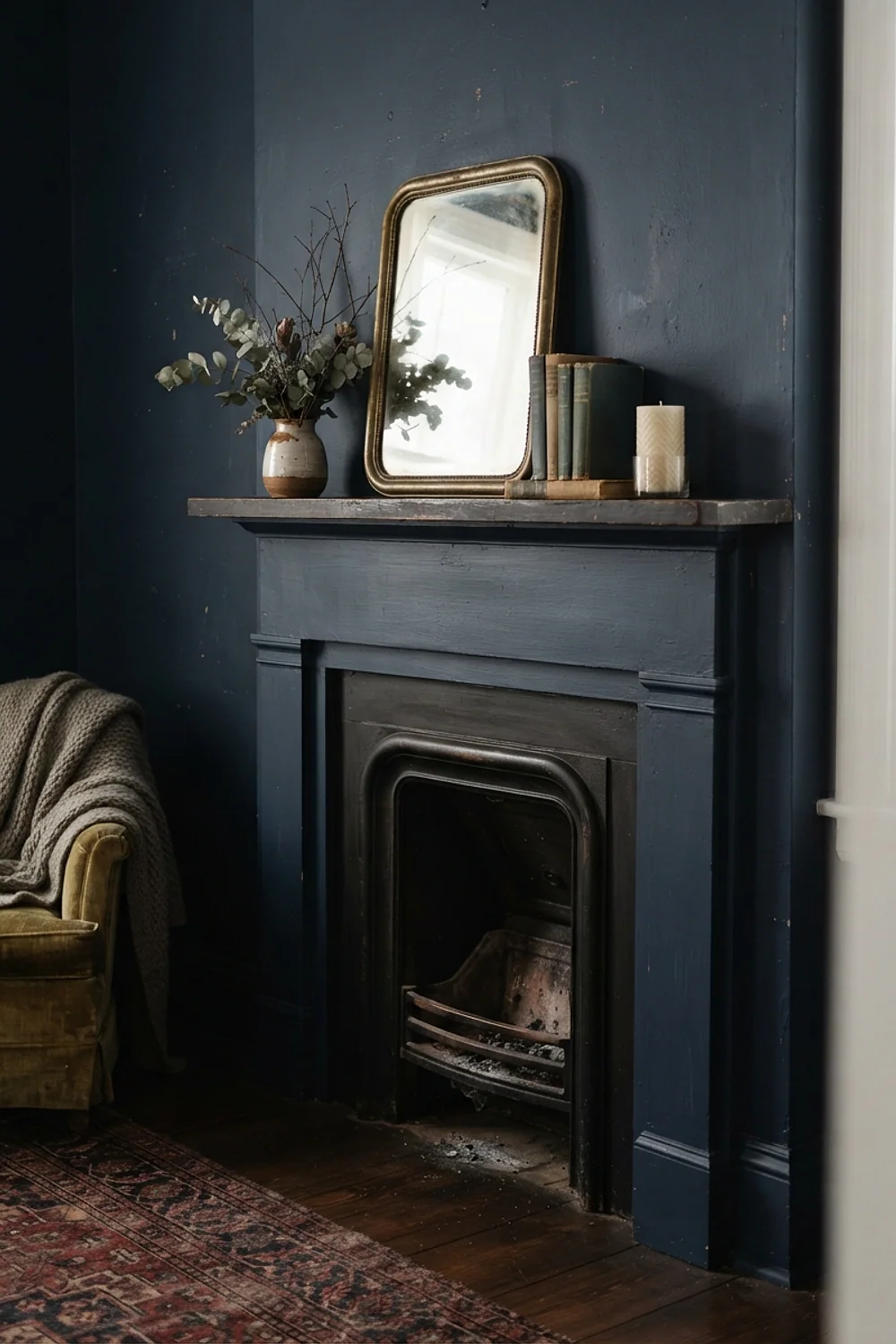
A mantel cleared to bare stone in the first week of January looks worse than a cluttered one. The common mistake is removing everything in one pass and leaving a hole where the garland hung.
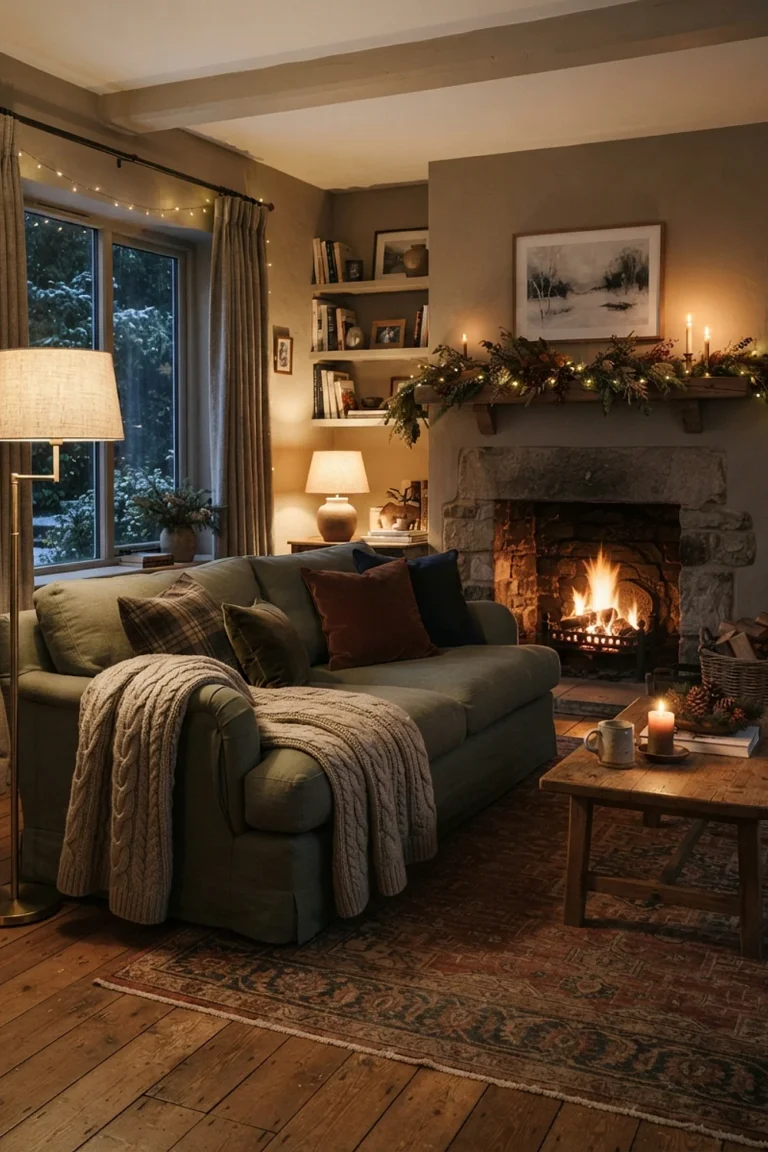
Keep one run of cedar or fir and swap the red ribbon for natural linen. This suits anyone who dreads the bare-room feeling, and it works best on mantels at least 48 inches wide. Fresh boughs drop needles after about three weeks, so faux is the safer pick above a radiator.
Three objects on a console
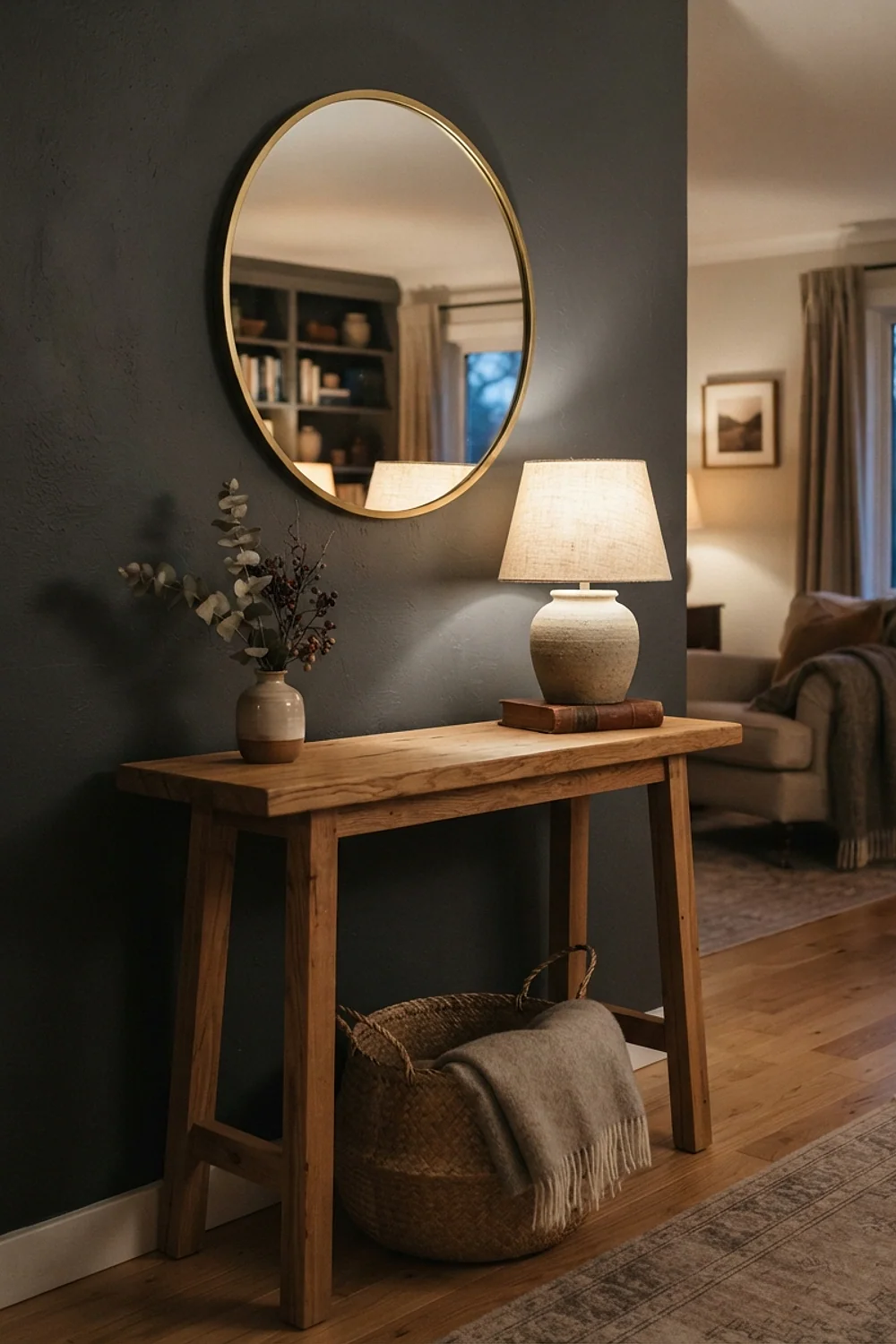
Group three objects on a console 36 to 48 inches wide: a tall vase at one end, a lamp at the back and a low tray opposite. The tree left a vertical gap in the room, and this loose triangle refills it without crowding the walkway.
It suits narrow entries and living rooms where the tree stood against a wall. Leave at least 12 inches of bare surface, or the grouping reads like a shelf clearing sale.
Pale gray, oatmeal and pewter

Pale gray, oatmeal and brushed pewter are the fastest way to say winter without saying Christmas. Hold swatches up in the room first: a soft gray such as Benjamin Moore Gray Owl reads cool in north light and calmer in south light.
This palette suits rooms that already have a neutral sofa. Skip pure bright white, which turns bluish under 5000K bulbs and makes a January afternoon feel clinical.
Three lamps instead of one ceiling fixture

Three lamps at different heights, each with a 2700K bulb, do more than any overhead light. By 4:45 in January the window light is gone, and a single ceiling fixture flattens every surface in the room.
Aim for pools of light at roughly 15, 30 and 60 inches off the floor. It works in living rooms and bedrooms alike. Avoid anything labeled 4000K or “daylight,” which fights the candlelit mood you’re building.
Bare branches in a tall vase

Birch or dogwood branches in a 12-inch ceramic vase, standing 30 to 40 inches tall, give a mantel or sideboard height with zero needle cleanup. Use an odd number of stems. Even counts look staged.
This suits anyone who wants a gesture bigger than a candle but quieter than a wreath. Skip the glittered branches sold in December, which are just Christmas in disguise.
Texture and comfort for the cold months
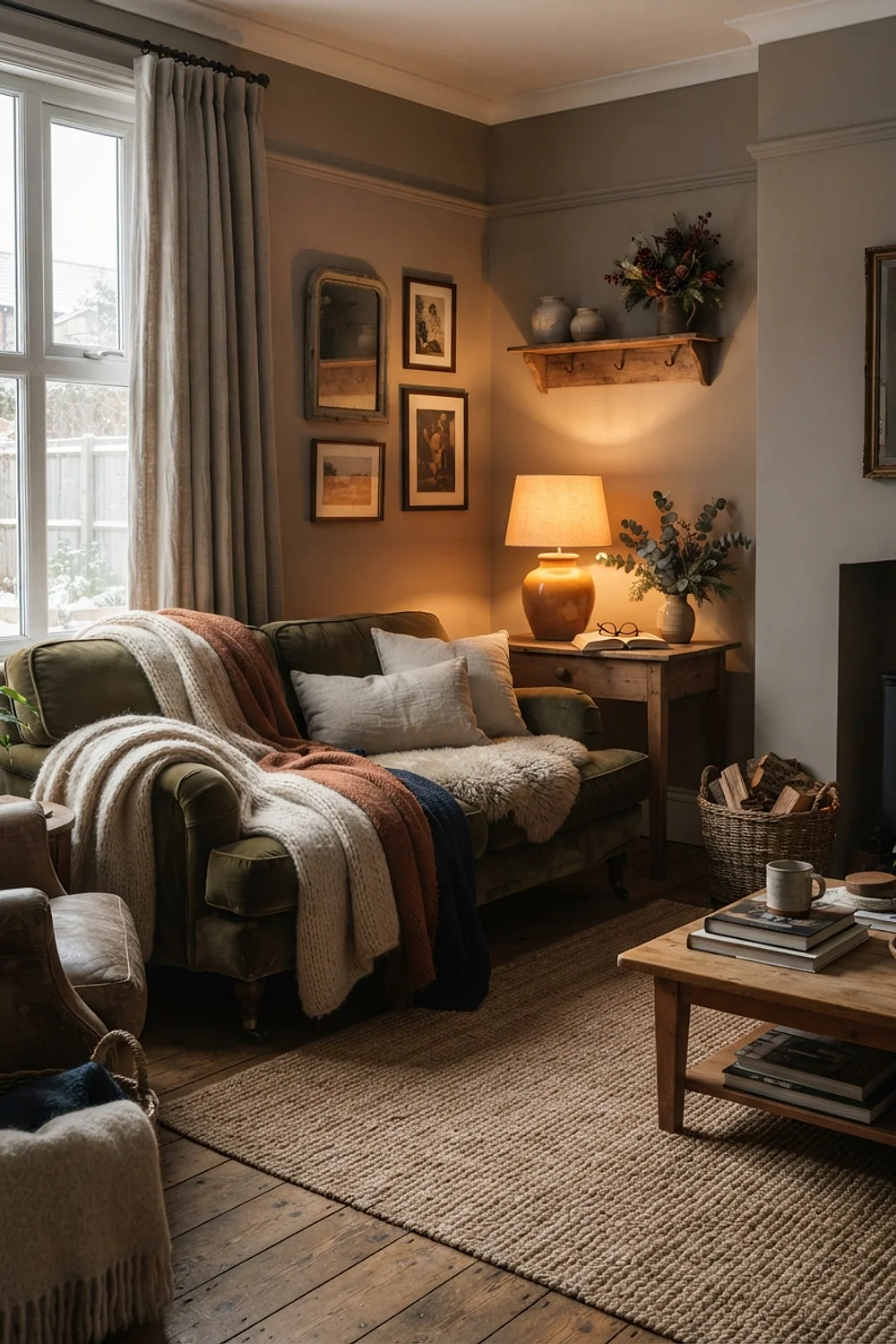
A chunky cable-knit throw
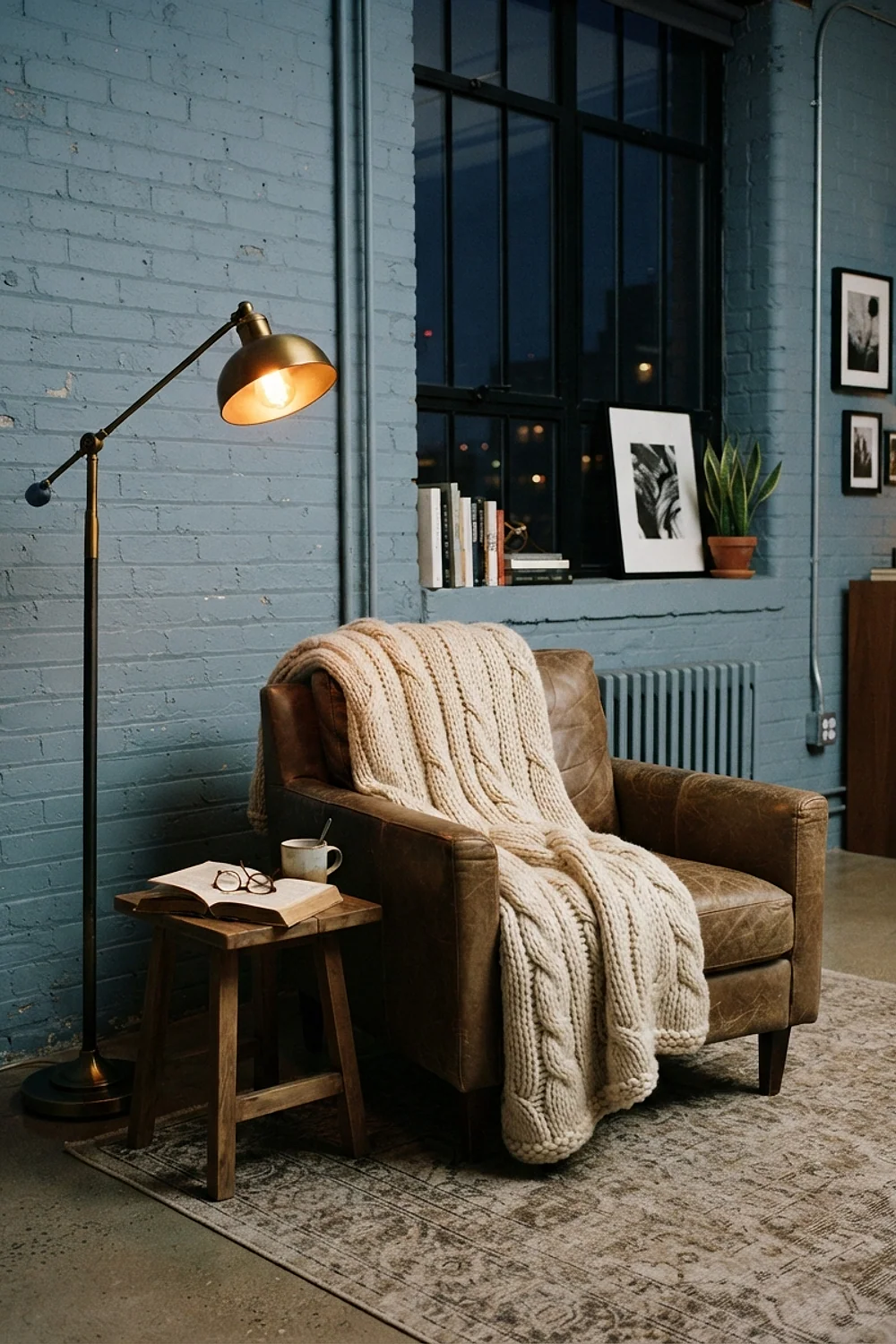
A cable-knit throw around 50 by 60 inches in a wool blend runs roughly $40 to $70, and it does more for a sofa than another pillow. Weight matters. About 3 pounds drapes properly and stays put on an armrest.
Cheap acrylic sheds static and feels slick against the hand. Pick wool or a cotton-wool mix if the sofa sees daily use, and drape it in a loose fold instead of squaring it off.
A boot tray by the door
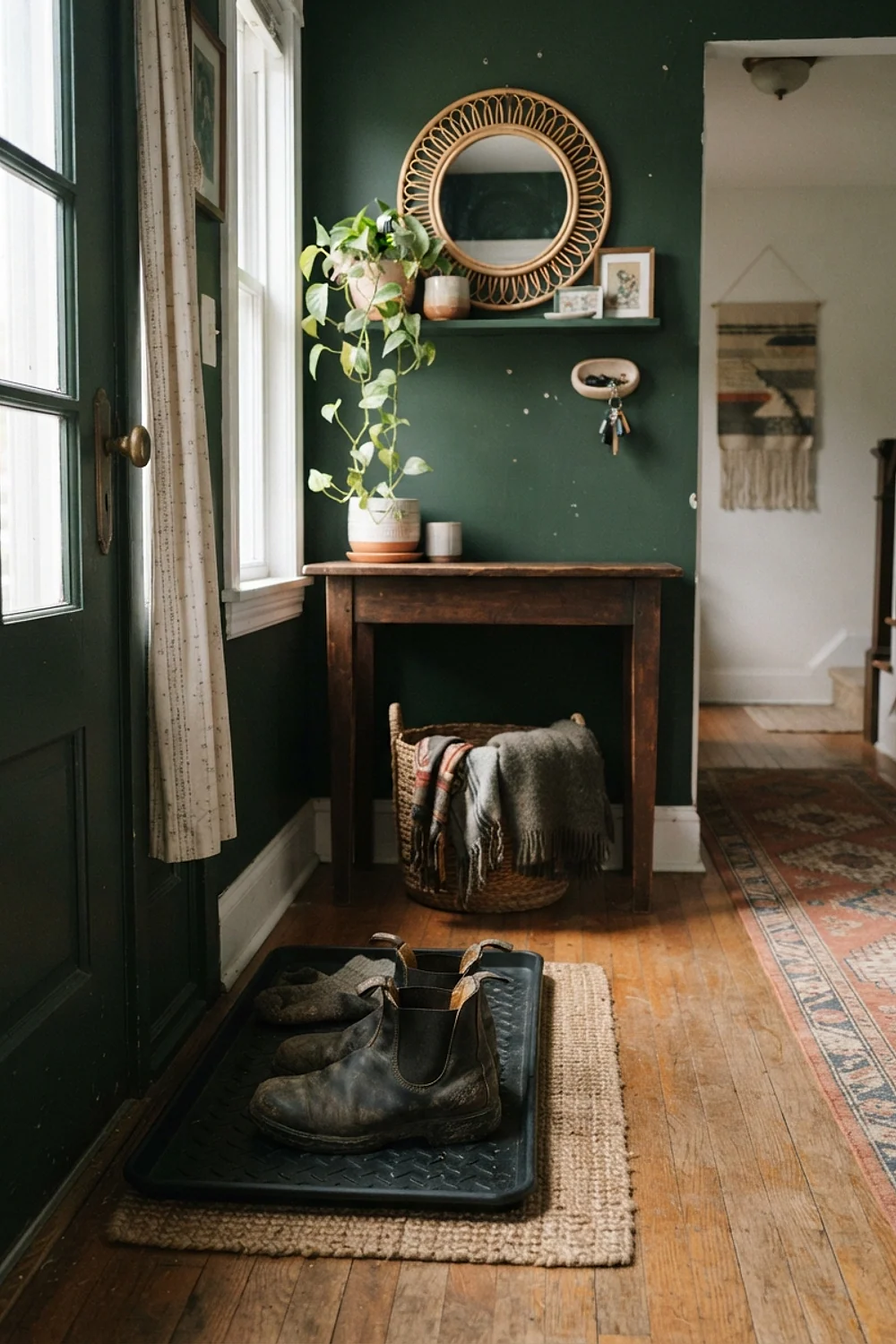
A 30-inch rubber boot tray with a raised lip, set under a hook rail mounted at about 60 inches, handles the slush January brings. The lip holds roughly half an inch of meltwater before it spills onto the floor.
It’s the right fix for small entries without a mudroom. Avoid fabric rugs here, because they hold moisture and start to smell by February.
Matte stoneware in place of glass
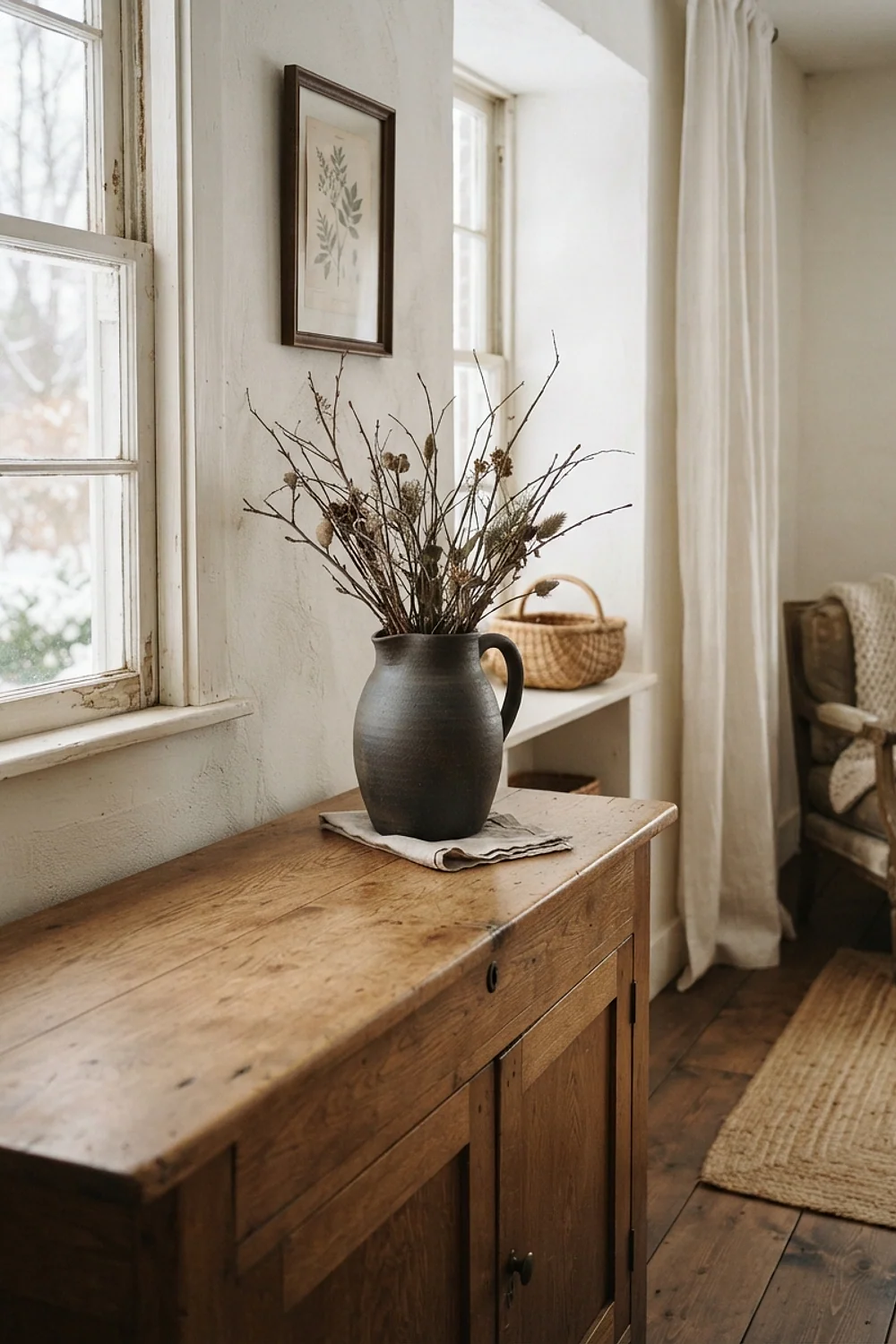
Matte stoneware, raw wood and wool replace glossy glass and tinsel as the dominant surfaces. Shiny finishes bounce light around in December and look brittle in flat January daylight, while a matte glaze absorbs it softly.
Three speckled white candle holders suit Scandinavian and farmhouse rooms especially well. Steer clear of mercury-glass finishes, which still say holiday from across the room.
One large framed landscape

One 24 by 36 inch print of a snowy field, hung with its center at 57 inches, replaces a dozen small seasonal figurines. Big art settles a room, while small trinkets scatter the eye, which is why post-holiday clutter feels so loud.
This suits any wall above a sofa or bed. A print under 18 inches wide over an 84-inch sofa looks lost.
Labeled lidded bins

Six 27-quart lidded bins, around $15 each, swallow an entire Christmas, and a label by room saves ten minutes next November because nobody has to open every lid hunting for the stair garland. Uniform bins also stack cleanly, so they use vertical space instead of floor.
They suit small homes and apartments with a closet shelf 16 inches deep or more. Wrap glass ornaments in tissue, because newsprint transfers ink. Keep candles and wreaths out of the attic, since summer heat warps wax and flattens faux needles.
Rethinking color and light once the tree is gone
Anything with text on it
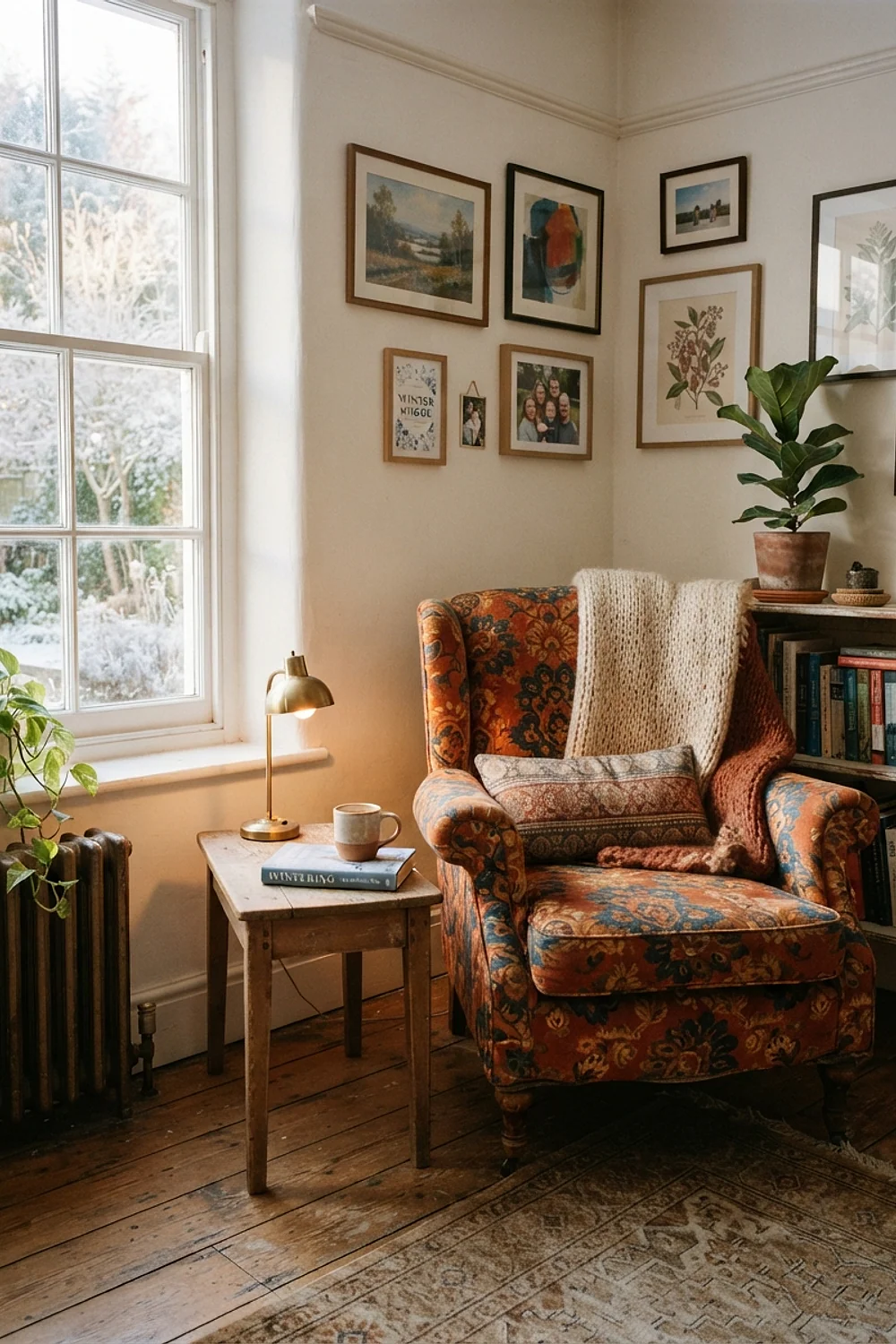
Look, a “Merry and Bright” sign still hanging in February is the quickest way to make a room feel unfinished. Repeating the obvious gets tedious, but it’s the item most homes miss.
Anything with lettering, Santa or a candy cane goes in the bin. Snowflakes, pinecones and stars can stay, since they belong to the season instead of the holiday. That rule covers every room, including the windowsill over the sink.
The corner where the tree stood
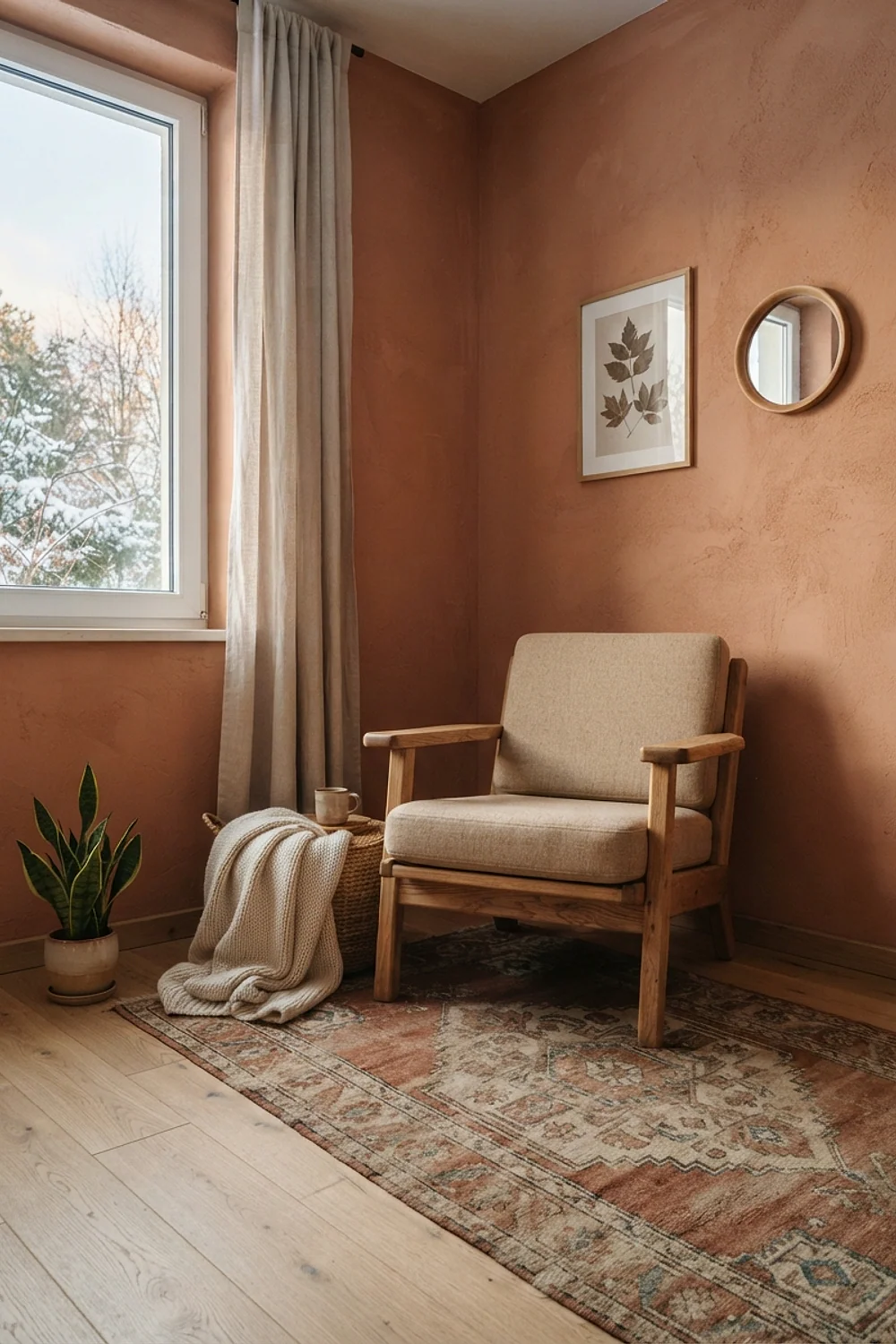
The tree corner is usually about 4 by 4 feet of unused floor, and a reading chair with a floor lamp fills it neatly. An outlet is already nearby from the tree lights, which makes the lamp easy.
A potted fiddle-leaf fig is the usual suggestion for that spot… actually, no, scratch that. Figs sulk in January drafts and drop leaves, while a snake plant in a 10-inch pot tolerates the cold fine.
Velvet in deep evergreen
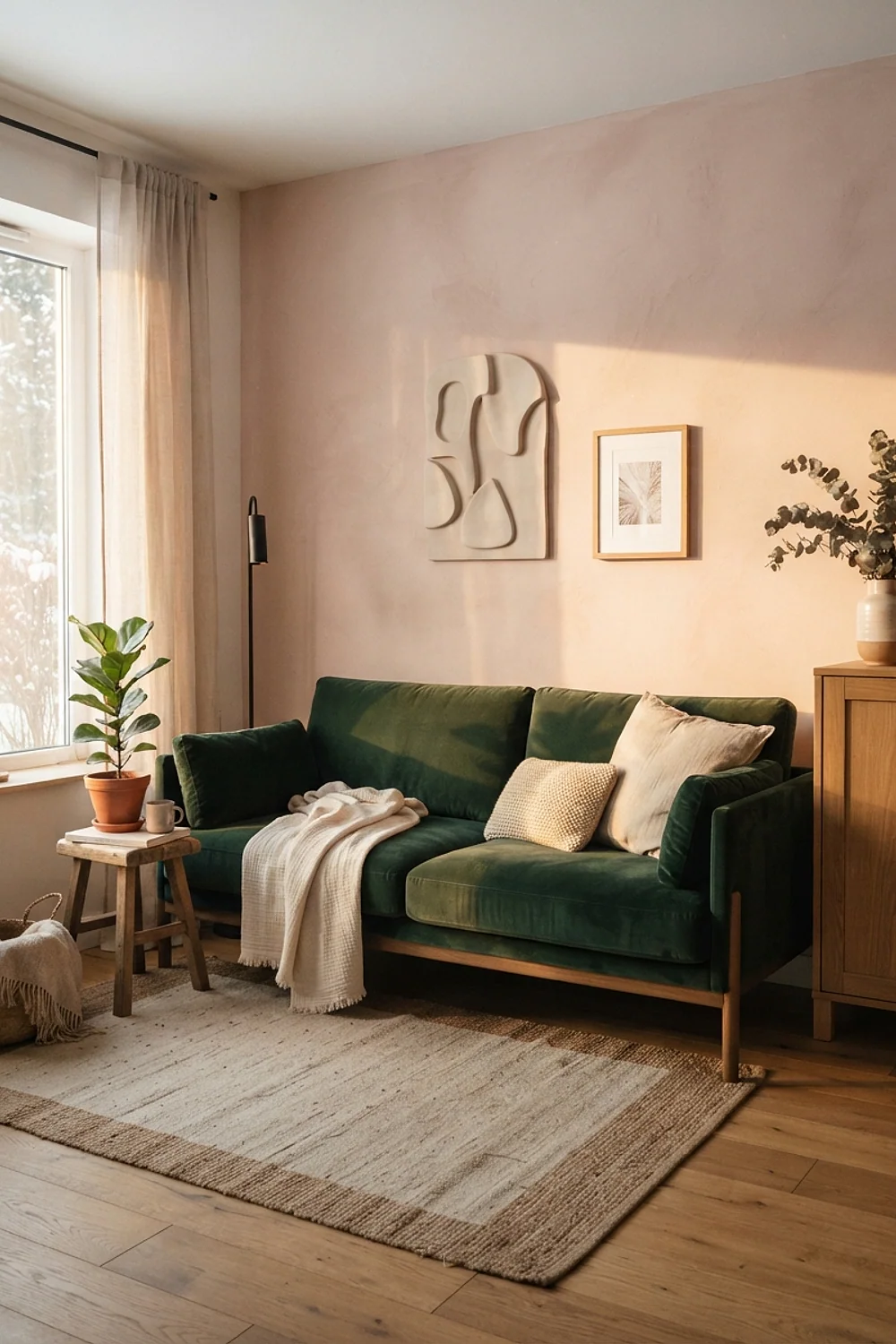
A forest-green velvet cover on a 20-inch pillow, around $30 to $45, proves that winter doesn’t have to mean pale. Deep evergreen, navy and charcoal hold their color in low light, where pastels go muddy.
Pair it with oatmeal or cream, never red, or the whole sofa snaps back to Christmas. Velvet pile crushes where people sit, so brush it with a dry hand every few days.
String lights inside glass
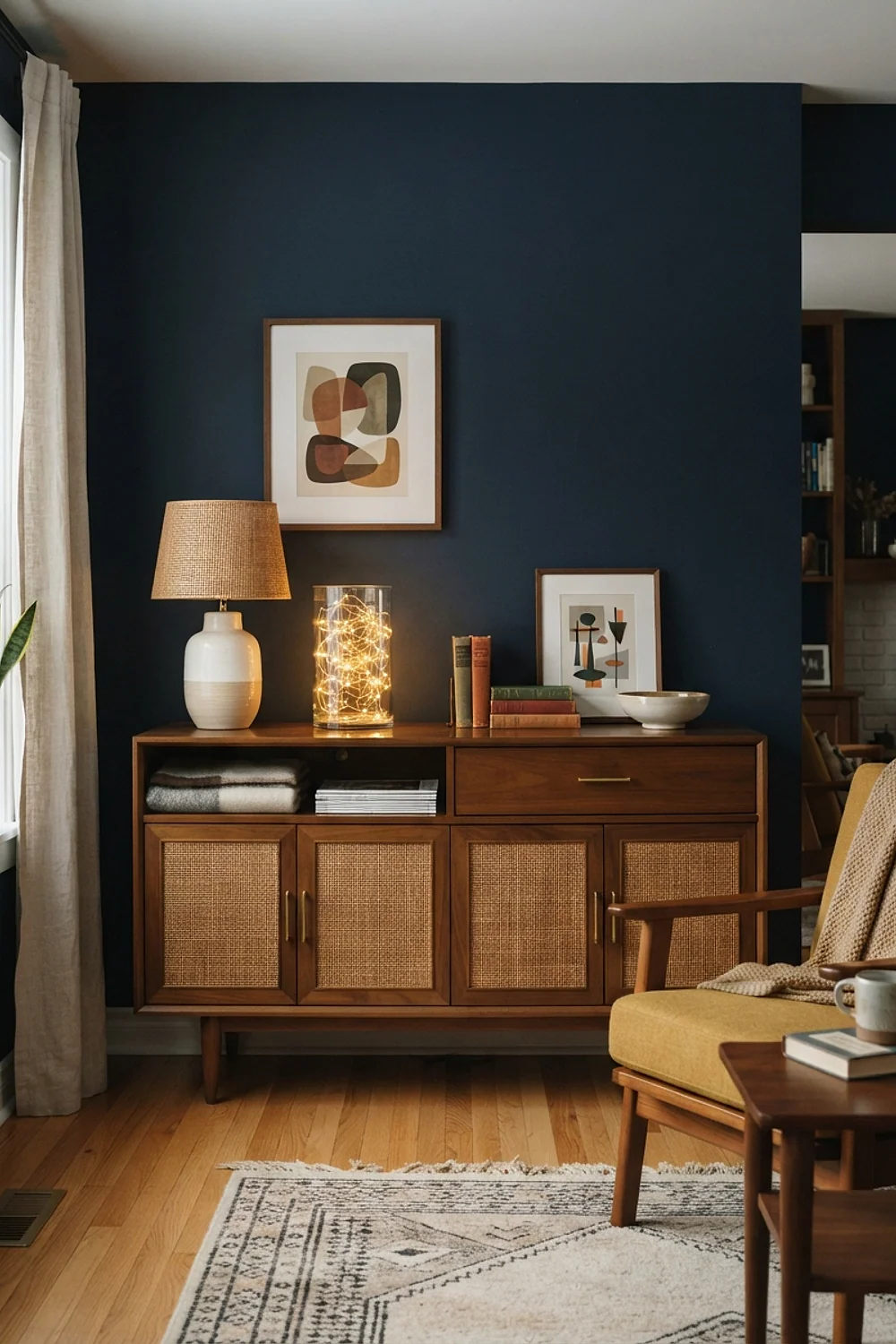
Warm-white micro lights coiled in a 12-inch glass hurricane lantern keep the glow without the tree. The glass diffuses the bulbs so they read as a soft haze instead of dots.
Battery strands with a six-hour timer suit shelves and bedside tables, where cords are a nuisance. Avoid multicolor and cool-white strands, which carry holiday associations no matter where they’re hung.
Three heights on a tray
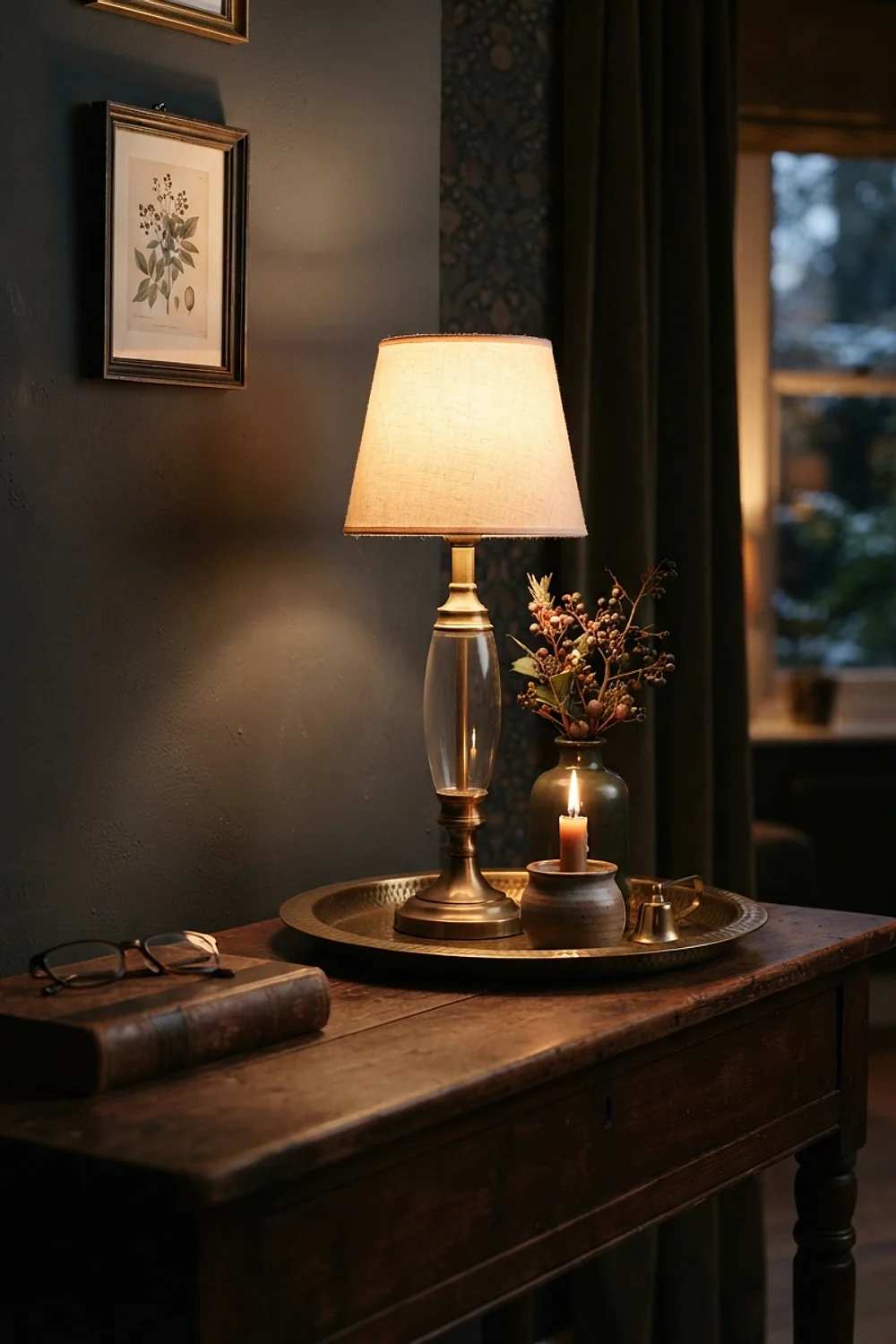
Three heights on one tray read as a deliberate vignette: a white bowl of pinecones, a 10-inch taper candle and a short stack of two books. Vary the heights by 3 to 4 inches so the eye travels from one object to the next instead of stopping at a flat line.
This suits coffee tables and sideboards in any size of room, since the tray corrals the objects into one footprint. Shake pinecones outdoors first, because they shelter small insects.
Practical moves for the long gray stretch
Bare feet on a cold floor

A 5 by 8 foot wool rug over hardwood adds roughly half an inch of insulation, and oak planks in January can sit near 60 degrees. The front legs of the sofa should rest on it so the seating group feels anchored.
Choose a 1/4-inch felt-and-rubber pad underneath. A thin mesh pad lets the rug creep and wrinkle within a week.
Thermal-lined curtains hung high
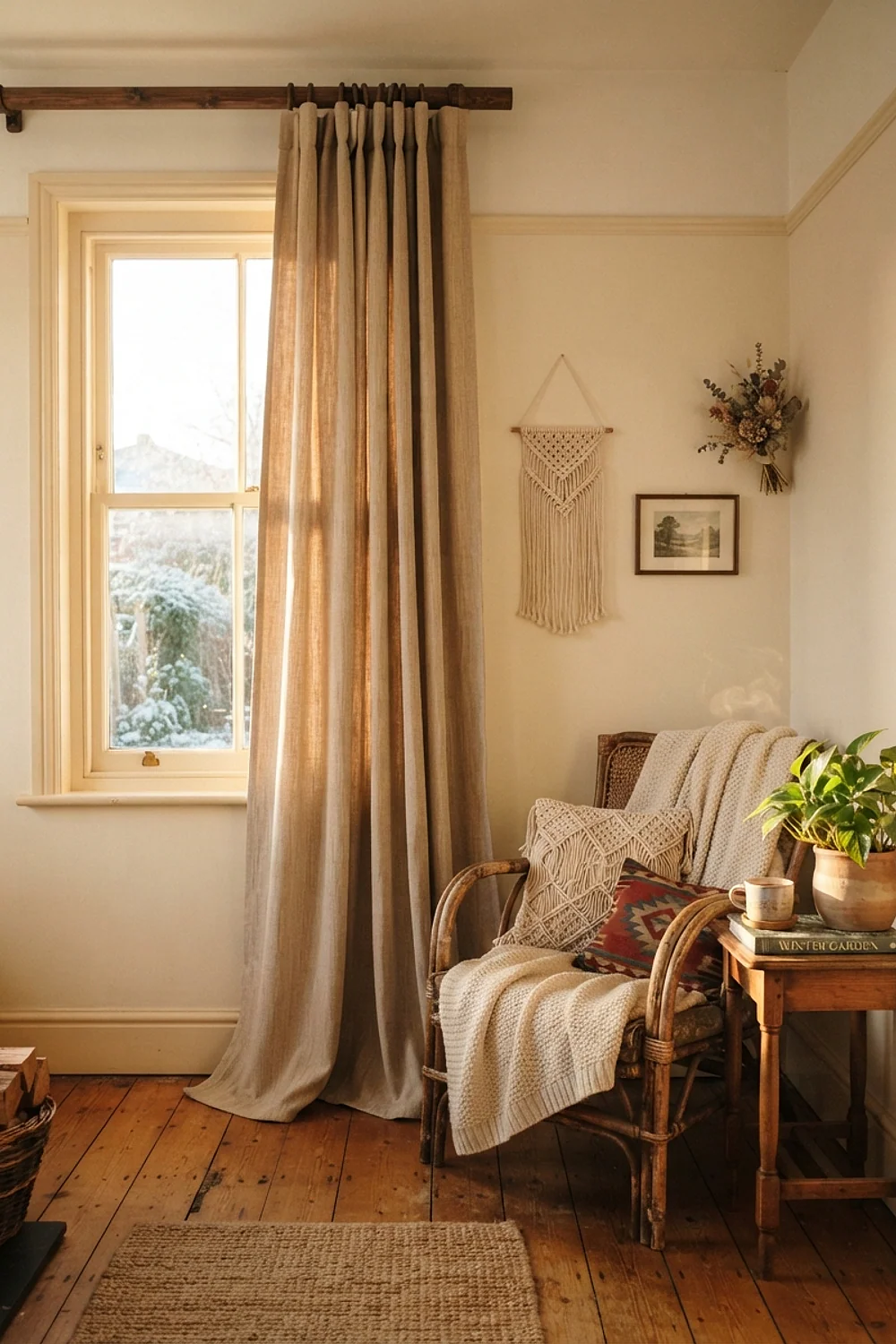
Thermal-lined curtains mounted 4 to 6 inches above the frame, reaching the floor, cut drafts and soften low-sun glare. Extend the rod 8 to 12 inches past each side so the glass stays clear by day.
This is the best fix for older windows with single glazing. Sheers alone do nothing against cold, so layer them behind the heavier panels.
Flannel sheets in a heavier weight

Flannel at 170 grams per square meter or heavier traps body heat, while thinner weights pill after a dozen washes. The brushed surface feels soft right away, with none of the clammy chill of percale in January. Heavier weight holds a layer of warm air against the skin, so the heating can stay lower overnight.
Bedrooms are where this pays off most, especially drafty or older ones. Avoid microfleece, which feels plush but sweats and holds static.
A runner on the dining table
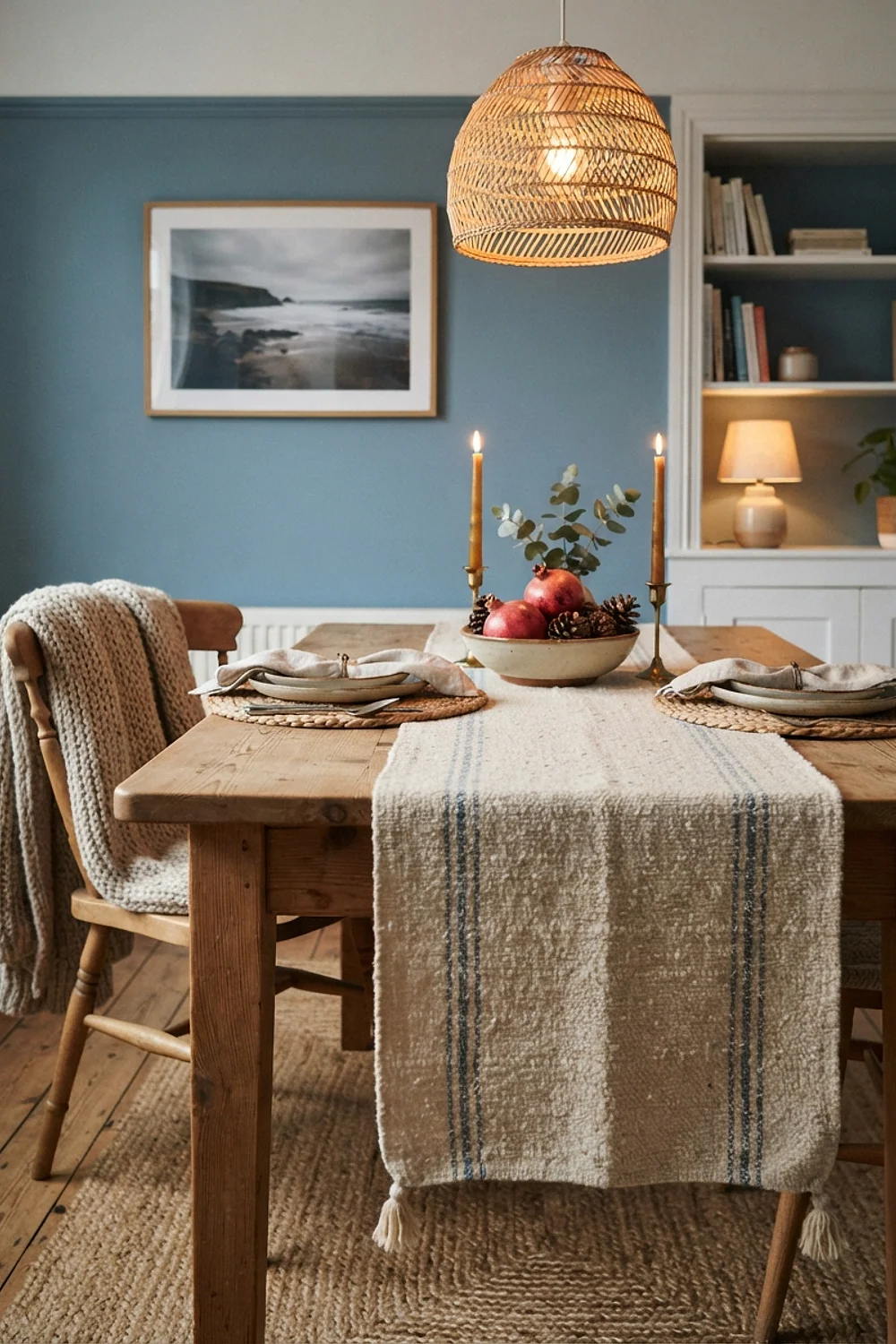
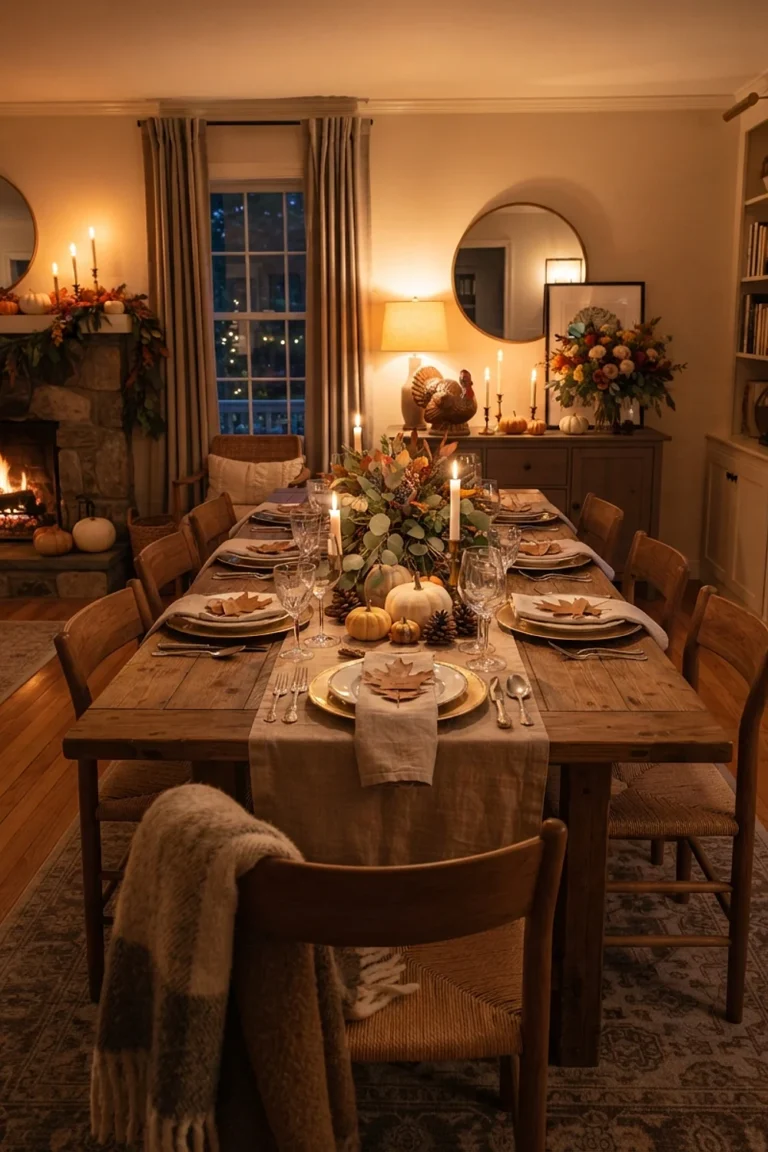
A linen runner 14 inches wide on a 36-inch table, dropping 8 to 10 inches at each end, replaces the Christmas tablecloth. It leaves the wood visible, which lightens the room after the heavy holiday look, and it is far quicker to wash than a full cloth. Keep any centerpiece under 12 inches tall so guests can see each other across the table.
It suits any dining room used for weeknight sit-downs. Tall candelabras block sightlines and drip wax onto the linen.
A lidded basket for blankets
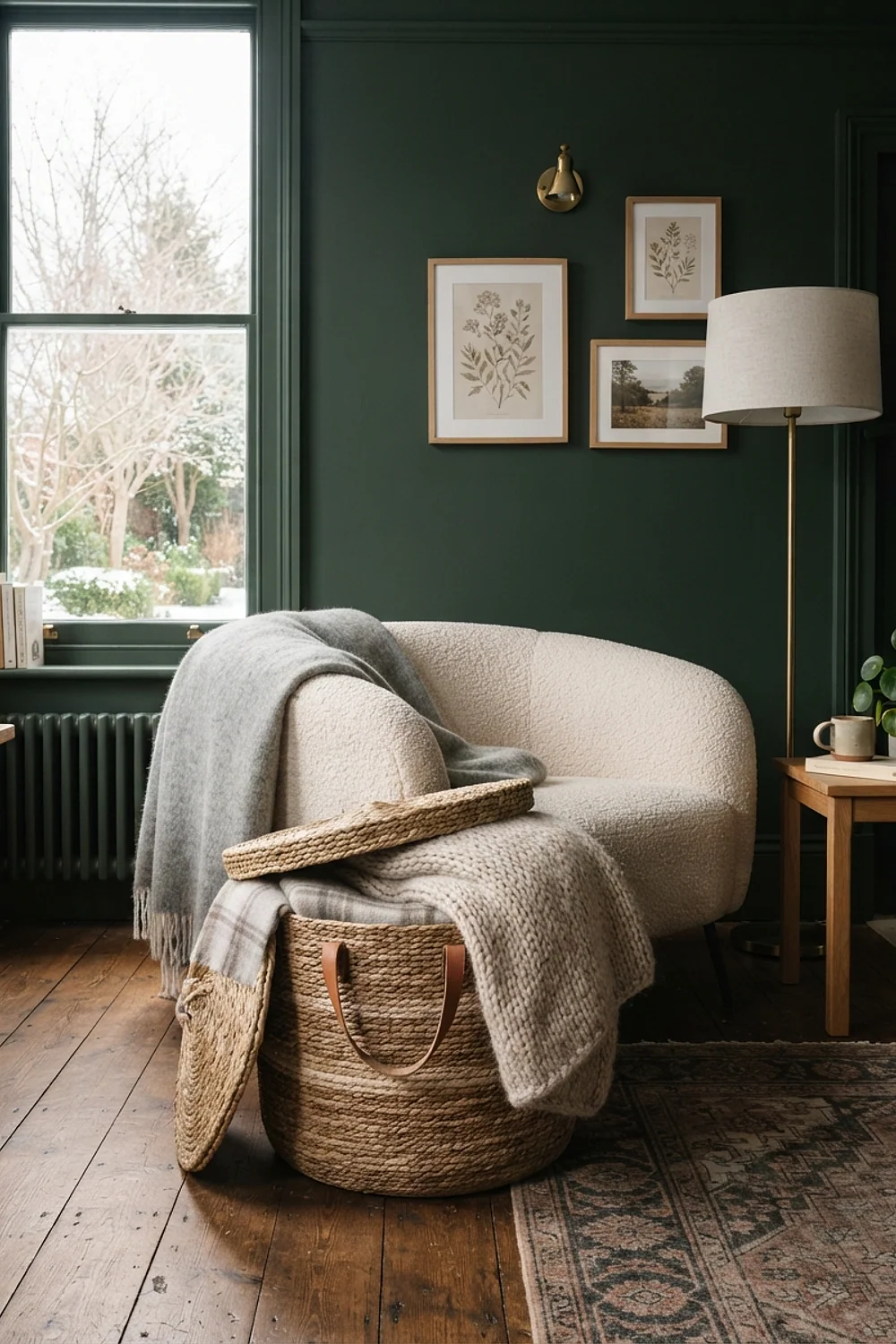
An 18-inch round seagrass basket with a lid, parked beside the sofa, swallows two throws and keeps them within reach. Loose clutter on the sofa is what makes a room look unfinished after the holidays, and a closed lid hides the pile in one move. It fits living rooms with limited storage and households with pets or kids.
Pick a tight weave. Open, loose baskets snag knits and pull threads from wool.
Design inspiration and ideas
Order matters more than any single purchase. Work in this sequence and the room settles in an afternoon:
- Clear every item with text, figures or red-and-green pairings into one box.
- Reset the surfaces with one tall, one mid and one low object each.
- Swap pillow covers and throws toward wool, velvet and linen.
- Rearrange lamps so three pools of light cover the room by dusk.
- Stand in the doorway at 4pm and remove one thing.
That last step trips people up. A room usually needs one fewer object than the hand wants to place.
Counterintuitively, January rooms want more lamps, not fewer. Cutting decor by half while leaving the lighting alone is what makes a house feel cold.
Notes from real rooms
Winter decorating ideas after christmas go wrong in predictable ways. The same few mistakes show up in nearly every house.
- Keeping the holiday palette and just swapping the objects.
- Going all white, which reads as a showroom, not a home.
- Leaving string lights in cool white after the candles are gone.
- Putting small items in rows, which looks like a shop display.
- Skipping the rug, so the room feels cold underfoot.
The fix for most of these is texture. Wool, linen and matte ceramic bring depth without bringing the holiday back.
And if a room still feels flat after the edit, add a lamp before adding an object.
Weekend rearranging and quick daily refresh
On a gray Tuesday in mid-January, a five-minute reset is enough: fluff the throw, trim a candle wick to 1/4 inch and wipe dust off the branches. Small habits keep the room looking intentional.
Once a month, rotate one vignette. Swap the pinecone bowl for a pitcher of dried eucalyptus, or move the lamp from the console to the reading corner.
By late February, the first early sunsets are behind you. Retire the heaviest layers, such as the thermal curtains on south-facing windows, and let the room lighten gradually.
Closing thoughts
The strongest winter decorating ideas after christmas work by subtraction first, then texture, then light. Keep the greenery, drop the holiday labels and let wool, stoneware and lamplight carry the rest of the season.
Save or pin this list so it’s there when the ornaments come down, and start with the one edit that costs nothing: measure the mantel, then clear everything with lettering on it.