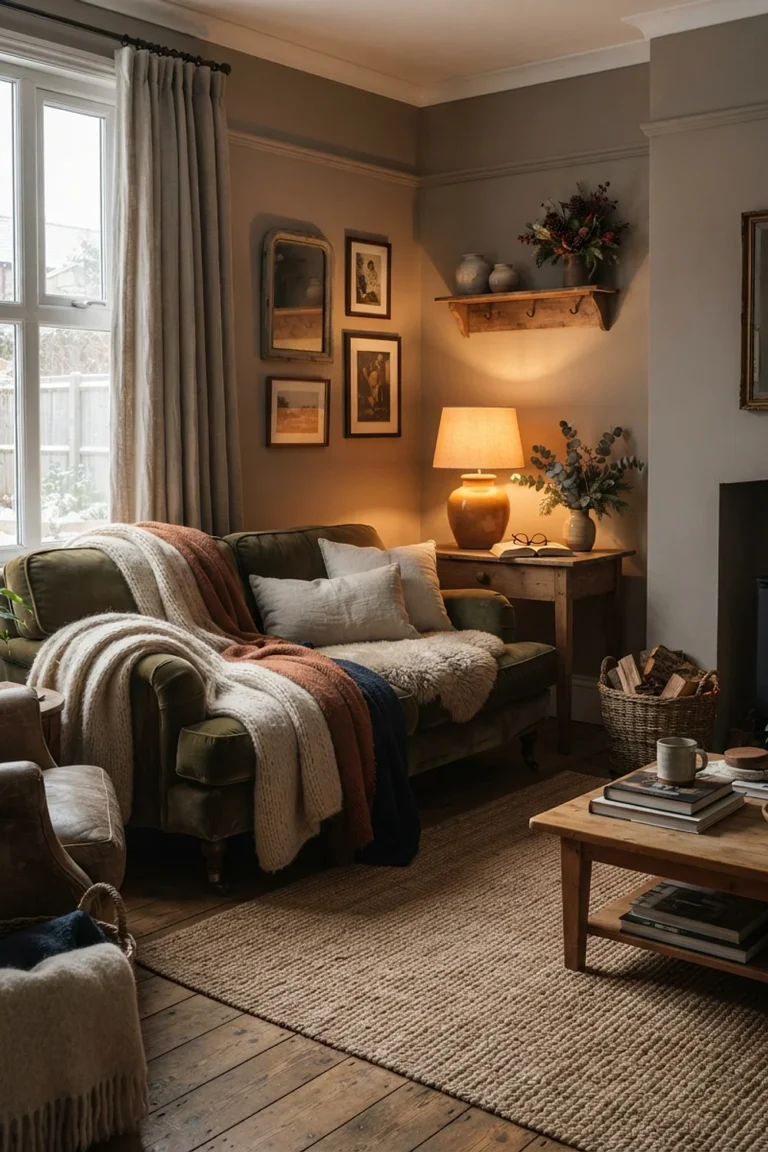

Room-by-Room Guide to January Winter Decor
Nine hours of daylight is all much of the northern US gets in early January, which is why rooms that looked fine in October feel flat by 4:30 pm. Good january winter decor fixes that one room at a time, with specific pieces rather than a general pile of throws.
Below are nine products and setups, each tied to a real zone in the house, with sizes, materials and the trade-offs that decide whether they earn their place after the holiday decorations come down.
January winter decor for every space
January winter decor works best when each room gets one job: the entry handles wet boots, the bedroom handles warmth, the living room handles low light. Pieces that can’t pass a messy weekday with kids, a dog and a wet coat pile get cut.
The nine picks below move from front door to window wall. Where two materials compete, the comparison is spelled out so you can pick a winner for your own house.
Coir mat and boot tray in the entryway
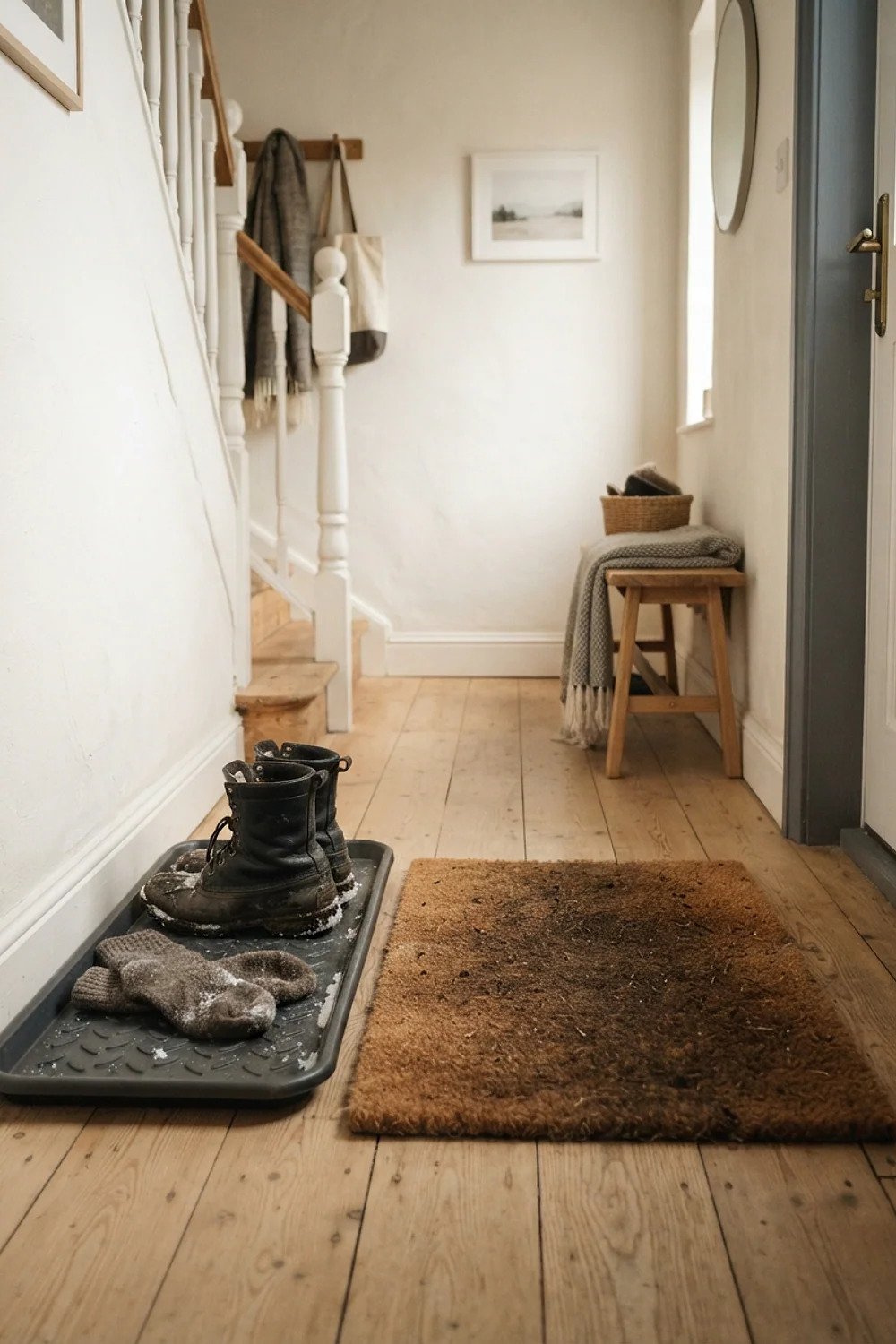
A rubber-backed coir mat with a 30-inch boot tray beside it beats a woven jute runner in January, and it isn’t close. Coir scrapes slush off soles, while jute soaks up meltwater and starts smelling like a damp basement within a week.
The tray works like the crumb tray in a toaster: it catches the mess so the rest of the floor stays clean. A busy household with four pairs of boots and a wet dog is the real stress test, and a tray with a 2-inch lip survives it.
In an entry narrower than 4 feet, drop to a 24-inch tray so the door still swings fully open.
Bare branches on the mantel
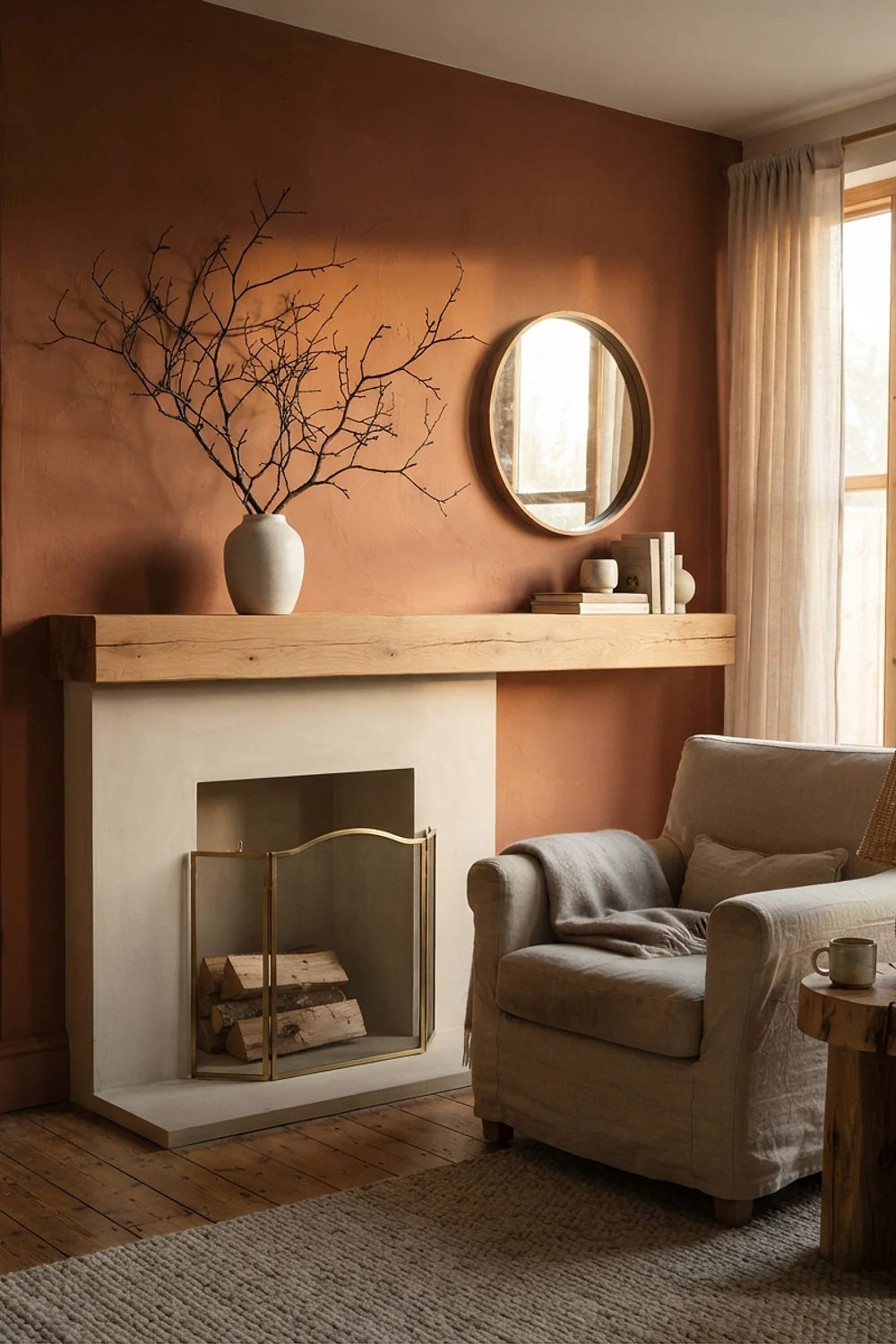
Three bare branches around 36 inches tall, standing in a ceramic vase, do more for a mantel than a garland ever could. Birch, pussy willow or curly willow read as winter without shouting “holiday,” and they cost almost nothing from a florist or a trimmed backyard tree.
This suits mantels from 48 to 72 inches wide. Place the vase off-center and leave about a third of the shelf empty.
Resist the urge to fill the gap.
The common mistake is lining up matching candlesticks on both sides, which turns a mantel into a bookend display.
Sheepskin draped on an angled armchair
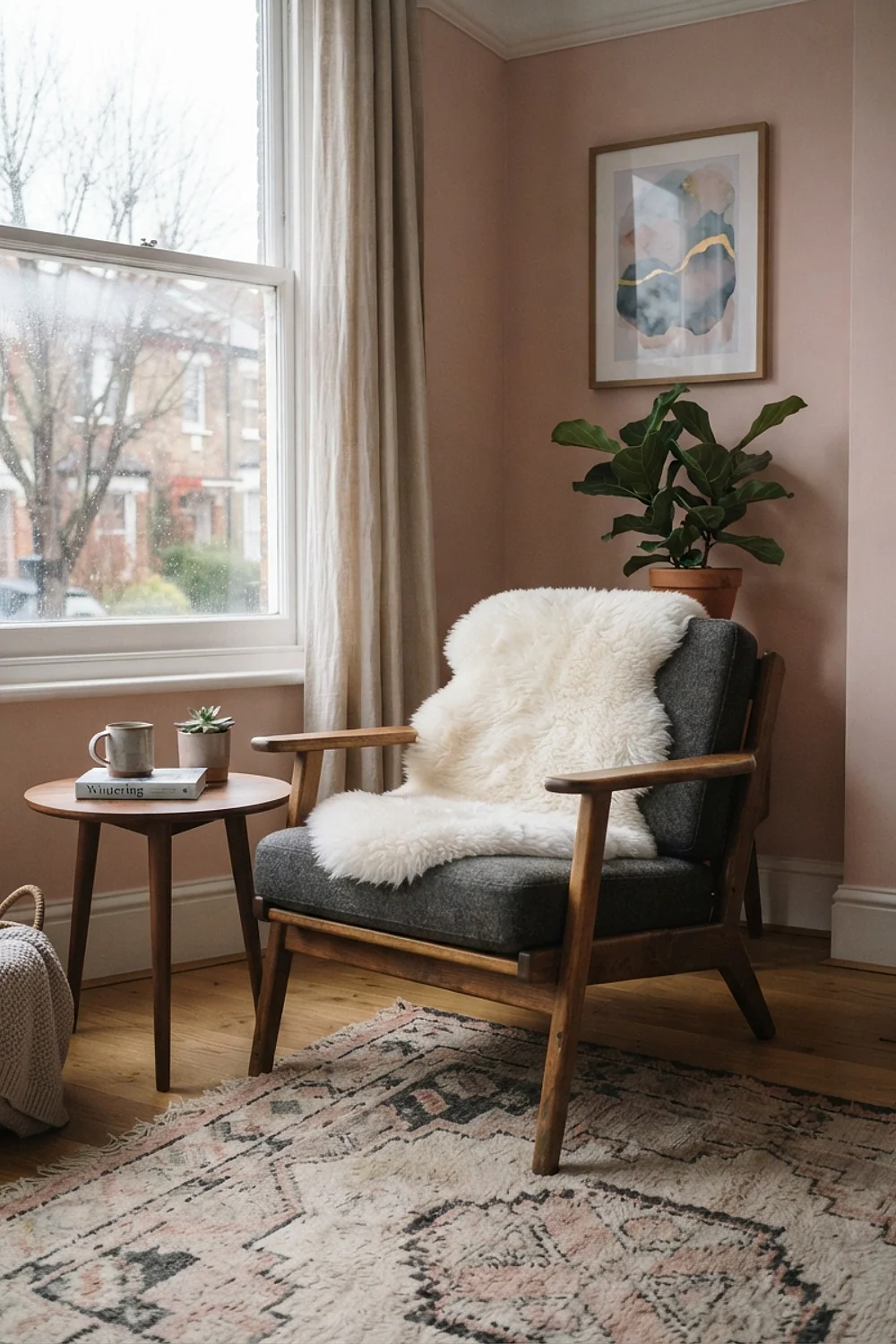
An armchair turned about 30 degrees toward the sofa, with a 2-by-3-foot sheepskin over the back, makes a seating group feel intentional on a gray Tuesday at 4 pm. The wool is dense and slightly oily under your palm, and it warms up fast against bare arms.
Real sheepskin runs about $80 to $150, while a faux version is closer to $30 to $50. Faux sheds less and survives a damp-dog afternoon, but it pills at the edges after a season of use.
Choose real if the chair gets daily use, faux if it’s mostly for looks.
Deep green or navy linen runner on the dining table
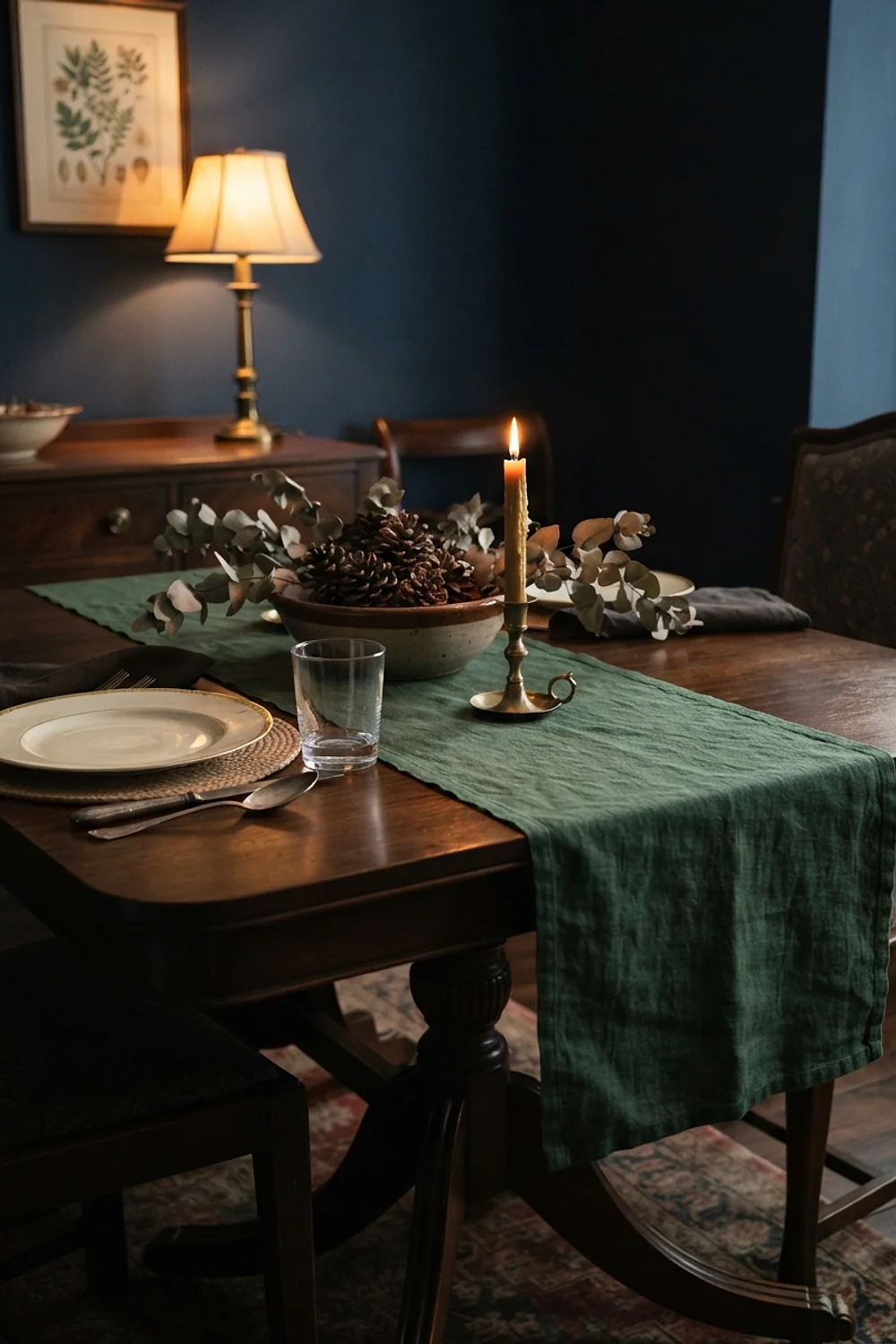
A forest green or deep navy linen runner, 14 to 16 inches wide, holds its own against the flat blue-gray light of January afternoons. Pastels wash out in that light, and saturated colors absorb it and look richer by the hour.
Let the runner hang 6 to 12 inches past each table end. Stone-washed linen is worth the money over shiny polyester, because it hides wrinkles, softens with every wash, and doesn’t slide when someone leans on the table.
This works for tables 36 to 40 inches wide. On a narrower table, go down to 12 inches.
Ironstone pitcher and wood crock on the kitchen counter
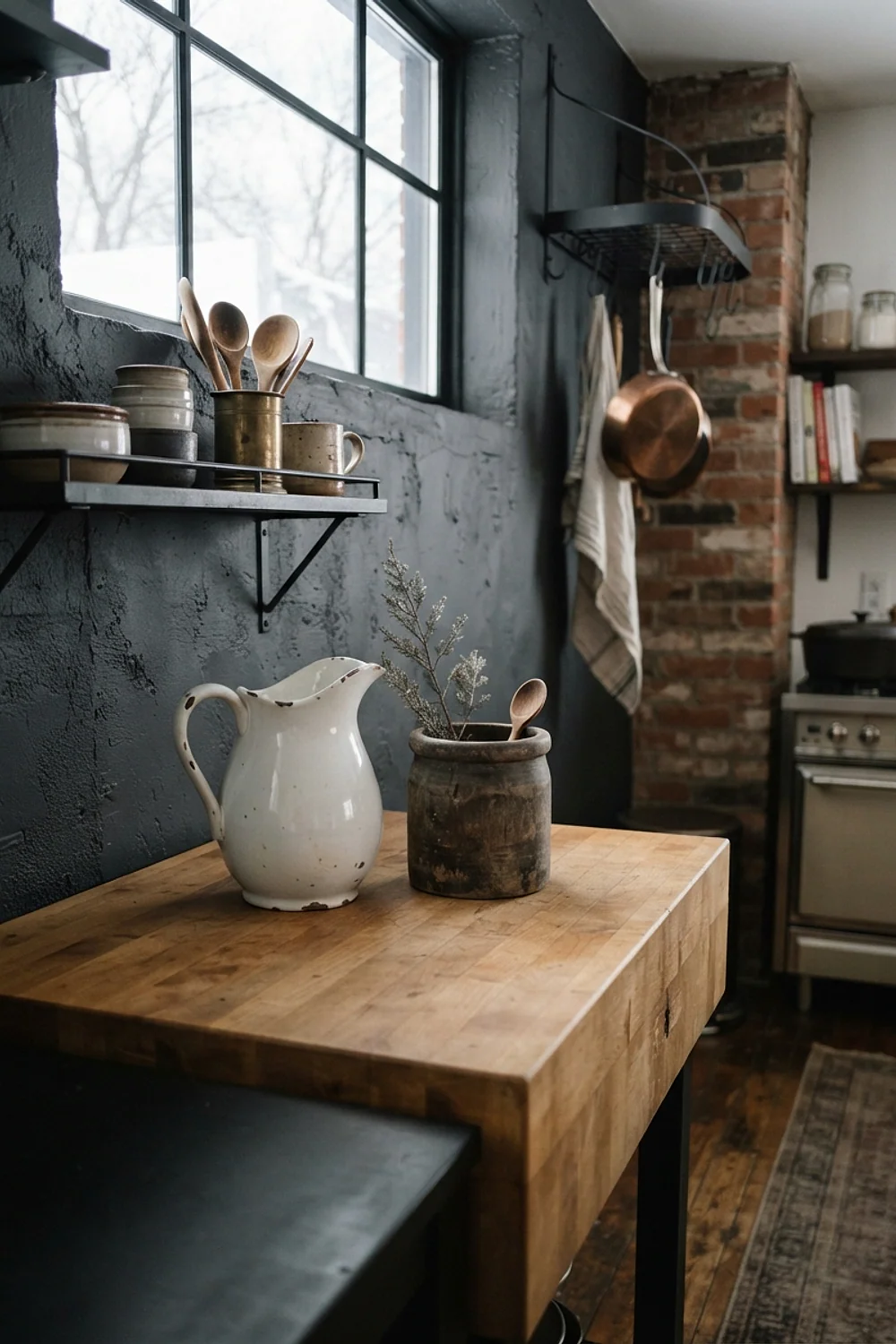
A 10-inch ironstone pitcher holding cedar or eucalyptus, a wooden board leaned on the backsplash and a stoneware crock for utensils is enough counter decor. The crock earns its spot because it’s storage and decoration in one object.
Stop at three items. A fourth tips the counter from styled to cluttered, especially in galley kitchens under 8 feet wide.
Evergreen cuttings last about three weeks in a cool room if the water is changed every few days.
Cotton flannel sheets for the bedroom
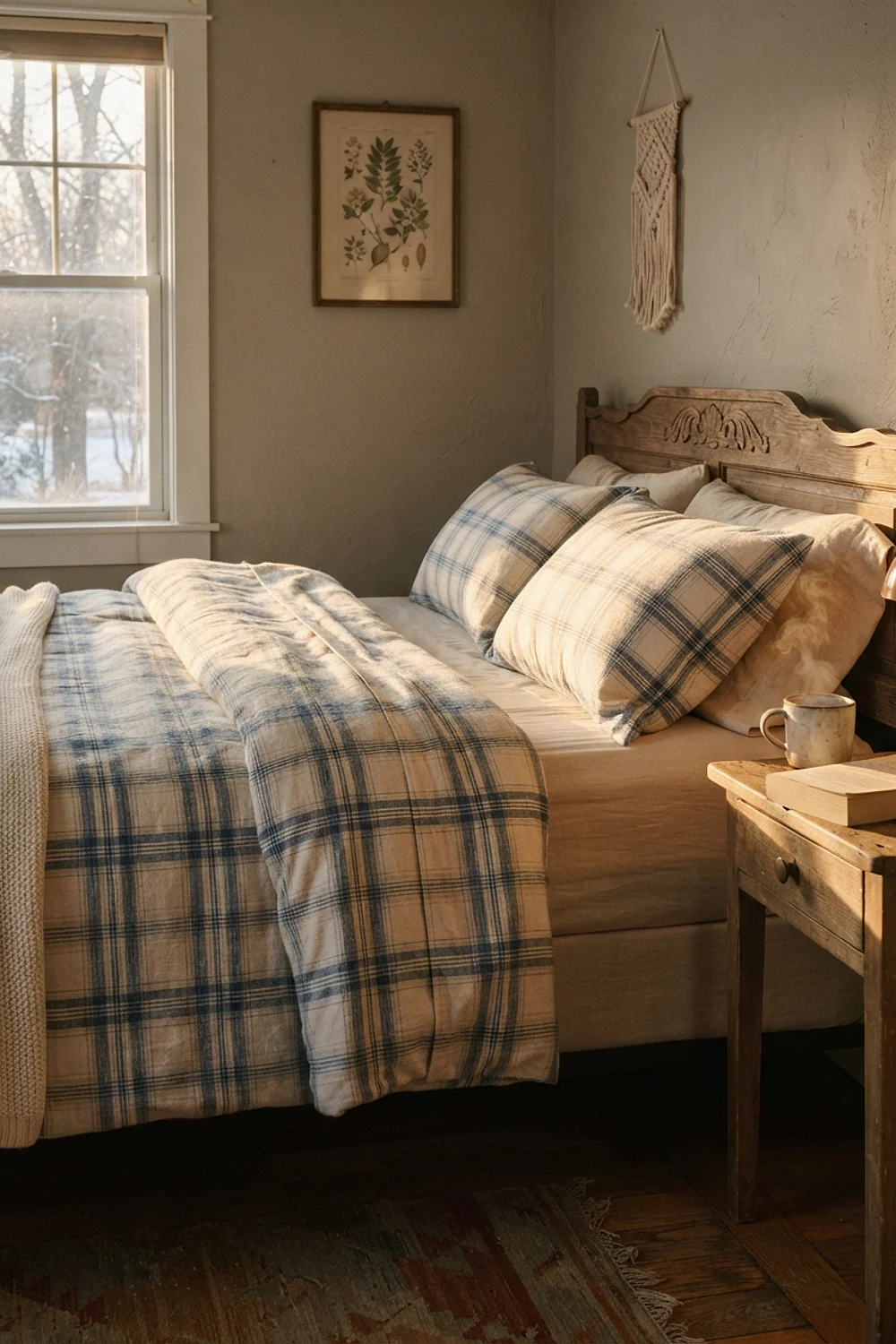
Cotton flannel at roughly 170 to 190 grams per square meter traps body heat better than linen does, which makes a drafty bedroom livable in January. A queen set runs about $90 to $150, and the brushed surface feels like a soft sweatshirt the second you slide in.
Linen still wins for hot sleepers or rooms with strong radiators. But flannel suits cold bedrooms on an outside wall.
The trade-off is pilling. Wash in cool water, skip fabric softener, and the surface stays smooth for several winters.
Teak mat and waffle towels in the bathroom
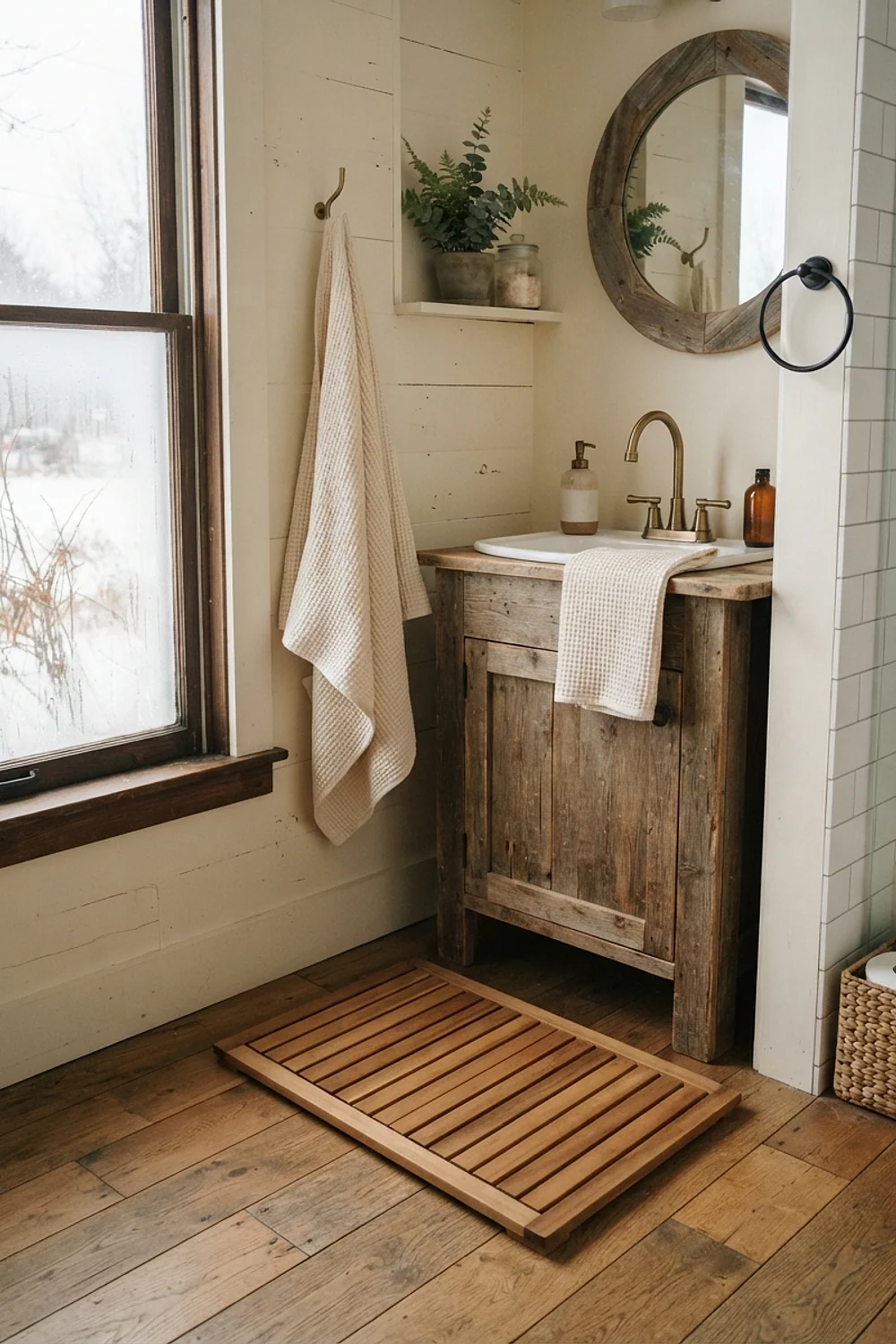
A teak bath mat about 21 by 34 inches drains water between its slats, so it dries in hours rather than days. A cotton mat in a winter bathroom with weak ventilation stays damp, then sour.
Pair it with waffle-weave towels in oatmeal or slate. Waffle cotton dries faster than terry, which matters when the heating is low and the room never fully warms up.
Hang a small eucalyptus bunch from the shower head. Steam releases the scent, and it lasts about two weeks.
Warm bulbs and a lamp at the reading corner
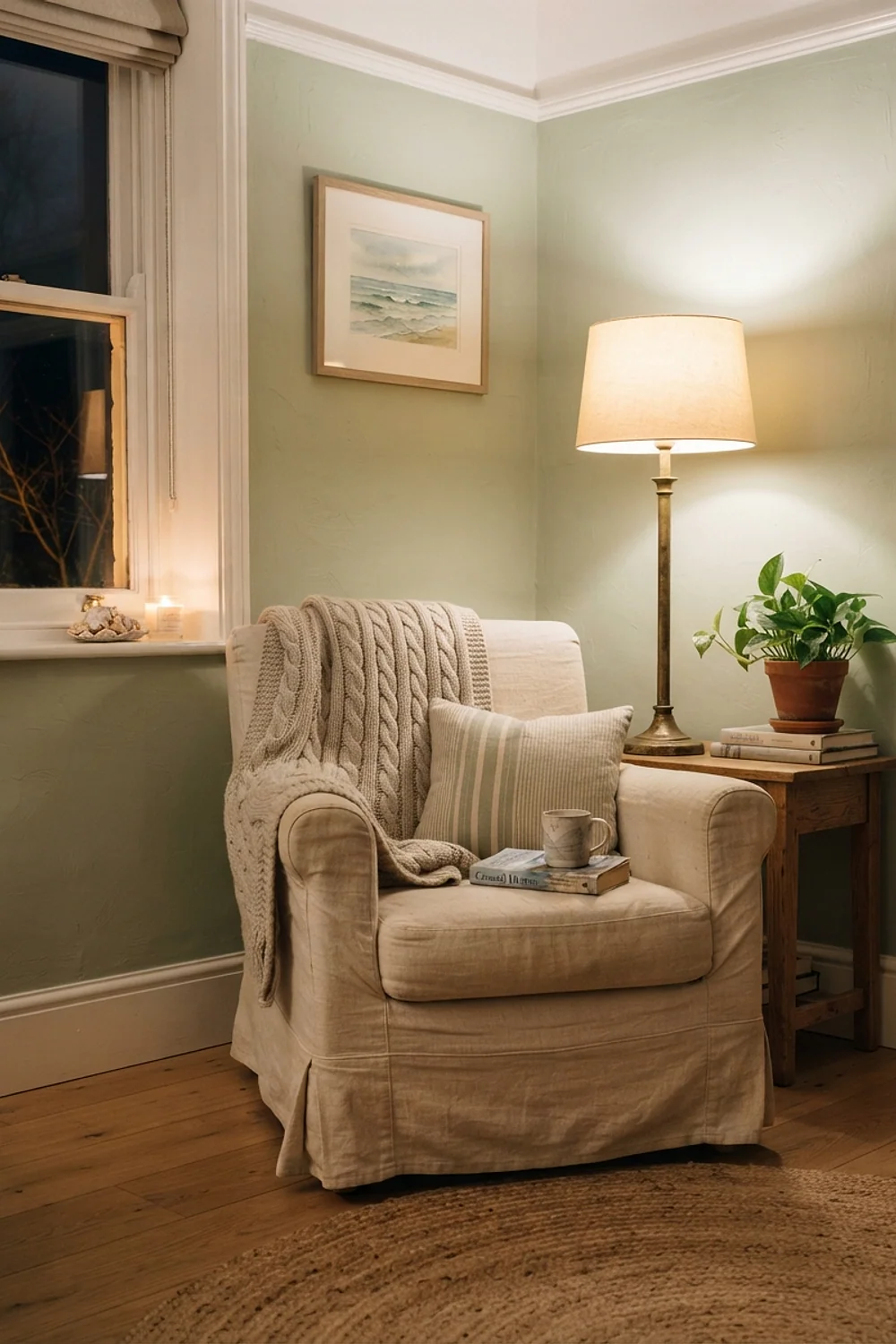
Swapping the bulb comes before buying a new lamp: choose 2700K at about 800 lumens, which matches a 60-watt incandescent. Color temperature changes how warm a room feels even when the thermostat hasn’t moved, and that’s the counterintuitive part.
Set the lamp so the bottom of the shade sits at seated eye level, roughly 40 to 42 inches off the floor. Any higher and the glare bounces off your page.
This fits reading chairs and desks near north-facing windows, where the 4 pm light turns cold fast.
Lined curtains hung high and wide

Lined curtains mounted 4 to 6 inches above the window frame, extending 8 to 12 inches past each side, make a window look taller and let the glass stay fully uncovered by day. Thermal or blackout lining also cuts the chill that drifts off older single-pane glass.
Order panels long enough to hover about half an inch above the floor, usually 84 or 96 inches. Curtains that stop at the sill look like a mistake and leave a cold gap.
Heavy fabric like wool blend or thick cotton velvet hangs better than thin polyester, and the weight keeps the folds straight.
Notes from real rooms
Good january winter decor starts with sizes, because a rug that’s too small ruins an otherwise warm room. Check these before you buy anything:
- Living room rug: 8 by 10 feet, with at least the front legs of every seat on it.
- Sofa to coffee table: 16 to 18 inches of clear floor.
- Table lamp: shade bottom at 40 to 42 inches, or lower if the chair is low.
- Curtain rod: 4 to 6 inches above the frame, 8 to 12 inches past each edge.
- Entry tray: 2-inch lip, and 4 feet of clear floor for the door swing.
Walk the room with a tape and painter’s tape on the floor first. It takes ten minutes and saves a return.
Making january winter decor flow between rooms
Cohesive january winter decor repeats a few things instead of matching everything. Pick two colors, one wood tone and one scent, then let each room use them differently.
- Choose a base palette of two deep colors, such as forest green and oatmeal, and use both in at least three rooms.
- Repeat one wood, like teak or oak, in the bathroom mat, the kitchen board and the mantel.
- Keep bulbs at 2700K everywhere so the light doesn’t jump from amber to blue between doorways.
Doorways are where the mismatch shows. If you can see two rooms at once from the hall, they should share at least one color.
Wrapping up the winter rooms
January winter decor doesn’t need a big budget or a full weekend, just a few pieces sized correctly and chosen for how the room is used from morning to 4 pm. Start with the room you walk through most, then work outward.
Save or pin this list so it’s ready when the holiday boxes go back in the attic, and try the entry tray or the 2700K bulb swap first, since both take under 20 minutes and need only a tape measure.
Frequently asked questions
How long should january winter decor stay up?
Most january winter decor can stay through the end of February, since nothing in it is tied to a holiday. Fresh evergreens and branches need replacing every two to three weeks, but textiles and lamps stay until spring.
Can I do january winter decor in a rental?
Yes, nearly every idea here works without a drill. Use a tension rod for curtains, plug-in lamps, a freestanding boot tray and layered textiles, all of which leave walls and floors untouched.
What colors work best for january winter decor?
Deep, saturated colors like forest green, navy and oatmeal-brown hold up best in low winter light. Pale pastels tend to look gray by mid-afternoon.
How much should a room refresh cost?
A single room can be refreshed for roughly $60 to $200 if you stick to textiles, bulbs and a few cuttings. Sheepskins, flannel sheets and lined curtains are the pieces that push costs higher.