
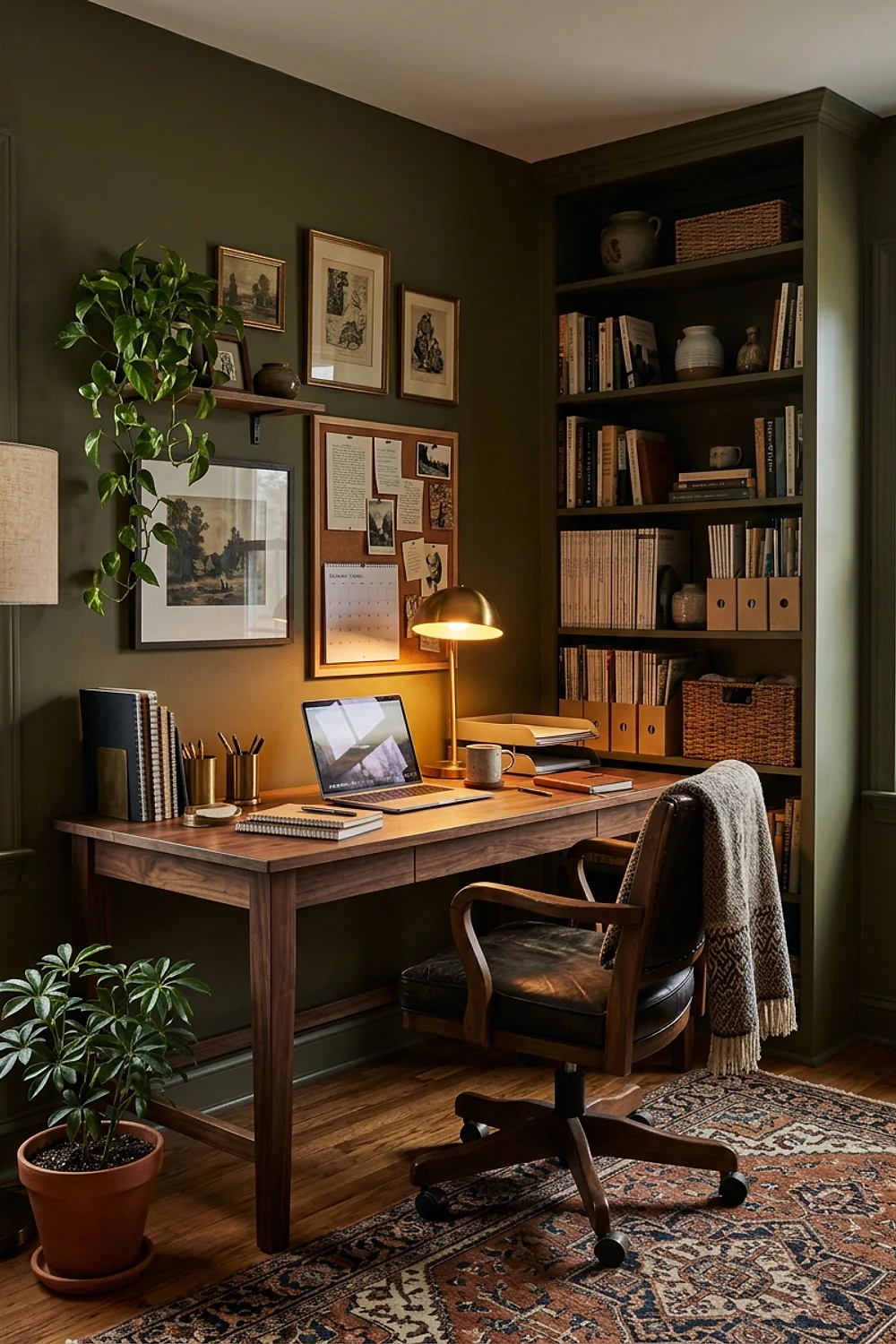
Stop Making These Stylish Functional Home Office Mistakes
Most home offices fail because they were set up for a photo, not for eight hours of actual work. A stylish functional home office has to hold up at 3pm on a Tuesday, with a laptop, a mug, a charging cable and a stiff neck.
Below are eleven common pitfalls, each with the fix. Proportion is the first test throughout: how big a piece is against the wall, the window and the furniture beside it.
Stylish functional home office: Rookie errors
A glossy white desk under the window

High-gloss laminate looks crisp in a showroom and terrible beside a window. It bounces daylight straight into your eyes and shows every fingerprint and coffee ring. Matte surfaces are kinder to a screen.
Look for oiled oak, walnut veneer or a matte-finish laminate. A 60 by 30 inch top at 29 to 30 inches high suits most adults, and a solid-wood option such as IKEA‘s Idåsen runs around $400 to $500. Run a hand across the surface in the store. If it feels like plastic, it’ll look like plastic by March.
Relying on one ceiling fixture
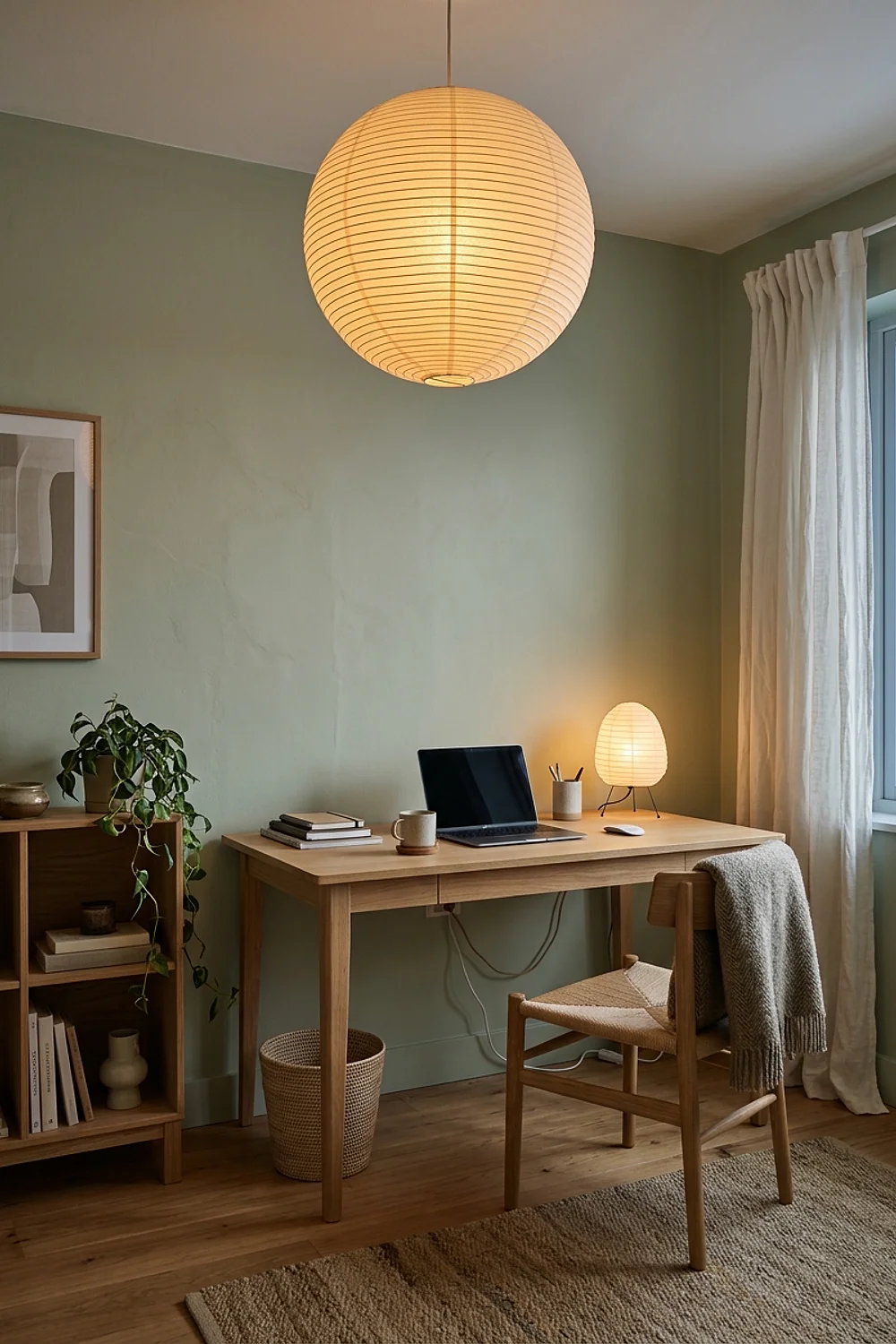
A lone overhead light throws your own shadow across the keyboard. On a gray November afternoon, when the window gives up around 3:30, the room goes flat and slightly sad.
Layer instead. Add a task lamp on the desk with a warm-neutral bulb (3000 to 4000K, at least 500 lumens), and set the desk perpendicular to the window so daylight comes from the side. A swing-arm lamp clamped to the edge saves the desktop area you’d lose to a base.
Painting the wall behind you without a camera test
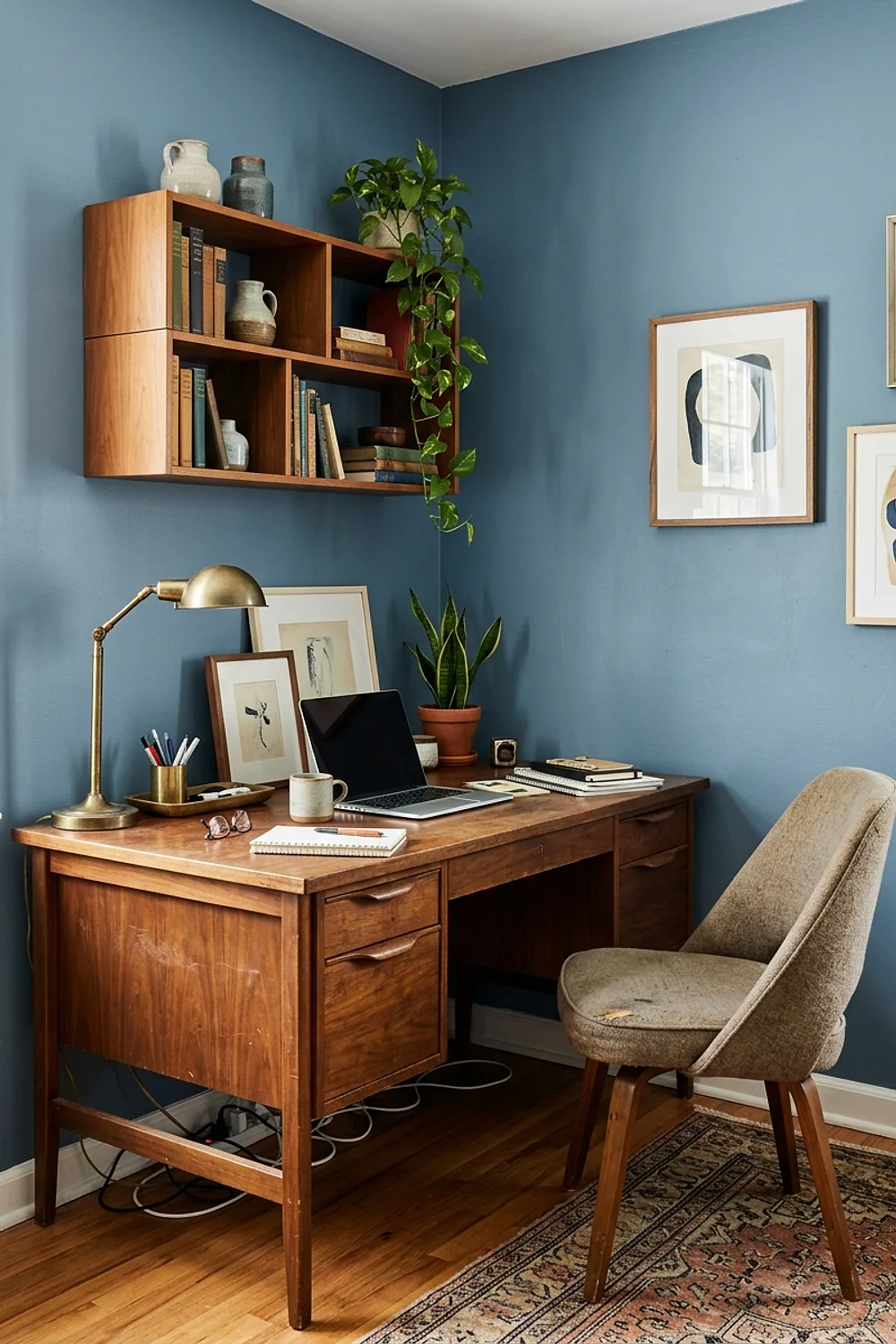
Stark white walls turn pale on video calls, and saturated reds and oranges throw color onto your face. The wall behind your chair is in frame all day, so it deserves a test.
Choose a muted mid-tone: a deep sage, a smoky blue, a greige with some weight. Paint 2-foot swatches and look at them at 9am and again at 4pm, when low sun turns yellow-leaning paints almost mustard. This suits anyone on camera more than twice a week.
Ignoring cables until they pile up
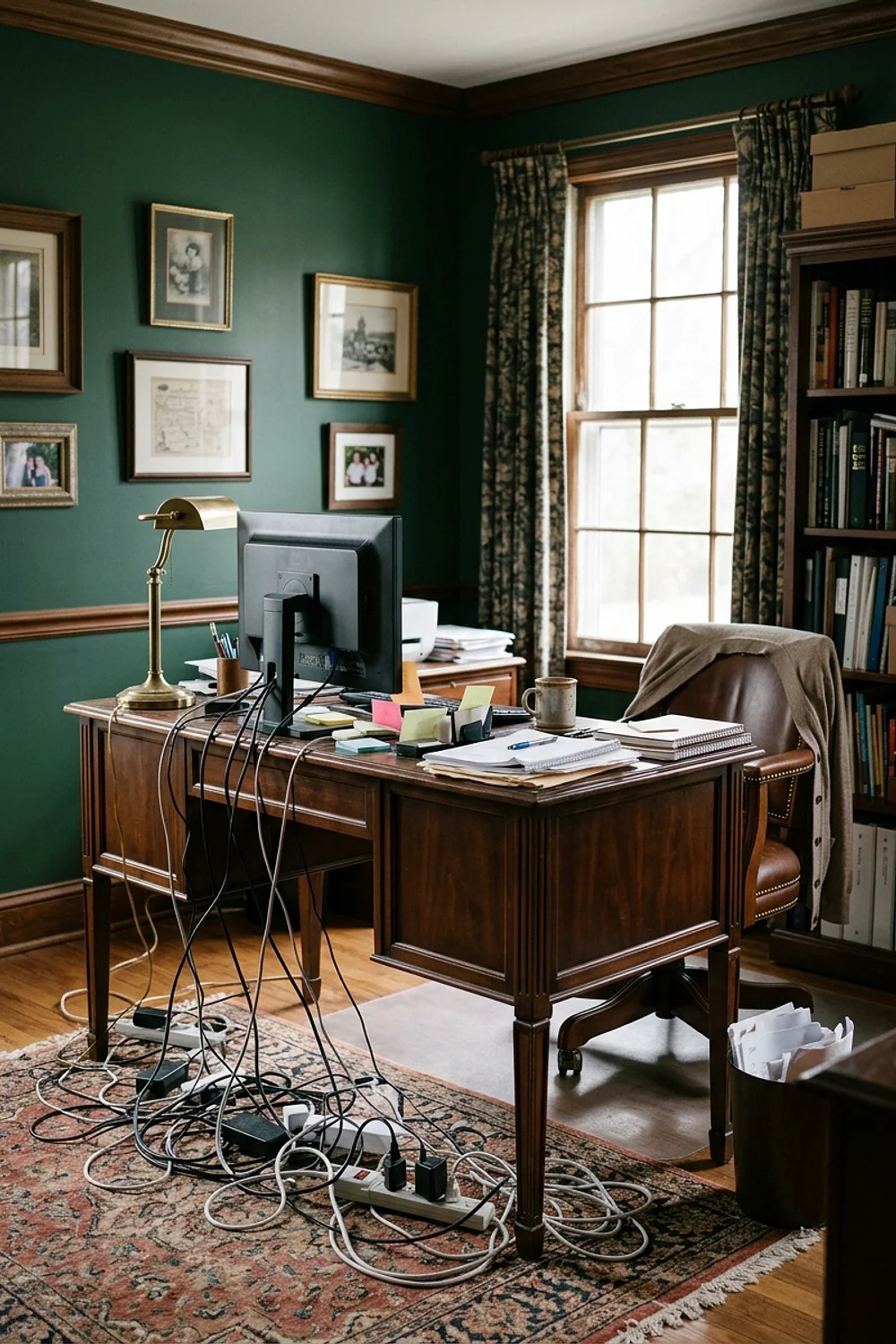
A desk with no cable plan ends up with a nest of black cords at ankle height. It’s ugly, and it makes vacuuming a chore you’ll quietly skip.
Plan the route before the desk goes in. A under-desk cable tray (about $20 to $30), a six-outlet surge protector mounted to the back leg, and a 2-inch grommet hole keep power cords out of sight. Do it on day one, when the cords are still labeled in your head.
Floating the desk with your back to the door
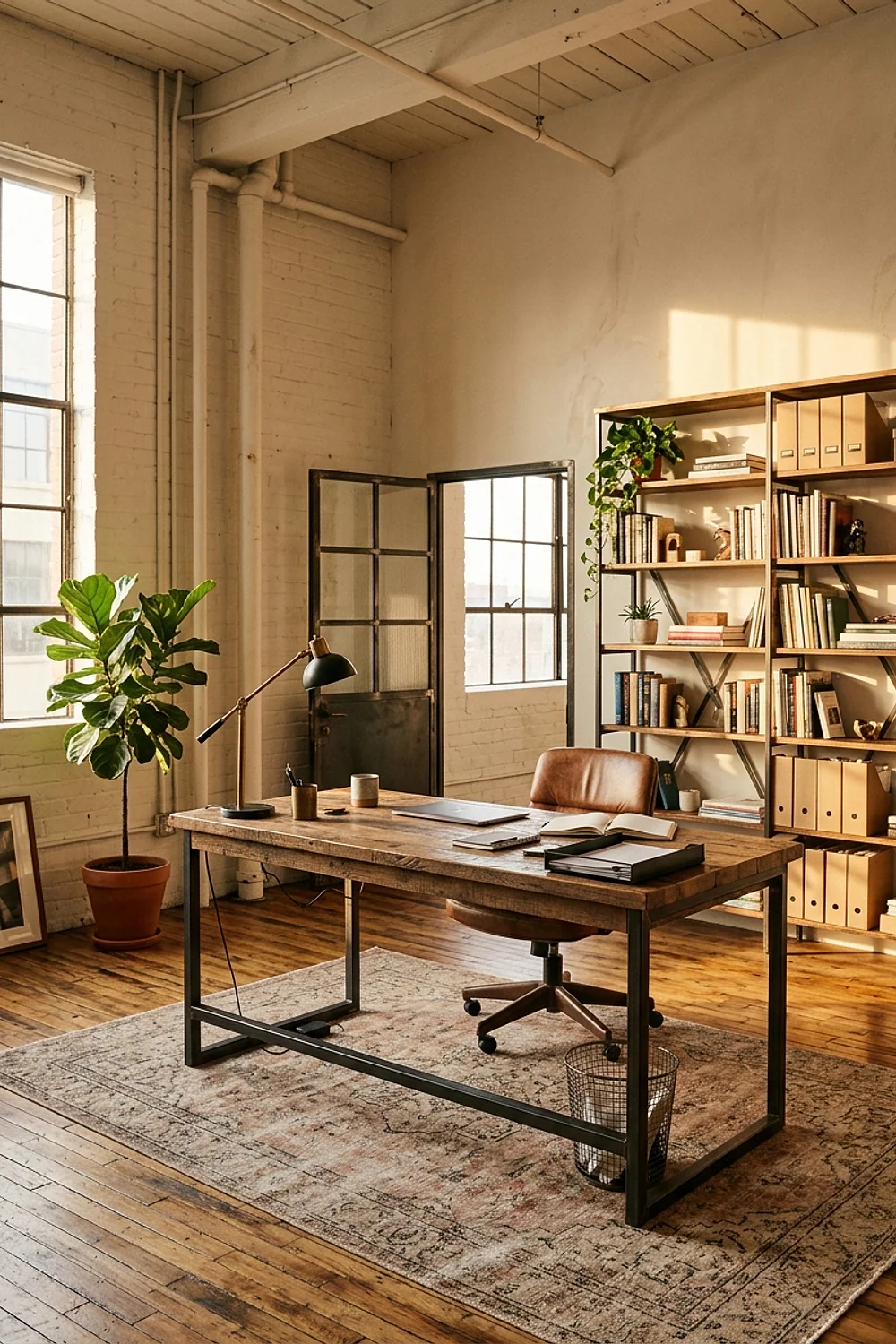
Pushing a desk into the middle of a room looks bold, but it leaves you facing a wall while people walk in behind you. Most people feel jumpy in that position without knowing why.
Anchor the desk to a wall, or angle it so the entry stays in your peripheral view. Keep 36 inches clear behind the chair so it can roll back and a person can pass. In a bedroom corner, a 48-inch-wide desk against one wall often beats a bigger one floating.
Buying the desk before listing what lives on it

The common mistake is choosing a desk because it’s pretty, then discovering it can’t hold two monitors, a laptop stand and a notebook. Surface area comes first.
Write down every item that needs a home on the desktop. Dual 27-inch monitors need roughly 55 to 60 inches of width and 28 inches of depth to sit comfortably at arm’s length. A single laptop worker can happily live with 42 inches.
Styling the shelves like a bookshop
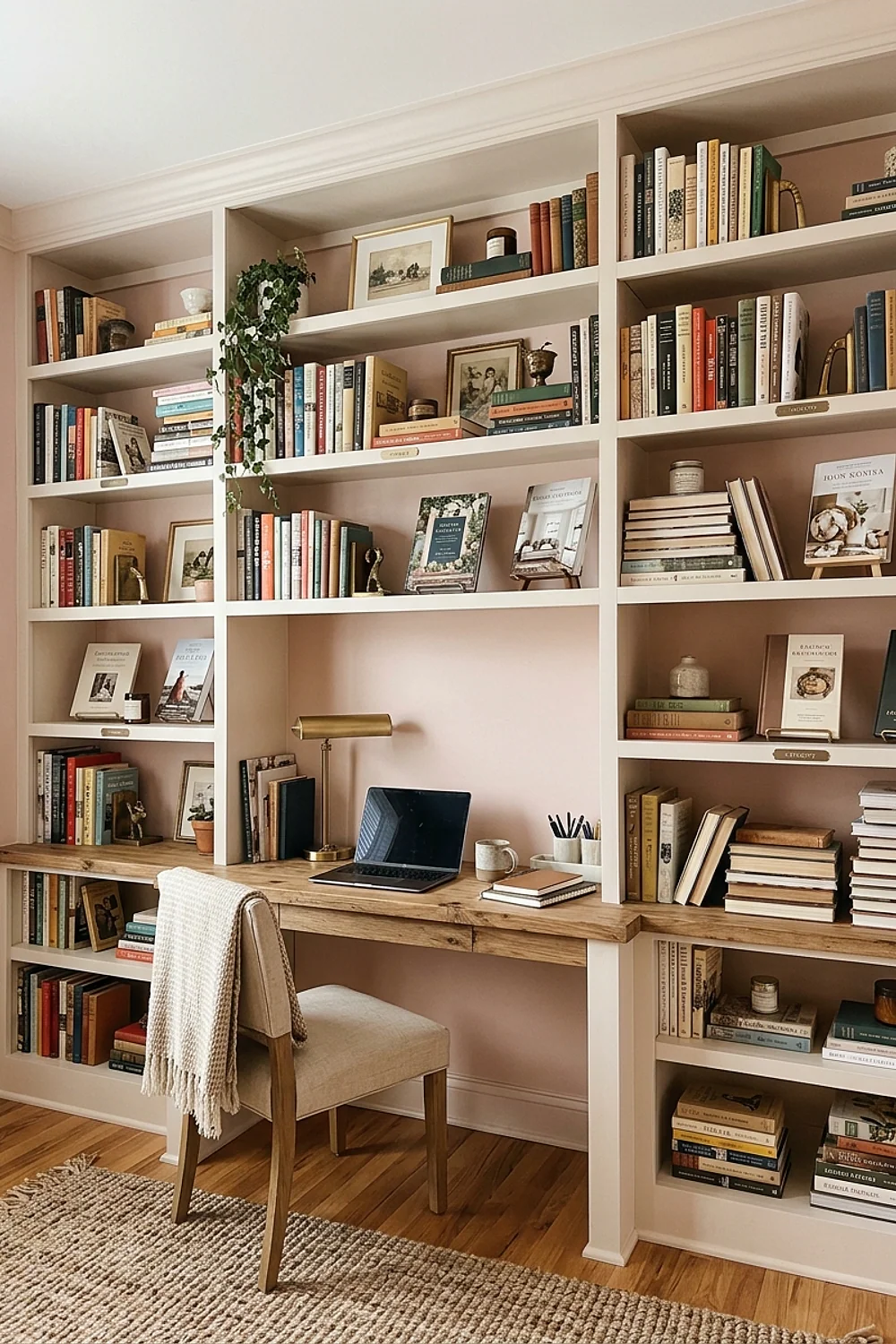
Crowded shelves behind the desk read as visual noise, especially on camera. Every vase, framed print and stack of hardbacks competes for attention with your face.
Should the wall behind your chair be the calmest thing in the room? Exactly.
Leave about a third of each shelf empty, group objects in odd numbers, and keep one tall item, such as a 14-inch ceramic lamp base or a trailing pothos, per shelf. The restraint is what makes it look intentional.
Open shelving as the only storage
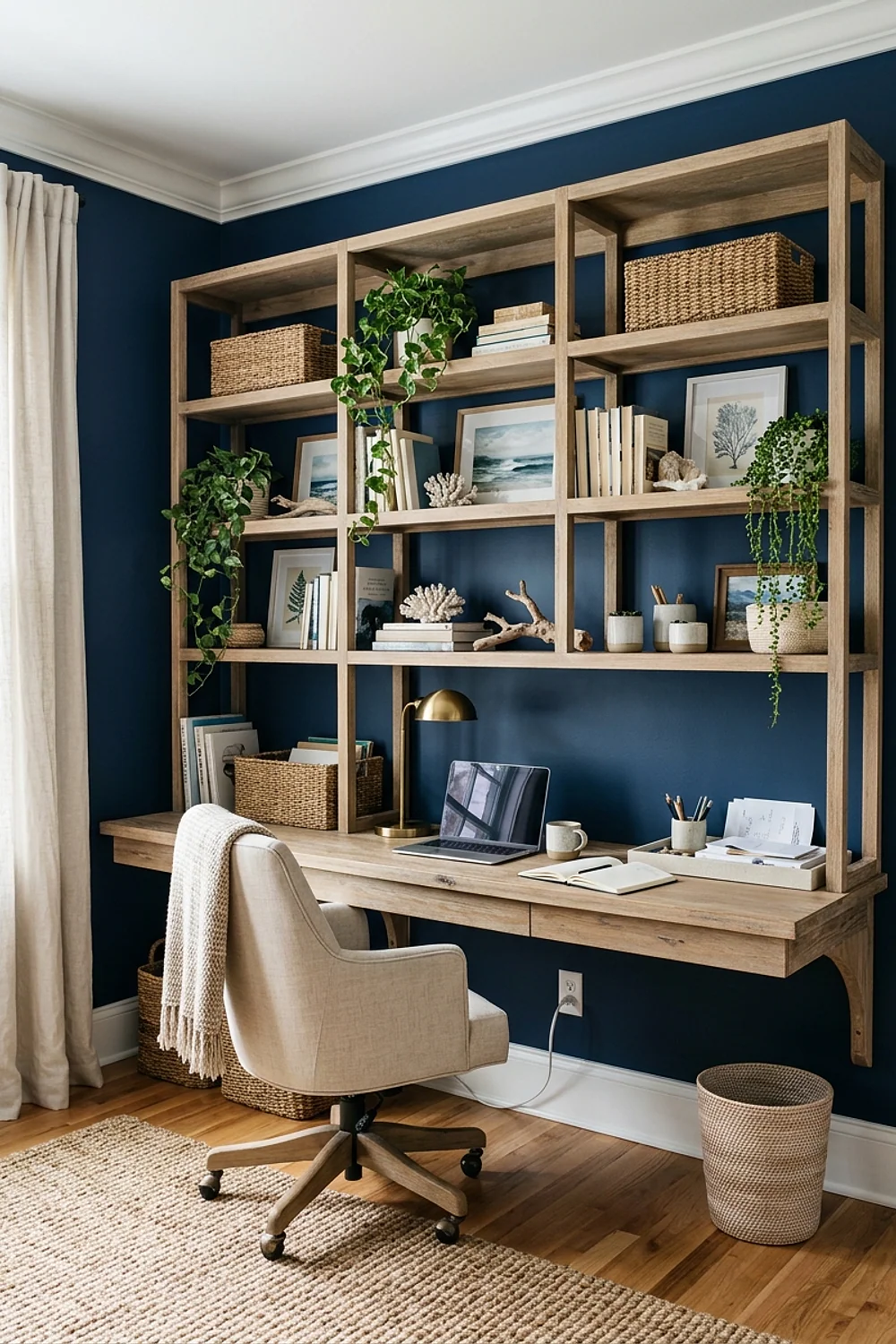
Paper, chargers and a half-dead printer look awful on open shelves. Open shelving only works for objects that earn their place in view.
Add closed storage: a two-drawer lateral file about 18 inches deep, or lidded boxes in linen or wicker on the lower shelves. A rolling file cart tucks under most desks for around $60 to $90 and moves to the closet when guests arrive.
A desk that swallows the room
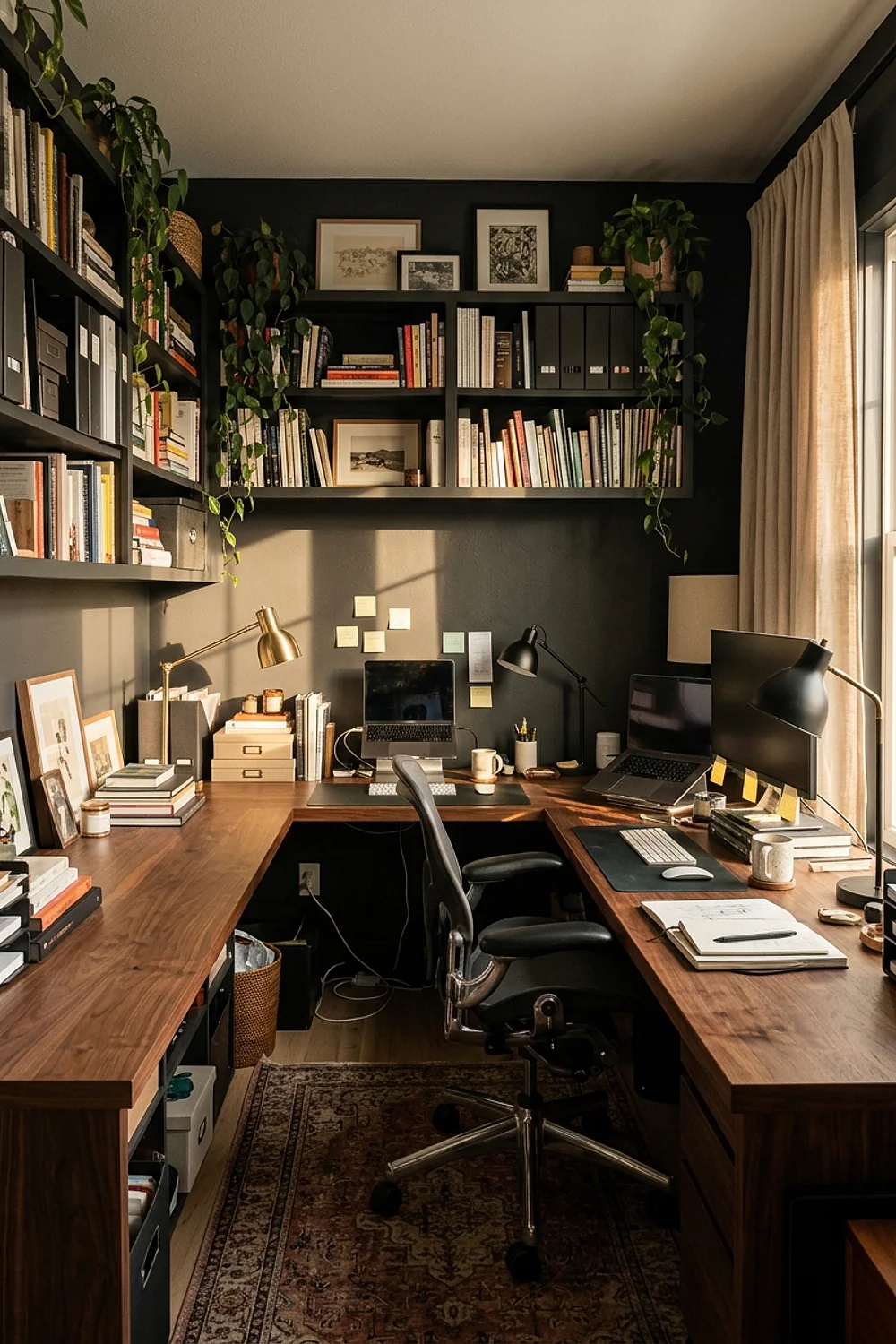
A 72-inch executive desk in a 9 by 10 foot spare room leaves almost no walking room and makes the ceiling feel lower. The piece wins against the room instead of living in it.
Scale to the floor plan. Leave at least 30 inches of clear walkway on one side, and in a small room choose a 24-inch-deep desk instead of a 30-inch one. Put a 5 by 8 rug under the chair, with the front legs fully on it, to define the zone.
A dining chair doing a task chair’s job

Dining chairs have a fixed seat and no lumbar support. A few hours in one leaves hips stiff and shoulders hunched, no matter how handsome the oak looks.
Here’s the counterintuitive bit: a thick plush rug under a rolling chair makes the problem worse, because the wheels drag and your back compensates. Use a rug with a pile under a quarter inch, or a hard chair mat, and pick a chair with an adjustable seat height of roughly 16 to 21 inches.
Floating shelves that bow
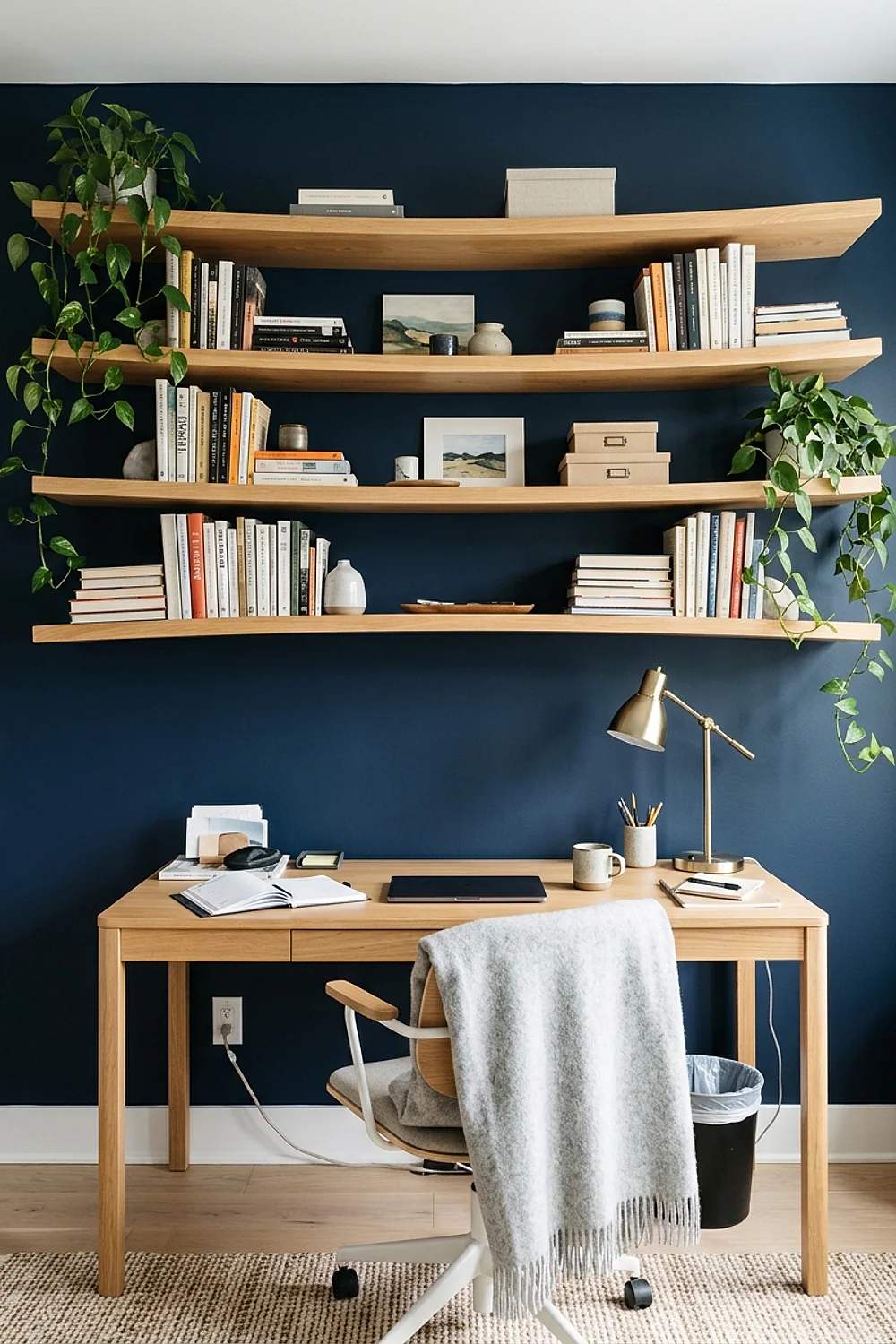
Thin particleboard shelves over a desk start to sag within months once they hold books. A shelf with a 36-inch span and a half-inch board will visibly dip, and the sight is hard to unsee.
Choose boards at least three-quarters of an inch thick, or solid pine or oak, and keep spans to 32 inches or less without a center bracket. Anchor brackets into studs, not just drywall. Anyone planning to display a row of heavy books needs this one most.
Walking through the setup
A stylish functional home office comes together faster when the order of decisions is right. Buying accessories first and measuring last is how most of the mistakes above happen.
- Tape the desk footprint on the floor with painter’s tape and live with it for two days.
- Check the light at 9am and 4pm and note where glare hits the screen position.
- Count outlets and mark where each cable will run.
- List everything that must sit on the desktop, then choose the desk width.
- Pick the chair last, and sit in it for at least ten minutes before buying.
The tape trick is worth the effort. A shape on the floor shows scale problems that a tape measure only hints at.
And hold off on decor until the work setup feels right. Pillows, art and plants are easy to add in an afternoon. A badly sized desk is not.
When to call a professional
Some fixes are beyond a weekend. A stylish functional home office that needs new wiring or built-ins is a case where hiring help saves money in the long run.
- An electrician, when the room has two outlets or fewer, or you plan to run cable through walls.
- A carpenter, for built-in desks and shelving that must fit an awkward alcove to within an eighth of an inch.
- A designer, for a room with a sloped ceiling, an odd corner or no usable wall.
- A structural check, before hanging anything heavy on a wall you haven’t opened up.
A one-hour design consultation often runs $100 to $200 and can prevent a $1,000 furniture mistake. That trade is hard to argue with.
Bringing it together
Every mistake above comes down to the same habit: choosing pieces for how they look alone instead of how they sit together. A stylish functional home office is built on measurements, light and a chair you can sit in all day, with the pretty things layered on top.
Save or pin this list so it’s handy when you’re ready to start. Tape out your desk footprint on the floor first, and measure the wall behind it before you buy anything.
One Comment