
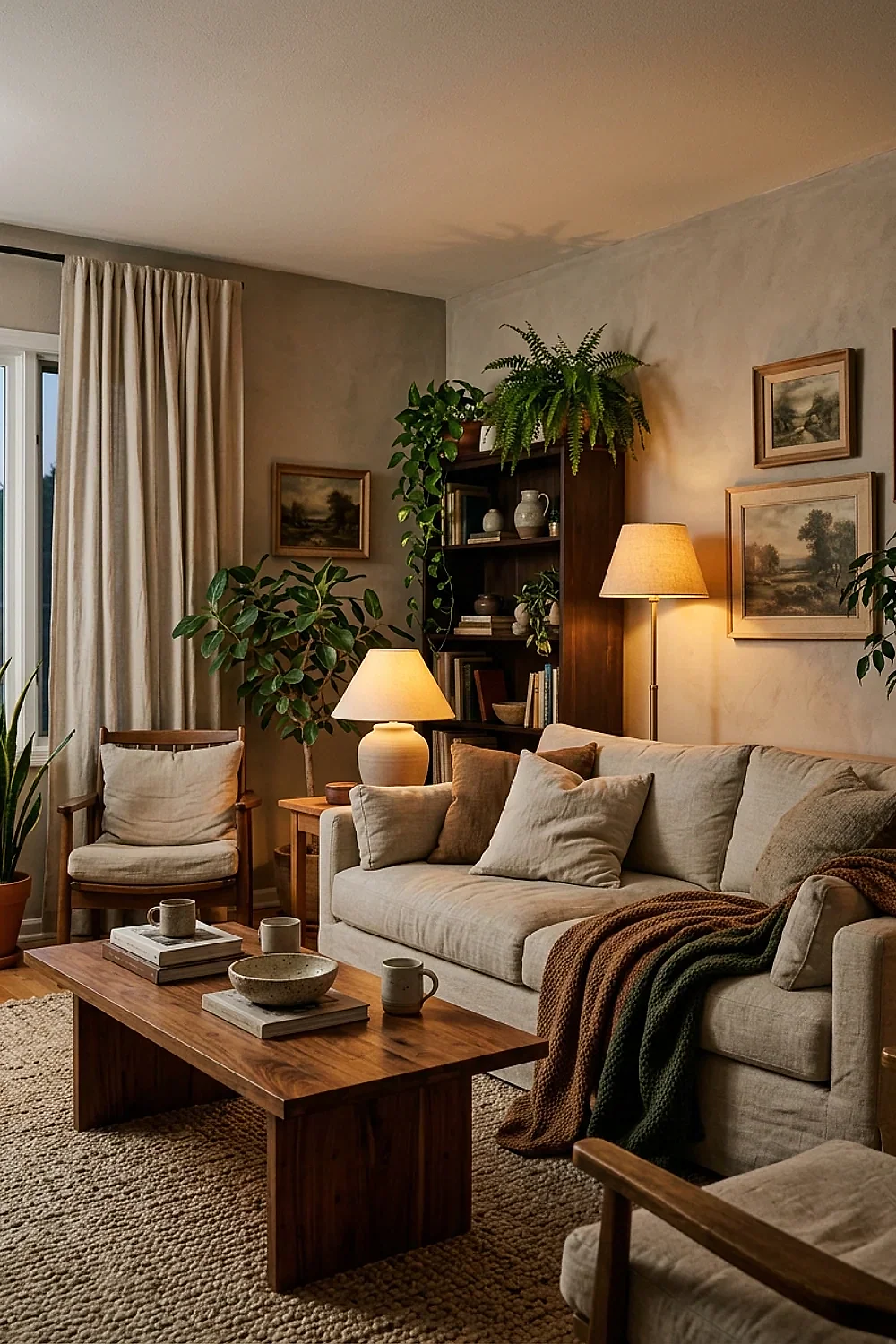
Non Toxic Living Room Decor Color Palettes
A 12 by 15 foot living room takes roughly 2 gallons of paint for two coats, and that much wet solvent-based product can leave a smell in the air for days. Picking the palette for non toxic living room decor starts with that gallon count, because the color and the formula get chosen together.
Below are 20 specific color pairings, each built around low-emission paint and natural materials. Every one comes with the light conditions it suits and the mistake to dodge.
The color logic behind non toxic living room decor
The short answer for anyone searching: choose a zero-VOC or low-VOC paint, pick an undertone that matches your light, and fill the room with undyed or plant-based textiles. Color decides the mood. The formula decides what you breathe while the walls cure.
Here’s a counterintuitive fact worth knowing. “Zero-VOC” on a label allows up to 5 grams per liter in the base, and the tint added at the store can raise that number. Deep colors need more colorant, so a navy can be less clean than a white from the same line.
Light settles every palette argument. A room with one west window looks gold at 4 p.m. and flat gray at 8 a.m., and no swatch tells you that in advance.
Before falling for any color below, run it through three checks:
- Is the base labeled zero-VOC, such as Benjamin Moore Natura or Sherwin-Williams Harmony, and is the tint system low-VOC too?
- Does the undertone (yellow, green, blue, or pink) fight the daylight direction in your room?
- Do the rug, curtains, and upholstery use natural fibers like wool, cotton, linen, or jute rather than synthetic blends?
Alabaster walls with an undyed wool rug
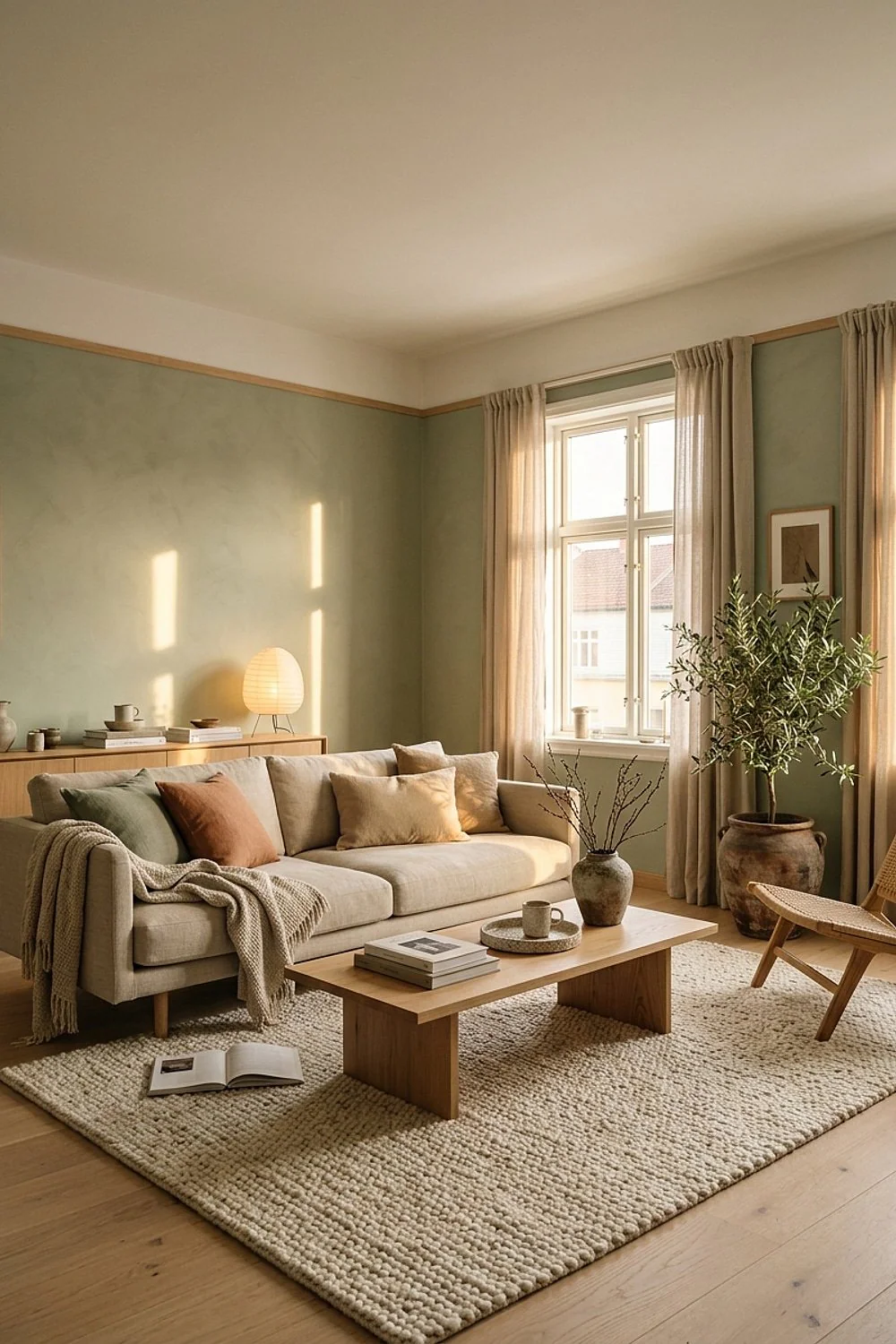
A 9 by 12 foot rug in natural oatmeal wool sets the proportions for a Sherwin-Williams Alabaster living room. Leave about 18 inches of bare floor to each wall so the rug reads as a deliberate shape, not wall-to-wall carpet.
Alabaster leans slightly creamy, which stops a big white room from feeling like a clinic. It suits medium-to-large rooms with two windows. Skip bleached or chemically stain-treated rugs here, since the contrast would turn the cream muddy.
Expect to spend $450 to $900 for an untreated wool rug at this size, and it’s the one purchase in this scheme worth stretching for.
White Dove with raw linen drapes
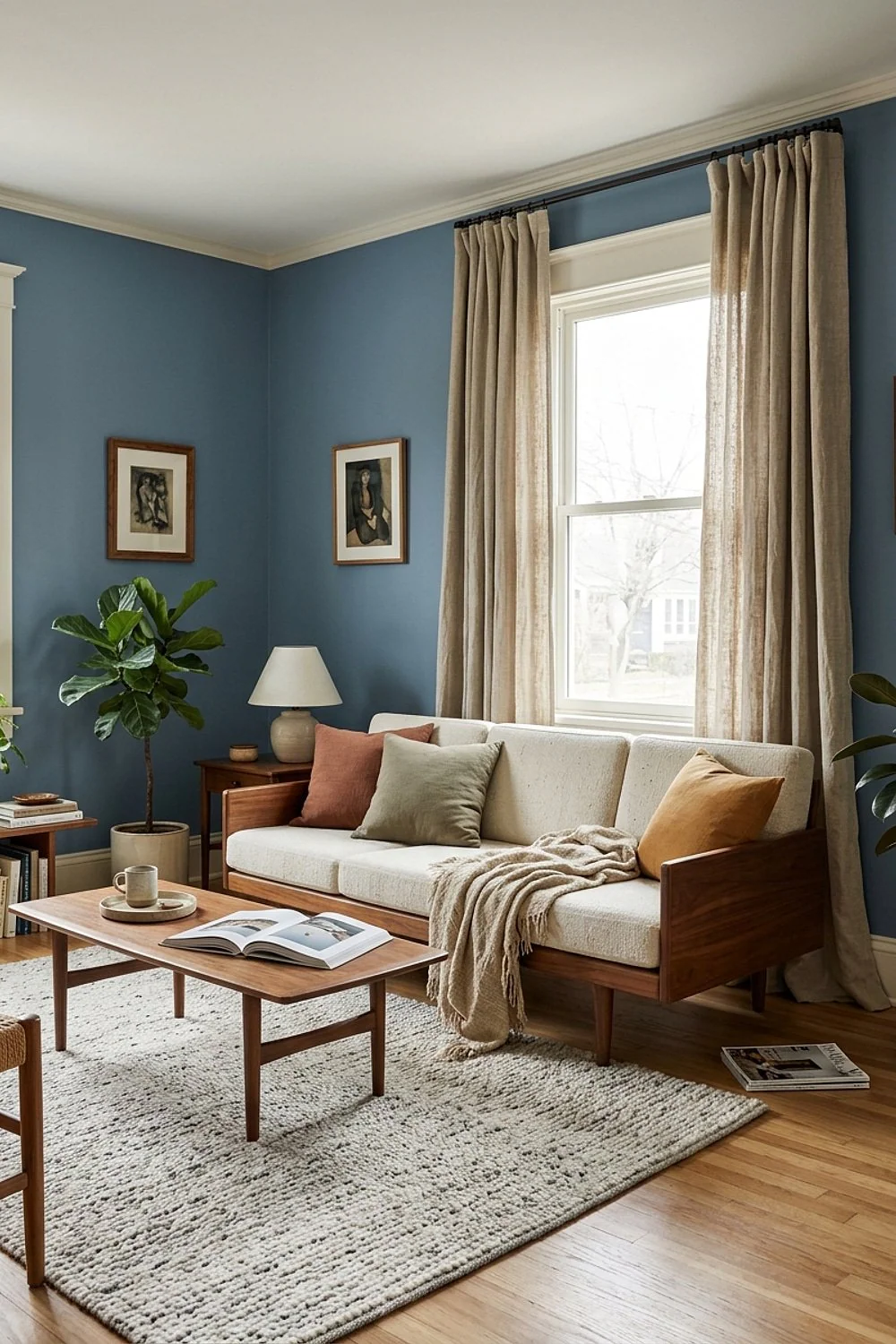
Painting a north-facing room stark, cold white is the classic mistake, because north light already pulls everything blue. Benjamin Moore White Dove carries a faint warm gray undertone that holds steady where brighter whites go icy.
Hang unbleached linen panels from a rod mounted 4 inches above the window frame. The slubby weave diffuses light and adds texture without a single synthetic lining.
This works best for renters with limited paint choices, since White Dove is easy to match later.
Pale Oak walls with a sofa floated off the wall
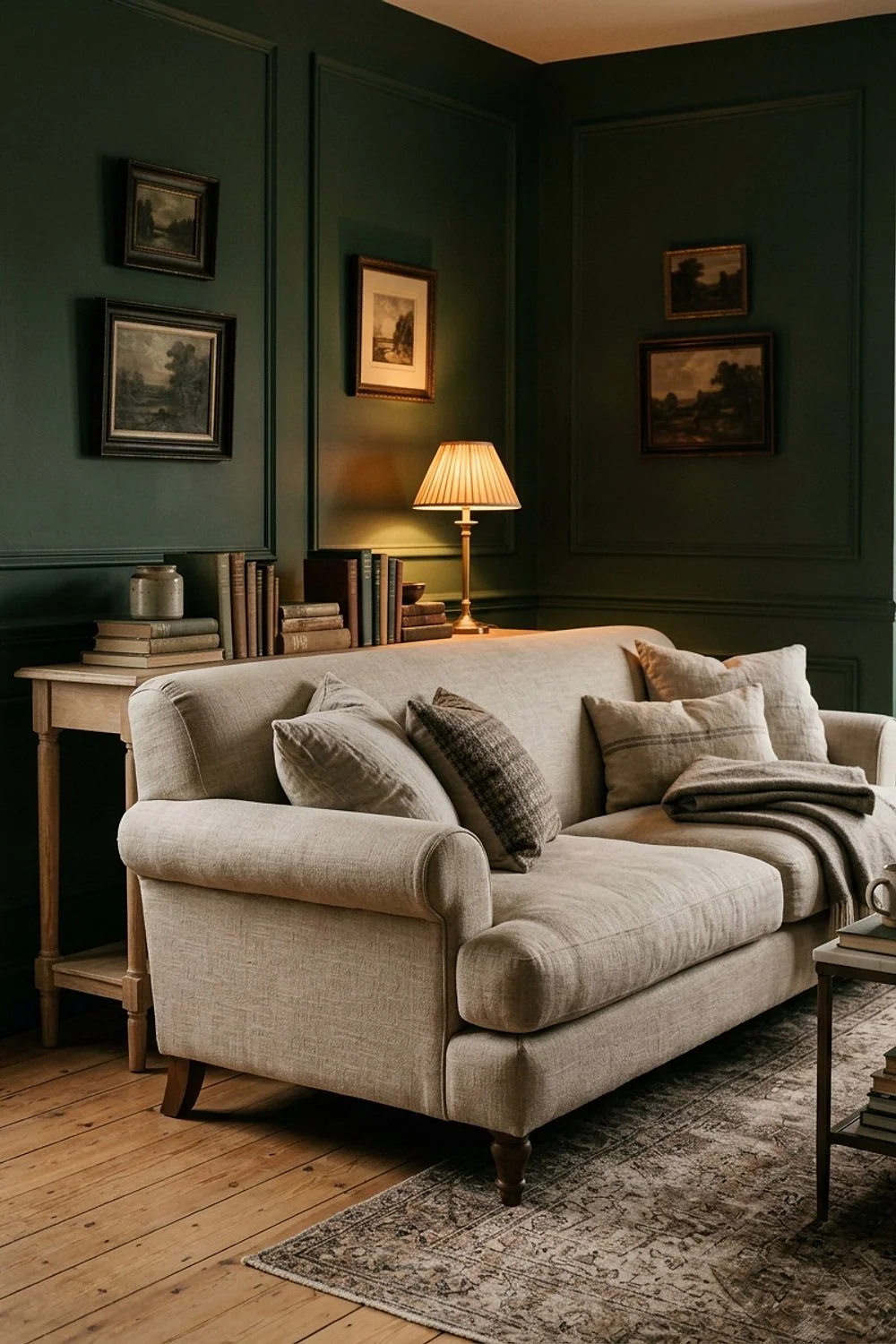
Pull the sofa 4 to 6 inches off a Benjamin Moore Pale Oak wall, and the paint gets room to glow behind the upholstery. Pushed flat against the wall, the sofa casts a shadow line that makes the greige look dirty.
Pale Oak is a soft pink-beige, so it flatters wood tones such as white oak or ash. It suits open-plan rooms where the sofa also divides the dining zone.
The trade-off: floating furniture needs at least 11 feet of room width to look intentional.
Sea Salt walls with ash shelving and felted wool baskets

Sherwin-Williams Sea Salt is a gray-green that turns more green at dusk, so open shelves in solid ash keep it grounded. Store throws and toys in felted wool or seagrass baskets with lids.
Skip plastic bins entirely. Flexible plastics can carry phthalates, and they look jarring against a mineral color like this one.
This pairing suits families who need hidden storage but don’t want a wall of cabinets.
Accessible Beige with a washable cotton slipcover
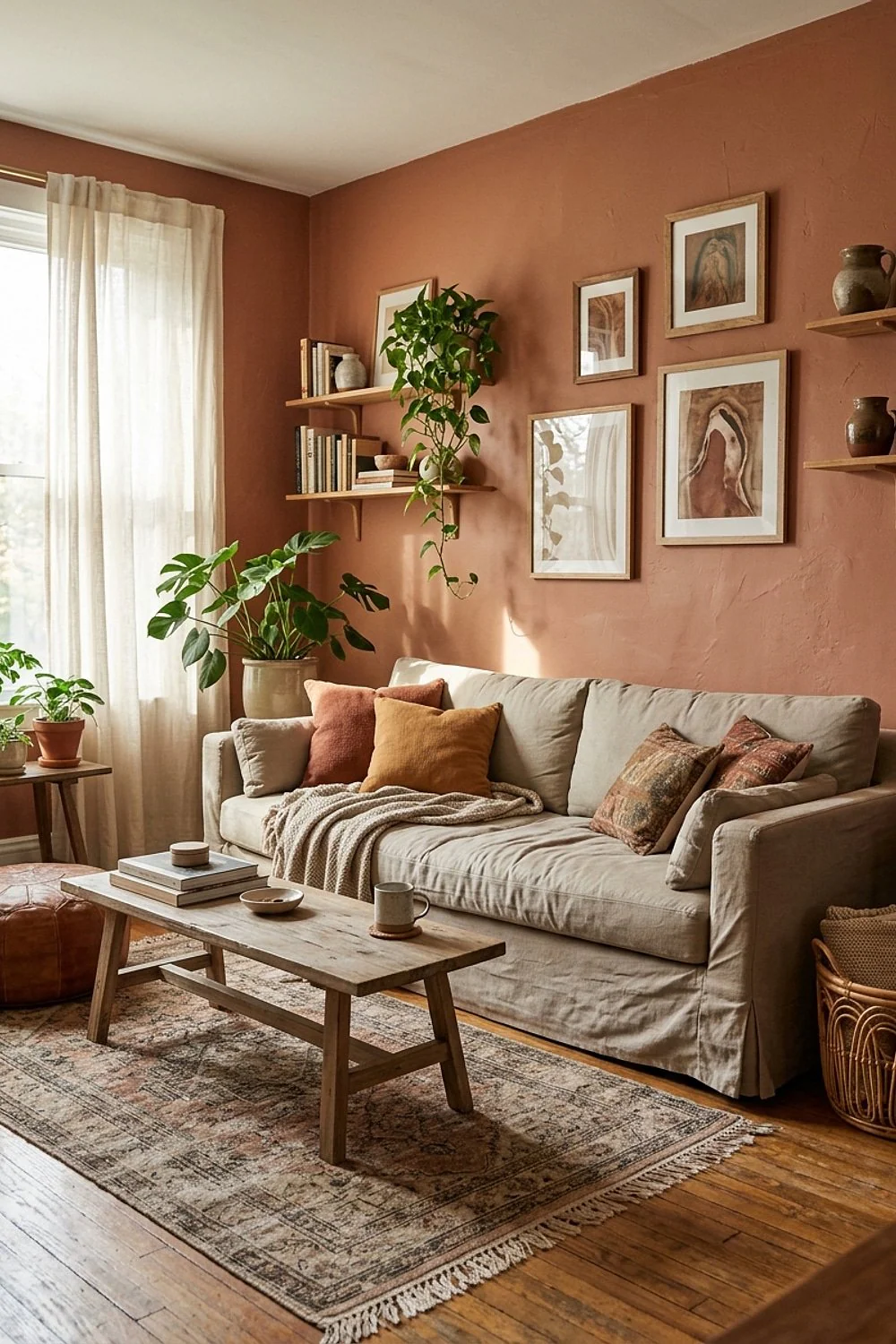
A slipcover in organic cotton twill, roughly $300 to $600 for a three-seat sofa, keeps the seating soft under the hand and machine-washable at 30°C. Accessible Beige behind it reads as a gentle greige in most light.
Check the cushion inside, too. Foam labeled CertiPUR-US or natural latex beats untreated polyurethane for off-gassing.
It’s the practical choice for homes with pets and children, since a spill goes in the wash instead of on the budget.
Roman clay in dusty terracotta
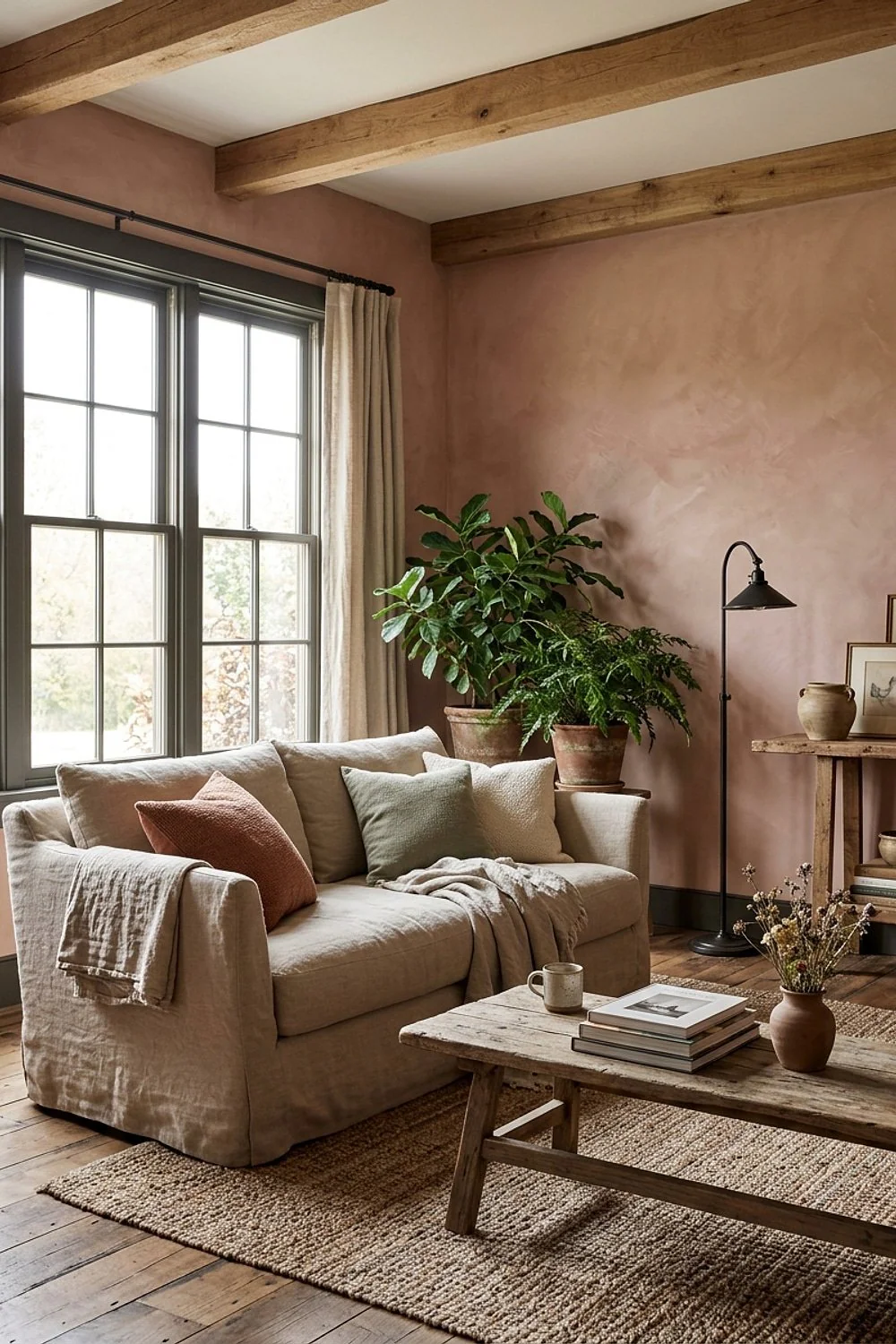
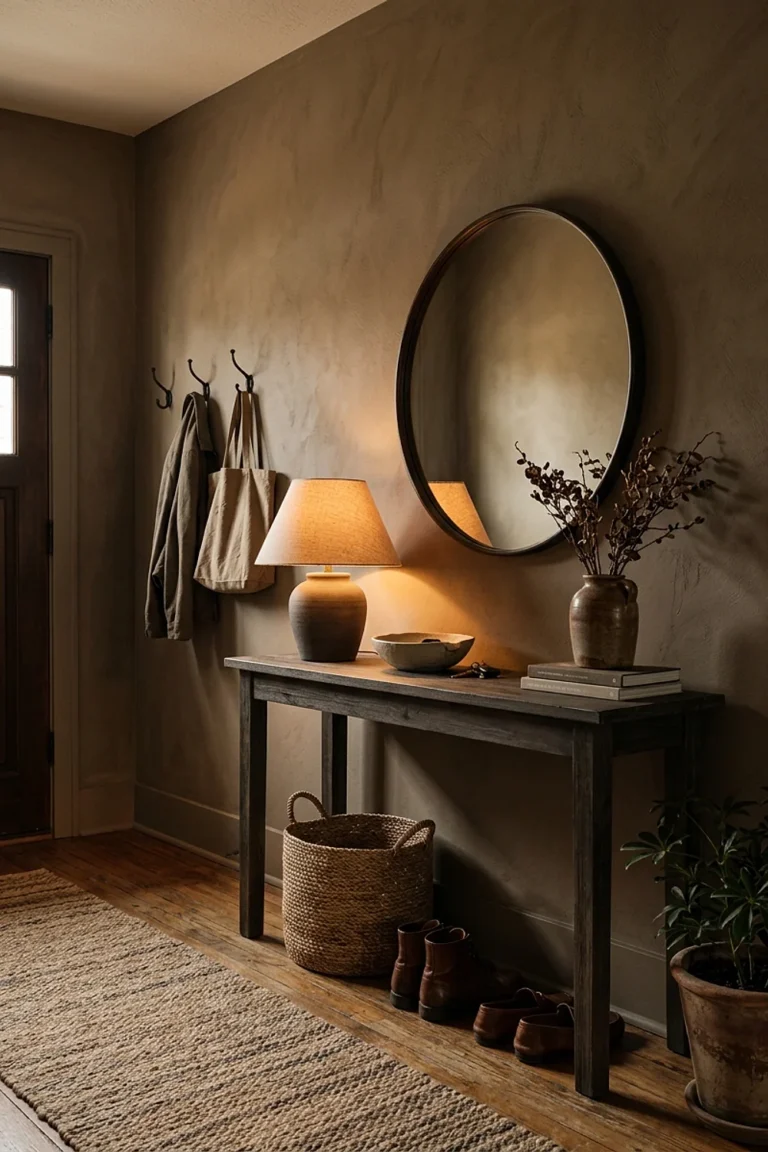
A mineral plaster finish such as Portola’s Roman Clay in a dusty terracotta hides roller marks and small dings better than flat paint. Buff out a scuff with a damp sponge, and the cloudy texture swallows the repair.
The finish is matte and slightly chalky, so it belongs in lower-traffic areas, not behind a sofa that kids climb on.
Plan for a skilled applicator or a long weekend of practice on a scrap board first.
Revere Pewter in a room with a single window
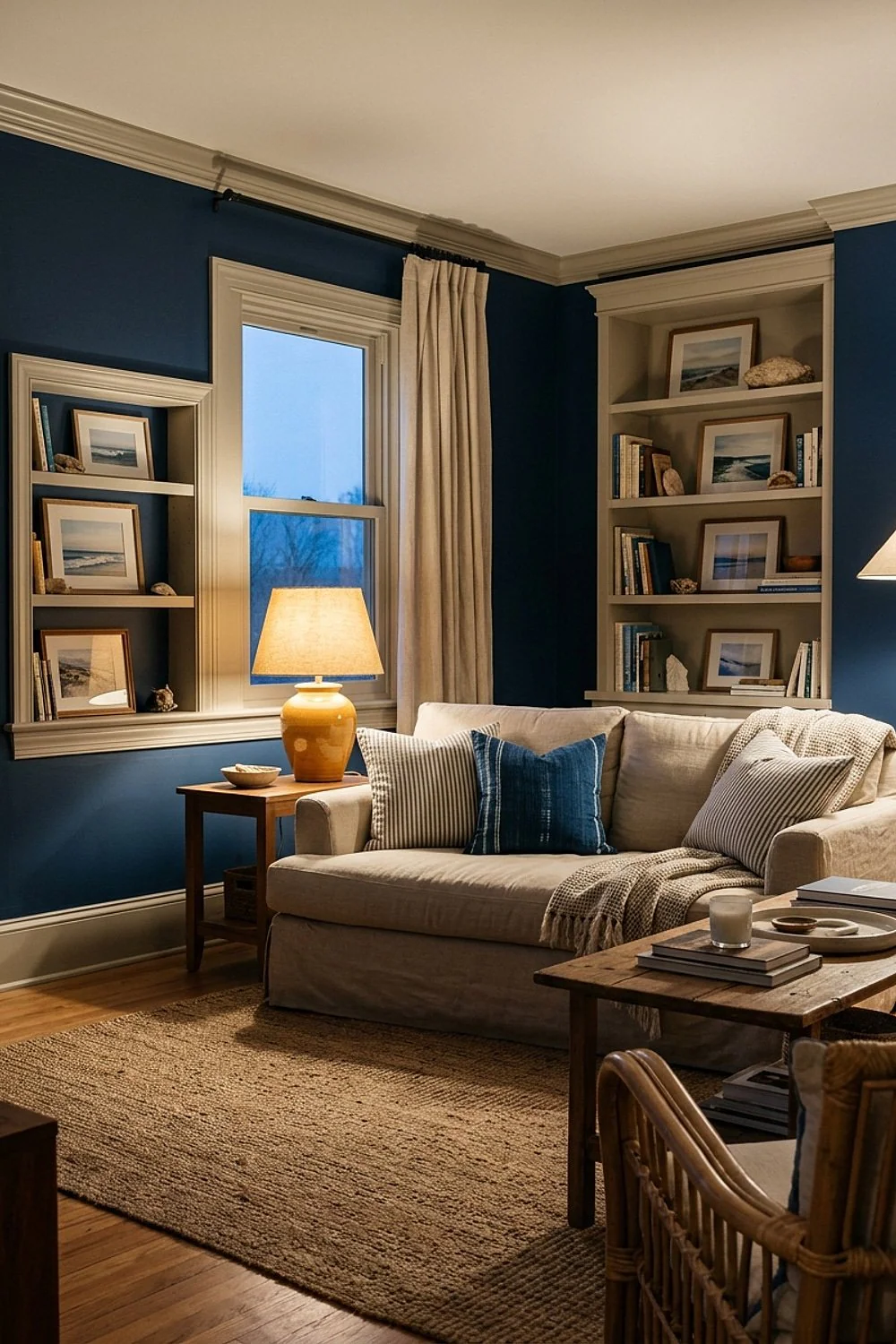
Benjamin Moore Revere Pewter lands as a warm gray at 8 a.m. and nearly taupe by 9 p.m. under 2700K bulbs. That’s why a dim, one-window room needs a gray with some brown in it.
Cool grays go sullen in the same conditions, and a gray November afternoon makes the effect worse. Layer in a camel wool throw and a jute rug to push the brown further.
Avoid LED bulbs rated above 3000K here, which flatten the color back to plain gray.
Rainwashed with white oak and linen
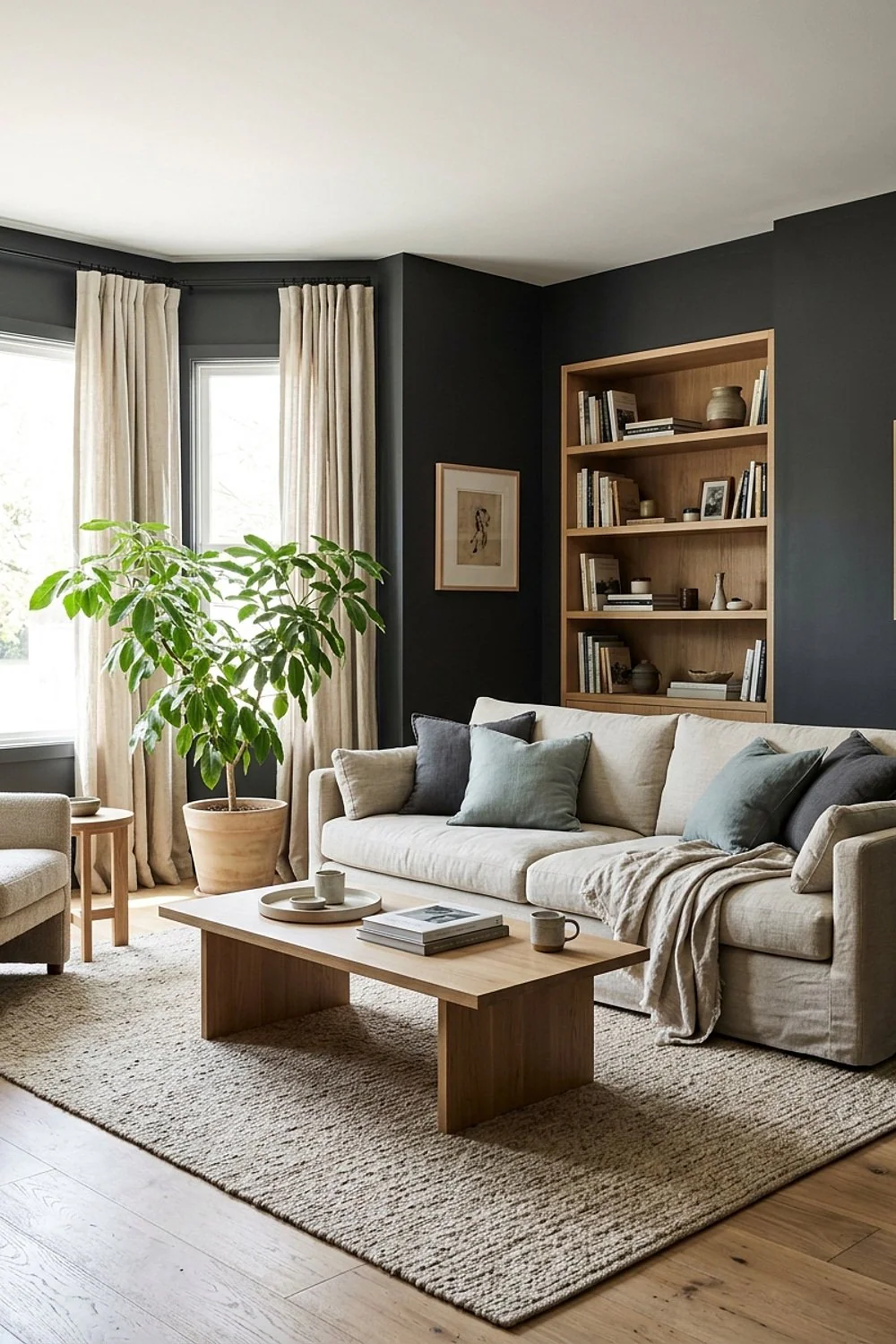
Sherwin-Williams Rainwashed is a pale aqua-gray that reads cool on a south wall and soft on an east one. White oak furniture and natural linen cushions bring in the yellow that stops it feeling like a spa lobby.
The undertone is the whole point. It works in sunny rooms, and it fails in shaded ones where the blue deepens to an unfriendly slate.
Sample it on two walls before committing.
Deeper palettes for evening-heavy living rooms
Evergreen Fog with oak frames and beeswax candles
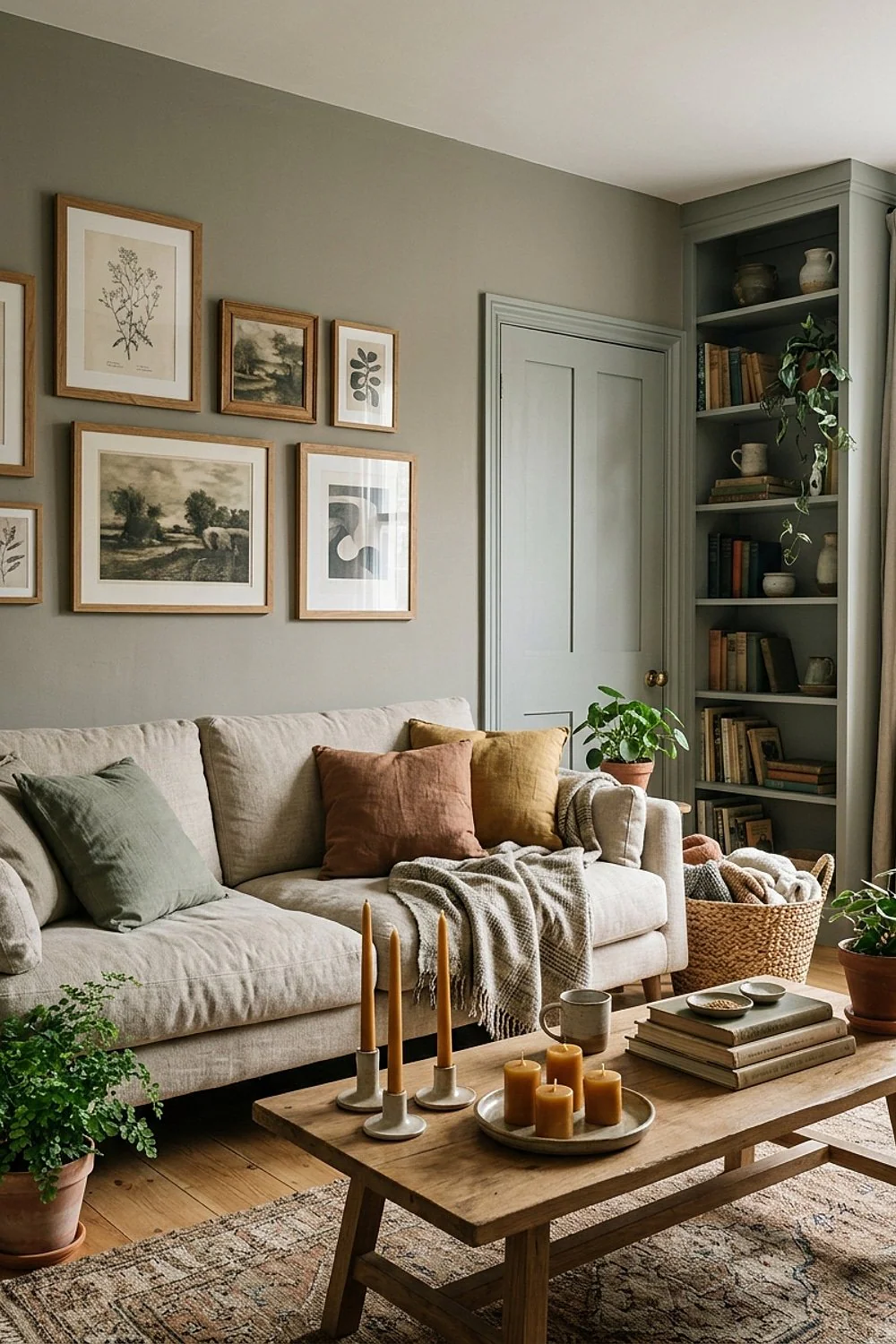
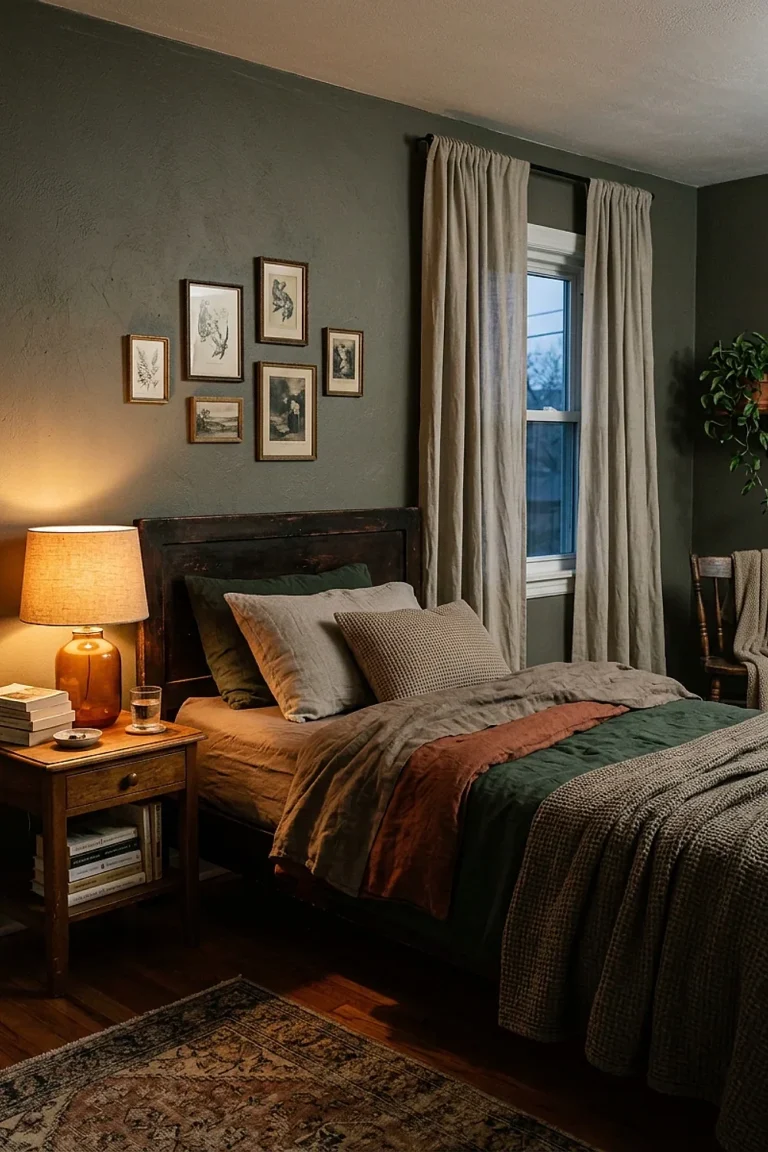
Oak picture frames read almost golden against Sherwin-Williams Evergreen Fog, a muted gray-green that warms the wood without any extra effort. Group three or four frames, 2 inches apart, on a single wall for a balanced arrangement.
Burn beeswax or soy candles instead of paraffin, which gives off more soot. A $25 beeswax pillar candle burns clean for about 60 hours.
It suits anyone who spends most evenings in the room, since lamplight deepens the green beautifully.
Urbane Bronze with solid walnut and wool boucle
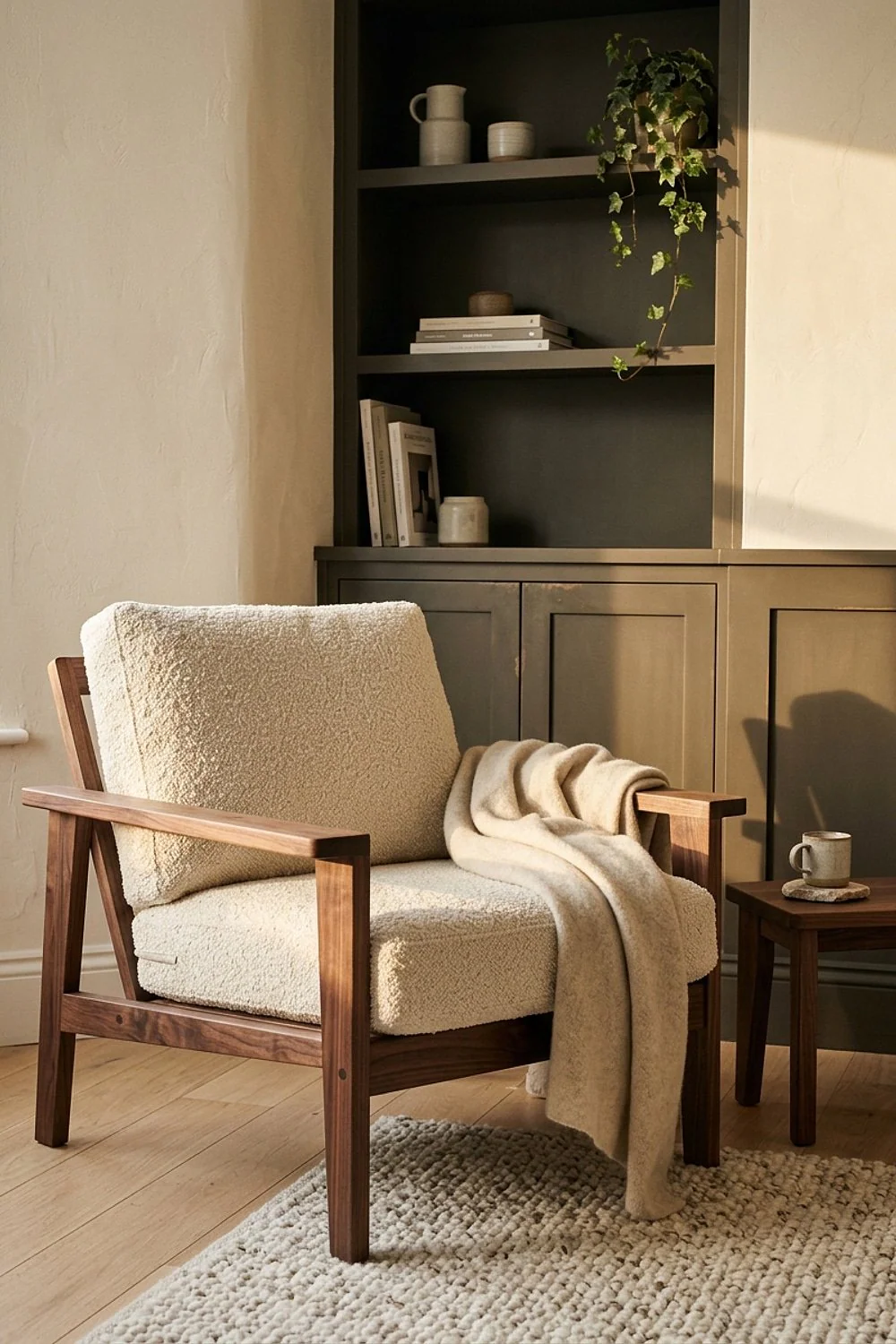
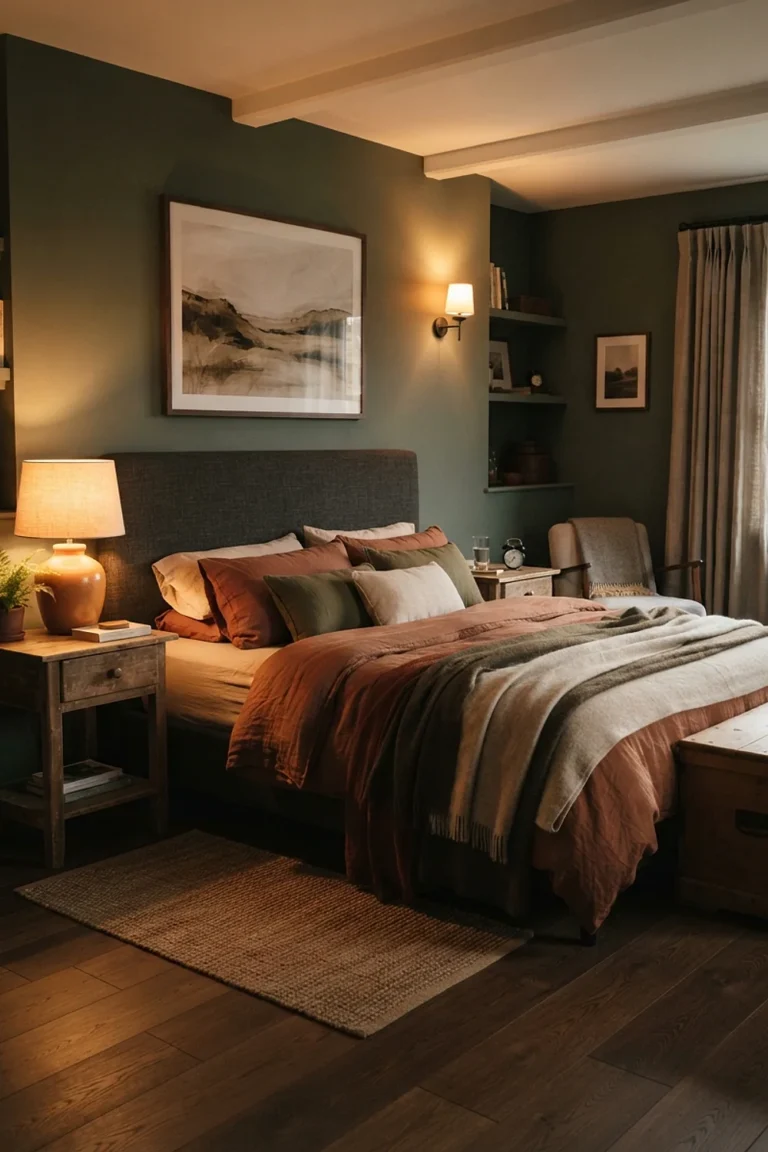
Solid walnut, not veneer over MDF, holds up against a dark Sherwin-Williams Urbane Bronze wall, and the grain stays visible in the dim. A wool boucle chair adds a nubby texture without foam-backed synthetics.
A solid walnut side table runs $200 to $450, and veneer pieces often glue with formaldehyde-based resins. The solid one is the better buy.
Choose this when the room faces north and you want to lean into the shadow.
Hale Navy in a 10 by 12 room
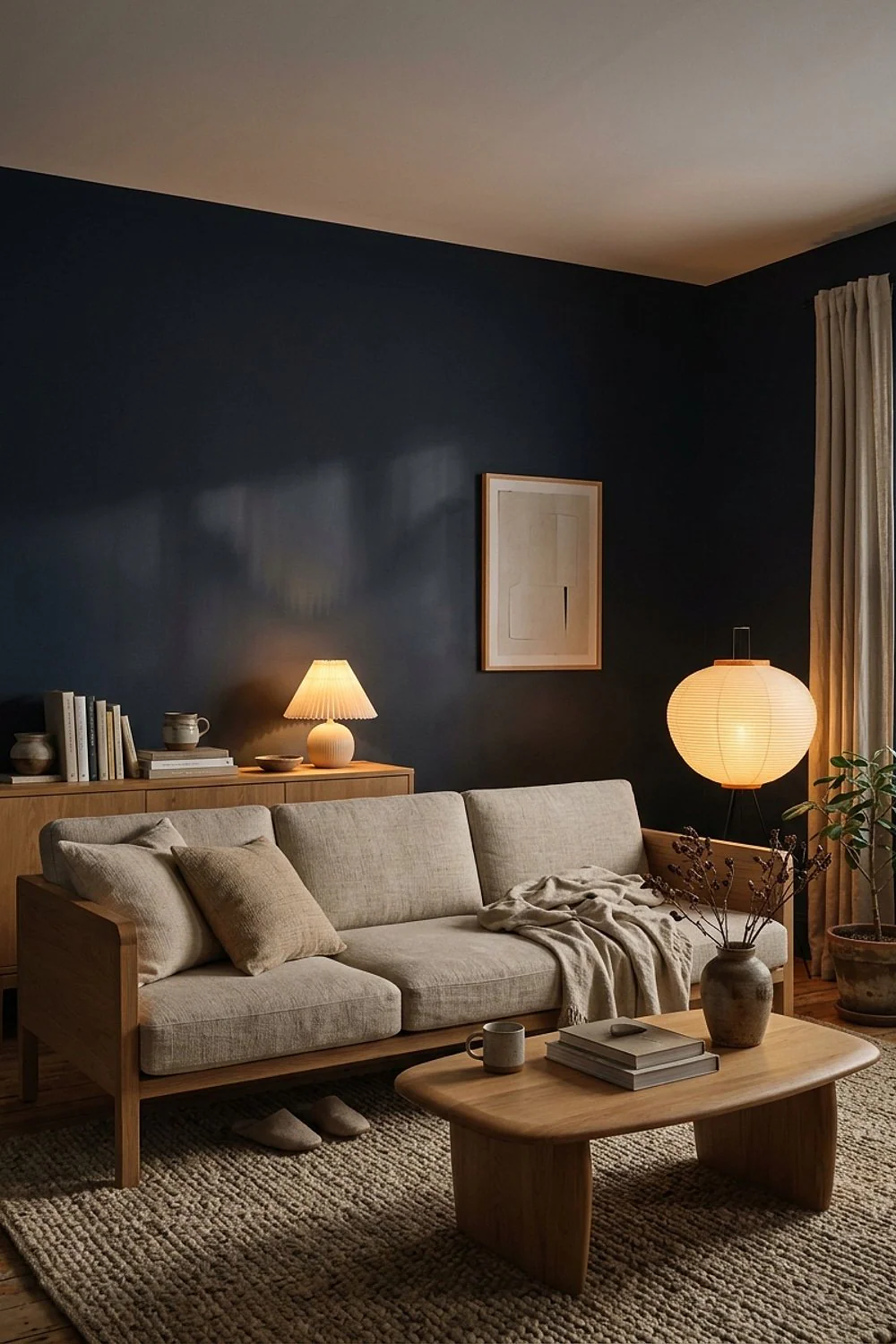
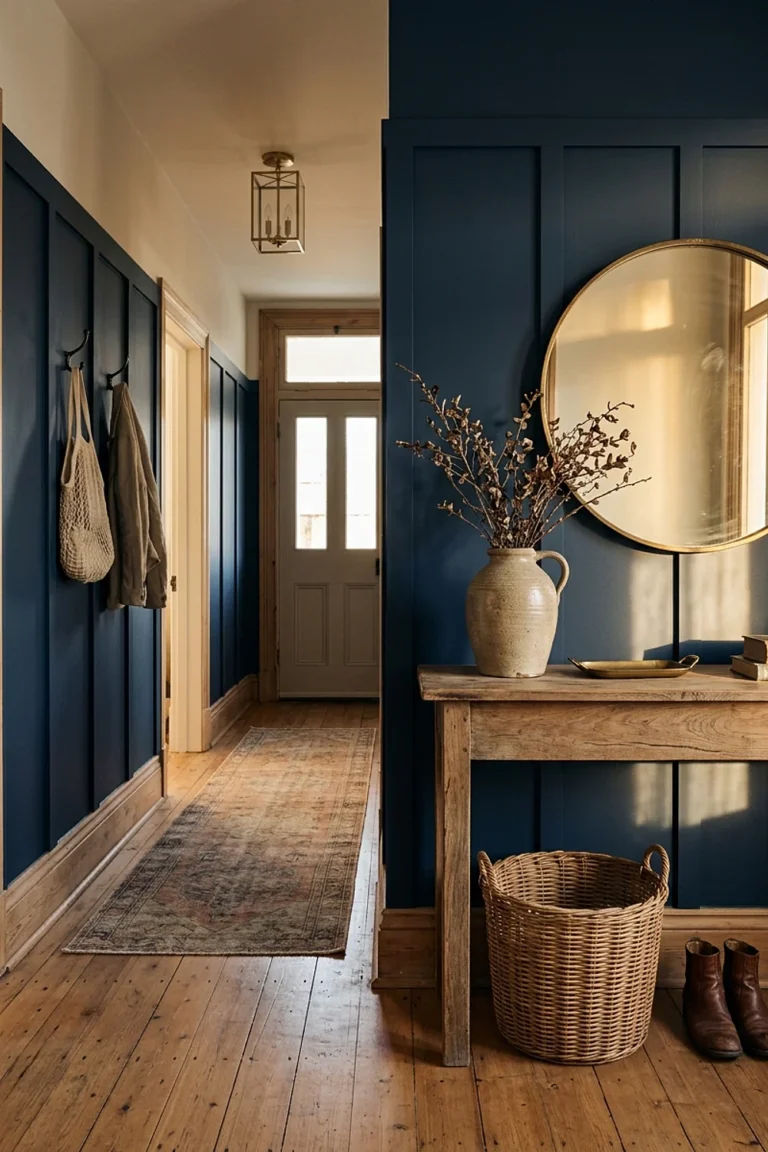
Convention says dark paint shrinks small rooms, so go light. Break that rule: a 10 by 12 foot room in Benjamin Moore Hale Navy, walls and ceiling together, loses its corners, and the eye stops measuring the space.
Light walls with a white ceiling draw a hard line at every edge, which advertises how little room there is. Paint trim the same navy for a continuous shell.
Pick zero-VOC and ventilate for 48 hours, since navy takes more tint and more colorant.
Kendall Charcoal with oatmeal linen
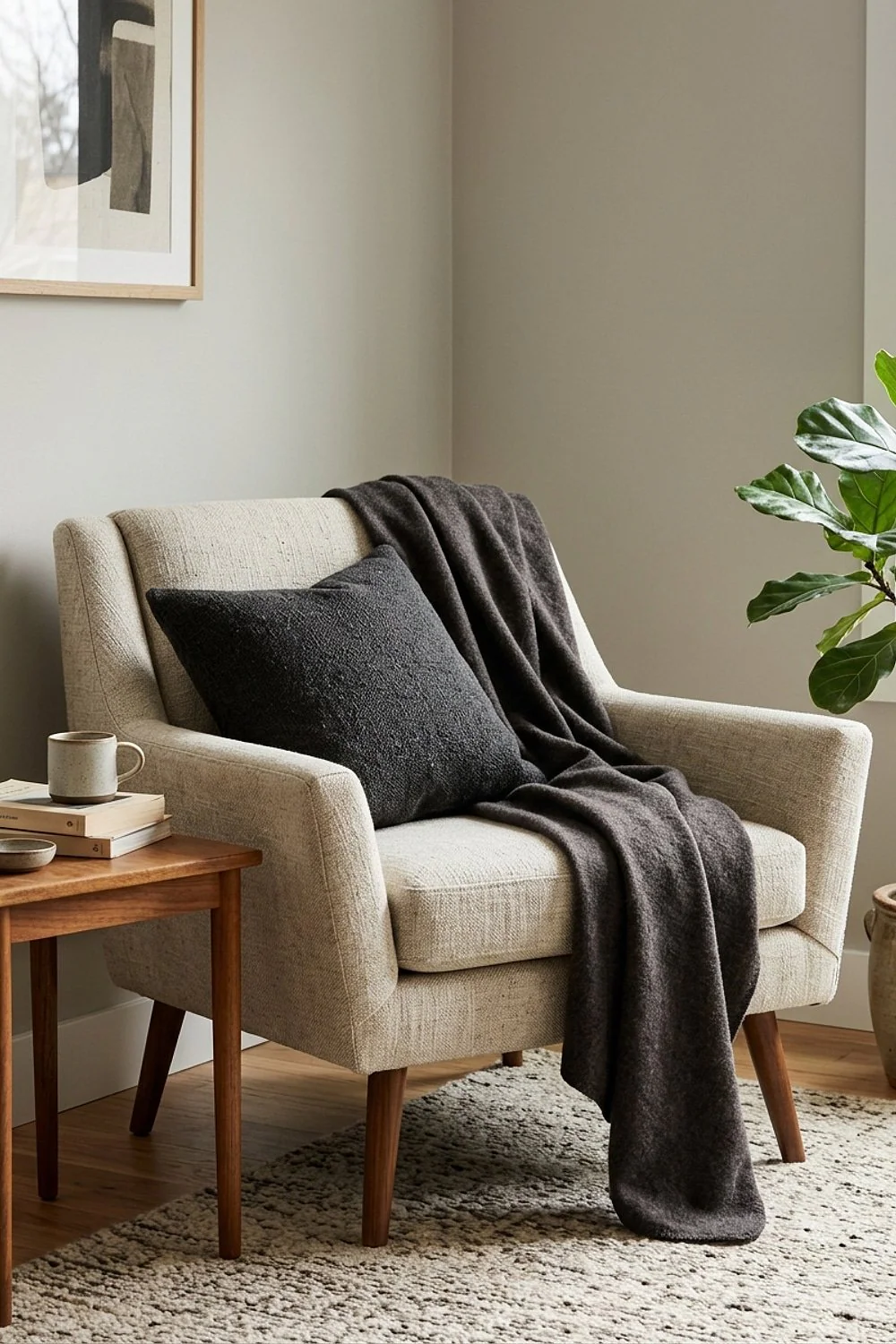
A charcoal wall with a charcoal sofa is the common mistake in dark rooms, because the furniture vanishes. Benjamin Moore Kendall Charcoal needs an oatmeal linen sofa in front of it to give the eye something to land on.
The value contrast matters more than the hue. About three steps lighter on the paint strip is enough.
Pair it with white oak floors, and the room stays readable at night.
Elephant’s Breath around a low table
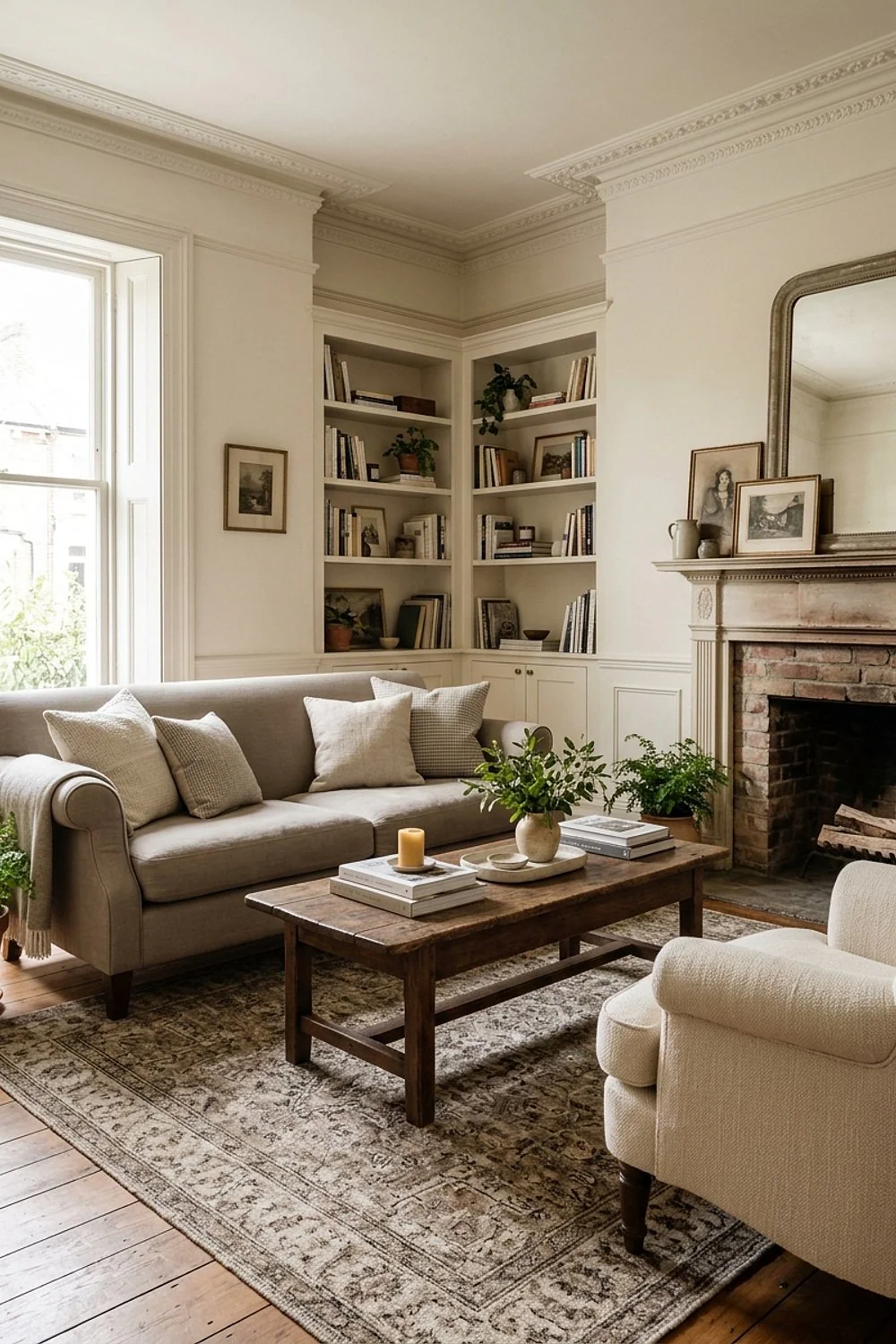
Place two chairs and a sofa around a table about 18 inches from the seat edges, and Farrow & Ball Elephant’s Breath becomes the backdrop to a real conversation zone. This pinkish taupe is dark enough to feel sheltered and gentle enough for daytime.
The water-based formula is low in emissions, though it isn’t labeled zero-VOC in every finish, so check the tin.
It works well for rooms used mostly for talking, not television.
Pigeon cabinetry in solid wood
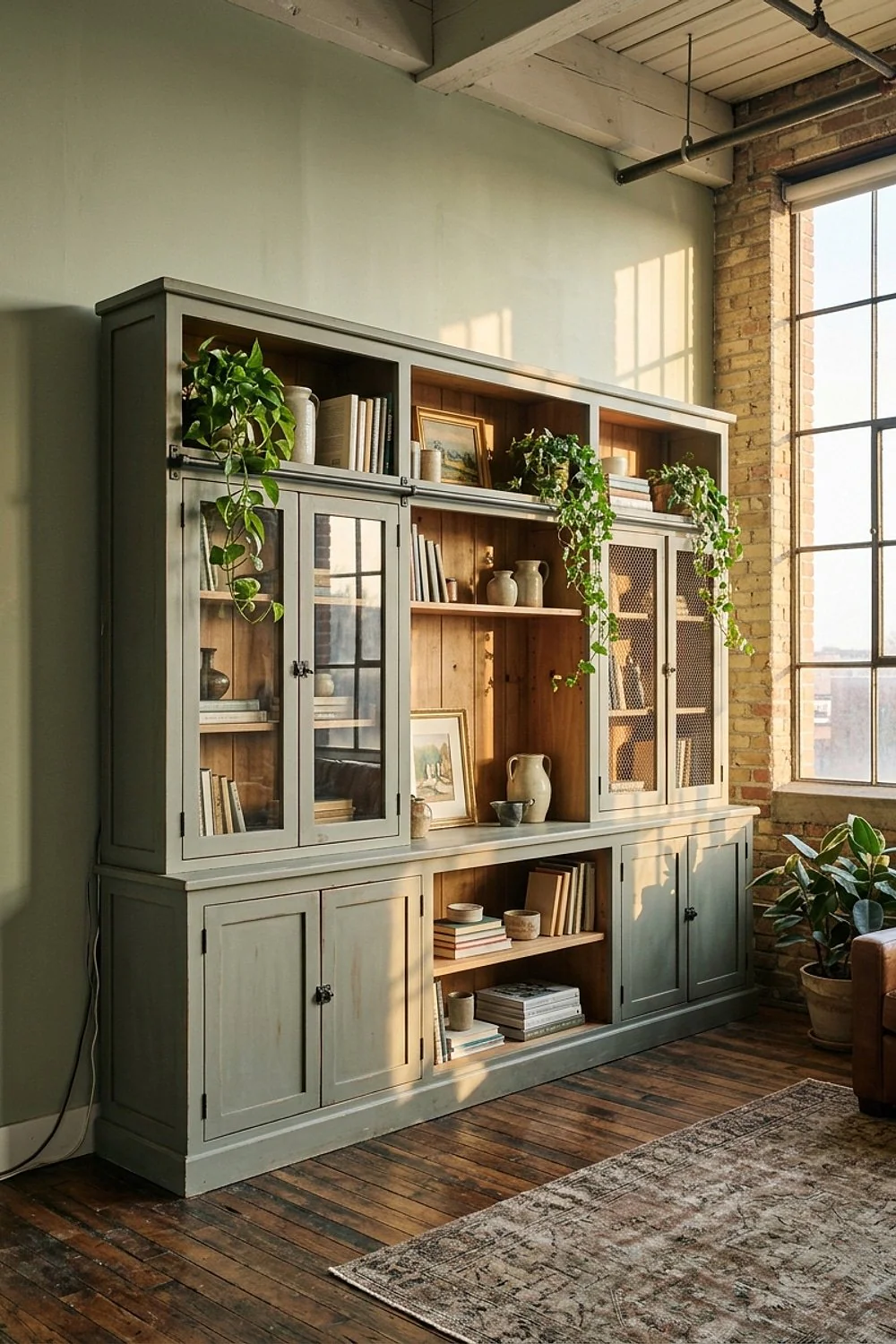
A built-in cabinet painted Farrow & Ball Pigeon looks best in solid poplar or maple, not particleboard. Cheap cabinet boxes can release formaldehyde for months, so look for plywood labeled CARB Phase 2 or no-added-formaldehyde.
A 36-inch-tall base cabinet holds media gear and board games behind doors. A budget version costs $900 to $1,500 in finished materials, labor aside.
Pigeon’s blue-gray sits well beside a stone fireplace.
Soft color stories for small and sun-starved rooms
Palladian Blue with wool throws
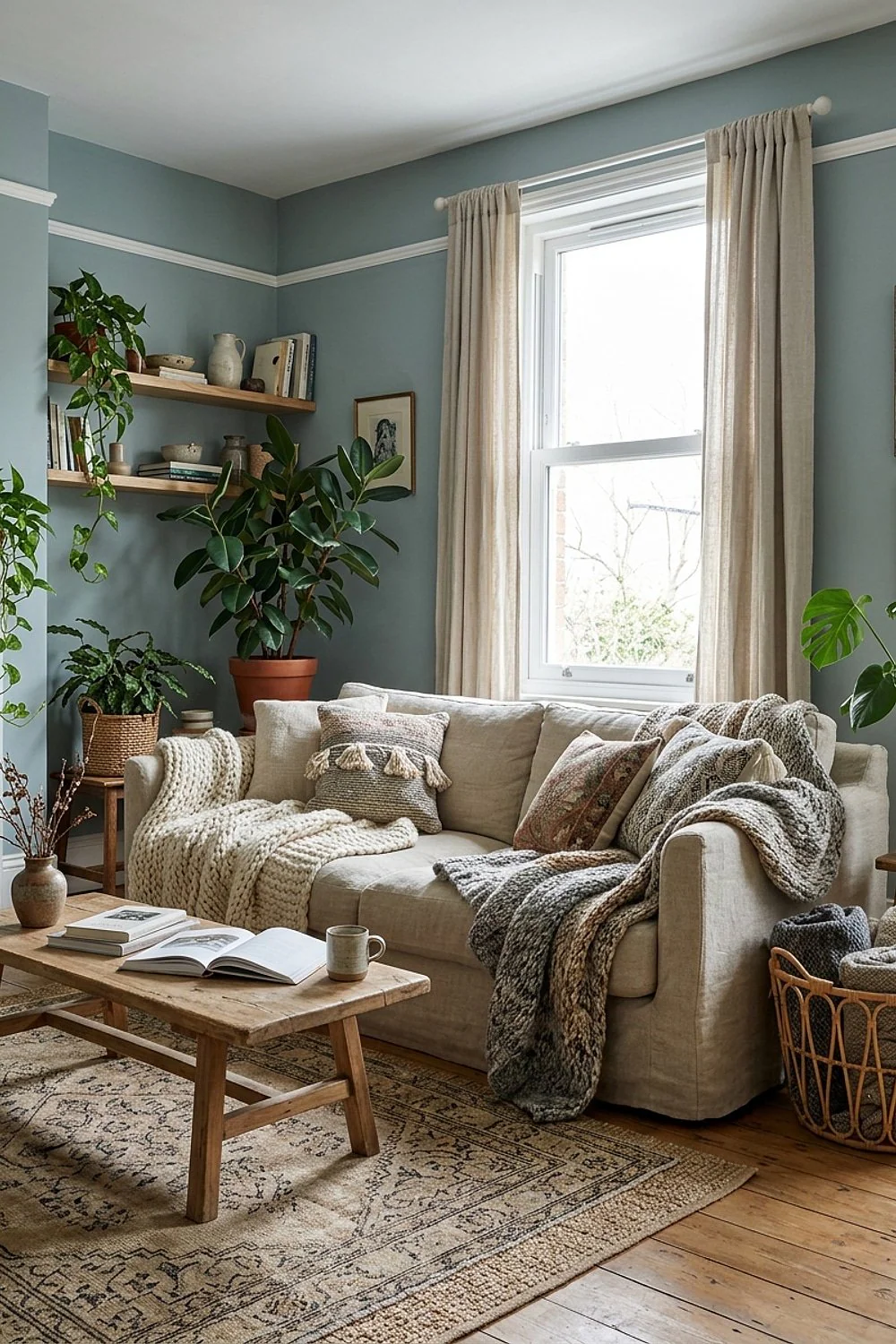
Wool needs to feel warm in the hand when it sits against Palladian Blue from Benjamin Moore, a pale aqua that feels cool to the eye. A chunky merino throw folded over the arm of the sofa balances it.
Cool colors can make a drafty room read as colder than it is. That’s a real problem for homes without good heating.
Use it where afternoon sun does the work of warming the room.
Saybrook Sage for a living room that doubles as an office
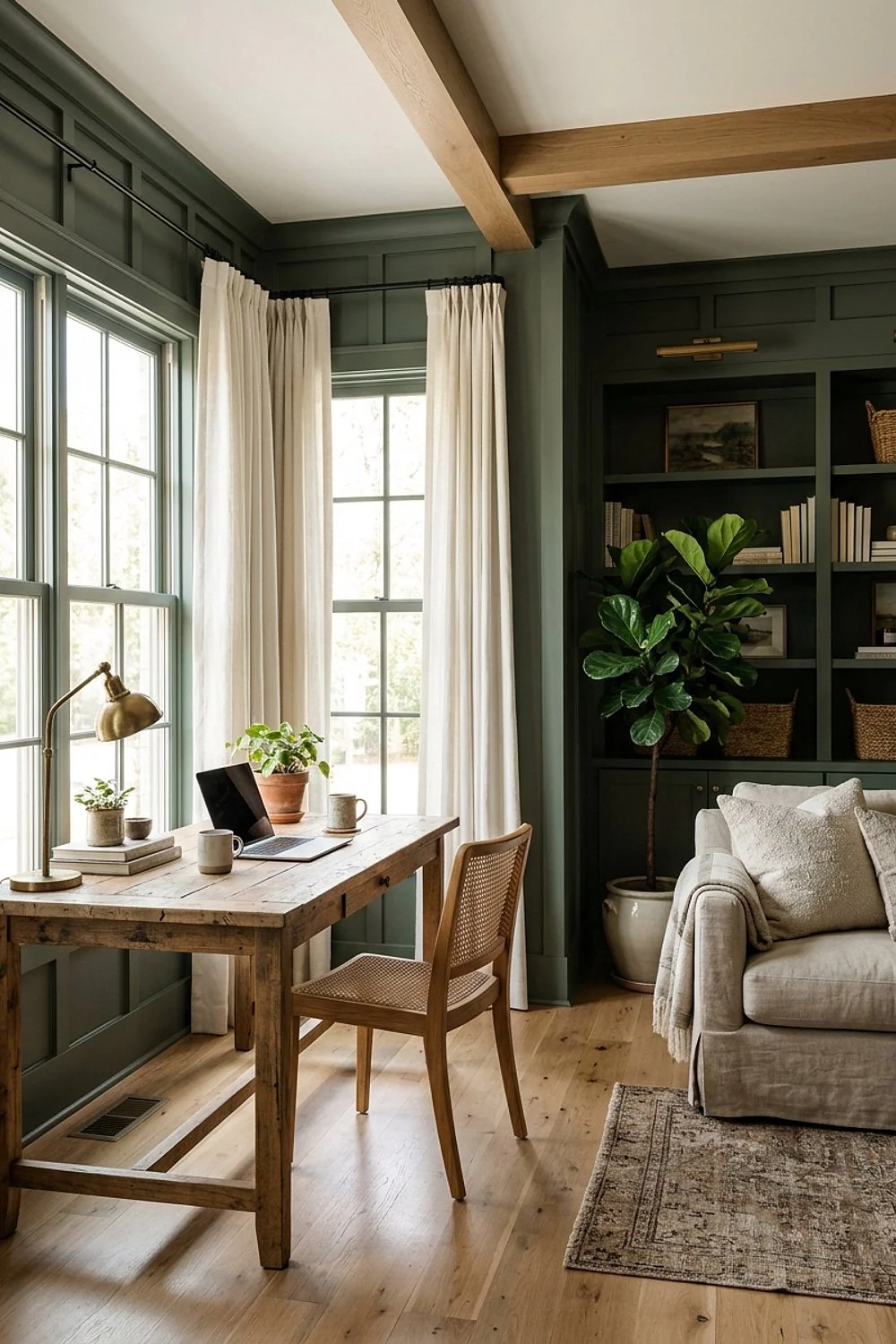
When a laptop sits on the coffee table for six hours a day, glare is the problem. Benjamin Moore Saybrook Sage, a gray-green, bounces less harsh light than a white, and it’s easier on tired eyes.
Choose an eggshell or matte finish, never satin, which reflects window light straight onto the screen.
It suits remote workers who can’t give up the sofa.
Natural Linen in a basement or north room
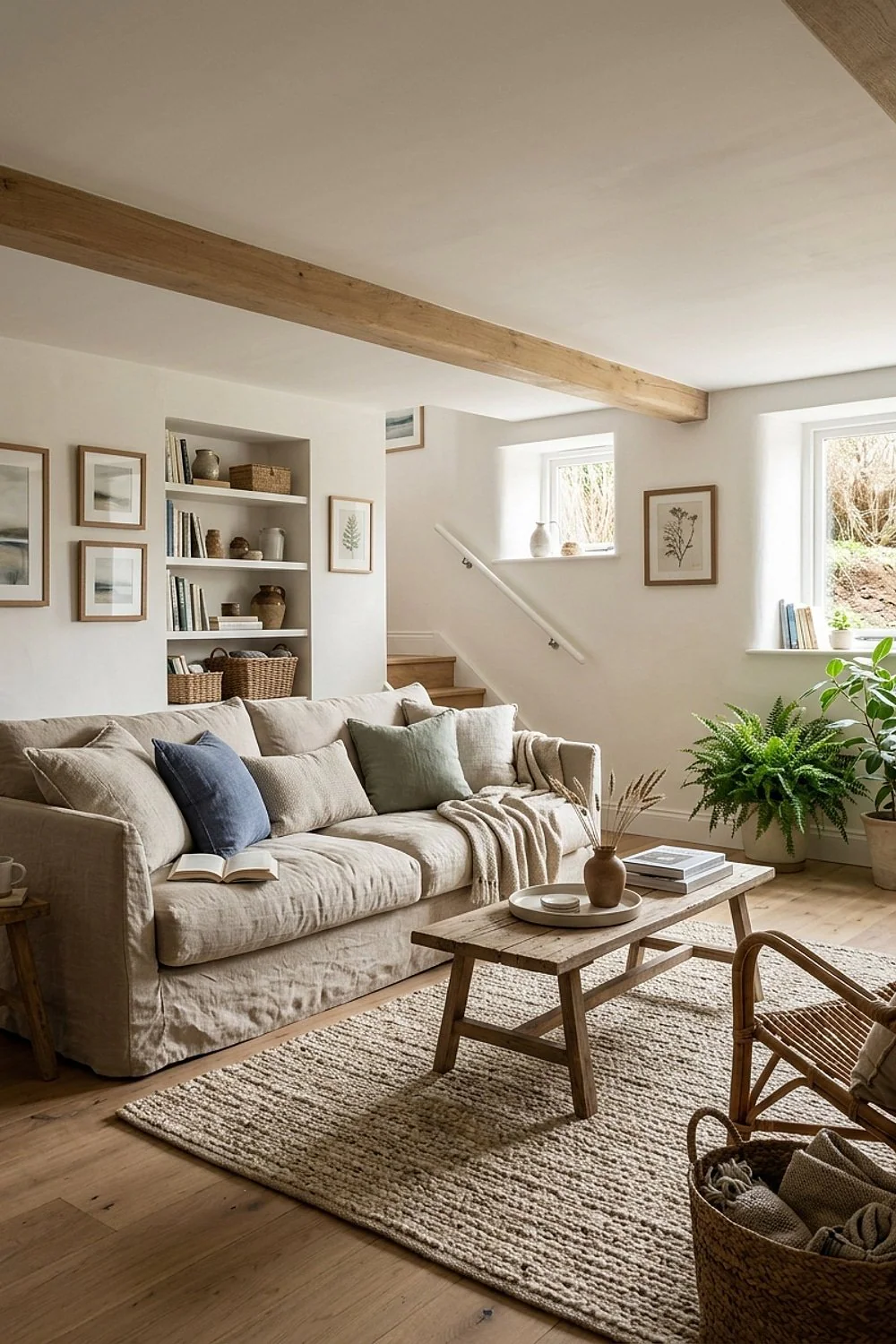
A peachy beige such as Sherwin-Williams Natural Linen works in a room with weak, bluish light because the warm undertone fakes a little sun that the windows never deliver. Two lamps with 2700K bulbs at different heights add to the effect, since overhead light alone flattens the walls.
This suits a basement or north-facing living room. Ask for a zero-VOC base, since closed rooms hold fumes.
Avoid a single ceiling fixture, because under one source the peach can read as dingy pink. Go with three light sources minimum.
Setting Plaster with olive linen
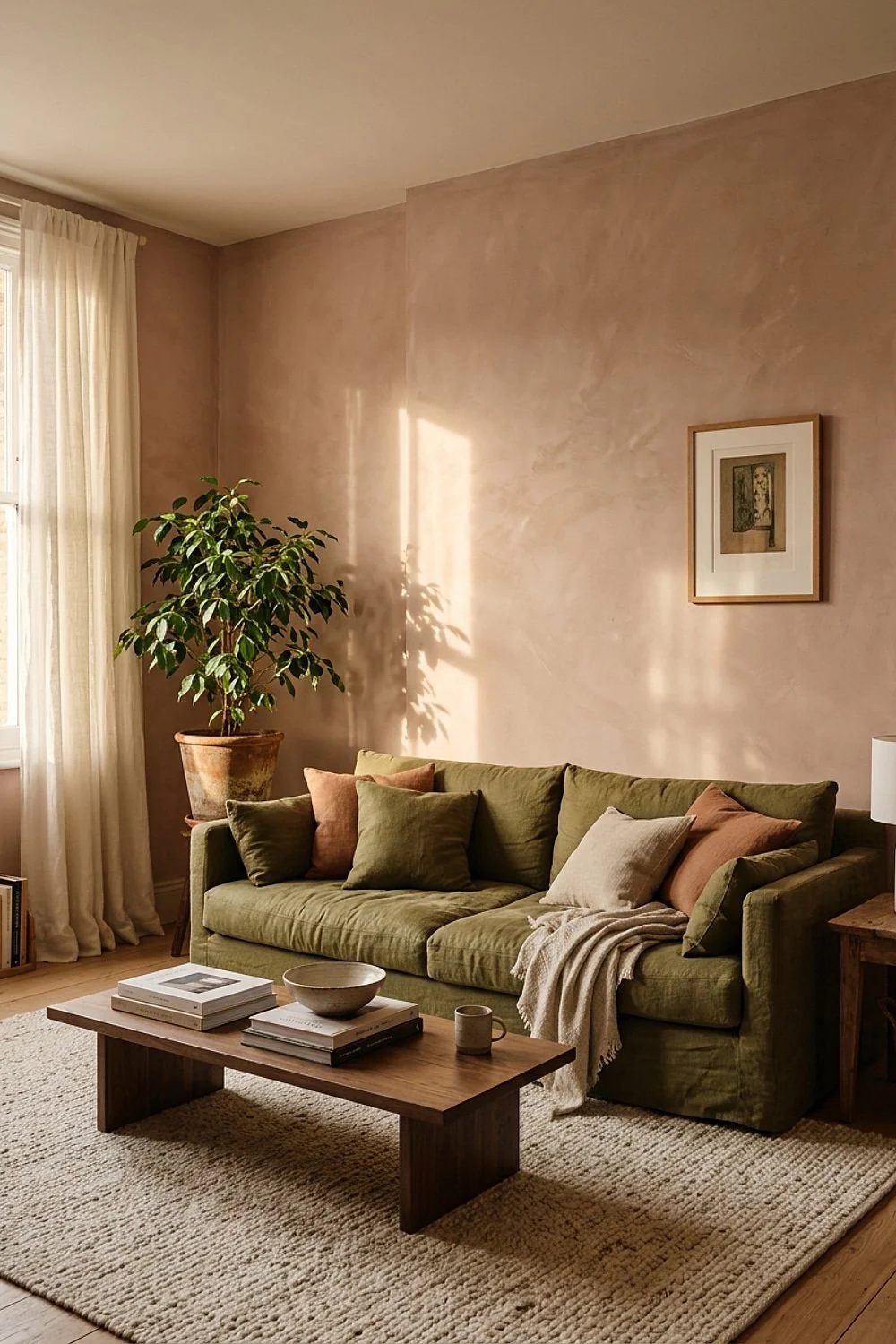
Farrow & Ball Setting Plaster is a dusty pink that reads almost neutral, and olive linen pillows pull it toward a sophisticated brown. The green sits directly opposite pink on the color wheel, so each calms the other.
Keep the olive muted. Anything bright turns the pairing into a nursery.
This works for people who say they hate pink but want something softer than gray.
Pointing walls and unglazed terracotta pots
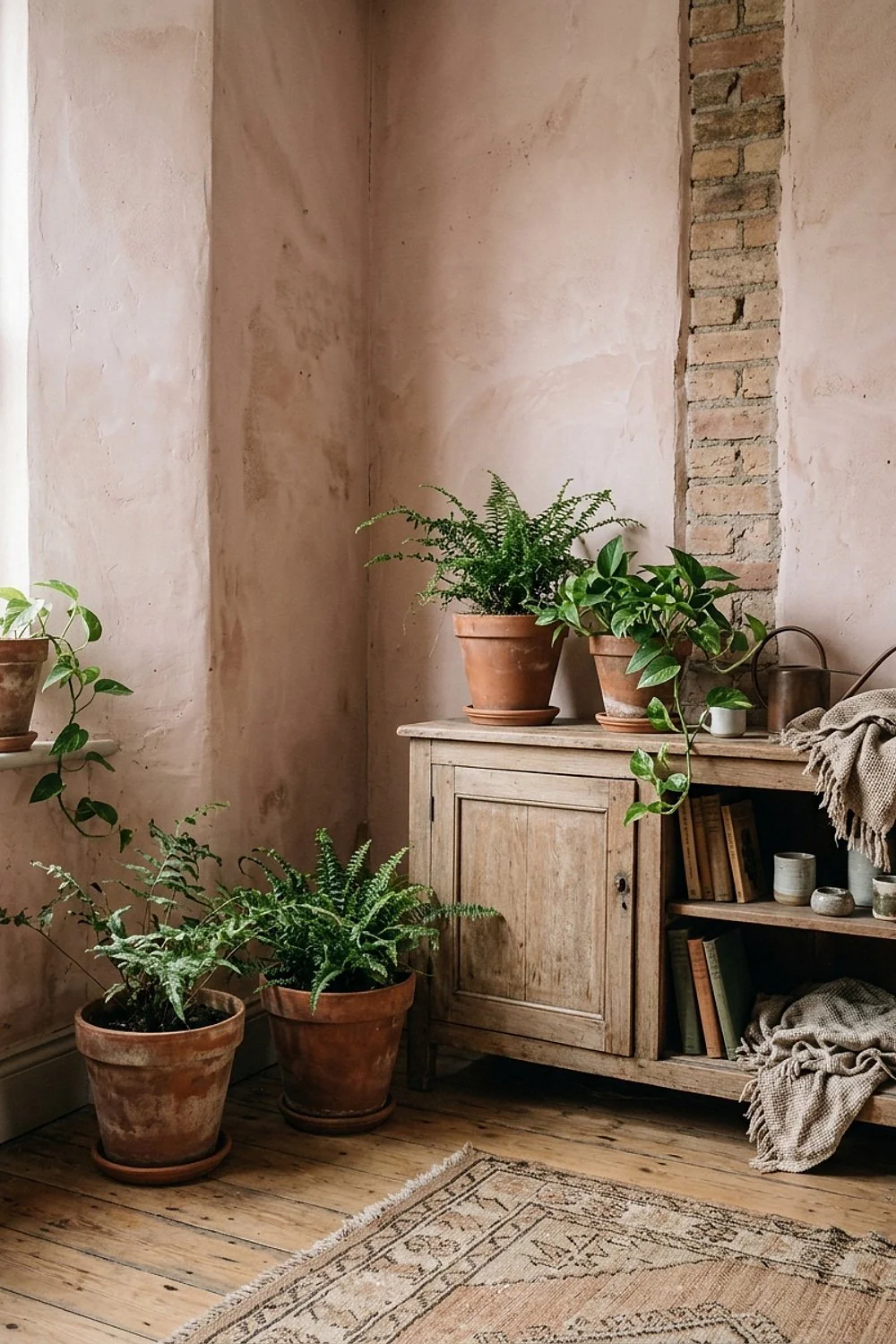
Plants in unglazed terracotta, about 8 inches wide and $6 to $12 each, look best against a Farrow & Ball Pointing wall, a creamy off-white. Group three at different heights on an open shelf.
Skip glossy glazed pots for this look, since the sheen competes with the matte wall. The clay also breathes, so overwatered roots dry faster.
It fits anyone who wants green without a green wall.
Lime wash in pale stone
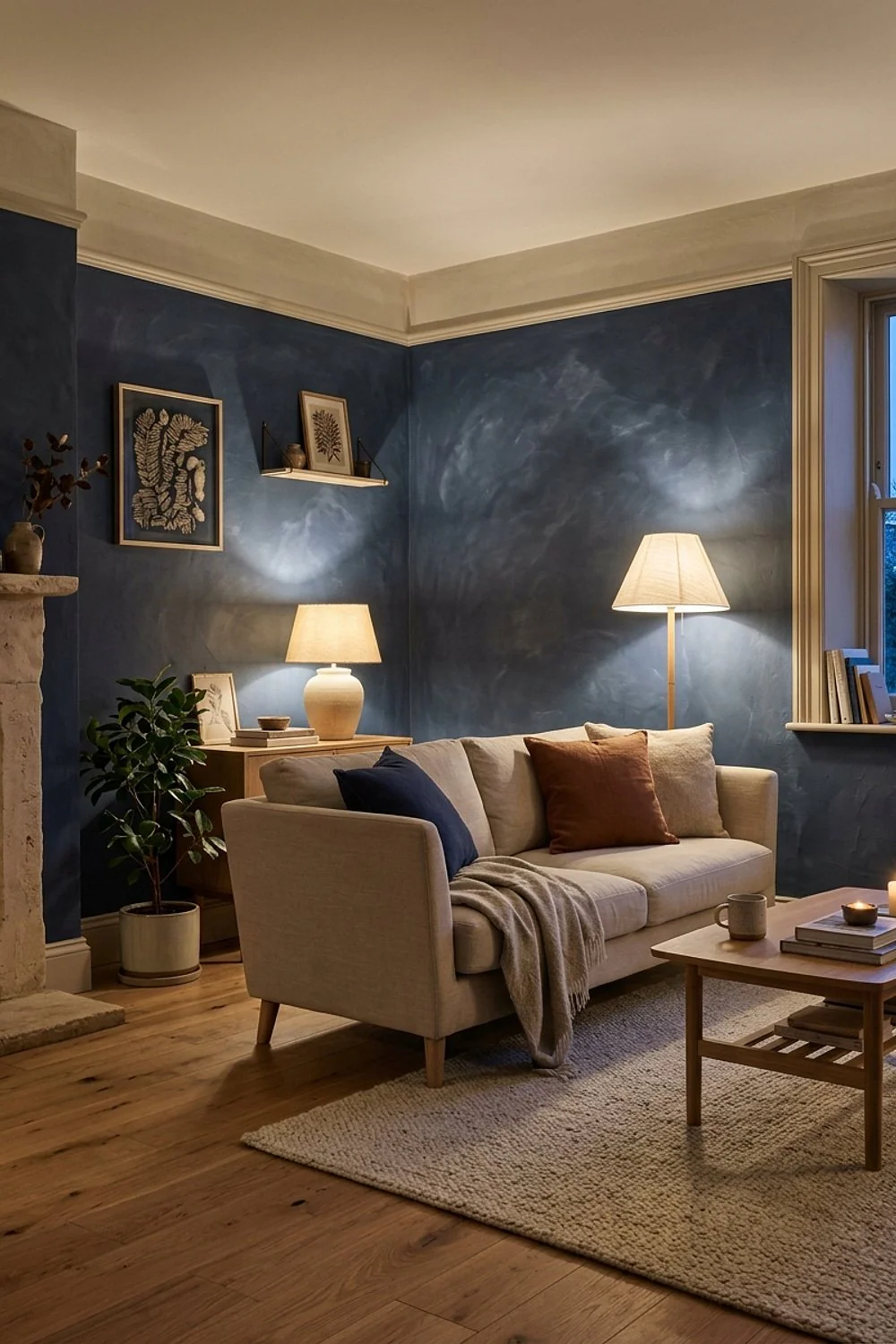
Lime wash in a pale stone shade is mineral, not plastic, and it ages like plaster instead of peeling. Wear gloves and eye protection while mixing, since wet lime is caustic at around pH 12.
It cures slowly, so allow several days before hanging anything. The finish suits rooms with a lot of natural light, where its cloudy movement can show.
Test it on primed board first, since the effect varies by hand.
Testing colors before you commit
Non toxic living room decor falls apart when the color gets chosen from a 2-inch chip under store lights. A swatch has to live in your room for a full day.
Paint two 2 by 2 foot sample boards, or use 12-inch peel-and-stick samples, and prop them on different walls. Check them at 8 a.m., noon, 4 p.m., and 9 p.m. (this only works if the light is typical, so a heavily overcast day will lie to you about a south-facing room).
Run through this checklist:
- Place the sample next to your rug and upholstery, not alone on a blank wall.
- Look at it from the sofa, not from the doorway.
- Switch your lamps on at dusk and note how the undertone shifts.
- Leave it up for at least two full days.
The common mistake here is judging a wet sample. Paint shifts as it dries over 24 hours, and some colors darken a full shade.
What went wrong
A wall that looks wrong the day after painting isn’t always a repaint. Wait 24 hours first, then judge in daylight, because wet paint lies.
If it still misses, work through these in order:
- Swap bulbs to 2700K-3000K to remove a green or gray cast.
- Add a contrasting textile, such as an oatmeal rug against a too-dark wall.
- Hang artwork or mirrors to break up a color that feels overwhelming.
- Repaint only the worst wall, using a zero-VOC formula, and ventilate for 48 hours.
Too yellow usually means too much warm tint for the light, so add a cooler throw or curtain. Too cold calls for wood and wool before any new paint.
Choosing your palette
The best non toxic living room decor starts with a clean formula and an honest read of your light, then adds one undertone that suits both. Everything else, from rugs to shelving, follows from those two decisions.
Save or pin this list so it’s ready when painting day approaches. Start with one sample board in the room’s darkest corner, and measure the wall before buying a single gallon.
Frequently asked questions
Does zero-VOC paint really have no smell?
Not always. The base can contain up to 5 grams per liter and tinting can add more, especially in dark colors. Ventilate for 48 hours and expect a faint odor from the binder.
How long should a living room air out after painting?
Most zero-VOC paints dry to the touch in about an hour and take 4 hours to recoat. Keep windows open and a fan running for 24 to 48 hours, though full curing takes 2 to 4 weeks.
Can I do this in a rental?
For non toxic living room decor in a rental, move the color into textiles instead of walls. Wool rugs, linen curtains, and cotton throws bring in palette without a repaint, and a landlord may approve a zero-VOC gallon for a single wall.
Do clean paints cost more?
Zero-VOC lines from major brands generally run $50 to $80 a gallon, close to standard premium paint. Mineral and clay finishes cost more per square foot and usually need more skill to apply.
15 Comments